

Accelerating @Gradient_HQ Advancing OIS stack: ./ Open AI for Sovereign Future. Make it you against the matrix
Accra, Ghana
Joined August 2023
- Tweets1.6K
- Following295
- Followers258
- Likes9.6K




— then pass hidden deterministic tests. No LLM judges.
Models that crush SWE-bench still struggle to go from zero to a full working repo. This is a much harder (and more useful) benchmark.
Contribute tasks or seed repos:
github.com/Gradient-Data/Zer…

Over the past year Gradient has been building better infrastructure for AI post-training.
Now with Gradient Data and Zero2Repo, they’re creating verifiable environments where agents have to build complete repositories from a pure spec + empty workspace

Over the past year, we’ve worked on Echo and Logits to make AI post-training more efficient and accessible.
Gradient Data now extends that work with verifiable environments, real-world trajectories and evaluation systems for more capable and reliable agents.
gradientdata.ai
$0.10 to reread the session vs $2 to send it again.Use it when the step needs the extra modality or the stronger pass. Don’t use it for every turn just because it’s available.
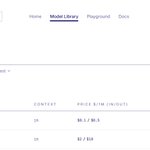
Gemini 4 Argon is on Commonstack.$2 in / $10 out
Cached read: $0.10 / 1M
1M context
Text, image, audio, video in → text outMultimodal at the mid-frontier price.The number that matters on long runs is the cache.


Luna and Sol. Live on Commonstack.Luna: $0.10 / $0.50
Sol: $2 / $10
Both 1M context.Volume vs the step that can fail the run. That’s the whole pairing.

They replaced Sol in 7 days. Not with a new price list.
With a model that sits 1 point under Astra on the Intelligence Index at under a quarter of the cost per task. $2 / $10.
Same sticker as Sol.
Cache read discount: 90% → 95%.$0.72 per Intelligence Index task vs Astra’s $3.26.
That’s the real cut. It uses 10–30% more output tokens than Sol.
And still lands cheaper per finished task, because the score went up. Sticker price is a vanity metric now.
Agents pay for resolved work, not for a million tokens that didn’t land. Always-Astra is a routing policy.
This chart is why that policy is getting harder to defend.

GPT-6.1 Sol replaces GPT-6 Sol after just 7 days. It scores 1 point below GPT-6 Astra in the Intelligence Index at less than one quarter of the Cost per Task
Pricing matches GPT-6 Sol at $2/$10 per million input/output tokens, except that the cache read discount rises from 90% to 95%. GPT-6.1 Sol’s overall blended price for agentic workloads is therefore slightly lower than GPT-6 Sol. This represents an additional price cut, following GPT-6 Sol’s original 50% discount from GPT-5.6 Sol.
Key takeaways:
➤ Achieves near-Astra Intelligence: GPT-6.1 Sol gains 4 points in the Intelligence Index vs GPT-6 Sol, and 5 points vs GPT-5.6 Sol - landing 1 point below GPT-6 Astra. It makes significant gains in agentic knowledge work, improving 4 points and 5 points in AA-Briefcase v1.1 and GDPval-AA v2.1 respectively. Other notable gains include a 12 point jump in Terminal-Bench 4.0, a 5 point jump in Humanity’s Last Exam, a 6 point jump in GDP.pdf, and an 8 point jump in AA-Omniscience Accuracy coupled with hallucination rate falling from 60% to 54%.
➤ Pushes cost efficiency frontier: At max effort, GPT-6.1 Sol costs less than a quarter of GPT-6 Astra per Intelligence Index task ($0.72 vs $3.26). It also costs 31% less per task than GPT-6 Sol ($1.05) and 64% less than GPT-5.6 Sol ($1.99). All effort levels of GPT-6.1 Sol push out the cost efficiency Pareto frontier: for a given level of intelligence, there is no cheaper model.
➤ Pushes token efficiency frontier, but uses slightly more output tokens than GPT-6 Sol: GPT-6.1 Sol uses ~10-30% more output tokens than GPT-6 Sol across effort levels. However, due to the increase in Intelligence Index score, its low and medium effort levels are Pareto optimal for token efficiency.
➤ Gains in Coding Agent Index: GPT-6.1 Sol gains 3 points on GPT-6 Sol at max effort in the Artificial Analysis Coding Agent Index, and sits 2 points below GPT-6 Astra.
Congratulations @OpenAI and @sama on the launch!

A look back at whats we've built across different layers of the stack. @Gradient_HQ Higher
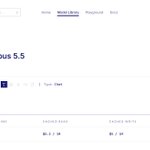
Opus 5.5 is on @commonstack_ai.
$4 in / $20 out
Cached read: $0.20 / 1M
Cached write: $5 / 1M
1M context. Text + image in.
Same class of model. Lower line on the invoice.T he useful number is the cache.
$0.20 to reread a session vs $4 to send it again.Long agent runs live or die on that gap.
Keep the prefix stable and the bill follows the cache hit, not the sticker price. Frontier for the hard step.
Not for every step.

Agents don’t need a frontier model to parse a tool call.
They need one for the step that can kill the trajectory. So the split is now:
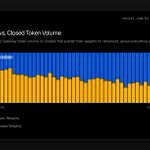
78% of tokens → cheap, downloadable weights
22% of tokens → the models that still take most of the spend Same pattern everywhere else.
Vercel monthly:
open ~56% of tokens, ~14% of dollars.
Anthropic still takes the majority of gateway spend. Tokens measure usage.
Spend measures who has pricing power.If your default is always-frontier, you are paying closed prices for work the blue bar already absorbed.Route the path.
Save the expensive model for the step that actually needs it.
Explore more models on
commonstack.ai/account/signu…
