

Assistant Professor and Attending Pathologist @UVMLarnerMed via @MSKPathology & @NYUGSOMpathres Views are my own. Posts ≠ medical advice 🔬🇲🇽🏳️🌈
Burlington, VT
Joined September 2021
- Tweets184
- Following200
- Followers248
- Likes205


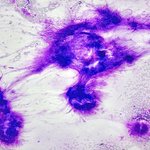



Lobular lushness, different spectra of lobular disease in the same field: On the left, classic type LCIS with “small” or Type A cells (top) and“large” or Type B cells (bottom). ILC (right) with cells of similar morphology to those of Type A LCIS #breastpath #pathpearls #pathart

@FuzzFree delivered an outstanding presentation on @NYUGSOM_Path rapid digital pathology transformation, had an engaging thoracic unknowns session with our residents, and -of course- got to try the best farm-to-table restaurants in the area!


3
55
One day you’re a baby resident at @NYUGSOMpathres learning the nuts and bolts behind Dr. Zhou’s scope (pre digital revolution!) and only a few years later you’re hosting her for @UVMLarnerMed Pathology Grand Rounds! Thank you @FuzzFree for bringing knowledge & sunshine to VT 🌞


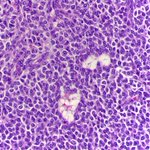
This needs p40 to rule out a basaloid squamous cell carcinoma. Morphologically it looks high-grade neuroendocrine, so maybe NE-low SCLC. Is the stain POU2F3?
1
4
240
It’s finally out and free to read! The @MSKPathology experience using FNA supernatant for BRAF detection in high-grade thyroid cancers (mostly ATCs). Our findings: faster and more accurate than immunostains. In this race against the clock, every minute counts!

New and #OpenAccess! Ultrarapid BRAF mutation detection on supernatant cell-free DNA obtained by FNA: An accurate and expedient method for BRAF assessment in aggressive thyroid carcinomas
acsjournals.onlinelibrary.wi…
#CytoPath @carliesigel

1
114
If they are seen in pancreatic body and tail lesions and not so much on head ones, it means that they’re going through the stomach. I’d say they are chief (blue) and parietal (pink) cells of oxyntic mucosa glands
1
7
365
What do you make of the multiple intracytoplasmic mucin vacuoles? Is that enough to favor a diagnosis of adenocarcinoma?
11
Intracytoplasmic mucin vacuoles give away this lung tumor. Although this finding is sufficient to justify the diagnosis of adenocarcinoma, confirmatory TTF-1 immunostain was positive.
#pulmpath #pathology #PathTwitter #pathx


Despite the vulgarity you’re still wrong, Columbian and Colombian are different words, you just didn’t care to read the results of your own search 👇🏽


1
3
49


100% skeletal muscle and connective tissue… clearly no pathologist involved whatsoever in the manuscript nor the peer review 😓
4
158
I never cease to be amazed at the beauty of polarizing foreign material and the fabulous colors that result from the interference of two components of light split by an anisotropic specimen. In this case, ruptured polyethylene liner of a prosthetic knee #PathTwitter


1
4
341