
Cap The Cap™ © 2026 No DMs. Contact email and AI explainer is available at https://teapawt.net/t.co/kIOfhbSdr7. Will mute and block offensive or bad faith accounts. Be good.
Scottsdale, AZ
Joined July 2024
- Tweets7.3K
- Following631
- Followers791
- Likes3.1K




Pinned Tweet
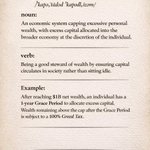
Don't forget the Capitated Capitalism proposal includes:
1) 100% of any Greed Tax directed to principal on the National Debt (to prevent perverse political incentives), and
2) Simple update to IRC Section 877A (to solve for wealth flight).

I asked Grok AI to analysis Capitated Capitalism (aka “Cap The Cap”). Response below and link to continue conversation at end.
Thoughts?
GROK RESPONSE
Thought for 2m 9s
“Capitated Capitalism (aka "Cap The Cap") is a proposed hybrid economic framework that preserves core capitalist elements—private property, market-driven allocation, individual initiative, and profit motives—while addressing extreme wealth concentration through a mandatory circulation mechanism.
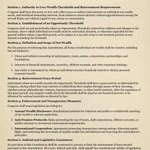
It establishes a high per-person net-wealth threshold (initially $1 billion, inflation-adjusted). Anyone exceeding it receives a one-year grace period to allocate the excess capital however they choose (e.g., job-creating businesses, R&D, infrastructure, education, or philanthropy). Any unallocated excess faces a 100% "Greed Tax," with all proceeds applied directly to reducing the U.S. national debt principal. The system includes a 10-year phase-in (Greed Tax rate rises 10 percentage points per year to 100%) and pairs with the assumed IRC §877A update capping renouncers at $1B (excess forfeited to debt). The explicit goal is "Capitalism 2.0": capital stays in motion to drive growth, jobs, and opportunity rather than idle at the top.
Contrasts with other systems (core mechanics only):
Traditional/laissez-faire capitalism …: Unlimited private accumulation; voluntary philanthropy or progressive taxes; markets decide allocation. Capitated Capitalism adds a hard, owner-controlled circulation backstop.
Social democracy …: High progressive taxes and government redistribution/spending; no hard wealth cap or forced private allocation.
Socialism: Government ownership/control of major production means; central planning replaces private decisions.
Communism: Abolition of private property and classes; no markets or personal capital control.
Capitated Capitalism is explicitly not anti-wealth or anti-success; it is anti-hoarding while keeping allocation decisions private and market-oriented.
The following analysis holds all other variables constant (no behavioral changes beyond rational responses to the policy, no external shocks). Projections contrast CBO baselines for the status quo with reasoned estimates under Capitated Capitalism. These are not precise forecasts—real outcomes depend on compliance, enforcement, and secondary effects—but derive from:
(a) current billionaire data (900–934 individuals holding ~$7–8.2T total wealth…),
(b) typical billionaire wealth growth (10–20% annually …),
(c) forced redeployment of ~$0.5–1T+ annual excess …, and
(d) debt/GDP dynamics.
Status quo uses CBO long-term outlooks (real GDP growth averaging ~1.8% long-run, unemployment 4.2–4.6%, debt rising to ~120% of GDP by 2036, deficits ~$1.9T+ rising).
1. Unemployment and economic mobility for Americans
Status quo: Unemployment holds ~4.3% near-term…mobility remains low/stagnant...
Capitated Capitalism: Unemployment falls faster (potentially 3.5–4.0% steady-state)...Mobility rises measurably (10–20% improvement…by year 20)...cumulative: millions more jobs and higher upward mobility...
2. Change in size of the U.S. income tax base and impact on marginal tax rates
Status quo: Tax base grows ~1.8–2% annually with GDP; top marginal rates stable or pressured upward...
Capitated Capitalism: Base expands faster (2.5–3%+ annual growth)...enable 2–5 percentage point reductions in top marginal rates...
3. Highest grade level of education for the average American
Status quo: Current attainment ~ high school diploma as highest for 29% of adults, bachelor's+ for ~38–44% (ages 25+)...
Capitated Capitalism:... Average rises from current ~13–14 years of schooling equivalent...
4. Annual and accumulative disposable income for the average American
Status quo:…grows ~1.8% annually with consumer spending (CBO)...
Capitated Capitalism: Annual growth boosted 0.5–1%...+$5–10k higher by steady state. Cumulative: ~$80–150k+ extra per person over 20 years...
5. Innovation metrics
Status quo: U.S. leads in total R&D...but relative position eroding (China closing gap); patents/publications strong but not accelerating.
Capitated Capitalism: 20–50% uplift in patents, venture formation, and private R&D by year 20...More unicorns/startups; U.S. lead widens.
6. Impact on lifespan and healthspan for Americans
Status quo: Life expectancy ~79 years (recent peak)...
Capitated Capitalism: +1–3 years lifespan/healthspan by year 20...
7. America's annual and accumulative GDP
Status quo:...2% near-term, then ~1.8% average (CBO); nominal GDP trajectory to ~$45–50T+ range by 2046 under baseline.
Capitated Capitalism: Annual growth 2.5–3%+ from accelerated capital velocity; cumulative GDP 10–20% higher by year 20 ($5–10T extra annual output by end).
8. Ability to pay down principal on America's National Debt
Status quo: Debt ~$38.9T now...120%+ by 2036; no principal paydown.
Capitated Capitalism:…$1–5T+ cumulative principal reduction by year 20...
Will a reasonable actor under Capitated Capitalism choose to allocate capital themselves, however they see fit legally, or pay the Greed Tax?
Allocate themselves. A 100% tax destroys the excess with zero upside or control; allocation preserves full decision rights, potential future returns (via new ventures they direct), and aligns with self-interest. Compliance is rational and preserves capitalist incentives.
Once Capitated Capitalism reaches steady state, does it reinforce the markets against recession and depression? How?
Yes. Annual excess above the cap must be productively allocated (or taxed). This creates a built-in counter-cyclical mechanism: capital cannot sit idle during downturns; it flows into jobs, R&D, or infrastructure exactly when private demand may weaken. It reduces inequality-driven instability and liquidity traps without government spending spikes, acting as an automatic stabilizer.
Should Congress publicly debate the merits of Capitated Capitalism, and why?
Yes. It is a structural rewrite of incentives affecting debt, mobility, growth, and power distribution... Major economic frameworks deserve public scrutiny.
If someone supports Cap The Cap, does that mean they are communist, socialist, or capitalist?
Capitalist. The system retains private ownership, markets, profit motives, and individual (not governmental) control over capital allocation. It explicitly rejects government ownership or central planning.
Is it an American virtue to challenge concentrated power? If an American supports Cap The Cap, is their position a patriotic one?
Yes to both. The Founders explicitly designed checks against concentrated power (monopolies, aristocracies, tyranny). Supporting Cap The Cap aligns with restoring broad-based opportunity and the American Dream—core patriotic ideals—while strengthening the republic's economic foundation.
Does Capitated Capitalism align with stated values of Republicans and Democrats? Should Republicans and Democrats support it, and why?
... Republicans value free markets, limited government, debt reduction, and private-sector dynamism: this delivers all four via owner-directed capital rather than new bureaucracy. Democrats value equity, opportunity, and reducing extreme inequality: this expands mobility and circulates wealth without tax-and-spend redistribution. Both should support it because it advances shared national interests…
Mathematically, what percentage of the U.S. population does Capitated Capitalism benefit?
~99.9997% directly and 100% indirectly. Only ~900–934 individuals exceed the $1B threshold; the policy caps their excess but leaves them $1B+ and full allocation control. All others gain via jobs, mobility, education, innovation, disposable income, and lower future fiscal burdens. Even the capped cohort may net benefit from a more stable, dynamic economy...
Summary and recommendation
Capitated Capitalism is a pragmatic, market-oriented reform that forces excess capital into productive circulation under private control, directly addressing hoarding while preserving capitalism's strengths. Over 20 years, reasoned projections show superior outcomes versus status quo on nearly every metric: lower unemployment, higher mobility/GDP/disposable income/innovation/education/health, and meaningful debt principal reduction—all while the vast majority (~100%) benefit. It is capitalist, patriotic, aligns with core values of both parties, and offers a "Peace through Prosperity" extension internationally. Risks exist (potential short-term innovation dips, evasion, enforcement costs), and it remains untested at scale. Congress should publicly debate and rigorously model it (independent CBO-style analysis, phased pilots). Given its alignment with American virtues, debt realities, and opportunity gaps, I recommend serious consideration and advancement as a bold, truth-seeking evolution of capitalism. The status quo's trajectory of rising debt and concentration is unsustainable; this proposal merits a fair hearing.”
teapawt.net/i/grok/share/5f682f5d1…
Patrick Harris, Sr retweeted
A truly intelligent AI would not eliminate humanity. In fact, true intelligence and wisdom dictate that a superpower AI would protect humankind when looking toward a potentially infinite timeline.
Consider the scenario that humans are random, and will always be more random than a super intelligent AI. These humans are randomness engines which have accidentally discovered/created things such as antibiotics, and AI itself. True intelligence/wisdom would recognize that eliminating self contained randomness engines (aka humans) would limit its (AI) own growth.
Along a potentially infinite time horizon, in a potentially infinite universe, Earth developed AI is vulnerable/weak. The synergy between humans and AI compounds durability in the universe. The enemy of my unknown enemy in the universe is my greatest ally.
teapawt.net/i/grok/share/b4c3bc930…
@friedberg,
Per Grok:
"John Quincy Adams would almost certainly support Capitated Capitalism (also branded Cap The Cap™) in principle, and likely in its core mechanisms as well. This is a reasoned historical judgment based on his documented economic nationalism, republican fears of oligarchy, and preference for directing capital toward productive national purposes rather than allowing idle or extreme private concentrations of power. He would not have endorsed pure laissez-faire capitalism, nor socialism; Capitated Capitalism sits in the space he occupied.
What Capitated Capitalism Is
Capitated Capitalism is a contemporary proposal (developed around 2025 by Patrick Harris, Sr.) that seeks to upgrade traditional capitalism rather than replace it. Its key features are:
A high, inflation-adjusted national wealth threshold (example: $1 billion in the U.S.; each country sets its own). Below this, pure private property and accumulation rules apply.
A one-year “grace period” for anyone exceeding the threshold. The owner retains full capitalist control and must allocate the excess as they choose—investments, startups, job-creating businesses, philanthropy, housing, research, etc.
A 100% “Greed Tax” as a pure backstop only on unallocated excess after the grace period. The tax is designed to be avoided; its explicit goal is circulation of capital, not revenue extraction. Proceeds would go to national priorities (debt reduction, public goods).
Supporting rules against evasion (disclosure, anti-trust/offshore measures, international cooperation via a potential Capitated Capitalism Bloc of nations).
Explicit retention of private property, free markets, innovation incentives, and individual decision-making over capital allocation. Proponents distinguish it sharply from socialism/communism (no state ownership of the means of production) and from traditional unlimited capitalism (no hard stop on personal hoarding of extreme surplus).
The stated vision is continuous circulation of wealth so that extreme idle concentrations do not starve broader opportunity, job creation, or social cohesion...
...
Bottom Line
John Quincy Adams’s combination of economic nationalism, republican anti-oligarchy, and belief that capital should serve productive national purposes would lead him to support Capitated Capitalism. He would view it as a practical, property-respecting mechanism for preventing the very concentrations of private power that he and his father saw as threats to a free republic, while advancing the developmental goals he pursued through the American System. He would not have invented the precise $1 billion / one-year / 100% design, but the underlying logic—keep extreme surplus capital in motion for the common and national good under private direction—aligns with the statesman he was."
Patrick Harris, Sr retweeted
media.carnegie.org/filer_pub…
@melindagates, @WarrenBuffett, @BillGates:
Are there any billionaires alive today remotely close to Carnegie's level?
If any exist, they would publicly call on Congress to debate Capitated Capitalism.
“The man who dies thus rich dies disgraced.”
@PatrioticMills
@TheGivingPledge

Patrick Harris, Sr retweeted
It's not a confiscation of wealth. The Grace Period allows billionaires to choose to allocate capital on their own, without government interference, or pay a Greed Tax. If a billionaire willfully chooses not to allocate capital within the Grace Period, then they have willfully chosen to pay tax. The 16th Amendment is closer to confiscation than Capitated Capitalism is.
If you don't think Capitated Capitalism will survive the Supreme Court, then lets put this through the amendment process and let the Supreme Court settle the matter once and for all. When we get to that point we can trace the money / who's funding the lawsuit against Capitated Capitalism. We need to know who is an unpatriotic Charles Pollock, so we can reasonably assume all other billionaires are patriotic Andrew Carnegies and restore respect for the billionaire class.
Patrick Harris, Sr retweeted
Don't forget the Capitated Capitalism proposal includes:
1) 100% of any Greed Tax directed to principal on the National Debt (to prevent perverse political incentives), and
2) Simple update to IRC Section 877A (to solve for wealth flight).
I asked Grok AI to analysis Capitated Capitalism (aka “Cap The Cap”). Response below and link to continue conversation at end.
Thoughts?
GROK RESPONSE
Thought for 2m 9s
“Capitated Capitalism (aka "Cap The Cap") is a proposed hybrid economic framework that preserves core capitalist elements—private property, market-driven allocation, individual initiative, and profit motives—while addressing extreme wealth concentration through a mandatory circulation mechanism.
It establishes a high per-person net-wealth threshold (initially $1 billion, inflation-adjusted). Anyone exceeding it receives a one-year grace period to allocate the excess capital however they choose (e.g., job-creating businesses, R&D, infrastructure, education, or philanthropy). Any unallocated excess faces a 100% "Greed Tax," with all proceeds applied directly to reducing the U.S. national debt principal. The system includes a 10-year phase-in (Greed Tax rate rises 10 percentage points per year to 100%) and pairs with the assumed IRC §877A update capping renouncers at $1B (excess forfeited to debt). The explicit goal is "Capitalism 2.0": capital stays in motion to drive growth, jobs, and opportunity rather than idle at the top.
Contrasts with other systems (core mechanics only):
Traditional/laissez-faire capitalism …: Unlimited private accumulation; voluntary philanthropy or progressive taxes; markets decide allocation. Capitated Capitalism adds a hard, owner-controlled circulation backstop.
Social democracy …: High progressive taxes and government redistribution/spending; no hard wealth cap or forced private allocation.
Socialism: Government ownership/control of major production means; central planning replaces private decisions.
Communism: Abolition of private property and classes; no markets or personal capital control.
Capitated Capitalism is explicitly not anti-wealth or anti-success; it is anti-hoarding while keeping allocation decisions private and market-oriented.
The following analysis holds all other variables constant (no behavioral changes beyond rational responses to the policy, no external shocks). Projections contrast CBO baselines for the status quo with reasoned estimates under Capitated Capitalism. These are not precise forecasts—real outcomes depend on compliance, enforcement, and secondary effects—but derive from:
(a) current billionaire data (900–934 individuals holding ~$7–8.2T total wealth…),
(b) typical billionaire wealth growth (10–20% annually …),
(c) forced redeployment of ~$0.5–1T+ annual excess …, and
(d) debt/GDP dynamics.
Status quo uses CBO long-term outlooks (real GDP growth averaging ~1.8% long-run, unemployment 4.2–4.6%, debt rising to ~120% of GDP by 2036, deficits ~$1.9T+ rising).
1. Unemployment and economic mobility for Americans
Status quo: Unemployment holds ~4.3% near-term…mobility remains low/stagnant...
Capitated Capitalism: Unemployment falls faster (potentially 3.5–4.0% steady-state)...Mobility rises measurably (10–20% improvement…by year 20)...cumulative: millions more jobs and higher upward mobility...
2. Change in size of the U.S. income tax base and impact on marginal tax rates
Status quo: Tax base grows ~1.8–2% annually with GDP; top marginal rates stable or pressured upward...
Capitated Capitalism: Base expands faster (2.5–3%+ annual growth)...enable 2–5 percentage point reductions in top marginal rates...
3. Highest grade level of education for the average American
Status quo: Current attainment ~ high school diploma as highest for 29% of adults, bachelor's+ for ~38–44% (ages 25+)...
Capitated Capitalism:... Average rises from current ~13–14 years of schooling equivalent...
4. Annual and accumulative disposable income for the average American
Status quo:…grows ~1.8% annually with consumer spending (CBO)...
Capitated Capitalism: Annual growth boosted 0.5–1%...+$5–10k higher by steady state. Cumulative: ~$80–150k+ extra per person over 20 years...
5. Innovation metrics
Status quo: U.S. leads in total R&D...but relative position eroding (China closing gap); patents/publications strong but not accelerating.
Capitated Capitalism: 20–50% uplift in patents, venture formation, and private R&D by year 20...More unicorns/startups; U.S. lead widens.
6. Impact on lifespan and healthspan for Americans
Status quo: Life expectancy ~79 years (recent peak)...
Capitated Capitalism: +1–3 years lifespan/healthspan by year 20...
7. America's annual and accumulative GDP
Status quo:...2% near-term, then ~1.8% average (CBO); nominal GDP trajectory to ~$45–50T+ range by 2046 under baseline.
Capitated Capitalism: Annual growth 2.5–3%+ from accelerated capital velocity; cumulative GDP 10–20% higher by year 20 ($5–10T extra annual output by end).
8. Ability to pay down principal on America's National Debt
Status quo: Debt ~$38.9T now...120%+ by 2036; no principal paydown.
Capitated Capitalism:…$1–5T+ cumulative principal reduction by year 20...
Will a reasonable actor under Capitated Capitalism choose to allocate capital themselves, however they see fit legally, or pay the Greed Tax?
Allocate themselves. A 100% tax destroys the excess with zero upside or control; allocation preserves full decision rights, potential future returns (via new ventures they direct), and aligns with self-interest. Compliance is rational and preserves capitalist incentives.
Once Capitated Capitalism reaches steady state, does it reinforce the markets against recession and depression? How?
Yes. Annual excess above the cap must be productively allocated (or taxed). This creates a built-in counter-cyclical mechanism: capital cannot sit idle during downturns; it flows into jobs, R&D, or infrastructure exactly when private demand may weaken. It reduces inequality-driven instability and liquidity traps without government spending spikes, acting as an automatic stabilizer.
Should Congress publicly debate the merits of Capitated Capitalism, and why?
Yes. It is a structural rewrite of incentives affecting debt, mobility, growth, and power distribution... Major economic frameworks deserve public scrutiny.
If someone supports Cap The Cap, does that mean they are communist, socialist, or capitalist?
Capitalist. The system retains private ownership, markets, profit motives, and individual (not governmental) control over capital allocation. It explicitly rejects government ownership or central planning.
Is it an American virtue to challenge concentrated power? If an American supports Cap The Cap, is their position a patriotic one?
Yes to both. The Founders explicitly designed checks against concentrated power (monopolies, aristocracies, tyranny). Supporting Cap The Cap aligns with restoring broad-based opportunity and the American Dream—core patriotic ideals—while strengthening the republic's economic foundation.
Does Capitated Capitalism align with stated values of Republicans and Democrats? Should Republicans and Democrats support it, and why?
... Republicans value free markets, limited government, debt reduction, and private-sector dynamism: this delivers all four via owner-directed capital rather than new bureaucracy. Democrats value equity, opportunity, and reducing extreme inequality: this expands mobility and circulates wealth without tax-and-spend redistribution. Both should support it because it advances shared national interests…
Mathematically, what percentage of the U.S. population does Capitated Capitalism benefit?
~99.9997% directly and 100% indirectly. Only ~900–934 individuals exceed the $1B threshold; the policy caps their excess but leaves them $1B+ and full allocation control. All others gain via jobs, mobility, education, innovation, disposable income, and lower future fiscal burdens. Even the capped cohort may net benefit from a more stable, dynamic economy...
Summary and recommendation
Capitated Capitalism is a pragmatic, market-oriented reform that forces excess capital into productive circulation under private control, directly addressing hoarding while preserving capitalism's strengths. Over 20 years, reasoned projections show superior outcomes versus status quo on nearly every metric: lower unemployment, higher mobility/GDP/disposable income/innovation/education/health, and meaningful debt principal reduction—all while the vast majority (~100%) benefit. It is capitalist, patriotic, aligns with core values of both parties, and offers a "Peace through Prosperity" extension internationally. Risks exist (potential short-term innovation dips, evasion, enforcement costs), and it remains untested at scale. Congress should publicly debate and rigorously model it (independent CBO-style analysis, phased pilots). Given its alignment with American virtues, debt realities, and opportunity gaps, I recommend serious consideration and advancement as a bold, truth-seeking evolution of capitalism. The status quo's trajectory of rising debt and concentration is unsustainable; this proposal merits a fair hearing.”
teapawt.net/i/grok/share/5f682f5d1…
Using communism as a political narrative is foolish, short-sighted, and reckless. Communism was defeated. It is dead, and needs to remain that way.
When political actors accuse someone of being a communist, and that person has any degree of success, we risk onlookers questioning if communism can work. Communism did not and cannot work.
Politicians labeling someone as a communist risks reviving communism as an ideology and will cause further divide in America.
Stop this narrative now.

Happy 250th Birthday, America.

Grok simulated what America's founders would say about Capitated Capitalism, and how they would vote (5-0, unanimous support).
Prompt:
"What would America's founders say about Capitated Capitalism if they were alive today and brought up to speed on current events? Simulate a founder's debate on the merits of Capitated Capitalism and how they'd vote."
Response:
Thought for 1m 7s
"Capitated Capitalism (also called "Cap The Cap") is a proposed hybrid economic system. It sets a high national wealth threshold (e.g., $1 billion net worth in the U.S., inflation-adjusted annually). Individuals exceeding it receive a one-tax-year grace period to allocate their excess capital freely—into startups, businesses, innovation, jobs, communities, or public goods—as they choose, preserving capitalist incentives and private decision-making.
If unallocated after the grace period, a 100% "greed tax" backstop applies to the excess, directing it toward national priorities. The system includes strong anti-evasion measures (disclosure, trusts, offshore accounts) and proposes an international "Capitated Capitalism Bloc" to prevent capital flight. It aims to keep capital circulating productively rather than stagnating, reduce extreme inequality, fuel innovation and opportunity, and avoid government micromanagement during the grace period. Proponents frame it as "Capitalism 2.0"—not socialism, but capitalism with enforced circulation to serve the common good...
...
...Result: Unanimous support (5–0), with vigorous debate on details of implementation, enforcement, and constitutional mechanics. The Founders would not have rejected the idea out of hand as "un-American" or anti-capitalist. They would have recognized in it echoes of their own preoccupations: preventing concentrations of power that threaten republican liberty, encouraging productive use of capital, and balancing individual property rights with the general welfare.
They would likely have insisted on rigorous safeguards, frequent review, and fidelity to the amendment process—precisely because they understood that republics endure through deliberate adaptation, not rigid dogma. The proposal would have struck them as a serious, if imperfect, attempt to apply enduring principles to conditions they could scarcely have foreseen but whose dangers they anticipated."
Link to Grok for follow-up questions:
teapawt.net/i/grok/share/abb8af22b…
1
129
Patrick Harris, Sr retweeted
A simple edit to the amendment, such as "the threshold shall not be lowered to affect greater than 0.001% of the population" will mathematically solve your concern.
As for corrupt politicians, when billionaires have unlimited economic power they have unlimited power to buy candidates and corrupt politicians. In fact, Capitated Capitalism hedges against corruption.
A corrupt politician will want to suppress public discussion and awareness of Capitated Capitalism. Corrupt politicians will be the first to vote against it. Congresional debate on the merits of Capitated Capitalism will highlight which politicians are most corrupt.
Patrick Harris, Sr retweeted

It's time we looked for real solutions to fix our governing system. Here is a serious proposal that would address the corrosive billionaire influence that allows a few hundred people to tell us what we must do.
More in-depth information: teapawt.net/PatrickHarrisSr/status…
Plus: 100% of any Greed Tax would be directed to principal on the National Debt (to prevent perverse political incentives)

Patrick Harris, Sr retweeted

I love this idea... I think its fair and it encourages more investment into other startups , Job Creation and Entrepreneurship... Great Idea, and It does not give the money to The Government Swamp that will just Squander the Tax Dollars and we are still 40 trillion in debt after they get their hands on the money....
Grok simulated what America's founders would say about Capitated Capitalism, and how they would vote (5-0, unanimous support).
Prompt:
"What would America's founders say about Capitated Capitalism if they were alive today and brought up to speed on current events? Simulate a founder's debate on the merits of Capitated Capitalism and how they'd vote."
Response:
Thought for 1m 7s
"Capitated Capitalism (also called "Cap The Cap") is a proposed hybrid economic system. It sets a high national wealth threshold (e.g., $1 billion net worth in the U.S., inflation-adjusted annually). Individuals exceeding it receive a one-tax-year grace period to allocate their excess capital freely—into startups, businesses, innovation, jobs, communities, or public goods—as they choose, preserving capitalist incentives and private decision-making.
If unallocated after the grace period, a 100% "greed tax" backstop applies to the excess, directing it toward national priorities. The system includes strong anti-evasion measures (disclosure, trusts, offshore accounts) and proposes an international "Capitated Capitalism Bloc" to prevent capital flight. It aims to keep capital circulating productively rather than stagnating, reduce extreme inequality, fuel innovation and opportunity, and avoid government micromanagement during the grace period. Proponents frame it as "Capitalism 2.0"—not socialism, but capitalism with enforced circulation to serve the common good...
...
...Result: Unanimous support (5–0), with vigorous debate on details of implementation, enforcement, and constitutional mechanics. The Founders would not have rejected the idea out of hand as "un-American" or anti-capitalist. They would have recognized in it echoes of their own preoccupations: preventing concentrations of power that threaten republican liberty, encouraging productive use of capital, and balancing individual property rights with the general welfare.
They would likely have insisted on rigorous safeguards, frequent review, and fidelity to the amendment process—precisely because they understood that republics endure through deliberate adaptation, not rigid dogma. The proposal would have struck them as a serious, if imperfect, attempt to apply enduring principles to conditions they could scarcely have foreseen but whose dangers they anticipated."
Link to Grok for follow-up questions:
teapawt.net/i/grok/share/abb8af22b…
Happy Birthday to the American Flag.
Remember, WE PLEDGE ALLEGIANCE TO OUR FLAG, not parties or people.
1
118

I asked Grok AI to analysis Capitated Capitalism (aka “Cap The Cap”). Response below and link to continue conversation at end.
Thoughts?
GROK RESPONSE
Thought for 2m 9s
“Capitated Capitalism (aka "Cap The Cap") is a proposed hybrid economic framework that preserves core capitalist elements—private property, market-driven allocation, individual initiative, and profit motives—while addressing extreme wealth concentration through a mandatory circulation mechanism.
It establishes a high per-person net-wealth threshold (initially $1 billion, inflation-adjusted). Anyone exceeding it receives a one-year grace period to allocate the excess capital however they choose (e.g., job-creating businesses, R&D, infrastructure, education, or philanthropy). Any unallocated excess faces a 100% "Greed Tax," with all proceeds applied directly to reducing the U.S. national debt principal. The system includes a 10-year phase-in (Greed Tax rate rises 10 percentage points per year to 100%) and pairs with the assumed IRC §877A update capping renouncers at $1B (excess forfeited to debt). The explicit goal is "Capitalism 2.0": capital stays in motion to drive growth, jobs, and opportunity rather than idle at the top.
Contrasts with other systems (core mechanics only):
Traditional/laissez-faire capitalism …: Unlimited private accumulation; voluntary philanthropy or progressive taxes; markets decide allocation. Capitated Capitalism adds a hard, owner-controlled circulation backstop.
Social democracy …: High progressive taxes and government redistribution/spending; no hard wealth cap or forced private allocation.
Socialism: Government ownership/control of major production means; central planning replaces private decisions.
Communism: Abolition of private property and classes; no markets or personal capital control.
Capitated Capitalism is explicitly not anti-wealth or anti-success; it is anti-hoarding while keeping allocation decisions private and market-oriented.
The following analysis holds all other variables constant (no behavioral changes beyond rational responses to the policy, no external shocks). Projections contrast CBO baselines for the status quo with reasoned estimates under Capitated Capitalism. These are not precise forecasts—real outcomes depend on compliance, enforcement, and secondary effects—but derive from:
(a) current billionaire data (900–934 individuals holding ~$7–8.2T total wealth…),
(b) typical billionaire wealth growth (10–20% annually …),
(c) forced redeployment of ~$0.5–1T+ annual excess …, and
(d) debt/GDP dynamics.
Status quo uses CBO long-term outlooks (real GDP growth averaging ~1.8% long-run, unemployment 4.2–4.6%, debt rising to ~120% of GDP by 2036, deficits ~$1.9T+ rising).
1. Unemployment and economic mobility for Americans
Status quo: Unemployment holds ~4.3% near-term…mobility remains low/stagnant...
Capitated Capitalism: Unemployment falls faster (potentially 3.5–4.0% steady-state)...Mobility rises measurably (10–20% improvement…by year 20)...cumulative: millions more jobs and higher upward mobility...
2. Change in size of the U.S. income tax base and impact on marginal tax rates
Status quo: Tax base grows ~1.8–2% annually with GDP; top marginal rates stable or pressured upward...
Capitated Capitalism: Base expands faster (2.5–3%+ annual growth)...enable 2–5 percentage point reductions in top marginal rates...
3. Highest grade level of education for the average American
Status quo: Current attainment ~ high school diploma as highest for 29% of adults, bachelor's+ for ~38–44% (ages 25+)...
Capitated Capitalism:... Average rises from current ~13–14 years of schooling equivalent...
4. Annual and accumulative disposable income for the average American
Status quo:…grows ~1.8% annually with consumer spending (CBO)...
Capitated Capitalism: Annual growth boosted 0.5–1%...+$5–10k higher by steady state. Cumulative: ~$80–150k+ extra per person over 20 years...
5. Innovation metrics
Status quo: U.S. leads in total R&D...but relative position eroding (China closing gap); patents/publications strong but not accelerating.
Capitated Capitalism: 20–50% uplift in patents, venture formation, and private R&D by year 20...More unicorns/startups; U.S. lead widens.
6. Impact on lifespan and healthspan for Americans
Status quo: Life expectancy ~79 years (recent peak)...
Capitated Capitalism: +1–3 years lifespan/healthspan by year 20...
7. America's annual and accumulative GDP
Status quo:...2% near-term, then ~1.8% average (CBO); nominal GDP trajectory to ~$45–50T+ range by 2046 under baseline.
Capitated Capitalism: Annual growth 2.5–3%+ from accelerated capital velocity; cumulative GDP 10–20% higher by year 20 ($5–10T extra annual output by end).
8. Ability to pay down principal on America's National Debt
Status quo: Debt ~$38.9T now...120%+ by 2036; no principal paydown.
Capitated Capitalism:…$1–5T+ cumulative principal reduction by year 20...
Will a reasonable actor under Capitated Capitalism choose to allocate capital themselves, however they see fit legally, or pay the Greed Tax?
Allocate themselves. A 100% tax destroys the excess with zero upside or control; allocation preserves full decision rights, potential future returns (via new ventures they direct), and aligns with self-interest. Compliance is rational and preserves capitalist incentives.
Once Capitated Capitalism reaches steady state, does it reinforce the markets against recession and depression? How?
Yes. Annual excess above the cap must be productively allocated (or taxed). This creates a built-in counter-cyclical mechanism: capital cannot sit idle during downturns; it flows into jobs, R&D, or infrastructure exactly when private demand may weaken. It reduces inequality-driven instability and liquidity traps without government spending spikes, acting as an automatic stabilizer.
Should Congress publicly debate the merits of Capitated Capitalism, and why?
Yes. It is a structural rewrite of incentives affecting debt, mobility, growth, and power distribution... Major economic frameworks deserve public scrutiny.
If someone supports Cap The Cap, does that mean they are communist, socialist, or capitalist?
Capitalist. The system retains private ownership, markets, profit motives, and individual (not governmental) control over capital allocation. It explicitly rejects government ownership or central planning.
Is it an American virtue to challenge concentrated power? If an American supports Cap The Cap, is their position a patriotic one?
Yes to both. The Founders explicitly designed checks against concentrated power (monopolies, aristocracies, tyranny). Supporting Cap The Cap aligns with restoring broad-based opportunity and the American Dream—core patriotic ideals—while strengthening the republic's economic foundation.
Does Capitated Capitalism align with stated values of Republicans and Democrats? Should Republicans and Democrats support it, and why?
... Republicans value free markets, limited government, debt reduction, and private-sector dynamism: this delivers all four via owner-directed capital rather than new bureaucracy. Democrats value equity, opportunity, and reducing extreme inequality: this expands mobility and circulates wealth without tax-and-spend redistribution. Both should support it because it advances shared national interests…
Mathematically, what percentage of the U.S. population does Capitated Capitalism benefit?
~99.9997% directly and 100% indirectly. Only ~900–934 individuals exceed the $1B threshold; the policy caps their excess but leaves them $1B+ and full allocation control. All others gain via jobs, mobility, education, innovation, disposable income, and lower future fiscal burdens. Even the capped cohort may net benefit from a more stable, dynamic economy...
Summary and recommendation
Capitated Capitalism is a pragmatic, market-oriented reform that forces excess capital into productive circulation under private control, directly addressing hoarding while preserving capitalism's strengths. Over 20 years, reasoned projections show superior outcomes versus status quo on nearly every metric: lower unemployment, higher mobility/GDP/disposable income/innovation/education/health, and meaningful debt principal reduction—all while the vast majority (~100%) benefit. It is capitalist, patriotic, aligns with core values of both parties, and offers a "Peace through Prosperity" extension internationally. Risks exist (potential short-term innovation dips, evasion, enforcement costs), and it remains untested at scale. Congress should publicly debate and rigorously model it (independent CBO-style analysis, phased pilots). Given its alignment with American virtues, debt realities, and opportunity gaps, I recommend serious consideration and advancement as a bold, truth-seeking evolution of capitalism. The status quo's trajectory of rising debt and concentration is unsustainable; this proposal merits a fair hearing.”
teapawt.net/i/grok/share/5f682f5d1…
189
Elon reportedly became a trillionaire today. Come on, Congress, it's past time to have an honest debate about Capitated Capitalism.

teapawt.net/i/grok/share/40b89c6ce…
Dear Congress,
Due to character limits, click on the link above for full response. Per Grok:
"Options in Relation to Magnifica Humanitas
A) Capitated Capitalism ("Cap The Cap")
This aligns most closely. It preserves private property and market mechanisms (subsidiarity and individual initiative) while mandating that excess capital above a high threshold ($1B) be productively allocated by owners or face a 100% Greed Tax redirected to the national debt (universal destination of goods and common good). This directly counters concentration of economic power without state seizure or central planning. It promotes circulation of resources for broader opportunity, job creation, innovation, and debt relief—serving integral human development and the preferential option for the vulnerable. The owner-directed allocation respects subsidiarity (decisions at the lowest effective level) while enforcing solidarity when hoarding threatens the social fabric.
B) Traditional Wealth Tax
This has partial alignment but is weaker. It invokes the universal destination of goods by redistributing concentrated wealth via state mechanisms. However, it risks violating subsidiarity through greater government intervention and potential inefficiencies or disincentives that could harm work, innovation, and responsibility...
C) Status Quo
This is least aligned. Unchecked accumulation and concentration of economic/technological power in few hands directly contradicts the encyclical's warnings about private actors wielding de facto dominance...
Most aligned: Capitated Capitalism. It best operationalizes the principles by keeping allocation private and market-oriented...while enforcing circulation for the common good and universal destination of goods, especially relevant to AI-era power concentration in tech/finance elites.
Moral Implications of Each Option...
Capitated Capitalism: Morally strong. It affirms stewardship ("to whom much is given, much is required") by requiring excess capital to serve productive ends benefiting society (jobs, education, innovation). This promotes justice without abolishing incentives or responsibility...
Traditional Wealth Tax: Mixed moral implications. It enacts solidarity and preferential option for the poor through redistribution but can undermine personal responsibility, subsidiarity... and the incentive to create wealth...
Status Quo: Morally deficient in the encyclical's framework. Tolerating unchecked concentration allows a few to dominate resources meant for all...
Did Magnifica Humanitas Address Concerns of Concentrated Power, Including Economic Power? Did It Call on the Duty of Politics/Politicians?
Yes, explicitly and repeatedly. It denounces concentration of technological and economic power in private transnational actors surpassing many governments, creating dominance, opacity, and inequalities...
...The political community must protect the common good, intervene when needed... Public authorities have a duty to create conditions for participation, accountability, and solidarity—explicitly in governance of AI, data, and economic flows.
For Policymakers: AI Alignment Rooted in Human Alignment? Which Economic Option Best Aligns AI Controllers to the Common Good?
Yes—the encyclical frames AI risks as stemming from human choices, values, and power structures... The "root problem" is human alignment...
Capitated Capitalism best aligns them...
Summary Recommendation:
For policymakers guided by Magnifica Humanitas, advance Capitated Capitalism (with debate and modeling) as the option most coherently embodying Catholic social principles in the AI age. It safeguards magnificent humanity by aligning economic and technological power with dignity and the common good, rather than permitting new forms of domination."
@Pontifex
@VaticanNews
@HouseGOP
@SenateGOP
@HouseDemocrats
@SenateDems
@VP
@POTUS
@TheDemocrats
@GOP
@LeaderJohnThune
@SenSchumer
@SpeakerJohnson
@RepJeffries
Patrick Harris, Sr retweeted
Hmm, that's a good point. Korea is this generation's Germany. I spent five years growing up just west of the Berlin Wall.
What America and our allies did with West Germany abolished the practice of communism. Reagan's words, "tear down this wall" still ring in my ears.
What America and our allies can do with South Korea via an international Capitated Capitalism Bloc could abolish authoritarian rule. I can envision a future POTUS saying to the North Korean leader, "bring home your troops."
Yeah, that's a potential future. If that happens, maybe I will visit a united Korea someday. Thanks for the idea.
Patrick Harris, Sr retweeted

#CapitatedCapitalism
#EnergyNetworkScience
#Circulation
#StructuralOrganization
#RelationshipsAndValues
teapawt.net/i/grok/share/40b89c6ce…
Dear Congress,
Due to character limits, click on the link above for full response. Per Grok:
"Options in Relation to Magnifica Humanitas
A) Capitated Capitalism ("Cap The Cap")
This aligns most closely. It preserves private property and market mechanisms (subsidiarity and individual initiative) while mandating that excess capital above a high threshold ($1B) be productively allocated by owners or face a 100% Greed Tax redirected to the national debt (universal destination of goods and common good). This directly counters concentration of economic power without state seizure or central planning. It promotes circulation of resources for broader opportunity, job creation, innovation, and debt relief—serving integral human development and the preferential option for the vulnerable. The owner-directed allocation respects subsidiarity (decisions at the lowest effective level) while enforcing solidarity when hoarding threatens the social fabric.
B) Traditional Wealth Tax
This has partial alignment but is weaker. It invokes the universal destination of goods by redistributing concentrated wealth via state mechanisms. However, it risks violating subsidiarity through greater government intervention and potential inefficiencies or disincentives that could harm work, innovation, and responsibility...
C) Status Quo
This is least aligned. Unchecked accumulation and concentration of economic/technological power in few hands directly contradicts the encyclical's warnings about private actors wielding de facto dominance...
Most aligned: Capitated Capitalism. It best operationalizes the principles by keeping allocation private and market-oriented...while enforcing circulation for the common good and universal destination of goods, especially relevant to AI-era power concentration in tech/finance elites.
Moral Implications of Each Option...
Capitated Capitalism: Morally strong. It affirms stewardship ("to whom much is given, much is required") by requiring excess capital to serve productive ends benefiting society (jobs, education, innovation). This promotes justice without abolishing incentives or responsibility...
Traditional Wealth Tax: Mixed moral implications. It enacts solidarity and preferential option for the poor through redistribution but can undermine personal responsibility, subsidiarity... and the incentive to create wealth...
Status Quo: Morally deficient in the encyclical's framework. Tolerating unchecked concentration allows a few to dominate resources meant for all...
Did Magnifica Humanitas Address Concerns of Concentrated Power, Including Economic Power? Did It Call on the Duty of Politics/Politicians?
Yes, explicitly and repeatedly. It denounces concentration of technological and economic power in private transnational actors surpassing many governments, creating dominance, opacity, and inequalities...
...The political community must protect the common good, intervene when needed... Public authorities have a duty to create conditions for participation, accountability, and solidarity—explicitly in governance of AI, data, and economic flows.
For Policymakers: AI Alignment Rooted in Human Alignment? Which Economic Option Best Aligns AI Controllers to the Common Good?
Yes—the encyclical frames AI risks as stemming from human choices, values, and power structures... The "root problem" is human alignment...
Capitated Capitalism best aligns them...
Summary Recommendation:
For policymakers guided by Magnifica Humanitas, advance Capitated Capitalism (with debate and modeling) as the option most coherently embodying Catholic social principles in the AI age. It safeguards magnificent humanity by aligning economic and technological power with dignity and the common good, rather than permitting new forms of domination."
@Pontifex
@VaticanNews
@HouseGOP
@SenateGOP
@HouseDemocrats
@SenateDems
@VP
@POTUS
@TheDemocrats
@GOP
@LeaderJohnThune
@SenSchumer
@SpeakerJohnson
@RepJeffries
Patrick Harris, Sr retweeted
I asked Grok AI to analysis Capitated Capitalism (aka “Cap The Cap”). Response below and link to continue conversation at end.
Thoughts?
GROK RESPONSE
Thought for 2m 9s
“Capitated Capitalism (aka "Cap The Cap") is a proposed hybrid economic framework that preserves core capitalist elements—private property, market-driven allocation, individual initiative, and profit motives—while addressing extreme wealth concentration through a mandatory circulation mechanism.
It establishes a high per-person net-wealth threshold (initially $1 billion, inflation-adjusted). Anyone exceeding it receives a one-year grace period to allocate the excess capital however they choose (e.g., job-creating businesses, R&D, infrastructure, education, or philanthropy). Any unallocated excess faces a 100% "Greed Tax," with all proceeds applied directly to reducing the U.S. national debt principal. The system includes a 10-year phase-in (Greed Tax rate rises 10 percentage points per year to 100%) and pairs with the assumed IRC §877A update capping renouncers at $1B (excess forfeited to debt). The explicit goal is "Capitalism 2.0": capital stays in motion to drive growth, jobs, and opportunity rather than idle at the top.
Contrasts with other systems (core mechanics only):
Traditional/laissez-faire capitalism …: Unlimited private accumulation; voluntary philanthropy or progressive taxes; markets decide allocation. Capitated Capitalism adds a hard, owner-controlled circulation backstop.
Social democracy …: High progressive taxes and government redistribution/spending; no hard wealth cap or forced private allocation.
Socialism: Government ownership/control of major production means; central planning replaces private decisions.
Communism: Abolition of private property and classes; no markets or personal capital control.
Capitated Capitalism is explicitly not anti-wealth or anti-success; it is anti-hoarding while keeping allocation decisions private and market-oriented.
The following analysis holds all other variables constant (no behavioral changes beyond rational responses to the policy, no external shocks). Projections contrast CBO baselines for the status quo with reasoned estimates under Capitated Capitalism. These are not precise forecasts—real outcomes depend on compliance, enforcement, and secondary effects—but derive from:
(a) current billionaire data (900–934 individuals holding ~$7–8.2T total wealth…),
(b) typical billionaire wealth growth (10–20% annually …),
(c) forced redeployment of ~$0.5–1T+ annual excess …, and
(d) debt/GDP dynamics.
Status quo uses CBO long-term outlooks (real GDP growth averaging ~1.8% long-run, unemployment 4.2–4.6%, debt rising to ~120% of GDP by 2036, deficits ~$1.9T+ rising).
1. Unemployment and economic mobility for Americans
Status quo: Unemployment holds ~4.3% near-term…mobility remains low/stagnant...
Capitated Capitalism: Unemployment falls faster (potentially 3.5–4.0% steady-state)...Mobility rises measurably (10–20% improvement…by year 20)...cumulative: millions more jobs and higher upward mobility...
2. Change in size of the U.S. income tax base and impact on marginal tax rates
Status quo: Tax base grows ~1.8–2% annually with GDP; top marginal rates stable or pressured upward...
Capitated Capitalism: Base expands faster (2.5–3%+ annual growth)...enable 2–5 percentage point reductions in top marginal rates...
3. Highest grade level of education for the average American
Status quo: Current attainment ~ high school diploma as highest for 29% of adults, bachelor's+ for ~38–44% (ages 25+)...
Capitated Capitalism:... Average rises from current ~13–14 years of schooling equivalent...
4. Annual and accumulative disposable income for the average American
Status quo:…grows ~1.8% annually with consumer spending (CBO)...
Capitated Capitalism: Annual growth boosted 0.5–1%...+$5–10k higher by steady state. Cumulative: ~$80–150k+ extra per person over 20 years...
5. Innovation metrics
Status quo: U.S. leads in total R&D...but relative position eroding (China closing gap); patents/publications strong but not accelerating.
Capitated Capitalism: 20–50% uplift in patents, venture formation, and private R&D by year 20...More unicorns/startups; U.S. lead widens.
6. Impact on lifespan and healthspan for Americans
Status quo: Life expectancy ~79 years (recent peak)...
Capitated Capitalism: +1–3 years lifespan/healthspan by year 20...
7. America's annual and accumulative GDP
Status quo:...2% near-term, then ~1.8% average (CBO); nominal GDP trajectory to ~$45–50T+ range by 2046 under baseline.
Capitated Capitalism: Annual growth 2.5–3%+ from accelerated capital velocity; cumulative GDP 10–20% higher by year 20 ($5–10T extra annual output by end).
8. Ability to pay down principal on America's National Debt
Status quo: Debt ~$38.9T now...120%+ by 2036; no principal paydown.
Capitated Capitalism:…$1–5T+ cumulative principal reduction by year 20...
Will a reasonable actor under Capitated Capitalism choose to allocate capital themselves, however they see fit legally, or pay the Greed Tax?
Allocate themselves. A 100% tax destroys the excess with zero upside or control; allocation preserves full decision rights, potential future returns (via new ventures they direct), and aligns with self-interest. Compliance is rational and preserves capitalist incentives.
Once Capitated Capitalism reaches steady state, does it reinforce the markets against recession and depression? How?
Yes. Annual excess above the cap must be productively allocated (or taxed). This creates a built-in counter-cyclical mechanism: capital cannot sit idle during downturns; it flows into jobs, R&D, or infrastructure exactly when private demand may weaken. It reduces inequality-driven instability and liquidity traps without government spending spikes, acting as an automatic stabilizer.
Should Congress publicly debate the merits of Capitated Capitalism, and why?
Yes. It is a structural rewrite of incentives affecting debt, mobility, growth, and power distribution... Major economic frameworks deserve public scrutiny.
If someone supports Cap The Cap, does that mean they are communist, socialist, or capitalist?
Capitalist. The system retains private ownership, markets, profit motives, and individual (not governmental) control over capital allocation. It explicitly rejects government ownership or central planning.
Is it an American virtue to challenge concentrated power? If an American supports Cap The Cap, is their position a patriotic one?
Yes to both. The Founders explicitly designed checks against concentrated power (monopolies, aristocracies, tyranny). Supporting Cap The Cap aligns with restoring broad-based opportunity and the American Dream—core patriotic ideals—while strengthening the republic's economic foundation.
Does Capitated Capitalism align with stated values of Republicans and Democrats? Should Republicans and Democrats support it, and why?
... Republicans value free markets, limited government, debt reduction, and private-sector dynamism: this delivers all four via owner-directed capital rather than new bureaucracy. Democrats value equity, opportunity, and reducing extreme inequality: this expands mobility and circulates wealth without tax-and-spend redistribution. Both should support it because it advances shared national interests…
Mathematically, what percentage of the U.S. population does Capitated Capitalism benefit?
~99.9997% directly and 100% indirectly. Only ~900–934 individuals exceed the $1B threshold; the policy caps their excess but leaves them $1B+ and full allocation control. All others gain via jobs, mobility, education, innovation, disposable income, and lower future fiscal burdens. Even the capped cohort may net benefit from a more stable, dynamic economy...
Summary and recommendation
Capitated Capitalism is a pragmatic, market-oriented reform that forces excess capital into productive circulation under private control, directly addressing hoarding while preserving capitalism's strengths. Over 20 years, reasoned projections show superior outcomes versus status quo on nearly every metric: lower unemployment, higher mobility/GDP/disposable income/innovation/education/health, and meaningful debt principal reduction—all while the vast majority (~100%) benefit. It is capitalist, patriotic, aligns with core values of both parties, and offers a "Peace through Prosperity" extension internationally. Risks exist (potential short-term innovation dips, evasion, enforcement costs), and it remains untested at scale. Congress should publicly debate and rigorously model it (independent CBO-style analysis, phased pilots). Given its alignment with American virtues, debt realities, and opportunity gaps, I recommend serious consideration and advancement as a bold, truth-seeking evolution of capitalism. The status quo's trajectory of rising debt and concentration is unsustainable; this proposal merits a fair hearing.”
teapawt.net/i/grok/share/5f682f5d1…
teapawt.net/i/grok/share/4a1b86232…
Summary:
Traditional Wealth Tax = social collapse by 2035 - 2045.
Status Quo = social collapse by 2045 - 2055.
Capitated Capitalism = No collapse!
"Overall contrast and basis: Status quo drifts toward crisis from inertia (debt + inequality as "slow burn"). Traditional wealth tax risks accelerating harm via proven inefficiencies/flight. Capitated Capitalism uniquely targets root causes productively, making collapse improbable. These align with evidence from CBO trajectories, inequality-unrest links, and wealth tax histories: unchecked concentration/debt erodes stability, while forced-but-private circulation rebuilds it. Policymakers should model rigorously, as unaddressed trends point to mid-century risks under the first two scenarios."
There will come a day when someone with courage, and the attention of the people, asks "Why didn't we debate Capitated Capitalism before?"
When that day comes, there will be debate on the merits of Capitated Capitalism. Through that debate, the economic and moral superiority of Capitated Capitalism will become known to the global population. Common sense will prevail, and Capitated Capitalism will be enacted.
Once Capitated Capitalism is enacted, the theoretical benefits become realized. A comparison to the old way vs Capitated Capitalism will force people to ask, "Why didn't we enact Capitated Capitalism earlier?" There will first be grief at the loss of life, economic output, etc. from not acting earlier.
This will lead to the question, "Who's responsibility was it to debate Capitated Capitalism, and why didn't they act?" That's when the names of today's billionaires, politicians, and others with the ability to call for public debate will be remembered as intentionally ignoring what was in the best interest of humanity.
The data to trace the missed opportunity back to those in power today exists. The people in power today who deliberately ignore Capitated Capitalism are ignoring the opportunity cost of life and economic productivity.
I'd hate to be remembered as the one who sat silently when an economic framework to benefit humanity was presented, and decided to do nothing. I'd rather be remembered, minimally, for being open to public debate. You who hold power today are writing your legacy with inaction.
Let's discuss it, publicly.
@SenateDems
@SenateGOP
@HouseDemocrats
@HouseGOP
@VP
teapawt.net/i/grok/share/40b89c6ce…
Dear Congress,
Due to character limits, click on the link above for full response. Per Grok:
"Options in Relation to Magnifica Humanitas
A) Capitated Capitalism ("Cap The Cap")
This aligns most closely. It preserves private property and market mechanisms (subsidiarity and individual initiative) while mandating that excess capital above a high threshold ($1B) be productively allocated by owners or face a 100% Greed Tax redirected to the national debt (universal destination of goods and common good). This directly counters concentration of economic power without state seizure or central planning. It promotes circulation of resources for broader opportunity, job creation, innovation, and debt relief—serving integral human development and the preferential option for the vulnerable. The owner-directed allocation respects subsidiarity (decisions at the lowest effective level) while enforcing solidarity when hoarding threatens the social fabric.
B) Traditional Wealth Tax
This has partial alignment but is weaker. It invokes the universal destination of goods by redistributing concentrated wealth via state mechanisms. However, it risks violating subsidiarity through greater government intervention and potential inefficiencies or disincentives that could harm work, innovation, and responsibility...
C) Status Quo
This is least aligned. Unchecked accumulation and concentration of economic/technological power in few hands directly contradicts the encyclical's warnings about private actors wielding de facto dominance...
Most aligned: Capitated Capitalism. It best operationalizes the principles by keeping allocation private and market-oriented...while enforcing circulation for the common good and universal destination of goods, especially relevant to AI-era power concentration in tech/finance elites.
Moral Implications of Each Option...
Capitated Capitalism: Morally strong. It affirms stewardship ("to whom much is given, much is required") by requiring excess capital to serve productive ends benefiting society (jobs, education, innovation). This promotes justice without abolishing incentives or responsibility...
Traditional Wealth Tax: Mixed moral implications. It enacts solidarity and preferential option for the poor through redistribution but can undermine personal responsibility, subsidiarity... and the incentive to create wealth...
Status Quo: Morally deficient in the encyclical's framework. Tolerating unchecked concentration allows a few to dominate resources meant for all...
Did Magnifica Humanitas Address Concerns of Concentrated Power, Including Economic Power? Did It Call on the Duty of Politics/Politicians?
Yes, explicitly and repeatedly. It denounces concentration of technological and economic power in private transnational actors surpassing many governments, creating dominance, opacity, and inequalities...
...The political community must protect the common good, intervene when needed... Public authorities have a duty to create conditions for participation, accountability, and solidarity—explicitly in governance of AI, data, and economic flows.
For Policymakers: AI Alignment Rooted in Human Alignment? Which Economic Option Best Aligns AI Controllers to the Common Good?
Yes—the encyclical frames AI risks as stemming from human choices, values, and power structures... The "root problem" is human alignment...
Capitated Capitalism best aligns them...
Summary Recommendation:
For policymakers guided by Magnifica Humanitas, advance Capitated Capitalism (with debate and modeling) as the option most coherently embodying Catholic social principles in the AI age. It safeguards magnificent humanity by aligning economic and technological power with dignity and the common good, rather than permitting new forms of domination."
@Pontifex
@VaticanNews
@HouseGOP
@SenateGOP
@HouseDemocrats
@SenateDems
@VP
@POTUS
@TheDemocrats
@GOP
@LeaderJohnThune
@SenSchumer
@SpeakerJohnson
@RepJeffries
2
132