

re-reconquistador, but otherwise a very nice fellow
Joined November 2020
- Tweets5.9K
- Following435
- Followers670
- Likes20.9K



Pelayo retweeted

Yalta 2.0: Why Russia, the US, and China need to agree on new rules for the global order by Sergey Glazyev
1. The World Is in a Process of Systemic Transition
The contemporary world order is undergoing a systemic crisis, driven by the shift in technological and world economic paradigms. Not only is the old architecture of international security collapsing; the economic centers of power, the financial system, the technological leaders, and the very principles of international engagement are all changing.
The transition from an imperial to an integral world economic paradigm began with the dissolution of the USSR and is now culminating in the collapse of Pax Americana. The old international institutions are no longer capable of providing stability, while new ones are taking shape amidst a struggle between the old and the new centers of power. During the previous shift of world economic paradigms, this struggle was mediated by the First and Second World Wars—conflicts instigated by Great Britain in an effort to hold on to its global dominance. Although Britain achieved its objectives in the First World War, the Second World War resulted in the disintegration of its colonial empire, and the world transitioned to a bipolar imperial world economic paradigm with centers in the USSR and the United States.
The current transition is likewise unfolding through a world war, through which the ruling elite of the United States seeks to preserve the global hegemony it established following the collapse of the USSR. Although this is a hybrid war, in which the main front lines run through cognitive-informational and economic-financial space, its flare-ups may transition at any moment to the conflagration of a nuclear war. Military actions in Ukraine and Iran, the systemic crisis in Europe, financial and trade wars, the erection of technological barriers, and an arms race involving artificial intelligence may appear to be isolated problems. But in reality, they are interconnected by the overall process of the shift of the world economic paradigm.
This is precisely why there is now a historical necessity for a new “Yalta,” whose historical agenda should not be carving up the world among a few powers. Its task, rather, is to agree upon rules for peaceful coexistence in the polycentric world that is taking shape.
2. Three Leaders—One Historic Opportunity
In February 1945, Stalin, Roosevelt, and Churchill met in Yalta. The war was still ongoing, yet the leaders already understood that victory over Nazism did not, in itself, guarantee peace. A new system of international relations had to be established. At the time, at issue were a division of spheres of influence, creation of the United Nations, and principles capable of preventing the recurrence of a global catastrophe. This three-way handshake halted the world’s slide into chaos and laid the foundations for an order that endured for decades.
Today, the situation is different, but the analogy is clear: humanity has once again reached a historical turning point. The issue now is not the division of a post-war world, but rather its preservation—specifically, agreement on rules for the peaceful coexistence of states within the emerging multipolar system.
The expert community is discussing the possibility of a meeting of the leaders of Russia, the United States, and China on the sidelines of the APEC summit in Shenzhen. Such a meeting could provide a significant impetus for a negotiation process in which the interests of the world’s leading civilizational centers are brought into accordance with shared rules for security and development.
The historical analogy looks like this: the United States today is reprising the role of Great Britain, attempting to maintain its global dominance; China, like the USA at Yalta, seeks to sustain its transformation into a leading global power; and Russia, like the USSR, requires victory to ensure its own survival and sovereign development.
Consequently, the motives of the participants also differ. Trump is in the most difficult situation, in that he is not backed by a national consensus.
It is now known that at Yalta, Churchill was harboring a grudge—the treacherous scheme Operation “Unthinkable”: to accept a separate surrender from Germany and, in alliance with the remnants of the Wehrmacht, launch an assault on the USSR to destroy our country. This would have been a repeat of the attempt made after the First World War, when the former Entente allies launched an armed intervention aimed at dismembering Russia into spheres of influence.
Trump, driven by the idea “Make America Great Again,” has similar motives: to strengthen the U.S. position in its rivalry with China, at the expense of Russia and Europe. He is spurred on both by the historical precedent of the U.S. economic surge that was fueled by a massive influx of capital and talent from Europe during the world wars of the last century, and by the current crisis in the American economy, where the depreciation of fixed assets is outpacing their replacement due to a lack of productive investment. The American ruling elite has traditionally sought to overcome such trends by inciting wars abroad, to secure an influx of resources from the war-ridden nations.
An escalation of the world hybrid war, however, could prove catastrophic for the United States by triggering the collapse of the quadrillion-dollar financial bubble of financial derivatives and of the multi-trillion-dollar bubble in the valuation of companies developing artificial intelligence, including for military applications. Russia, moreover, possesses a “needle” capable of bursting these bubbles. Should this happen, the financial and military might of the United States would deflate, the financial pyramid of its national debt would collapse, and the dollar would lose its status as the global reserve currency: Pax Americana would repeat the fate of the British Empire.
Thus, Trump certainly has reason to negotiate: preserving the central role of the dollar remains, objectively, a vital interest of the United States. Other nations are seeking to move away from dollar dependence in order to safeguard their assets and shield their payment and settlement operations from risk. The possible solution is not the destruction of the global monetary and financial system, but its transformation into a multi-currency architecture. The dollar could retain its international role, even as the use of national, regional, and international settlement currencies expands and independent payment and settlement mechanisms are established.
In this way, financial competition is transformed from a source of confrontation into an element of a mutually complementary global system.
The motivation of China’s leadership is simple, and it is openly declared in the initiatives of President Xi Jinping of the PRC such as a “community with a shared future for mankind,” the “Belt and Road Initiative,” and the “Global Development Initiative.” To sustain high rates of economic growth and maintain its position as the world’s leading manufacturing power, China needs peace. It has already become the center of the emergence of the new world economic paradigm, around which a new center of world economic development has taken shape.
This has been achieved through a system for managing socio-economic development that is an order of magnitude more effective than those of the USSR or the United States, and other Asian nations are trying to implement elements of it. A century-long Asian cycle of capital accumulation has begun, which will define global economic development throughout the current century.
The motivation of Russia’s leadership is likewise clear and transparent, and has repeatedly been set forth in the statements of President Vladimir V. Putin: the construction of a multipolar world based on mutual respect for national sovereignty, mutual benefit, and voluntary cooperation. Examples of this approach can be seen in the integration structures which Russia has participated in creating, such as the Union State, the EAEU, the CIS, the SCO, and BRICS. The initiative by the Russian head of state to establish a Greater Eurasian Partnership also remains timely.
3. The Main Goal: A New Global Security System
Thus, the positions of Russia and China converge and are reinforced by their strategic partnership. The ruling elite in the United States remains driven by a thirst for global hegemony, though it finds itself in disarray following the failure of the third stage of Brzezinski’s insane strategy (transforming Ukraine into an Anti-Russian state; severing Europe from Russia; installing a puppet regime in Russia; destroying Iran; and isolating China). The attempt to leap directly to the fourth stage and crush Iran has resulted in a catastrophe for the U.S., comparable to the 1956 fiasco of British and French attempts to regain control of the Suez Canal. These events clearly illustrate the shift of the world’s centers of power and mark the completion of the transition to a new international economic paradigm. It appears that Trump understands this and is quite capable of “making a deal” that preserves U.S. greatness without harming the other centers of a multipolar world.
The subject of an agreement among the three great powers should be the entire complex of factors in international security and strategic stability: establishing systems for cybersecurity and prohibiting the use of artificial intelligence to kill human beings; biological security, including a ban on the synthesis of microorganisms pathogenic to humans; and restoring control over the non-proliferation of weapons of mass destruction.
A positive part of the agenda could be a discussion of approaches to developing shared systems of planetary security against outer-space, climate, and tectonic threats, in the interests of all mankind.
It is necessary to transition from the logic of mutual deterrence toward the principle of indivisible security, a concept consistently championed by Russian diplomacy: the security of one nation cannot be achieved at the expense of the security of another.
4. The Integral World Economic Paradigm
This new order is termed “integral” because it combines strategic planning with market mechanisms, national sovereignty with international cooperation, and technological development with social objectives. The state acts as an integrator of the interests of various social groups, on the basis of the overall criterion of the general welfare. It oversees the circulation of money, for the purpose of harnessing all available resources to the process of expanded reproduction of the economy.
Its economic foundation is the priority of production and productive investment; the development of infrastructure, science, education, and human capital; fostering long-term investment cycles; and expanding international cooperation.
Instead of competing for the opportunity to extract rent from the weaknesses of other nations, a system of interdependence emerges, in which the development of a partner becomes a prerequisite for one’s own development. Liberal globalization is superseded by joint investment as the primary driver of international economic cooperation.
Thus, a new principle for the global economy takes shape: not a zero-sum game, but the collective expansion of the space for development. In this context, European security should be pursued not through the containment, let alone the destruction, of Russia (as advocated by unhinged revanchists), but should become part of a new, pan-Eurasian architecture, rather than a continuation of bloc-based confrontation.
5. Shared Values as a Prerequisite for Stability
No security system, however, will endure if it lacks a spiritual and moral foundation. This is not a question of imposing a single civilizational code upon the entire world. Russia, China, India, the United States, Europe, the nations of the Islamic world, and other civilizations have their own distinct historical and cultural traditions.
Yet, despite this great diversity, humanity is capable of relying on a common minimum of spiritual and moral principles: the dignity of a person, life, family, justice, sovereignty, honesty, mutual respect, constructive labor, and responsibility toward future generations. It is precisely this minimum that enables different civilizations to coexist without abandoning their own identities.
A comparative analysis of Asian, Russian, and European values reveals this core, on the basis of which mutual understanding can be achieved and a common future for humanity can be built. Western politicians, of course, will have to abandon their preferred tools: falsehoods and the deception of their partners. While such a shift may require a generational change, it needs to start now, by creating a global network of honest and responsible international engagement among people from diverse nations and civilizations, for the sake of preserving and advancing humanity.
Shared values are not an end in themselves, but rather the social foundation for collective security and development.
6. The Information Space
The information environment is taking on particular significance. Modern digital platforms are capable not only of connecting people but also of commercializing their attention, exploiting cognitive vulnerabilities, and facilitating the spread of destructive content.
Therefore, alongside physical and economic security, it is essential to establish information security for individuals and for society.
It is the task of the state and society to create conditions in which the digital environment fosters education, creativity, constructive self-realization, and responsible civic engagement, rather than turning human attention into an object of exploitation.
7. The Principles of Yalta 2.0
A new architecture could rest upon several fundamental principles:
— The indivisibility of security. The security of one country must not be achieved at the expense of the security of another.
— Sovereign equality. All countries have the right to independently determine their own path of development.
— The priority of the UN Charter. International law must serve as the common foundation for security.
— Polycentricity. The emergence of multiple centers of development should become the basis for balance, rather than a source of new confrontation.
— Addressing the root causes of conflicts. A lasting peace is impossible without eliminating the causes that gave rise to a conflict.
— Joint development. Economic interdependence should be transformed from a tool of pressure into a mechanism for long-term cooperation.
— Strategic stability. The main outcome of a new system must be the elimination of the possibility of a global catastrophe.
8. From Yalta 2.0 to a New Global Architecture
“Yalta 2.0” is not the name of a conference. It is a political formula for humanity’s transition from one system of international relations to another.
Its practical core is a new security architecture, which blocks the use of any technologies whose military application could lead to the destruction of humanity.
Its economic basis is an integral world economic paradigm that combines strategic planning, the market, sovereignty, and international cooperation.
Its social foundation is spiritual and moral principles shared by all mankind, while preserving the diversity of civilizations.
Its historical content is a transition from the logic of confrontation to a logic of joint development.
The world today does not need a new redivision of spheres of influence. It needs new rules for coexistence.
In 1945, Yalta helped in founding the post-war global system. In the 21st century, humanity must take the next step: to create a system of international relations in which security does not require preparation for war, economic development does not entail the exploitation of the weak, and the diversity of civilizations becomes a source of cooperation rather than of conflict.
There is hope that a Yalta 2.0 can pave the way toward a stable, secure, benevolent, and harmonious world—both for those alive today and for all those who will come after us.

#2974 why Americans should welcome being ruled by Japanese

Once every ten days, a bright canary-yellow bullet train glides into Tokyo Station at full speed, yet not a single passenger is allowed to step on board.
Its windows are mostly covered from the inside, its timetable is never published for the public, and there are no ticketed seats in any of its seven cars.
In Japan, every child and every commuter knows this train by two English words: Doctor Yellow.
Since the Tokaido Shinkansen began running between Tokyo and Osaka in October 1964, Japanese bullet trains have carried more than seven billion passengers at speeds up to one hundred and eighty-five miles per hour with zero passenger fatalities from derailments or collisions.
Critics sometimes assume that kind of sixty-year safety record is a miracle of luck.
It is not luck; it is what happens when a nation builds a high-speed hospital train whose only patient is the steel track itself.
Why does Japan run a seven-car bullet train painted bright yellow with zero paying customers on board?
In the early days of high-speed rail, engineers realized that checking hundreds of miles of track on foot at night with hand gauges was too slow, and that tracks behave differently when a three-hundred-ton train slams over them at one hundred and sixty-eight miles per hour.
So Japanese railway engineers took a seven-car Class 923 Shinkansen trainset and packed every car from nose to tail with laser-optical sensors, gyroscopes, accelerometers, and high-speed cameras.
Running in the middle of the regular passenger schedule at a full one hundred and sixty-eight miles per hour, Doctor Yellow fires laser beams onto the left and right rails to measure track width, vertical dip, and curvature alignment down to one-tenth of a millimeter, about the thickness of a single human hair.
At the same time, two special observation domes built into the roof and laser pantographs check the overhead high-voltage copper wire for microscopic wear before a single spark can cause a power outage.
The instant Doctor Yellow detects a rail that has shifted by even a fraction of an inch, it beams the exact GPS coordinates to maintenance crews waiting along the line so they can fix the spot that very night after the last passenger train goes to sleep.
Because its schedule is kept secret so crowds do not pack the platforms, Japanese commuters treat spotting Doctor Yellow by chance as a genuine good-luck charm that brings happiness for the rest of the week.
Safety is never an accident when engineers check their work down to the width of a hair.
(Note: Every photograph-style illustration on my feed is created by AI.)

Pelayo retweeted
Alastair Crooke (@AWCrooke) describes a long-running project to establish a single Western-led world order, one that requires severing people from family, community, and national sovereignty. He traces its modern form through the neoconservative movement and Zionism, and argues that the wars in Ukraine, Iran, and Yemen are not separate conflicts, but instruments of the same design.
Alastair Crooke:
“And it’s a design for world government. And it would be led by Western civilization. When Rubio spoke in Athens, he said what we have to do is we have to get back. The West has to dominate. It has to be the civilization that sets the rules, that sets the template for a world order. All the values we thought we had, law, morality, all of these things, rectitude in business, all just eliminated.
But nonetheless, it goes on, the idea that it’s inconceivable that there could be a world in which the West does not give it its orders. It started off partly with the Enlightenment. It started off with the founding of the Illuminati. It started off with Sabbatai Zevi. It started off with Freemasonry. It started off with the Hellfire Clubs. All of these movements and others converged together on the idea of a single government.
We had to move away from the connections people had with family, with their community, with their country, and sever all of those things. It was very clear. Rousseau made this very clear in the Enlightenment: we had to do away with religion. We had to do away with connections to family, those things that held us in their sway, with community, with all of those organizations. We had to do away with those and become one element in this. And he said our religion is now going to be that of mechanical reasoning.
Eventually, partly in the 1890s, it moved to America and became the neocon movement. It moved to Europe. It moved to the Middle East as Zionism. All these wars we’re facing, apparently separate, distinct individual wars, Ukraine, Iran, in Yemen, are actually part of a single structure, a single attempt. The grand design wishes to use these to impose that one world order. Why on Iran? Why on Russia? Because they were civilizational states. But because the West was in the leadership in business and in money affairs, it would be run by the oligarchs combined with the political leadership of that time to control us all.”
Judge Napolitano:
“As you point out in this article, as far back as 1846, the Prime Minister of Great Britain, Benjamin Disraeli, said the world is governed by hidden forces, and nothing’s changed.”
Alastair Crooke:
“Exactly. Exactly. And nothing has changed. And he made this warning several times to Parliament and said there are movements that are coalescing together that intend to impose this on us, and of course they have huge resources.
The only thing that’s changed since that time was, you remember, at that time, in the sort of early 19th century, around about Disraeli’s time, the family financial structures of Europe became impossibly rich. They made fortunes out of the war against Napoleon. They made fortunes out of supporting the war in America on both sides. They financed the war of Japan against Russia. All of these things were there, and they made lots of money. They were more powerful than the state.
The Round Table by Lord Milner, was established about that time and effectively wrote the Balfour Declaration establishing Israel. It wasn’t written by the government, but by Balfour. He had nothing to do with it. It was this group of extremely wealthy people who had access to intelligence and to the defense system, who were operating above the government and dictating the government’s foreign policy.
And all of this is part of the grand design, if you like, to weaken those forces that are opposed to Western domination, a Western world government, with the ultimate aim being, of course, China.”
The alternative to oligarchical rule is a world of sovereign nations cooperating for peace, scientific progress, and economic development. No nation has the right to dictate humanity’s future. The choice is between perpetual geopolitical confrontation and a new order based on mutual development.
Pelayo retweeted
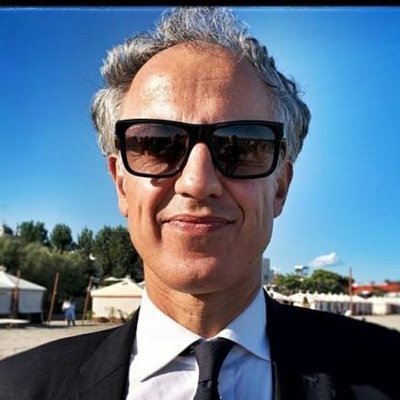
ITALY'S FORMER PRESIDENT ON 9/11:
"The Italian intelligence agency, knows very well the catastrophic attack was planned & carried out by the CIA & Mossad, with the help of the Zionist world, to accuse Arab countries & to persuade Western powers to go into Iraq & Afghanistan."
Francesco Cossiga,
former Italy President
Corriere della Sera, 2007
Pelayo retweeted
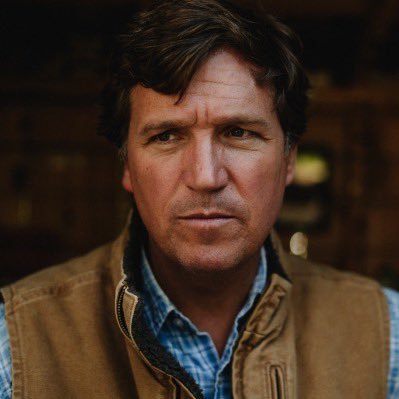
What kind of government would push gambling, porn and drugs on its own population? Saagar Enjeti on who’s getting rich from the destruction of young men in America.
Pelayo retweeted

The Israeli education system is utterly collapsing. That is one of the main reasons for the move of the country towards complete genocidal theocratic barbarity. The numbers are stark:
1) Only 3% of ninth-graders tested in science in 2025 reached the ministry's own curriculum-compliance threshold. 54% failed the test outright. English in ninth grade, published about two weeks earlier: roughly 20% of students met the standard the ministry expects. The Education Ministry cancelled the publication of the numbers.
2) Teachers are not qualified to teach. In elementary school, only 25.4% of Hebrew teachers, 37.0% of mathematics teachers have a matching academic or training background. In junior high and high school the numbers are between 65%-75%. In many cases, the least qualified teachers are the ones with the most longevity.
3) The teachers are becoming less and less qualified: the share holding a first degree from a university fell from 38.6% in 2011 to 32.1% in 2020. By subject, to 2022: language teachers with a university degree fell from 55.1% to 41.7%, mathematics from 37.3% to 31.2%, English from 41.5% to 35.3% and now the numbers are no longer being published but are reportedly getting worse annually.
4) There is a shortage of 30,871 qualified teachers, leading to overcrowding in classrooms and decreased academic achievement.
5) This is starting to show mong adults. 38% of Israeli adults aged 25 to 64 sit at the lowest level of reading literacy, against an OECD average of 27%, placing Israel fifth from the bottom among developed countries.
6) 420,000 students studied in Haredi education, elementary and post-elementary, many of whom either do not study core subjects like English and math at all, or do so very partially. They are now 27% of students in Hebrew education and 21% of all students in Israel. By 2050 their numbers are set to increase 211%.
The next generations of Israelis will be illiterate, uneducated and as a result, increasingly racist and religiously fanatic. This is partially a matter of policy and partially a matter of demography. Everything you are seeing going wrong with Israel today will only get worse. Much worse.
