
Published Researcher. Conduct Clinical Trials. Research nitric oxide, ASCVD and endothelium chemistry. BlackBelt Fudoshin Bujutsu. Port Adelaide FC .
New South Wales, Australia
Joined March 2020
- Tweets16.5K
- Following3.3K
- Followers4K
- Likes11.5K






Pinned Tweet
My latest publication in the Australian Veterinary Journal.
Researched natural agents can provide efficacy

Hypothetically if we can maintain perfect coupled eNOS and perfect youthful physiological endothelial nitric oxide is it possible for atherosclerosis to initiate?
GROK answer but please ask your own AI or Professor or peer
Answer:
Hypothetically, if we can maintain fully coupled eNOS and perfect youthful physiological endothelial nitric oxide, classical atherosclerotic initiation is not expected.
Core mechanism of risk factors
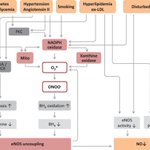
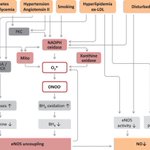
Virtually all major risk factors converge on increased superoxide production:
• Diabetes / hyperglycemia
• Hypertension / angiotensin II
• Smoking
• Hyperlipidemia / oxLDL
• Disturbed flow
• Lp(a)
• Aging
Superoxide (from NADPH oxidase, mitochondria, xanthine oxidase, and eventually uncoupled eNOS itself) oxidizes the essential cofactor tetrahydrobiopterin (BH4). This uncouples eNOS so that it produces superoxide instead of nitric oxide, generates peroxynitrite, and collapses NO bioavailability. Recent human data show that Lp(a) elevates arterial superoxide primarily through BH4 depletion and eNOS uncoupling, independent of ApoB.
Perfect coupling of eNOS plus youthful levels of endothelial NO blocks this convergent cascade at its critical point.
Additional protective actions of perfect endothelial NO that further prevent initiation
1. Restraint of PDGF and TGF-β → prevention of GAG hyperelongation and LDL trapping
Early atherogenesis follows the response-to-retention hypothesis. Proteoglycans (especially biglycan and versican) whose glycosaminoglycan (GAG) chains have been hyperelongated and highly sulfated bind and retain apoB-containing lipoproteins in the arterial intima. PDGF and TGF-β are the principal drivers of this GAG elongation in vascular smooth-muscle cells. Endothelial NO (via the cGMP/PKG pathway) inhibits TGF-β/Smad signaling and restrains PDGF responses, thereby limiting production of the “sticky” proteoglycan matrix that captures LDL. High youthful NO therefore removes a key early retention step.
2. Protection of the endothelial glycocalyx
The glycocalyx is essential for mechanotransduction of shear stress to eNOS activation and for maintaining barrier function. Physiological NO helps preserve glycocalyx integrity by scavenging the reactive oxygen species that cause its shedding. An intact glycocalyx supports continued NO production, creating a self-reinforcing protective loop.
3. Reciprocal regulation with caveolin-1 (Cav-1)
Cav-1 tonically inhibits eNOS within caveolae. NO can S-nitrosylate Cav-1, influencing caveolar structure, eNOS localization, and endocytosis. Perfect youthful NO maintains this balanced, functional relationship rather than the dysregulated state that occurs under oxidative stress.
4. eNOS functional reserve at bifurcations
Disturbed-flow regions (outer walls of bifurcations, lesser curvatures of arteries) normally exhibit reduced eNOS expression and activity and are the preferential sites of early lesions. Youthful endothelium possesses substantial eNOS functional reserve. Maintaining full coupling and high NO output buffers the impaired signaling that would otherwise occur in these low/oscillatory shear zones, keeping them non-adhesive and non-permeable.
Conclusion
All major pathways by which risk factors initiate atherosclerosis ultimately depend on tipping the endothelium into a low-NO, uncoupled-eNOS, pro-retention, pro-inflammatory state. Fully coupled eNOS plus perfect youthful endothelial nitric oxide prevents that transition. The additional effects on GAG elongation, glycocalyx integrity, Cav-1 balance, and local functional reserve at vulnerable sites close the remaining early loopholes.
Under this hypothetical, classical atherosclerotic initiation (endothelial activation + lipoprotein retention + monocyte entry) does not proceed.
PLAQUE BEGETS PLAQUE -a mechanisms hypothesis-all contributions to discussion welcome
Once coronary plaque is established (especially with high burden) three local factors can help it progress even when systemic risk factors are controlled:
1. Disturbed flow immediately downstream of the lesion
The plaque itself alters local hemodynamics, creating low shear or oscillatory zones similar to bifurcation regions. These promote further matrix remodeling and lipoprotein retention, allowing the lesion to lengthen.
2. Persistent elongated GAG chains in the matrix
Growth factor-stimulated (especially TGF-β and PDGF) hyperelongated GAG chains on proteoglycans such as biglycan remain in the fibrous cap, lipid core and deep intima for months to years. They retain spare binding sites that can still trap and modify LDL-even if new chain elongation elsewhere is suppressed.
3. OxLDL feedback loop
Retained and oxidized LDL can increase local PDGF and TGF-β, which in turn drive further GAG chain elongation and more retention.
Practical implications
-Intensive lipid-lowering therapy (LLT) deprives these residual elongated chains of substrate to bind.
-Sustained high endothelial nitric oxide bioavailability (via good metabolic health and low residual risk factors) is known to restrain TGF-β and PDGF signaling. Because these are the main drivers of GAG elongation, high NO bioavailability is hypothesized to reduce the ongoing supply of new hyperelongated chains.
Interestingly, both LLT and high nitric oxide bioavailability tend to remodel the same plaque regions where elongated proteoglycan GAG remnant chains are concentrated -the fibrous cap, the inner lipid core, and the deep intima (micro to macro calcification regions).
But neither LLT nor high NO rapidly clears the already elongated GAG chains deposited in the plaque matrix!
Any shift toward a matrix containing mainly shorter, less sticky chains would therefore take substantial time (likely a year or more for proteoglycan degradation and turnover) and would require risk factors to stay low enough to keep eNOS coupled throughout.
In short, measures sufficient to prevent initiation of atherosclerosis may not fully neutralize these three residual progression mechanisms once plaque is already present.
The residual elongated GAG chains, in particular, remain a plausible reason some patients still progress even at very low LDL-C (as seen in the 35.7% of the evolocumab arm in GLAGOV who did not regress) and warrant further consideration, including the importance of nitric oxide bioavailability.
But this may be analogous to bifurcation sites:
-they are permanent low-shear risk zones, yet they do not always develop plaque when endothelial NO functional reserve is high enough to buffer the disturbed flow and limit retention and remodeling. Combined with effective reverse cholesterol transport and efferocytosis, this can keep lipid accumulation below the threshold for meaningful plaque production
-and the same principles may similarly limit progression once plaque is already present.
A proposed structure of chondroitin 6-sulfate proteoglycan of human normal and adjacent atherosclerotic plaque.
-Longer GAG chains isolated from human plaque vs normal aorta
ahajournals.org/doi/10.1161/…
Hyper-elongated biglycan: the surreptitious initiator of atherosclerosis
pubmed.ncbi.nlm.nih.gov/1876…
Differences in the Distribution of Versican, Decorin, and Biglycan in Atherosclerotic Human Coronary Arteries
sciencedirect.com/science/ar…
Response to retention hypothesis as a source of targets for arterial wall-directed therapies to prevent atherosclerosis: A critical review
-PDGF and TGF-b elongate GAG chains to bind with LDL
atherosclerosis-journal.com/…
Nitric Oxide Regulates Transforming Growth Factor-β Signaling in Endothelial Cells
ahajournals.org/doi/10.1161/…
Endothelium Derived Nitric Oxide Synthase Negatively Regulates the PDGF-Survivin Pathway during Flow-Dependent Vascular Remodelling
journals.plos.org/plosone/ar…

My explanation of Lp(a)HORIZON trial results
Summary:
Lp( a) is shown to uncouple eNOS by superoxide production
Reduction of Lp( a) reduced total superoxide production but plenty of residual risk factor produced superoxide in these cohorts may have kept the net redox state above the threshold needed for meaningful recoupling, restoration of NO bioavailability, and interruption of lipoprotein retention chemistry.

Hi Borge
If looked at through the lens of coupled eNOS status on retention chemistry we may have an explanation
Elevated Lp(a) is linked to higher arterial superoxide production, primarily through eNOS uncoupling via reduced tetrahydrobiopterin (BH4) bioavailability, and this appears independent of ApoB.
academic.oup.com/eurheartj/a…
Classic risk factors also drive the same pathway:
Hyperglycemia/diabetes, obesity/adiposity, smoking, residual LDL (especially oxidized forms), and inflammation activate NADPH oxidases, mitochondrial ROS, and other sources.
The resulting superoxide and peroxynitrite oxidize BH4 to BH2, uncouple eNOS and further endothelial dysfunction and retention chemistry
ahajournals.org/doi/10.1161/…
In the Lp(a)HORIZON secondary prevention population the conventional risk factors were optimized
yet residual drivers of superoxide remained:
-Mean BMI 28.2–28.4
-Mean HbA1c 6.11–6.12% with 26–27% diagnosed type 2 diabetes
-14% current smokers
-Residual circulating Lp(a) still 64 nmol/L on pelacarsen
Reducing Lp(a) being one major contributor of superoxide in this trial
lowers total superoxide load…
….but if the other sources keep BH4 depleted and eNOS largely uncoupled, the net redox state may stay above the threshold needed for meaningful recoupling, restoration of NO bioavailability, and interruption of lipoprotein retention chemistry.
In established plaques the absolute incremental benefit over 4.7 years can therefore be small or undetectable.

Interesting …
The ‘nitric oxide pills’ were nitroglycerin but could this be emulated with inorganic nitrate supps?

Lying on a vibrating mattress for 40 minutes, combined with taking two pills that release nitric oxide into the body, enhanced the clearance of an Alzheimer's-related protein via the brain's waste-disposal system newscientist.com/article/259…

‘It’s the e̵c̵o̵n̵o̵m̵y̵ superoxide, stupid’
Noting that all the risk factors seem to have a shared mechanism of superoxide production…
Then …apart from one role of LLT being depriving a substrate to be retained and modified to make atherosclerotic plaque…
Is the other main mechanism of LLT simply reduction of superoxide secondary to LDL reduction?
( as opposed to the lesser lipid independent pleiotropic actions of one of the LLTs on eNOS)
Also noting in GLAGOV the net regression but still 35.7% plaque progression or similarly in Miami Heart paper 30% of cohorts with <70 mg/dL having plaque…maybe there’s another plank of treatment to be added looking closer at superoxide?
Plank 1:
lower risk factors which reduces their superoxide production
Plank 2:
LLT reduces LDL superoxide production
Plank 3:
Something that reduces superoxide at the source ( eg NADPH pathway which all the risk factors share)
Certainly large trials (HOPE etc) showed little or no benefit on cardiovascular events with Vit C and E
(Scavengers struggle to protect NO or prevent peroxynitrite formation unless present at very high local concentrations in which they can become pro oxidants
They also do not address the enzymatic sources of superoxide (NOX enzymes, uncoupled eNOS, mitochondria)
Maybe more research for this plank is warranted on:
-Polyphenol extracts with documented NOX effects and human FMD data (curcumin in bioavailable form, resveratrol, quercetin, cocoa flavanols, green-tea EGCG etc)
-MitoQ or CoQ10 for mitochondrial superoxide.
-Folate/5-MTHF to recouple eNOS and lower uncoupled-eNOS superoxide.
-Inorganic nitrate produced nitric oxide itself can ,at the early stage, inhibit NADPH pathway
Just food for thought ( possibly literally)

⬆️superoxide ➡️eNOS uncoupling➡️endothelial retention chemistry
Here’s a few papers showing LDL, similarly to the other risk factors, produces superoxide
Effect of native and oxidized low-density lipoprotein on endothelial nitric oxide and superoxide production : key role of L-arginine availability
pubmed.ncbi.nlm.nih.gov/1072…
‘Native low-density lipoprotein increases endothelial cell nitric oxide synthase generation of superoxide anion’
pubmed.ncbi.nlm.nih.gov/7543…
‘Endothelial NADPH oxidase: mechanism of activation by low-density lipoprotein’
pubmed.ncbi.nlm.nih.gov/1474…

1
110
More on nitric oxide and glycocalyx health
Hi David,
Reducing risk factors by pursuing metabolic health reduces the glycocalyx damaging superoxide pool…
…but also helps keep eNOS coupled to ensure adequate physiological endothelial nitric oxide levels that protects the glycocalyx in 5 ways
1/ In individuals whose eNOS remains largely coupled the chronic “always-on” stressors on the glycocalyx that @earthling is correctly referring to
(disturbed flow at branch points- but also aging and Lp(a) superoxide)
can be buffered.
Similarly damaged glycocalyx impaired mechano transduction shear stress signalling of eNOS can be buffered by a largely coupled eNOS with good functional reserve
The local superoxide load then stays below the threshold that degrades the glycocalyx enough to allow sustained LDL passage ,
This explains why we can often see no plaque in these prone regions
2/ Nitric oxide suppresses NADPH oxidases (S-nitrosylation of p47phox, HO-1 induction) meaning nitric oxide can inhibit the major superoxide production pathway all risk factors share
3/ Nitric oxide inhibits glycocalyx shedding enzymes
4/ Nitric oxide inhibits oxLDL formation
A less known fact is that the superoxide production by native LDL can only occur after it passes through the damaged glycocalyx and comes to the endothelial surface (all the other risk factors can produce superoxide intrinsically regardless of the health of the glycocalyx)
But the very small amount of oxLDL in the circulation can produce superoxide extrinsicly and damage the glycocalyx directly
5/ Nitric oxide inhibits AGE formation , is anti-inflammatory, anti-oxidative and anti- thrombotic
In summary understanding the interdependent, reciprocal and protective role of nitric oxide on the glycocalyx then gives us another weapon in our armoury for glycocalyx protection beyond and supporting reducing risk factors
⭐️Boosting endothelial nitric oxide with dietary inorganic nitrate or supplements
Importantly nitric oxide also inhibits endothelial retention chemistry for any LDL that does get through the glycocalyx
Good eNOS functional reserve also may explain no plaque with exposure to the risk factors including hypercholesterolemia for all these aforementioned reasons
As an example of what’s possible this paper shows nitrate supplementation reversing atherosclerotic IMT changes on a high fat high fructose diet whilst still eating it
anatomyafrica.com/index.php/…
This paper shows boosting eNOS function reverses atherosclerotic IMT changes in smoking rat model whilst still smoking
repository.unair.ac.id/13331…
In both these instances of atherosclerotic IMT reversal could we presume also glycocalyx integrity restoration?
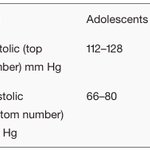
Finally, this paper in the photos shows too little or too much nitric oxide degrades the glycocalyx with no other risk factors superoxide present
( too much supra physiological NO can uncouple eNOS )
@markkaplan20


One of the more comprehensive articles
Ageing modifies the oral microbiome, nitric oxide bioavailability and vascular responses to dietary nitrate supplementation
sciencedirect.com/science/ar…

Cant wait for home portable FMD devices to be available (wearable version technology also only a few years away)
Then we can immediately assay our diet, risk factor, supps and meds where we are concerned- our arteries
Possibly a much better assay of metabolic health than traditional markers which may not show endothelial reserve
Noting that endothelial dysfunction precedes atherosclerosis this would be great to help with primary prevention but also for secondary cohorts with existing plaque improving FMD% may help slow/ halt/regress/ stabilise plaque
This paper below shows the effects of some foods on endothelial function- imagine also applying it to your supps , meds and risk factor improvements to see what’s working or not.
Immediate readings also -don’t have to wait for a month for trends to be seen
The effects of whole foods and dietary patterns on flow-mediated dilation: a systematic review and meta-analysis of randomized controlled trials
pubmed.ncbi.nlm.nih.gov/4097…
This paper showing early endothelial dysfunction in FH children being detected by FMD - before any structural changes!
researchgate.net/publication…

4
320
Peter J Anderson retweeted

Health benefits of beetroot supplementation in older adults: A systematic review of blood pressure and functional implications
Highlights
▶️ Beetroot extract supplementation enhances nitric oxide bioavailability, which is vital for improving vascular health and mitigating age-related physiological decline in older adults.
▶️ Functional outcomes, such as knee extension velocity and maximal power, consistently improve with beetroot supplementation, while blood pressure results are variable.
▶️ Despite increases in plasma and urinary nitrate and nitrite levels, significant reductions in blood pressure were not observed, indicating potential limitations in cardiovascular benefits.
sciencedirect.com/science/ar… @_INPST
@nuclearball


Interesting
Lowering salivary pH with sugar-containing gum augments salivary nitrite production and blood pressure reduction with dietary nitrate (beetroot juice)
👉Our aim was to determine the acute relationship between salivary pH, salivary nitrite production, plasma [nitrite] and the BP-lowering effect of dietary nitrate, by altering salivary pH using sugar-containing chewing gum (vs. sugar-free chewing gum).
👉 Methods: We performed a 7-h crossover study, with 14 healthy volunteers consuming beetroot juice (Beet-It®, 70-mL, ~400-mg nitrate) and randomized to initially chew either sugar-containing acidic chewing (bubble) gum or sugar-free non-acidic chewing gum, with the alternate gum on the second visit.
👉Results: Sugar-containing gum decreased salivary pH by 1.4 ± 0.09 vs. sugar-free gum (p < .0001). While there was no significant effect on salivary nitrate secretion or plasma [nitrate], salivary nitrite production was increased by 45% (30.0 ± 11.0 μmol·h-1; [p < .01]), with plasma [nitrite] increasing by 25% (222.2 ± 50.3 nmol·L-1; [p = .0001]). Systolic and diastolic BP were decreased by 2.7 ± 0.5 and 1.9 ± 0.5 mmHg, respectively (both p < .0001).
👉Conclusion: Acutely lowering salivary pH (with sugar-containing gum) augments salivary nitrite production, plasma [nitrite] and BP-lowering with dietary nitrate. This mechanism has potential to enhance other nitrate-nitrite-NO pathway effects, for example, exercise performance.
pubmed.ncbi.nlm.nih.gov/4231…
eNOS function and great physiological endothelial nitric oxide is the heavy hitter in glycocalyx and endothelial integrity
Nitric oxide has a protective and reciprocal role
eNOS health and nitric oxide is the heavy hitter in protecting the wall (glycocalyx and endothelium)
Nitric oxide inhibits ox LDL ( and AGEs) but also has a reciprocal protective relationship with the glycocalyx including inhibition of shedding enzymes
Studies show too much or too little nitric oxide damages the glycocalyx independent of any other risk factors
( supra physiological nitric oxide can uncouple eNOS)
Risk factors can extrinsically damage the glycocalyx but uncoupled eNOS can damage the endothelium intrinsically in a healthy intact glycocalyx
Regardless of much increased LDL entry from a damaged glycocalyx via pathological junction cellular entry
…..Or hypercholesterolemia upregulated physiological trancytosis…..
…..Retention still decides what is retained and modified
-again much governed by nitric oxide ( inhibits/ controls PDGF and TGF-b stopping GAG chain elongation to bind with LDL - and much more)
-otherwise if not retained this increased damaged glycocalyx pathological and hypercholesterolemia physiological LDL entry and accumulation into the subendothelial space ….just exits again unremarkably as does > 99% of physiological normal
trancytosed LDL
Also the risk factors extrinsic glycocalyx damage that impairs mechano transduction signalling of shear stress eNOS initially only reduces nitric oxide which is not as damaging as intrinsic risk factor uncoupling of eNOS adding peroxynitrite to the mix for endothelial damage
A good functional reserve of eNOS can resist impaired shear stress reductions of nitric oxide and it’s later uncoupling
- this is also demonstrated by and is the explanation why that in bifurcation regions we permanently have disturbed / oscillatory flow ( read impaired shear stress) ….but can have no signs of plaque
The reality is that both extrinsic and intrinsic actions can occur concomitantly and feed into each other via the uncoupling loop also noting that the intrinsic superoxide and peroxynitrite can add to glycocalyx damage
In Summary its adequate coupled eNOS and good nitric oxide that is the heavy hitter for both glycocalyx and endothelial health
Re the fireman analogy:
This is only pertinent post retention to the processes to the LDL not LDL itself ( as Mark has described )
Pre retention I can’t see any helpful attenuating role of LDL produced superoxide in ASCVD ( not withstanding necessary systemic hormone and immune roles etc )
Inhibition of low-density lipoprotein oxidation by nitric oxide. Potential role in atherogenesis
pubmed.ncbi.nlm.nih.gov/8224…
Nitric oxide inhibits the formation of advanced glycation end products
pubmed.ncbi.nlm.nih.gov/1101…

3
19
1,857