

Founder & CEO of Black Luster Recordings @BLACKLUSTERHTX, A “Perfect Pitch” Saxophonist, Comedian, & Male Model. NadirSaxWinds Artist.
Houston, TX
Joined May 2011
- Tweets75.1K
- Following104
- Followers912
- Likes2.3K








Philippe Edison retweeted
This is why Bob Doyle and Dan Quayle were trying to stop rap music in the 90's. #exposingwhitedaughters
Philippe Edison retweeted

Major fun with my son Brandon, in Las Vegas! Chilly golf! #geraldalbright #golf #like #share #follow

Philippe Edison retweeted

When you tell people Michael Jackson was Crip affiliated they think you’re tripping until you start unpacking the evidence.

Philippe Edison retweeted
We’re coming to town, Norfolk, Va! Come out and celebrate the music with us! #geraldalbright #like #share #follow #bethere


Philippe Edison retweeted

Berklee’s Music Business/Management Department will cohost the first Boston summit of the Music Managers Forum-US on Saturday, December 2. berklee.edu/berklee-now/news…


Philippe Edison retweeted

Thanks Catalina! We had a blast. Next up @chandlerarts October 27th and @smithcenterlv October 28th!


Philippe Edison retweeted
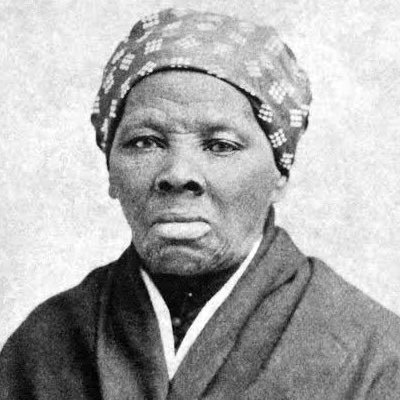
September 20, 1958, Martin Luther King Jr. in the hospital after being stabbed in a Harlem department store with a letter opener lodged near his heart.
— MLK Jr. Assassination Attempt —
On 20th September 1958, Izola Ware Curry, a 42-year-old mentally disturbed woman, stabbed Martin Luther King, Jr., while he signed copies of his book, Stride Toward Freedom, at Blumstein’s Department Store in Harlem, New York. Curry approached King with a seven-inch steel letter opener and drove the blade into the upper left side of his chest. King was rushed to Harlem Hospital, where he underwent more than two hours of surgery to repair the wound.
Izola Ware Curry was born June 14, 1916 in Adrian, Georgia. She was married to James Curry. The couple lived in Savannah until the late thirties when they separated then Izola Curry moved to New York City. She lived on the top floor of a tenement house at 121 W. 122nd Street in Harlem. She worked as a domestic she was unemployed. Her mind, clouded with thoughts of fear, fear of a false enemy, began fail her. For years, Curry feared the N.A.A.C.P. She believed that the members of the organization were all Communists.
Her life was a series of troubles. Her marriage was troubled. Her life was troubled. Her mind was troubled. Her mind in turmoil, her reasoning gone, she took a letter opener and plunged it into to the breast of Dr. Martin Luther King on September 21,1958 in New York City. She was arrested at the scene and later found to be carrying a loaded gun. During her questioning by police at New York's 28th Precinct, Curry indicated that she believed the NAACP and King had been "boycotting" and "torturing" her. When asked why she stabbed King she replied, "if it wasn't him it would have been me, he was going to kill me." She was committed to Bellevue Hospital for observation and soon found not competent to stand trial.
On October 20, 1958, Curry was committed to Matteawan State Hospital for the criminally insane, where she was diagnosed a paranoid schizophrenic. To this day few people, if any, know of the whereabouts of Izola Curry, of even if she is alive. Surprisingly, journalists who would have ordinarily covered the case in great detail have not covered the entire event more. Few, if any, photographs of Izola Ware Curry exist.
Izola Ware Curry died on March 7, 2015 in Queens New York. She was 98.
Ms. Curry died in a nursing home, the last stop in the series of institutions that had been her home for more than half a century. Her death, confirmed by the office of the chief medical examiner of New York City, was first reported by The Smoking Gun, the investigative website.
The stabbing nearly cost Dr. King his life, requiring hours of delicate surgery to remove Ms. Curry’s blade, a seven-inch ivory-handled steel letter opener, which had lodged near his heart. If he had so much as sneezed, his doctors later told him, he would not have survived.
Note: if you love our posts, please consider supporting African-Archives with a donation. To donate, please visit our page at AfricanArchives.Support

Philippe Edison retweeted
Did you know Sports legends Jackie Robinson and Joe Louis were stationed at Fort Riley during World War 2!
The legendary number "42" and the "Brown Bomber" are pictured in 1942 during their time serving our country. Robinson was drafted and sent to Fort Riley for basic training. During Robinson's time at Fort Riley he passed all the requirements and applied for Officer Candidate School. Robinson along with several other black candidates' applications were dismissed due to their race. Louis used his popularity to campaign on behalf of Robinson and other prospective officers. As a result, the candidates were granted acceptance into the program due largely to Louis's efforts.

Philippe Edison retweeted
Philippe Edison aka Fox Hound “Bass” ’s own “Detroit”. Praise be to 𐤉𐤄𐤅𐤄 for a successful release and the separation of style by naming title of this artist “Philippe Edison” the composer and named artist open.spotify.com/track/2pJnr…

Philippe Edison retweeted
On this day in 1957, Nashville's all-white Hattie Cotton Elementary School was destroyed by dynamite blast when black kids integrated the school.
—On September 9, 1957, as 19 Black six-year-olds integrated all-white elementary schools in Nashville, Tennessee, white church members—including one local minister—organized a persistent and violent campaign to oppose the integration of Nashville public schools. Outside Fehr Elementary School, one person held a sign that read “God is the author of segregation” and pursued two Black children walking to the school. Outside three different elementary schools that same morning, Fred Stroud, a white minister, sought to dissuade white parents from allowing their children to be educated alongside Black children by preaching damnation for those who did not uphold segregation.
The next day, 100 sticks of dynamite were thrown into Hattie Cotton Elementary School and exploded. Patricia Watson, the one Black elementary student who had been in class the previous morning, did not return. No Black children returned to Hattie Cotton Elementary School the following year, and no one faced criminal charges for the bombing.
Though Brown v. Board of Education determined in 1954 that school segregation was unconstitutional, for three years white residents in Nashville relied on intimidation and organized political resistance to maintain segregation in the public schools. In 1957, Nashville finally developed a “stair step program” which permitted a few Black elementary school students to enroll in eight elementary schools in their zones.
Throughout the summer of 1957, white segregationists in Nashville held intimidation rallies to terrorize Black families. In the days leading up to the first day of school, as Black parents pre-registered their children for school, mobs of white church members gathered outside buildings with signs calling segregation the “will of God.” One leader declared that “integration can be reversed” and that “blood will run the streets” before Nashville’s schools were integrated.
By the morning of September 9, out of the 126 Black children eligible to attend all-white elementary schools in their zones, only 19 Black children matriculated. Reverend Stroud gathered crowds at Glenn Elementary to preach about the evils of integration, and white people in cars outside of Jones Elementary held signs emblazoned with KKK iconography and Biblical quotes. As opposition grew throughout the morning, white mobs crowded the sidewalks and threw rocks and bottles at Black children and their parents who attempted to pass through the crowd. By the end of the day, half of the white students at Glenn Elementary School—nearly 250 children—had not arrived, as white parents chose to deny their children education rather than permit them to learn alongside Black children.
That evening, 300 white people gathered downtown and continued to threaten Black families who sent their children to school. They strung an effigy in blackface from a stoplight with a note pinned to its chest that read “this could be you.” As the mob around Fehr Elementary grew to at least 400, white people burned two outbuildings located on the property of a Black family that had sent their daughter to the school. The mob also continued to burn crosses on lawns of Black families who had dared to enroll their students that morning.

Philippe Edison retweeted
Mahatma Gandhi the Racist. While living in South Africa, Mahatma Gandhi described black Africans as “savage,” “raw” and living a life of indolence and nakedness.
•He routinely expressed "disdain for Africans," and he also campaigned relentlessly to prove to the British rulers that the Indian community in South Africa was superior to native black Africans.
•One of the first battles Gandhi fought after coming to South Africa was over the separate entrances for whites and blacks at the Durban post office.
•Gandhi obiected that Indians were "classed with the natives of South Africa," who he called the kaffirs, and demanded a separate entrance for Indians.
•In a petition letter in 1895, Gandhi also expressed concern that a lower legal standing for Indians would result in degenerating "so much so that from their civilised habits, they would be degraded to the habits of the aboriginal Natives, and a generation hence, between the progeny of the Indians and the Natives, there will be very little difference in habits, and customs and thought."
