

Philosophy professor - currently writing a book on the concept of lived experience
Joined December 2019
- Tweets4.4K
- Following994
- Followers1.2K
- Likes26.9K






Patrick J. Casey retweeted

"it is what it is" I'm sorry are you an ontologist? Do you have a PhD in the study of being itself? Maybe you should leave the assertion of fundamental metaphysical truths to the experts
Patrick J. Casey retweeted

For @NewYorker I wrote about the Stanford Encyclopedia of Philosophy.
If you’re dispirited by recent strides made by non-humans, come read about one of the greatest collective intellectual achievements by humans.
newyorker.com/culture/annals…

Patrick J. Casey retweeted

Hey, hey! It looks like my argument on Psych Today might have some traction! psychologytoday.com/us/blog/…


A research administrator at the University of Kentucky objected on religious grounds to the pressure the university was putting on him to rely on AI in his work, and was able to secure a Title VII exemption from using the technology. dailynous.com/2026/10/30/hum…

Patrick J. Casey retweeted

There is literally a machine infiltrating all aspects of our lives, which many take to be conscious, that literally spits back to us our average everyday understanding of things. Its wild.
Patrick J. Casey retweeted
This is your periodic public service announcement that it is a MYTH that before Columbus everyone thought the earth was flat.
Read about that and similar myths in one of my essays on the alleged historical conflict between science and religion:
thepublicdiscourse.com/2025/…

Patrick J. Casey retweeted

Usually I try pretty hard to avoid stating the obvious, but these are special times: chronicle.com/article/harvar…


Patrick J. Casey retweeted

One hundred percent of professors will agree with this: College campuses are being suffocated by administrators bostonglobe.com/2026/09/09/o… via @BostonGlobe

Patrick J. Casey retweeted
Absolutely thrilled to have my essay on lived experience and identity politics out with @aeonmag:
aeon.co/essays/on-lived-expe…


Patrick J. Casey retweeted
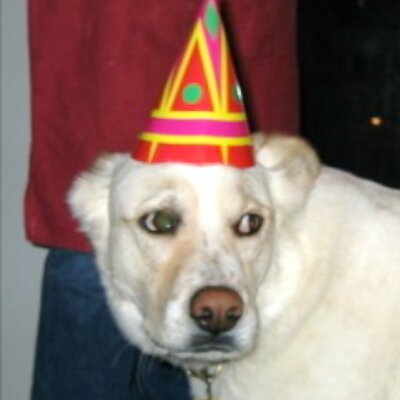
The great thing about dogs — one of the great things at least — is the rules that govern ranking other things don’t apply to dogs. I have never doubted that someone was telling the absolute truth when they said their dog was the best dog ever, even though I know for a fact that I’ve owned two of the best dogs ever and my current dogs will one day join them on Mount Rushmore as the four greatest dogs ever. It’s just not like mountains or money. There’s only one tallest mountain or richest person. But the number of obviously best dogs ever is almost infinite.
Patrick J. Casey retweeted
What philosopher do you think is simultaneously the most insightful and the most painful to read?
Patrick J. Casey retweeted

I figured a good deal of the 'pain' you were referring to was 'painful reading experience'--dry, hard to get through. Wittgenstein is, yes, lovely and passionate reading--but the solitude, the sense of radical alterity that makes his thought possible, is somatically painful
Patrick J. Casey retweeted

I strongly agree with this--AI is great as long as you have the expertise to ask the right questions and critical evaluate the output.
Otherwise, it seems to impair learning, foster overconfidence, and produce misleading output.

New Substack: : Students should only use AI for things that they already know how to do well.
dtwuva.substack.com/p/studen…
Patrick J. Casey retweeted

For @nytimes, I wrote about how great teaching in the algorithmic age involves getting a little weird: nytimes.com/2026/08/17/opini…
Patrick J. Casey retweeted
W.E.B. Du Bois on... AI?
In the true university, there should be "[n]othing new, no time-saving devices,-- simply old time-glorified methods of delving for Truth, and searching out the hidden beauties of life, and learning the good of living... 1/2


Patrick J. Casey retweeted
Joseph Joubert, 1800:
In our writings thought seems to move like a man who is walking straight ahead. On the other hand, in the writings of the ancients, thought seems to move like a bird that glides and advances by turning round and round.
(The Notebooks, tr. Paul Auster)