

Nonprofit Director / Volunteer Literacy Tutor / Wife / Mom / Child of God
Idaho, United States
Joined September 2016
- Tweets33.5K
- Following1.1K
- Followers2.9K
- Likes338K






Pinned Tweet
Unlock your reading and spelling potential, learn more about the Science of Reading.
thephonicspage.org
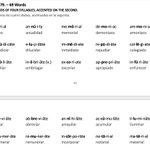
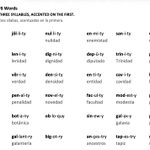
Gain years of progress in just 10 hours with our free video lessons. Phonics to the 12th grade level.
thephonicspage.org/syllables…
Elizabeth Brown retweeted

Somehow we've reached a point in education where:
- teaching kids explicitly is controversial
- academic rigour is treated as a threat to student wellbeing
- memorizing math facts is discouraged or considered unnecessary
- practice is dismissed as "drill and kill"
Low expectations are not kindness, and nothing hurts someone's confidence more than falling further behind every year.


Elizabeth Brown retweeted

For me a good script helps me insert specific activities that double or triple your dosage of a goal. For example, have students say the sounds when they write a ms word and then say the sounds when they erase the spellings. Small tweaks can truly increase effectiveness without requiring additional time.
I learned that trick from @ReadSimplified
Elizabeth Brown retweeted

A quiet classroom shouldn’t be something your parents have to earn enough money to buy you.
It’s crazy to me how often the people lecturing us about helping disadvantaged children object to enforcing the rules that would give them a chance at an education.
Elizabeth Brown retweeted

Educators - plenty of transparent information and training via this page to evaluate and compare the 'No Nonsense Phonics' programme with others: phonicsintervention.org/no-n… And take a look at examples of the complementary reading book series 'Phonics and vocabulary books': fliphtml5.com/bookcase/duafn… 😘

Elizabeth Brown retweeted

The anti-memorization movement has left millions of students unable to think. Every little operation consumes their working memory. Higher-order thinking becomes impossible.
Here’s an example:
Solving an equation is like moving puzzle pieces around. When basic arithmetic is automatic, the pieces are easy to move. You can focus on figuring out how they fit together.
But If you have to recalculate every basic fact, then every puzzle piece becomes a heavy weight. All your effort goes into lifting it. You have little brainpower left to figure out where it belongs. You can’t see the forest for the trees.
The same thing happens all the way up math, from arithmetic to algebra to calculus and beyond.
Each level builds on the skills below it. If those skills aren’t automatic, they’ll consume your brainpower. None will be left for higher-order thinking.
Elizabeth Brown retweeted

How many pre-worked examples should be on a math worksheet? One? Two?
It depends: Do the problems get harder?
If yes, then one per problem. 🧵

Elizabeth Brown retweeted
I agree. This is educational malpractice.

"Educational malpractice." 🚨
That's how @HeatherPeske of @NCTQ describes colleges of education that still don't teach the science of reading.
And she's right. When a teacher prep program skips the science of reading, it fails twice:
❌ It fails the teacher, who never learns how to teach the most basic building block of a child's education.
❌ It fails every child who ends up in that teacher's classroom.
Then Ron Noble Jr. said the part that should make everyone furious:
📍 Your child's chance of learning to read depends on their ZIP code.
States with strong literacy laws are pulling ahead. A child in Alabama or Ohio has a better shot at reading than a child in New York or California.
Reading shouldn't depend on where you live. It's a right, not luck. 📚
If this makes you mad, good. Channel it. Join us.
🎧 Listen to the full conversation: youtu.be/wQMrFu-zn9o?is=ENj4…
@FulcrumLiteracy @KJWinEducation
#ScienceOfReading #LiteracyIsACivilRight #ReadingJustice #TeacherPrep #LiteracyNowTogether #ParentsForReadingJustice
Elizabeth Brown retweeted

Teachers being told to do inquiry and then not doing full guided-inquiry is not evidence *against* an inquiry takeover.
It is evidence of *resistance* to the inquiry takeover because everyone intuitively understands that you need to explain things.
Elizabeth Brown retweeted
"Good" explicit instruction is only "harder" then other instruction in the sense that it's complex to design properly. But if someone else designs it for you, it's not particularly difficult to teach. It's arguably easier to teach.
Elizabeth Brown retweeted

The greatest barrier to a factual understanding of local school performance is the widely held perception that all is well.
Elizabeth Brown retweeted

"Pushing" kids (whether through encouragement, rewards, gamification, or just not letting them quit) works best for activities where there's a steep initial learning curve, after which the activity gets much easier/more fun
Learning to read is a great example of this.
I'm happy to shower my kids with encouragement and rewards for a few months, after which they're able to read independently and can appreciate the joy of reading for themselves

I am much more excited about what @NielsHoven is doing with early reading, because reading is in comparison a low-effort and enjoyable thing to commit to once you "get it." If we pop out more kids, I will subscribe them to Mentava.


Elizabeth Brown retweeted

Increasing math fact fluency shouldn't be that hard to implement. I use the Rocket Math Program. It does cost $99, but I find the cost worth it. If you aren't using anything you can also try Facts on Fire for free. The following graph is after 5 weeks of practice. The first assessment occurred after 8 days of practice. Twenty two days of practice occurred between the assessments. The chart shows number of problems correctly answers. Accuracy on the post test was approximately 99.5%. I followed the Rocket Math procedure for multiplication. It follows a peer tutoring format. One student practices saying the facts out loud like 8 x 7 = 56. The tutor provides feedback if incorrect, says the correct fact and makes the tutee say the correct fact 3 times before continuing. Each student practices for 2 minutes and there is a one minute timed test at the end. The other three operations students just take a 1 minute timed test. For homework, students practice by answering all the questions around the outside of the worksheet. In Rocket Math the facts slowly build up. Only one or two new facts are introduced each time. I don't follow the mastery recommendation. I find I can always go back with a few students after the whole class finishes levels A-Z. Each student completes just over 10,000 problems in about 6 weeks. Between class and homework students spend about 14 minutes daily on this (9 in class and 5 for homework). The graph shows the class average per operation from 9/18 to 10/23.

Elizabeth Brown retweeted

You know what’s joyless? Illiteracy. You know what else? Being so poorly educated that you are at the mercy of relying on people to explain things to you and hoping they’re not misleading you.

Elizabeth Brown retweeted
Teens are my jam. After 5 sessions, one of my private clients came in and told me that she wrote 5 words without needing to stop to think how to spell them! These are words like perception, invisibility, and beneficial. Huge. I will always remember the sparkle in her eye!
I am so grateful for @EBLIreads and @ReadSimplified that have helped me streamline my process for these students. Success builds motivation which increases engagement. These are key factors in literacy intervention found in the IES guidelines for adolescents. And we finally have a pedagogy that addresses these factors for our older students.
Elizabeth Brown retweeted

I love it. And since she has the script and routines so down cold you see how closely she can listen when the students go individually. She turns her ear to the student and takes it in and can think about whether she should say “one more time” or “you got it”
Chants and responses in unison just like this are really fun for kids. Collective effervescence
Elizabeth Brown retweeted

I used to tutor a middle schooler in writing and while we were working together I helped motivate him to enter a writing competition
He was hesitant at first and a little nervous to put his writing out there but he ultimately did
He didn't win but he enjoyed the experience
Fast forward to today, his mom texted me saying that he takes his writing so seriously, enters competitions all the time, and just recently won one
Having helped him do one competition is cool and all
But knowing that I helped create more of a lasting impact/change is so rewarding and one of the best parts of this job
Elizabeth Brown retweeted
This is a great assessment pdf for children who are struggling to decode and encode compared with their peers - name, date, add the actual age of the child when assessed: phonicsinternational.com/Tri… You can find the pdf and other great professional docs here: phonicsinternational.com/fre… You can use it with any phonics programme!
Elizabeth Brown retweeted

Sold a Story Season 2 exposes how the government’s education system rejected a proven teaching method that works — and why that protects the power of the adult jobs machine.
Strong Direct Instruction in general education (Tier 1) would shrink the need for extra help layers (and the staff/funding that go with them).
Most schools use MTSS: a tiered three-level system. Almost everyone gets regular classroom teaching (Tier 1). Some get small-group extra help (Tier 2). A few get intensive support (Tier 3), and some end up in special education. The idea is to catch problems early.
Direct Instruction is a specific, tightly scripted teaching method. Teachers follow clear lessons, kids respond frequently, and material is broken into small steps so almost everyone masters it. Decades of research show it works especially well for kids who start behind.
When Tier 1 teaching is weak, more kids get pushed into Tiers 2 and 3. When Tier 1 is strong and efficient (as with high-quality Direct Instruction), far fewer kids need the extra layers. That means better outcomes for students and lower costs for taxpayers—fewer specialists, interventionists, and “we need more funding” requests that mainly expand adult jobs.
MTSS is the organizational system. Direct Instruction is a proven teaching method that can sit inside it. Used well in the regular classroom, it reduces the downstream demand for higher tiers.


The new season of Sold a Story is coming tomorrow. I've seen speculation about it. I think there will be some surprises. I'm interested to know what you think.
First two episodes tomorrow. Then one a week on Thursdays until Nov 19. features.apmreports.org/sold…
