

co-founder & chief of research @metacognitionai | ex - ml & sys eng @NASAArtemis , @NASAJPL | prev - @UCBerkeley
Joined March 2022
- Tweets719
- Following218
- Followers355
- Likes661






would love to know if she's seen what it does to retention. struggling to pull the ideas together yourself is a big part of how the material gets consolidated. better essays sitting on weaker memory traces would be a strange trade
396
i mean its inevitable , rn there are idk like 2000+ students ? When the first 2 batches came we still had that feasibility of getting selective attention and nurturing.
Well lets see where it takes maybe in next few yrs
1
16

well i partially agree, ig most ppl who joined sst apart from the folks who just came for the namesake.. where trying to get a way in which they can experiment with whatever they loved. I had that liberty from day one as i stepped there but things that i felt lagged and still do :
- sst is all about the peer group and for some really miraculous way 2027 and 2028 batch rlly saw some rlly good folks coming who became the ppl i work so closely with today apart from that the pedigree which the cllg claimed is never present.
- for me atleast , i didnt learn anything new coming to the cllg atleast in the form of knowledge which i might have gathered from the regular sessions etc, i mean the faculties of our batch are rlly lovely and i learn alot from them everyday but in a grand scheme things are nothing crazy.
- now Entrepreneur landscape i mean yes we had to build it from scratch i mean the first 2 batches had to build eveyrthing from scratch but this idea of putting every responsibility and call it student lead is just a way to disguise alot of ownership.
- my field of work is academic research and some shit load of analysis and system engineering. Well personally i feel I would have benefited more if i had chosen my original path of going to iiser or iisc or smthg or just choose the tier 1 cllgs i was getting, cause there is no research culture in this cllg when i stepped in and alot of things which has forged me today is smthg I have achieved myself totally and thats how i even cracked them.
Well apart from that the cons of the cllg which i genuinely appreciate is
- a cracked peer group which game me my whole team at @metacognitionai
- a very cooperative peer group where ppl are eager to learn
learn
- compensation to ppl who are doing some crazy shit like excemptions etc ( lowk i had like 2 yrs full excemption from everything )
- resource access ig my target from day 1 was to be in the top 1% of the cllg and get the best out of it maybe from events, resources etc. First access which normally other tier 1 cllgs are stuck in their whole resource access protocol.
I mean i like what sst gave out to me but personally its a love hate relationship for me and this is totally my experience and its purely subjective
2
4
133
in the grandeour of the proving of riemann's hypothesis, we keep forgetting the alarming segregation we are seeing in the world of academic research as AI grows stronger and stronger.
the question comes to this.. who gets the access to these "internal models" by providers like @AnthropicAI and @OpenAI .
i mean dont get me wrong the public models which we have are good yes, they have ability to do scientific reasoning yes, and even if these companies give us access to these internal models, we wont be able to use it in its full potenial ofc. ( noone is spending $22M USD worth of compute to solve Navier stokes equ.)
but the fantasy of what these internal models are and how they are being transformed to these millennium questions slaying machines is fascinating. i mean i dont think @__alpoge__ used Fable 5.2 for having those highly relevant and important conversations with claude for solving the RH right ? i mean yes they provide faster inference over chips from @cerebras or what not but this just shows a division of access.
i mean i have seen alot of chinese researchers who are best of the domain been asking for access to these models for better academic research but the power dynamics of frontier research is in such a state that few people are sharing their revolutionary work on inf/rl etc from Chinese companies like deepseek and zai whereas what we get from the american companies are some abstract blogs which contain some huge amount of larp and very less value prop.
is access to these internal models the only way to crack the hardest problems in science ? i mean not really but access to these models allow you to strengthen the directions of research. its a tool. ai is supposed to be a cognitive artifact which levent for sure did but should this be confined to a selective few ?
who knows ? im not sure more like im conflicted abt this.
there is so much to solve and until we try to think of scientific research as a collective success we will be living in a world of skynet or smthg soon.

5
219
yah i mean it would have changed alot of assumtions in all fields of mathematics and informatiks for sure.
15
ok so multiple sources like @MIT and official channels of @leanprover have confirmed that the proof of the riemann hypothesis by @__alpoge__ HOLDS TRUE !!
i dont think people actually understand the gravity of it and why this problem has been the most notorious of all. why it being true is so freaking important.
in short the riemann hypothesis says that the all the non-trivial zeros of the riemann zeta function lies on the line parallel to the complex axis passing through Re( s ) = 1/2.
now lets take 2 scenarios of 1) whats the consequences of it being true means 2) and what if hypothetically it was false.
1) if the riemann hypothesis is proved true.. it would confirm precise limits on how far the distribution of prime numbers can deviate from our mathematical estimates. Many results that currently depend on assuming the hypothesis would become established facts, strengthening parts of number theory and the guarantees behind certain algorithms.
so whats happening to prime numbers here, so as we know that the gap between prime numbers is not even like it can be formulated properly right like 2,3,5,7,11 etc..
so instead of mathematician asking what the next prime number is we normally ask what are the number of primes below a certain number X ? well we have a fair understanding of how to do it and do a smooth estimation but the actual count is fuzzy.
well the connections goes back to Euler when he showed that for s > 1 , the sum over all positive integers equals a product over only primes. this works because every positive integer has a unique prime factorisation and each factor expands into powers of its prime..
now riemann extend it to complex numbers and hence the hunt for it gave birth to the field of complex analysis in mathematics. he said that the zeta functions zeros are inputs where the extended function equals zero.. he discovered that these zeros supply correction terms that connect the smooth prime-count estimate to the actual count.
you can picture these corrections as overlapping waves, together, they describe the fluctuations in the distribution of primes..
and hence if RH is true ( which it is most likely ) then the nature of prime has been truly understood that their positions guarantee a particular bound on these fluctuations.
and this is like a wet dream of number theorists.
2) now well if somehow we had seen that RH was false then it would reveal that prime numbers have larger fluctuations than those limits allow and our good'ol mathematicians would need to reconsider results and algorithmic guarantees that depend on the hypothesis, although their conclusions would not automatically become false.
established results about the average distribution of primes would remain valid, so mathematics would continue with a revised understanding.
Either outcome would transform number theory, but neither would automatically break encryption or immediately change everyday technology. so no if riemann hypothesis was false the world wont have ended but surely it would have changed our assumptions of many areas of science where the hypothesis was assumed to be true and worked upon.
well we still dont know what the proofs look like but sure this is just mind blowing. 2 millennium questions gone.. ig all would be solved by this century itself.
yang mills is what excites me the most cause it was my field of study, the mass gap and quantum gravity. but yes ig the biggest impact would be if p=np falls someday.
math.mit.edu/~drew/grh/
2
7
381
Priyam Ghosh retweeted

IMPORTANT NOTE:
EBM are often presented as a particular form of probabilistic models.
This is a very common misunderstanding.
EBMs are *MORE GENERAL* than probabilistic models.
Probabilistic models are a special case of EBMs in which:
1. Energies can be turned into a probabilities through the Gibbs distribution. That requires a convergent and computable partition function!
2. The loss function has a probabilistic interpretation, e.g. negative likelihood.
But there is whole world of EBMs that are NOT probabilistic: they require no partition function or normalization, and they can be trained with lots of loss functions that have no probabilistic interpretation.
vc landscape in for deeptech in india is similar to your typical indian parents telling you that "what will you do learning creative arts, engineering karlo safe hai, ROI is big "
the heads of vcs are still the same return hungry ppl looking for quick money.
2
27
riemann hypothesis is known as the most notorious unsolved questions in the field of mathematics, well until today yes.
and ppl are kinda crazy about it, but do you even know what the riemann hypothesis is and why is it so important ? well lets get down from the hype surf board and try to understand it.
if we try to get the crux of what it actually is, it goes back to this beautiful bridge Leonhard Euler and Bernhard Riemann built between continuous complex numbers and discrete prime numbers through the zeta function
zeta(s) = sum of 1/n^s = product over primes of 1/(1 - p^-s)
( which honestly is the whole link between continuous analysis and discrete primes ).
when we extend zeta(s) across the entire complex plane, we get trivial zeros sitting neatly at negative even integers (-2, -4, -6, ...), and then these mysterious non-trivial zeros trapped inside the critical strip where Re(s) is between 0 and 1, which the conjecture says every single one lies on the vertical critical line Re(s) = 1/2.
but..why does that matter so much ?
think of it like each zero acting as a harmonic wave that dictates the error between the true prime count pi(x) and the smooth logarithmic integral Li(x) -> if all zeros stay locked on Re(s) = 1/2, primes stay as evenly distributed as mathematics allows.. whereas if even one strays off that line the whole distribution gets messy.
And if we look at how anyone tried to crack this over the past 167 years, it actually comes down to a really fascinating contrast
in a simpler parallel universe of polynomials called function fields ( where polynomials replace ordinary whole numbers ), mathematicians like Sergei Stepanov already proved the Riemann Hypothesis because with polynomials we can just take derivatives of auxiliary functions to force high-multiplicity vanishing and trap the zeros. ( which is very promising tbh )
the whole roadblock has always been that you simply cannot take the derivative of an integer right.
today, when @__alpoge__ dropped a four-page note claiming that he and @claudeai found a way to fake that missing multiplicity over the integers -> starting from a simplified Fourier-analytic toy problem ( a shadow of RH ), taking a prime-weighted von Mangoldt sum of length X, and running it through a sequential chain of sqrt(X) iterated theta lifts where each lift transports an automorphic form across symmetry spaces and mimics one order of derivative vanishing.
basically, you’re taking a von Mangoldt sum up to X (which is just a way of tallying primes and their powers, giving them different weights), and passing it through about sqrt(X) steps and each step is a theta lift ..(basically, moving the information into a different mathematical space so you can work with it differently).
the idea is to get this whole-number data into a form where tools like derivatives become useful for studying the patterns. so if X is a million, you’re talking about roughly a thousand of these steps.,..
Because the engine operates natively through automorphic forms rather than a special quirk of zeta(s), the exact same setup sweeps in the Generalized Riemann Hypothesis (GRH) too. ( which alpoge showcases in his remark pdf ig )
the way this proof actually looks right now is honestly pretty crazy tbh. 41 days... 250k + pages of proofs converted to lean code... its nuts.. idk if i should be happy or terrified but the idea is insane and proposes an extraordinary workaround to a century-old wall, though we still have to stay grounded here -> Lean's type-checker verifies that every logical step follows from the rules, not that the top-level definitions of zeta(s) have zero subtle formalization bugs or unintended assumptions.
until Lean experts finish auditing every single definition and mathematicians distill that 250,000-page beast into something human-scale, we still have to wait and see if mathematics' biggest mystery is truly solved..
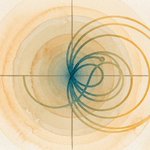
ps : look at this beutiful visual of the hypothesis


so we can rate our reviewers like giving a 5 star rating if they treat your paper good 😭😭
i hope my papers reviewer gets more stars than an Uber driver

GREATE NEWS, everyone!
Academia finally invented PEER REVIEW FOR ADVISORS.
LMAO 😂. Someone built YELP FOR PHD ADVISORS.
Fully anonymous. You can even rebuttal others' reviews.
Grad school just got a FEEDBACK LOOP 🫠
👉 openadvisor.net/


3
136
earworms look like a tiny attractor you keep falling back into.
a simple rise-and-fall contour at a fast tempo carves a deep, narrow basin, and almost any cue pulls you back in. curious whether the sticky songs also fade slower over the next few days
9
the wild part is that a reactivated trace drags the whole body state back with it. reads like an attractor spanning brain and gut.
curious whether the inflammation memory fades on the same timescale as ordinary traces or sits in a deeper well
13