

Plant-Prod is the world leader in soluble fertilizers and the partner for growers where high productivity is vital.
Brampton, Ontario
Joined May 2016
- Tweets984
- Following129
- Followers142
- Likes179


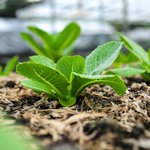

Native plants may perform well in landscapes, but greenhouse production is different. Research shows many native prairie plants respond well to fertility levels commonly used for traditional greenhouse crops.
#NativePlants #PlantNutrition

6
Native plants may be efficient nutrient users in nature, but container production is different. Soilless substrates have limited nutrient reserves, and inadequate fertility can affect plant size, quality and production time.
#NativePlants #PlantNutrition

There is no single “best” nitrogen form for every crop. Understanding how nitrate, ammoniacal and urea nitrogen behave helps growers make more informed fertilizer decisions.
#PlantNutrition #Fertigation #Horticulture
5
Total nitrogen doesn’t tell the whole story. A fertilizer’s guaranteed analysis shows how much nitrogen comes from nitrate, ammoniacal nitrogen and urea — helping guide fertilizer selection.
#PlantNutrition #Fertigation #Horticulture

15
Nitrogen form can influence substrate pH: nitrate tends to raise pH, while ammoniacal and urea nitrogen tend to lower it. Balancing these forms supports proactive fertility management.
#SubstratePH #PlantNutrition #Fertigation
5
Urea must first convert to ammonium before plants can fully utilize it. Because this process slows under cool conditions, urea use is often reduced during colder production periods.
#PlantNutrition #Fertigation #GreenhouseGrowing

8
Ammoniacal nitrogen can lower substrate pH as plants absorb ammonium and microorganisms convert it to nitrate. Managing the amount supplied is especially important under cool, low-light conditions.
#PlantNutrition #SubstratePH #Fertigation

8
Nitrate nitrogen moves readily through the substrate and can cause substrate pH to increase over time. It is commonly used in plug, liner and finished crop production.
#PlantNutrition #Fertigation #GreenhouseGrowing

11
Water-soluble fertilizers typically supply nitrogen as nitrate, ammoniacal nitrogen and urea. Each behaves differently in the substrate and influences plant uptake, pH and crop response.
#PlantNutrition #Fertigation #Horticulture

5
Nitrogen affects more than plant growth. The form supplied can also influence root-zone pH and nutrient availability, making nitrogen form an important part of fertilizer selection.
#PlantNutrition #Fertigation #Horticulture

11
Irrigation clogging is rarely caused by one factor. Physical debris, biological growth, chemical reactions, water quality and fertilizer compatibility can all play a role.
#Irrigation #Fertigation #PlantNutrition
4
Certain fertilizer combinations can react and form insoluble compounds within fertigation systems.
Understanding fertilizer compatibility and mixing interactions can help reduce the risk of precipitation and chemical clogging.
#Fertigation #PlantNutrition

8
Biological clogging develops when bacteria, algae and other microorganisms form biofilm inside irrigation lines. Once established, biofilm can trap more particles and accelerate clogging, making prevention important. #Irrigation #Biofilm #Horticulture

1
7
Chemical clogging occurs when dissolved compounds react and form insoluble precipitates inside irrigation lines. Water chemistry, pH and fertilizer compatibility can all contribute.
#Fertigation #PlantNutrition #Irrigation

6
Irrigation clogging generally falls into three categories:
1. Physical
2. Biological
3. Chemical
Each has different causes and management considerations. Understanding the difference helps growers make more precise decisions.
#Irrigation #Fertigation #Horticulture

8
Physical clogging happens when suspended solids such as sand, silt, organic debris or algae enter an irrigation system. Proper filtration is the primary way to reduce the risk.
#Irrigation #GreenhouseGrowing #Horticulture

5
Micronutrient availability depends on stability, pH, and compatibility. Sulphates can react and become unavailable, while chelated forms help protect nutrients across wider pH ranges. #PlantProd #Micronutrients #FertilizerCompatibility
5
Irrigation clogging can disrupt water and nutrient delivery, leading to crop stress, reduced uniformity and less control over fertigation programs. Understanding the cause is the first step toward reliable system performance.
#Fertigation #Irrigation #Horticulture

8
Nutrients can be present in a fertilizer program yet unavailable to plants. Precipitation, incompatibility, and increasing pH can reduce micronutrient availability and contribute to crop stress. #PlantProd #CropNutrition #Micronutrients

10
Iron chelate selection should match root-zone pH. Fe-EDTA suits lower pH, Fe-DTPA supports moderately elevated pH, and Fe-EDDHA is recommended for high-pH environments. #PlantProd #ChelatedIron #PlantNutrition

13