

Associate Professor @AU_SIS | Historical sociology; contentious & elite politics; empires; political economy; science, knowledge & technology; theory; China.
Washington, DC
Joined September 2010
- Tweets496
- Following814
- Followers29.4K
- Likes3.4K





Yang Zhang retweeted

「少談政治,多談發展」是如何成為中國社會常識的?這是社會學家徐曉宏在遺著《大分離:中國文化大革命與秩序經濟主義的政治起源》裡,試圖回答的問題。
2023 年 12 月,徐曉宏在美國安娜堡病逝,時年 45 歲。2026 年 10 月,徐曉宏生前三篇重要文章集結出版。他認為毛澤東並未事先設計好文革,當年的行動者並不知道,毛澤東會發動群眾鬥倒政敵。「文化大革命」一詞也並非一開始就有定義,而是隨著革命的變化激盪而生。
徐也指出,激進派為維護文革的政治純粹性,將工人爭取權利的訴求視為保守的「經濟主義」,認為只有奪權才是真正的革命。
因為文革突然打開的政治空間,工人得以用政治的語言控訴不平等,最終卻以被否定作收,革命也逐漸走向派系鬥爭與暴力。日後無論是黨內改革派還是自由派知識分子,都更傾向漸進的制度變化,對從下而上的激進政治抱有戒心。
1967年,毛派擔心「經濟主義」污染革命;改革開放以後的常識,卻是群眾政治妨礙發展。從「經濟污染政治」到「政治威脅經濟」,這一反轉正是《大分離》第三章要解釋的核心謎題⋯⋯
👉點擊連結,閱讀全文:buff.ly/RWnbaFG

Yang Zhang retweeted
人們普遍以為,中國社會遠離政治、埋頭消費的風氣始於改革開放。但在已故社會學者徐曉宏的遺著《大分離:中國文化大革命與秩序經濟主義的政治起源》中,這場政治與經濟的脫鉤,早在 1967 年文革的「一月風暴」就已埋下伏線。
當時,上海工人爭取工資、福利與平等權益的訴求,被毛派斥為必須打倒的「經濟主義」。現實生活的生計問題被逐出正當政治之外,政治淪為高層權鬥,失望的民眾轉而退回私人生活,掀起追求手錶、自行車的「大眾物質主義」。
這套邏輯歷經 1989 年,最終奠定了後改革時代的「秩序經濟主義」公式:國家負責發展經濟,群眾自覺遠離政治。
然而,這套運轉半世紀的共識正從兩端崩解:經濟放緩與生活壓力讓人們重新追問公平;而當維穩安全凌駕於經濟理性之上,原有的契約便難以為繼。評論更進一步追問:如果群眾從未真正掌握過自主的政治生活,這場「大分離」究竟是歷史的起點,還是僅是一次未竟實驗留下的深長陰影?
👉點擊連結,閱讀全文:buff.ly/0lk8C8Y

Yang Zhang retweeted

program being finalized. stellar lineup, cutting edge research, inspirations from the past & for the future. going to be a fulfilling feast, intellectually and gastronomically ssha2026.ssha.org/hps/SSHA20…

From my coeditor Robert S. Jansen: the offices release date is October 28, but the physical copy is already available!

Yang Zhang retweeted

Deeply honored to learn that After Positivism was awarded the Barrington Moore Book Award by the ASACHS. A joy to work on w/ @nickhwilson & contributors @Xiaohong__Xu @PacewiczJosh @BrundageStuart @ProfYangZhang @SimeonNewman @rjemigh & others not on X 🙏
cup.columbia.edu/book/after-…

Yang Zhang retweeted

Happy 250th! 🎉 New article in AHR: a Chinese tea chest label at Boston’s Old South Meeting House has long been displayed as a 1773 Tea Party relic. It isn’t one. Linguistic clues and a Cantonese merchant in Yokohama crack the case. academic.oup.com/ahr/article…

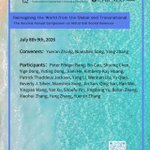
Join our second annual Historical Social Sciences Symposium “Reimagining the World from the Global and Transnational” at the University of Chicago Center in Beijing on July 8-9! We have lined up eight panels with 24 scholars from North America, China, and Europe. See you in Beijing next week!


Yang Zhang retweeted

Very happy to see that Cultural Revolution research is still going strong! I wrote my DPhil on this, will revisit at some point!


Yang Zhang retweeted

My new piece in @ForeignAffairs explains why it is so difficult for the Chinese government to stop misallocation of resources and wasteful spending, how waste in China differs from waste in democracies, and what it means for China’s development.

“Visibility projects reflect an uncomfortable reality for Chinese leaders: the Chinese state appears more capable than it actually is,” argues @leng_ning.
foreignaffairs.com/china/chi…

Yang Zhang retweeted

Ho-fung Hung on the persistence of dollar hegemony (@hofunghung):
'Every time the global economy plunges into turmoil, talk of the coming end of dollar hegemony resurfaces...'
newleftreview.org/sidecar/po…

Yang Zhang retweeted

My book Gender Identity: The Career of a Category was published today in the UK. It will be published in early August in the US, but the Kindle edition is available now. Print edition can be pre-ordered here: wiley.com/en-us/shop/general…

Yang Zhang retweeted

🚗🔋 Many think Beijing masterfully planned China's EV takeover. Fengming Lu (@ANUBellSchool ) and I spent 3 years and 60+ interviews finding out what actually happened in our latest article @TheChinaJournal. A thread 🧵


