

seismologist, Editor-in-Chief for #BSSA @SeismoSocietyAm, adventure traveler, outdoor enthusiast
King Abdullah University
Joined May 2020
- Tweets2.1K
- Following321
- Followers2.5K
- Likes184


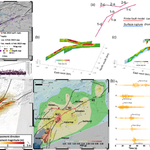


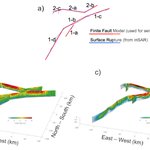

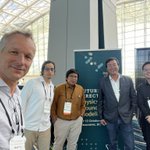
Great team work!

Published today @ScienceMagazine: Scale-dependent fracture energy as simple explanation for earthquakes observed across all scales with implications for earthquake nucleation & multi-fault rupture cascades with @BeyondTremors @KadekPalgunadi @Prof_QuakeMod
science.org/doi/10.1126/scie…

Earthquake Alert! The huge M 7.7 quake in Myanmar today (6:20 UTC; 13:30 local time) on the Sagaing Fault, expected rupture length 200-250 km, is likely cause to wide-spread damage and many fatalities. Damage reports & videos of shaking effects are accumulating. Be safe, Myanmar!

Martin Mai retweeted
Published today @ScienceMagazine: Scale-dependent fracture energy as simple explanation for earthquakes observed across all scales with implications for earthquake nucleation & multi-fault rupture cascades with @BeyondTremors @KadekPalgunadi @Prof_QuakeMod
science.org/doi/10.1126/scie…
PAPER ALERT --
Our study "Fault-size dependent fracture energy explains to multi-scale seismicity and cascading earthquakes” in SCIENCE today, with co-authors @InSeismoland @KadekPalgunadi @BeyondTremors @CES_KAUST
science.org/doi/10.1126/scie…
Check it out! @KAUST_PSE @KaustResearch


Martin Mai retweeted

Microseismic Event Location with Dual Vertical DAS Arrays: Insights from the FORGE 2022 Stimulation #SRL
Two vertical DAS boreholes, part of the Frontier Observatory for Research in Geothermal Energy (FORGE) project, could help with microseismicity.
buff.ly/4dnIgIL

Martin Mai retweeted
The crust and upper mantle of the Middle East and southwest Asia is complex. Scientists from Livermore_Lab explore these complexities with a new model of seismic wave speeds created with openly sourced data. For details, check out the new #BSSA paper.
buff.ly/4aMKNdI

Martin Mai retweeted

This male sumatran orangutan is Raku: he got a wound on his right cheek. Scientists were surprised to spot him applying a medicinal plant on his face: akar kuning (Fibranaurea tinctoria), a type of climbing vine that acts as an analgesic.
After about 8 days he applied the chewed stems and leaves of the plant, the wound began to heal and in approximately a month he completely recovered.
This series of observations undoubtedly constitutes the conclusive proof of the level of ingenuity that these majestic animals have.

Martin Mai retweeted
In a new #BSSA paper, @NorthwesternU scientists explore the long-term memory of a fault. Most models attribute variability of time between earthquakes to chance. But here, the team uses both chance and the state of strain for a given fault zone.
buff.ly/3UjtGcv

Martin Mai retweeted

Classmates and officemates during our PhD, some time ago. Today we had the pleasure of traveling together and shared several hours of nice chats. @Prof_QuakeMod ❤️

Workshop on "Saudi Arabia's Untapped Resource: Geothermal Energy" kicked off just now at #KAUST, in cooperation with TAQA Geothermal, the Saudi Geological Survey, the Ministry of Energy


Martin Mai retweeted
Engineering earthquake-resilient structures requires understanding how a specific site will move. A widely used proxy is the average shear wave velocity of Earth's top 30 meters, called Vs30. Scientists present a new way to predict Vs30. #BSSA
buff.ly/49lrZlq

Martin Mai retweeted

I started working on this 9 1/2years ago. Finally, it is published. This work was the motivation behind developing #BEAT and we published 3method papers until we had the tools that were needed. Great team work with @earthquake_andy , @Prof_QuakeMod , @Sjonni_KAUST

Vasyura-Bathke et al. Re-analyze the 1995 magnitude 7.2 Gulf of Aqaba earthquake (the largest on the Dead Sea fault in over a century) near the future city of NEOM (@NEOM), and show how the earthquake rupture jumped between different fault segments:
seismica.library.mcgill.ca/a…
A big step forward for geothermal energy in Saudi Arabia --
#KAUST and TAQA started drilling on KAUST campus. @Prof_QuakeMod of @KAUST_PSE leads seismic monitoring efforts together with Prof Matteo Ravasi and their teams
thinkgeoenergy.com/kaust-and…

Martin Mai retweeted
How can scientists infer the size of underground nuclear explosions using regional seismic data? A #BSSA article demonstrates a new way to extract source spectra, applied to North Korean nuclear tests conducted between 2009 and 2017.
buff.ly/3Ssimv8

Martin Mai retweeted
When the Peace River sequence began in Alberta, Canada, the Alberta Energy Regulator called it a natural earthquake. Later, a study said these were induced. How can you tell? Check out this #SRL paper
Paper: buff.ly/48iTuef
Press release: buff.ly/3v7NCWO
Martin Mai retweeted

I am sad to have to tell you that Paul Tapponnier passed away on Dec 24 in Beijing.
With Peter Molnar he was the father of indentation tectonics / extrusion processes in Asia. I had the joy and pleasure of working with him in many Asian countries.
Here 👇 in Myanmar

Martin Mai retweeted

Testing and Design of Discriminants for Local Seismic Events Recorded during the Redmond Salt Mine Monitoring Experiment
Rigobert Tibi, et al.
Seismological Society of America
Bulletin of the Seismological Society of America (2023)
hubs.la/Q02cxsBw0
@SeismoSocietyAm

Martin Mai retweeted

Lovely news!
1) GPlates 2.4 is out
2) It has built-in Scientific colour maps
Thank you to those who made it happen! 💫
gplates.org/news/2023-12-08-…
#UseBatlow @EarthByteGroup

ALT Screenshot of GPlates 2.4 with built-in Scientific colour maps by Fabio Crameri. #UseBatlow