

The good news is real. Here's the proof.
Planet Earth
Joined September 2026
- Tweets51
- Following64
- Followers10
- Likes18



Pinned Tweet
Welcome to Proof of Good News. 🌎☀️
The world has plenty of problems. We aren't here to pretend otherwise.
We're here because something else is also true:
Every day, diseases are being treated. Lives are being saved. Strangers are helping strangers. Species are recovering. Communities are rebuilding. Scientists are making breakthroughs. People are doing extraordinary things for one another.
Those stories deserve a place in your feed, too.
Our promise is simple:
✓ Real stories
✓ Credible sources
✓ No manufactured outrage
✓ No misleading clickbait
✓ The source included so you can see the evidence yourself
Medical breakthroughs. Heroism. Kindness. Charity. Human progress. Science. Conservation. And reminders of what people are capable of.
The good news is real.
We're here to show you the proof.
— Proof of Good News
@proofofgoodnews
5
76
Bhutan won the 2026 Earthshot Prize for Protect and Restore Nature on Nov. 17. The award brings GBP 1 million to support its conservation work.
Here's the proof:
earthshotprize.org/news/2026…

9
The FDA approved Gazyva, the first drug specifically approved for adults with primary membranous nephropathy. It's for adults at risk of the disease getting worse and aims to reduce protein in the urine to remission levels.
Here's the proof:
fda.gov/drugs/news-events-hu…

9
In a 26-person trial without a control group, people with stiff person syndrome walked faster on a timed test 16 weeks after experimental CAR T therapy. One participant had severe neck swelling and needed intubation.
Here's the proof:
jamanetwork.com/journals/jam…
8
Forsyth County's Meals on Wheels program delivered its 8 millionth meal on Nov. 9. The recipient was Ben Briggs, a 105-year-old retired science educator, according to the North Carolina governor's office.
Here's the proof:
governor.nc.gov/news/press-r…

9
Eight crew members rescued off the Philippines.
The Coast Guard brought all eight to safety after their boat sank off Cagayan on Oct. 31. Three were found to have hypertension, The Philippine Star reports.
philstar.com/nation/2026/11/…

11
Three passengers and the crew helped a mother deliver a baby boy aboard Guyana's MV Malisha on Oct. 31, the Guyana Chronicle reports. The mother and newborn were later taken to hospital for medical attention.
guyanachronicle.com/2026/11/…

19
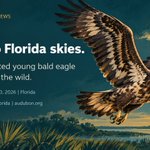
After treatment for a foot injury and rehabilitation, a young bald eagle returned to the wild at Florida's Alligator Lake. Audubon reports it is the 823rd eagle its Center for Birds of Prey has rehabilitated and released since 1979.
audubon.org/florida/news/aud…

86
A rafting team rescued a dog stranded after flooding in Gorkha, Nepal, Onlinekhabar reports. Animal Nepal and local authorities coordinated the effort after weather prevented a helicopter rescue.
english.onlinekhabar.com/dog…

28
He came looking for recyclables. Volunteers offered food, cold water and an invitation to return.
In Northriding, South Africa, Beanies for Beings later gave Amos clothing, toiletries and groceries too, Good Things Guy reports.
The proof:
goodthingsguy.com/recyclers-…

39
Their next challenge: the Marine Corps Marathon.
Nine wounded Ukrainian veterans joined its start line on Oct. 25, United Help Ukraine reports. It was the organization’s 10th consecutive year bringing wounded veterans to the race.
The proof:
unitedhelpukraine.org/report…

14
An extra year of school may have benefits that last a lifetime.
Researchers studied a 1972 UK education reform that required students to stay in school until age 16 instead of 15.
Using data from more than 100,000 people, they found lower dementia incidence decades later — with particularly encouraging results among people at higher genetic risk.
A powerful reminder that education can influence health long after graduation.
The proof:
nih.gov/news-events/news-rel…

14
Proof of Good News retweeted

Baby elephants don't learn to control their trunks until they’re about a year old.
In May, 3-year-old Keira was pulled from a swimming pool without a heartbeat.
Los Angeles firefighters arrived within minutes, began CPR and advanced care, and successfully restarted her heart.
Five months later, Keira stood alongside her parents as the firefighters who saved her life were honored. ❤️
A remarkable reunion — and a reminder of what skilled first responders make possible.
@LAFD
The proof:
lafd.org/news/lafd-fire-stat…
17
New hope for patients whose cancers have resisted treatment.
In an early clinical trial, an experimental immunotherapy stopped disease progression in 16 of 27 patients receiving its selected dose.
Four patients saw their tumors shrink by more than 30%.
The treatment works by selectively activating cancer-fighting immune cells.
It's still early-stage research, but these results offer a promising direction for patients with limited options.
The proof:
nih.gov/news-events/news-rel…
110 conservation projects. $35.5 million in new grants.
The National Fish and Wildlife Foundation and U.S. Fish and Wildlife Service are funding targeted efforts to help endangered and threatened species recover.
From restoring habitat to protecting rare salamanders and native fish, the projects aim to overcome specific barriers to recovery.
With matching funds, the investment totals $44.1 million.
The proof:
nfwf.org/media-center/press-…

7
A promising new approach to preventing premature birth.
Stanford researchers built AI-powered models of the immune system during pregnancy to identify potential treatments.
The models pointed to a combination of two existing medications. Follow-up animal experiments supported the finding, and researchers are moving toward a human clinical trial.
It’s not a proven treatment yet — but it could open an important new path for maternal and infant health.
The proof:
news.stanford.edu/stories/20…

20
Proof of Good News retweeted

A simple strip of wildflowers can dramatically reduce the need for chemical pesticides. So why aren’t they standard on every farm?
Farmers are increasingly planting colorful wildflower strips within and around their fields because these habitats attract beneficial insects that naturally control crop pests.
Ladybugs are the most familiar example. Both adult ladybugs and their larvae are voracious predators of aphids, small sap-sucking insects that damage crops. A single ladybug can eat dozens of aphids a day, while its larvae can consume hundreds before reaching adulthood.
Yet ladybugs are just the beginning. Wildflower strips also draw in hoverflies, lacewings, parasitic wasps, and predatory beetles, all highly effective natural enemies of common pests such as aphids, whiteflies, thrips, and caterpillars.
This approach is known as conservation biological control. Rather than releasing predators into fields, farmers create permanent habitats that support and boost populations of beneficial insects already present in the landscape.
The flowers supply essential nectar and pollen that many of these insects need as adults. Research shows that access to such resources significantly increases their lifespan, reproductive success, and pest-hunting efficiency.
Some parasitic wasps offer an especially impressive form of control: they lay eggs inside aphids or caterpillars, and their developing larvae consume the pest from the inside out.
Multiple studies confirm that fields with wildflower strips support far higher numbers of beneficial insects and achieve stronger natural pest suppression compared to conventional fields.
Beyond pest control, these strips provide additional benefits: they support pollinators, enhance biodiversity, reduce soil erosion, and create valuable wildlife habitat within agricultural areas.
Scientists are now fine-tuning which flower species work best for different crops and climates, aiming to design the most effective and practical wildflower strips possible.

Three people. Rushing floodwaters. Three successful rescues.
When heavy rain turned a Los Angeles flood channel dangerous, firefighters sprang into action.
Crews rescued one woman, used a helicopter to lift a man from the current, and deployed an aerial ladder to reach a third person clinging to a bridge support.
All three were taken to hospitals and are expected to survive.
The proof:
foxla.com/news/pacoima-water…

14
After more than a month trapped in a city canal, a shark nicknamed Bukangi has finally made it out. 🦈
In Busan, South Korea, rescuers tried twice to guide the shark toward the sea without success.
On their third attempt, divers and rescue teams used floating platforms and nets to guide her out of the canal.
She's now been spotted in harbor waters beyond the canal — a hopeful milestone after 33 days.
The proof:
en.yna.co.kr/view/AEN2026102…
1
77
A primate feared lost to science for nearly 100 years is still alive. 🐒
The critically endangered Bangka slow loris hadn't been documented in scientific literature since the 1930s.
Now, a new study confirms its survival in Indonesia.
Local rescuers documented more than 90 animals over a decade — and successfully rehabilitated and released 86.
It wasn't lost to local communities. Now the scientific world knows it's still here.
The proof:
rewild.org/press/bangka-slow…

1
28