

Universal outlook, social equality, economic democracy, cardinal human values, political subsidiarity, creating a new civilizational discourse.
World
Joined January 2018
- Tweets4.9K
- Following4.5K
- Followers1.2K
- Likes1.6K




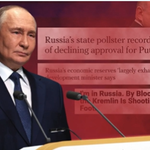
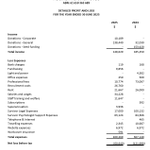
Lest anyone forgets ...
In the 1990s, the European project saw the birth of the European Union, the single market that ensured the free movement of goods and people across member states, the Schengen agreement for border-free travel, and the euro. The core idea was to extend peace across the continent.
"Europe can mean so many things, but the European project was not designed for war. It was designed for peace," said Kimmage.
During this period, there were even suggestions of Russia becoming a NATO member.
pbs.org/newshour/politics/st…

1
42
A Ukrainian victory, even if partial (meaning some territory is not reclaimed) that forces Russia to abandon further aggression would strengthen both collective and individual wellbeing in Germany and Europe primarily by lowering long-term security risks and unlocking economic opportunities that outweigh the short-term to medium-term costs of support for Ukraine. Provided that a long-term peace does actually occur and Russia ceases its aggression against Ukraine.
Russia has conducted an active hybrid campaign against Germany and other European states, including drone incidents at airports such as Leipzig/Halle, sabotage attempts on energy infrastructure, cyberattacks, and disinformation. German intelligence officials have described Russia as posing a direct and comprehensive threat, with Germany targeted in part because of its role as a major Ukraine supporter. A decisive or even near-decisive Ukrainian success against Russia would reduce the immediate risk of further Russian advances toward Moldova or intensified pressure on the Baltic states, and it would diminish the incentive for escalated hybrid operations aimed at fracturing European resolve. The problem is that Putin believes he can continue his war long enough so that none of this eventuates in favour of Europe.
Studies from the Kiel Institute estimate that a Russian victory would raise Germany’s annual costs by roughly 1–2 percent of GDP through higher defense spending (including additional brigades for the eastern flank), larger refugee inflows, and lost trade and investment. This is roughly 10 to 20 times the average annual military aid provided so far (around 0.1 percent of GDP). A Norwegian analysis of scenarios through 2029 similarly finds that a partial Russian victory would cost Europe roughly twice as much (€1.12–1.63 trillion range) compared to pathways supporting Ukrainian success. These higher baseline costs would constrain public finances for years, crowding out other collective priorities.
There are good economic opportunities for Europe from a free and integrated Ukraine. Reconstruction needs are estimated in the range of €500–600 billion or more. Analyses from the Vienna Institute for International Economic Studies frame this not merely as a burden but as a strategic opportunity for Europe. It would integrate Ukrainian industry into European value chains (automotive, defence, aerospace, electronics), develop renewable energy potential, and access critical raw materials. This would benefit local economies. Ukraine holds deposits of about 25 of the EU’s 34 critical raw materials, including substantial reserves of titanium, manganese, graphite, and lithium resources that could support European battery and green-technology supply chains and reduce reliance on distant or higher-risk suppliers. A stable, sovereign Ukraine integrated more closely with the EU would also open markets, shorten some supply chains, and generate demand for European goods and services during rebuilding. None of this actually reduces the self-sufficiency of any local economy. Defence-industry cooperation and lessons from Ukraine’s wartime innovation in drones and related technologies could further strengthen European capabilities. These effects support broader collective prosperity through growth, industrial resilience, and energy security over the medium to long term.
Individual freedom but responsible freedom with social obligations, security and prosperity are also at the heart of this vision. At the personal level, a free Europe underpinned by secure borders and a rules-based order provides the foundation for individual development. There is freedom from authoritarian pressure and freedom from disinformation campaigns that erode trust. As well, risk of energy or infrastructure disruptions are very much lessened, and these risks currently raise heating and electricity costs and interrupt daily life. Hybrid incidents already impose tangible costs and anxiety on people. So, a more secure environment reduces those personal risks.
Economically, the long-term gains of more stable energy markets once Russian leverage is curtailed, reconstruction-related employment and trade for German firms, and stronger overall growth, translate into better job prospects, incomes and fiscal space that can support social systems. Studies consistently show the alternative of a Russian-dictated outcome or prolonged frozen conflict is more expensive for German households and taxpayers.
Public polling in 2026 remains divided (with majorities in some surveys supporting continued or increased military aid, while others show rising desire for negotiations and concern about costs), but the economic analyses indicate that sustained support is aligned with German national-interest and doe not adversely affect the national interests of Ukraine or any other country. Currently, short-term trade-offs are real: energy price shocks after 2022, refugee and aid expenditures, and the need for higher defence investment have each imposed costs and political friction.
The evidence from independent institutes, however, indicates that allowing Russia to consolidate gains would amplify those costs over a longer horizon while forgoing the reconstruction and integration benefits. A free and secure Europe is not cost-free, but the data supports the claim that Ukrainian success is the lower-cost path for both collective stability and individual opportunity. Thus for the collective welling and individual wellbeing.
92
Russian “biolabs” are a network of state research institutes focused on dangerous pathogens, many with roots in the Soviet biological-weapons program.
The recent death of a technician at one such facility has drawn renewed attention to that history and to ongoing questions about transparency.
The Soviet Union ran one of the largest offensive biological-weapons efforts ever documented, under the civilian cover organization Biopreparat (and related military programs).
It researched and produced agents including anthrax, plague (Yersinia pestis), smallpox, and others, with facilities spread across the country.
After the USSR’s collapse, Russia inherited much of the infrastructure.
In 1992 President Yeltsin acknowledged the offensive program and ordered it shut down; subsequent Russian governments have stated that only defensive research continues.
Western governments and some former program participants have repeatedly questioned whether all offensive work fully ended.
A core part of the inherited system is the anti-plague network.
Institutes such as the Irkutsk Anti-Plague Research Institute of Siberia and the Far East (in Shelekhov) were established for surveillance, diagnosis, and vaccine work against plague and other high-risk infections endemic or historically present in parts of Russia and Central Asia.
These labs handle live pathogens under containment protocols.
The Irkutsk facility and others in the network have documented historical links to the broader Soviet biological program.
Similar institutes exist in places such as Saratov, Rostov, and Stavropol.
In early October 2026 a 28-year-old technician at the Irkutsk institute, identified in Russian media as Darya Shipilova, died after hospitalization with severe pneumonia.
Initial local and regional reports, including from the head of neighbouring Buryatia, described a possible pneumonic-plague infection and referenced an alleged broken test tube.
Russia’s public-health agency Rospotrebnadzor later stated the cause was “pneumonia of unknown etiology”, that testing found no pathogens linked to her laboratory work, and that no accident involving pathogenic microorganisms had occurred.
Roughly 200 contacts were placed under observation.
U.S. officials said they were monitoring the reports and urged rapid, open sharing of information.
No independent confirmation of either the laboratory-accident claim or a plague diagnosis has been publicly released.
Current Russian facilities continue work on dangerous pathogens for stated public-health and biodefense purposes.
International assessments note limited external access and verification compared with some other countries’ programs.
Claims of an active offensive bioweapons effort remain contested: Russian authorities deny them, while some foreign governments and analysts cite the scale of historical infrastructure, dual-use research, and opacity as reasons for continued concern.
The distinction between legitimate pathogen research and prohibited weapons development rests on intent, scale, and delivery systems.
For Russia, these details that are difficult to establish and there are few (if any) open sources.
The official story about a ‘plague’ death in Russia (Siberia) meanwhile is changing and leading to speculation about Russia’s vast bioweapons program.
87
In France the nationwide lycée/school blockades began in late September 2026 and have continued into early October. Pupils blocked schools over class sizes, teacher shortages, building conditions and hours. Some pupils even demanded they be paid to go to school considering it equivalent to working in a job. Others were upset that they could not take mobile phones to schools and use them there.
Parts of that movement turned into arson, smashed entrances and attacks on staff. The government and a Paris police intelligence note describe it as instrumentalized by La France insoumise (LFI) and far-left groups through student unions. Student organizers and some pupils say the grievances are local and that “casseurs” are harming the cause. They are “breakers” or “smashers.” In political and media usage, it usually refers to violent protesters or rioters who damage property, attack police, or engage in vandalism during demonstrations.
Documented damage includes fires at school entrances in Nantes (Nelson Mandela school) and Rouen. Also, the entrance of Lycée François-Mauriac in Bordeaux was destroyed by fire. Other schools have smashed doors and façades and bin fires, fireworks and projectiles have been used.
Education minister Édouard Geffray said at least 24 schools had been ransacked or set on fire. Regional estimates ran to about €7 million in Île-de-France (Valérie Pécresse) and €25–30 million in Auvergne-Rhône-Alpes if surrounding damage is included.
Interior figures cited more than 5,000 arrests from the start of the week through 2 October, most of them minors, plus injuries to pupils, staff and officers. In Marseille, staff at Victor Hugo school were reportedly splashed with petrol and a headteacher in Auchel was injured by a fireworks.
The political label of attaching this to the far Left is contested. But Matignon (Prime Minister's Office) and intelligence notes point to LFI and “ultra-left” proxies as organizers of the escalation. LFI denies directing the violence. Many of those arrested are school-age pupils, not party cadres.
Interestingly, earlier incidents of masked groups outside Lycée Gustave-Eiffel in Cachan in March 2024 a pro-Palestine occupation with damage at Lycée Hélène-Boucher in Paris in June 2024 show the same mix of student protest, far-left symbolism and unidentified vandals. A June 2024 ransacking of a collège in Baignes (Charente) left anti-RN and anarchist tags plus a swastika, so the perpetrators there were not cleanly identified either.

2
534
The ISS leak and whether investigators ever settled what caused the hole!
The famous hole was never "cleanly" cleared up in public. It was patched the same day and never threatened the crew, but the official story stopped at “someone drilled it” and then went quiet.
Take a look back. On 29–30 August 2018, ground controllers saw a small pressure drop on the ISS. The crew traced it to a roughly 2 mm hole in the orbital module of the docked Soyuz MS-09. That section is discarded before re-entry, so it did not affect the ride home. The crew sealed it first with tape, then with epoxy. NASA said the crew was never in danger; the leak was small enough that controllers did not even wake them when it first appeared.
Photos killed the first explanation, which was that it was a micrometeoroid. The story died quickly because the hole had drill marks and signs of a bit skidding across the metal, consistent with a hand-held drill from the inside. Russian Roscosmos chief Dmitry Rogozin said there were several attempts by a “wavering hand” and left open whether it happened on the ground or in orbit, accidentally or on purpose. Russian industry sources said a technician had drilled the hole on Earth, covered it with sealant so the craft passed vacuum checks, and that the patch later failed in orbit.
A December 2018 spacewalk confirmed the hole had been drilled from the inside and samples were collected of some materials. But that is as far as the public record goes! Why? Because you can't get anything about it from Russia.
In September 2019 Rogozin said Roscosmos knew exactly what happened but would keep it secret. In 2021 the findings were reportedly handed to Russian law enforcement. Around the same time a Russian tabloid pushed a claim that NASA astronaut Serena Auñón-Chancellor had drilled the hole. NASA rejected that treated it as baseless.
No named culprit, no published technical report, and no agreed conclusion on accident versus sabotage ever appeared.
The crew on orbit was cleared by both NASA and the cosmonauts on the ISS at the time.
A separate, later problem is often mixed up with that hole. Since 2019 the Russian Zvezda module’s PrK transfer tunnel has leaked through hairline structural cracks, at times losing on the order of a kilogram or more of air per day. Cosmonauts have sealed cracks repeatedly. NASA has called it a high safety risk.
Early in 2026 the pressure briefly looked stable after more patching; but leaks returned in May 2026, and in June 2026 new leak sites and a disputed repair plan briefly sent most of the crew into a Crew Dragon as a precaution. That is metal fatigue and aging hardware, not the 2018 drill hole, and it has not been permanently fixed.
136
What about the dumb-asses that supported Maduro?
Delcy Rodríguez, Venezuela’s acting president, has been quite willing to work with the United States—not as an ideological convert, but as a pragmatic operator trying to keep power after Maduro’s capture. What has she actually done?
Within days of taking over in January 2026, she publicly invited Washington to a “cooperation agenda” and dropped the usual anti-US rhetoric (had to be done for the sake of it).
Reporting later said she and her brother Jorge had already signaled to U.S. and Qatari intermediaries before the raid that they would work with Washington if Maduro was gone. So, certain people in Venezuela wanted Maduro out.
Since then she has:
restored diplomatic ties
hosted U.S. officials and oil executives
given the U.S. substantial oil access (reports include a deal ceding a large share of reserves)
extradited figures Washington wanted
joined operations against Tren de Aragua (gang)
gotten personal U.S. sanctions lifted
publicly thanked Trump at the UN in September 2026 for “diplomatic relations and cooperation”.
Leftists can't understand this, because they are not pragmatic. They live in an ideological vacuum.
Trump has repeatedly praised her. The U.S. has treated her as the person it can deal with.
What about the limit of that willingness? Well she is a lifelong Chavista. So, the pattern so far is: concede on oil, security cooperation, and some prisoners, but keep the ruling-party machine intact. This is how socialist operate anyway. Also, talk about elections without setting a firm date. She may even still treat Maduro, in official rhetoric, as the “legal” president who was “kidnapped”. But no one cares about that, not even in Venezuela.
So she is willing to cooperate when it protects her position and the regime’s core. She is not offering a clean handover to the opposition or an immediate, unsupervised democratic reset. Washington has accepted that bargain for now because it gets oil, access, and a pliable interlocutor. Venezuela’s opposition and many analysts call it regime continuity with a friendlier face.
Bottom line: High willingness to deal with the U.S. on energy, diplomacy, and selected security issues. Low willingness to dismantle Chavismo or hold elections on anyone else’s timetable (not usual behaviour for socialists though).
44
Mistiqueal Story
It was the morning of 14 September 1982. Baba came out of his room and told me to gather a few good singers, especially those who had a good knowledge of music, and keep them ready when he called for them. He said, “I am giving you half an hour to bring them.”
It was barely 4:30 in the morning, but I managed to gather four or five people whom I knew to be good singers. Devatmananda was among them, and Didi Ananda Gita was also one of them.
Baba was still inside his room. The door was slightly open, and I could hear him humming a tune inside. After some time, he came out and sat down.
He said:
“I want to say something about songs. Many Margiis sing devotional songs, but they sing without any systematic or recognized musical tradition. So I am thinking of starting a new gharana (school of music), which will benefit everyone. But first, I want to know your opinion. Do you think people will be interested in it?”
We all responded very enthusiastically. We knew how much the Margiis would appreciate it, and we told Baba so.
Baba said:
“Then let us take it forward. Let us start it right here, from Deoghar.”
Baba then began singing the same tune that I had heard him humming in his room. He asked the workers to repeat the tune and sing it back to him. Once he was satisfied that they had memorized the tune correctly, Baba sang the words along with the melody. The workers wrote down the words and then sang the complete song before Baba.
After they had finished singing, Baba asked:
“How did you like this song? Shall we keep it and make it the first Prabhat Samgiita?”
We replied:
“Yes, Baba. It is very beautiful—the words as well as the music.”
Baba asked:
“Are you absolutely sure? If you do not like it, I will cancel it.”
We said:
“No, Baba, please do not cancel it. We like this song very much.”
Baba said:
“All right. If you accept it, then let this song remain.”
Thus, the first Prabhat Samgiita—“Bandhu He Niye Chalo” (বন্ধু হে নিয়ে চলো)—was given.
78
Speech by Federal Chancellor Friedrich Merz
on the Budget Act 2027 before the German Bundestag on 9 September 2026 in Berlin:
Bulletin 82-1
September 9th, 2026
Madam President,
Dear colleagues,
Yes, Ms. Weidel, today you can hardly walk with your strength. They have achieved an election result in Saxony-Anhalt that is remarkable in every respect. And no one can blame you for concealing the true intentions you associate with it here. But I would like to point out that you have not achieved your actual election goal in Saxony-Anhalt, to achieve a majority of mandates. 56 percent of the voters in Saxony-Anhalt did not vote for you, ladies and gentlemen.
The polling stations had not yet closed for six hours when you called on your top candidate in Saxony-Anhalt to commit the first electoral fraud when you told him to look for a majority, even though he had made the election promise to govern only with an absolute majority of mandates. Ms. Weidel, yes, it could even be more than just a lucky coincidence that you did not achieve exactly this election goal. The voters have spoken quite clearly. You have also given us, including me, a clear message. But you don't have an absolute majority, and you won't achieve it in Germany either. Nowhere in Germany will you get a majority with this policy.
You are and you will remain, Ms. Weidel, a destructive force. And you have just made clear once again how far this goes in your article on Ukraine.
For four and a half years, this country has been fighting for survival. Let me say it again calmly: we support Ukraine, and we will continue to support it, because it also defends our freedom, including here in the middle of our European continent. And your reactions, ladies and gentlemen, only show that you obviously intend to continue the almost grotesque reversal of perpetrator and victim. It is a grotesque reversal of perpetrator and victim. No one has threatened Russia – not NATO, not the European Union, not Germany. And your reactions show exactly how you think.
Ladies and gentlemen, the only thing that really threatens Russia and Putin is the charisma of democracy. Ukraine was on its way to becoming a European democratic family. And that is precisely the real danger for Putin's regime in Russia. You from the AfD know that this is the case, and yet you obviously continue to stand by Russia's side when it comes to defending our freedom here. This is exactly where the deep rift between you and us runs, the deep rift in foreign policy, the deep rift in European policy and also the deep rift in social policy and peace policy.
The majority in the German Bundestag does not go along with this path that you are pointing out here, and the majority of the population of the Federal Republic of Germany does not go along with it either. We will continue to defend our freedom in the future.
That we have to do it – not only throughout Europe, but also here in Germany – we will have had to learn in a completely new dimension on 4 August 2026 at the latest. Not a word from you, Ms Weidel, about what happened at Leipzig Airport on 4 August. You laugh about that. – A clear classification that you know is that this attack was planned in Russia for months and was specifically directed against Germany and was only prevented by pure coincidence that major property damage and personal injury were prevented. You laugh at that, ladies and gentlemen. This shows how you think and where you stand.
Not a word from you about the massive threat to our data networks, our cybersecurity. Not a word from you about the disinformation campaigns through which Russia, with your support, has been trying to destabilise our country, our society and our democracy for weeks, months, years. Ladies and gentlemen, you are part of this problem that we have in Germany. And we will do everything we have at our disposal to prevent you from continuing on this path here in Germany.
The fact that we have to become more resilient, more capable of defending ourselves, that we have to protect our security better, we can see that right up to the last few days, also with regard to the massive attacks against our digital infrastructure in Germany up to what happened here in Berlin a few days ago. Not a word from you about what is currently happening here in Germany, ladies and gentlemen.
But that, too, is the reality of life for the people, the institutions, the authorities in our country. What distinguishes you is a contempt for our democratic institutions and a permanent personal disparagement of the representatives of our state. That is the characteristic of your policy, and that is the characteristic of your political action, ladies and gentlemen.
Yes, we will have to continue to protect ourselves. We will also have to better protect our people, the people in Germany, the population. Civil protection, civil defence, disaster control: these are topics that have occupied and challenged us intensively this summer as well.
Yes, we have set up a special fund for investments and climate protection. We have pledged 100 billion euros to the states in Germany, eight billion euros every year, so that civil defence, civil protection and disaster control can also be implemented in the states. We have seen that this is necessary, not least in the numerous forest fires in the summer of this year.
Not a word from you, Ms. Weidel, about what has been going on in this country this year. Not a word from you about the causes. These causes are, of course, climate change, which you deny. These are the causes that the population is feeling today and that they are noticing. Not a word from you about the fate of the people who were affected by these fires.
Yes, there has been criticism that I was not immediately in one of the places where there was such a big fire. Ladies and gentlemen, let me make this clear once again: in the days in mid-August, on 13, 14 and 15 August, I coordinated this closely with the Prime Minister of North Rhine-Westphalia, with the district administrator there, who expressly gave me to do so – expressly asked me to do so! – not to come there during the ongoing extinguishing work, but also asked that I come there a few days later and see what happened there.
I would like to take this opportunity to thank once again from the bottom of my heart the emergency services who have done their work there and elsewhere this year and helped there, the fire brigade, the Bundeswehr, the Federal Agency for Technical Relief, the German Red Cross, agriculture, forestry, many volunteers. That was something great what we saw in our country.
But I would also like to add that we will do more in civil protection. These are civil protection, for which the federal government is primarily responsible, and disaster control, for which the states are jointly responsible. We need to do more in these areas in the coming years. And we are doing that. We want to do that, we have to do it so that our society as a whole becomes safer.
Because that is what people in Germany rightly expect from politics: security. They want security from external threats. They want security from internal threats. But they also want security from the events we have seen this year.
But we can only solve all these tasks if we have a strong economy again, only if there is growth in Germany. Not a word from you either, Ms. Weidel. Personally, I didn't expect growth of over one percent until next year. We have already achieved it this year.1.3 percent economic growth for 2026 shows that our first measures are helping, that we are on the right track, that we have made decisions that will enable economic growth in Germany again.
But it is also true that this will only last if we introduce further reforms in Germany, if we implement further reforms and if we ensure that our economy as a whole can keep pace with the rapid structural change in the world. Only then can we do it. We have to be a modern country, have a modern industry, and we have to regain economic growth.
Ladies and gentlemen, yes, we have made the first decisions, mostly against your fierce resistance. We have pushed through a reform of statutory health insurance. It has been decided. Part two will follow in autumn.
We have received proposals for a comprehensive reform of the pension systems in Germany. Yes, of course there will be discussions about it, and of course we will have to look at details. In concrete terms, how we deal with people who have worked for 45 years and paid into pension insurance is of course a topic that we will be talking about.
But the most important goal is that we set up a pension insurance system that gives the young generation the chance to build up assets in the longer term. And that is the real core of the proposals that we have seen from the Pension Reform Commission. We can only enable comprehensive asset accumulation for the younger generations if we actually implement these reforms.
Ladies and gentlemen, you mentioned energy supply, Ms. Weidel. It is true – and I have no reservations about admitting this here – that serious mistakes have been made in Germany's energy policy in the past. Serious mistakes have been made: the shutdown of power plants in Germany, especially nuclear power plants, at a time when reserve capacities were not yet available was at least the wrong order. Yes, that's right.
But, ladies and gentlemen, you completely overlook the fact that we are doing exactly the right thing today to secure the energy supply of our country. We are correcting undesirable developments in energy policy. We are making sure that we can build gas-fired power plants in Germany. The tenders are on their way. The permit has been granted. We will ensure that Germany will continue to have a secure energy supply in the future, with renewable energies and not without them or even against them, as is supposedly possible according to your constant claims.
And let me also say something about gas supply. Of course, we keep an eye on the filling level of the storage facilities. And of course we talk to those who fill the gas storage facilities. And of course we look to the winter and next year. Assume that the Federal Minister for Economic Affairs, in consultation with the members of the Federal Government, will do exactly the right thing to ensure the gas supply in winter.
However, triggering hectic buying campaigns in public now, as you want, Ms Weidel, would only lead to prices on the gas markets rising so much that we can no longer pay the prices at all, and not only not the public budgets, but not the consumers in Germany either. What you are calling for here is the opposite of what is right for consumers in Germany.
We are getting clear indications that the energy supply, and in particular the gas supply, will be secured in Germany over the course of the winter; and this is exactly what the federal government is building its care strategy on. However, we are not doing this as you are doing with public theatre, but we are doing it in a way that is responsible, also for private households and public budgets. This is how we do it and not otherwise.
We are working intensively on a strategy for the use of artificial intelligence. We have set up a task force in the Federal Government, which has recently presented the proposals for a strategy in Germany on the use of artificial intelligence. We want to implement it, we will decide on it in the cabinet in a few days. But we also know that decisions by the Federal Government alone are not yet implementation in practice. All companies in Germany – services, trade, trade, industry, SMEs – will all be affected by this fourth industrial revolution.
We want us in Germany to be at the forefront of technological development in this technology as well. That's why we have already made sure that we build data centers on a large scale in Germany. We want to build these data centers so that we have the necessary energy and the necessary storage capacity available.
And yet we continue to take seriously what comes from the companies. And I would like to quote here in particular the one who represents the largest part of our economy, namely the chairman of the Central Association of German Skilled Crafts. Jörg Dittrich told us yesterday at the closed meeting of the cabinet, but also yesterday once again very clearly where the problems lie in the skilled trades, namely in bureaucracy, in the high costs of labour, in the high energy costs and in the high taxes. We work every day to reduce this high burden on companies and especially SMEs.
But, ladies and gentlemen, millions of people with a migrant background also work in the skilled trades. They [AfD] are propagating "remigration" here, which is nothing more than ethnic cleansing according to skin color and origin, nothing else. Ladies and gentlemen, the word 'remigration' is nothing more than a synonym for ethnic cleansing according to origin and skin colour. Mr. Chrupalla, you yourself come from the craft sector. One in six employees in the skilled trades has a foreign passport. If those who work in Germany have to leave the country again because you write "remigration" on your banner, then the crafts can no longer work in Germany, then not a single nursing home is working, then not a single hospital is working in Germany, then there is not a single restaurant left to operate in Germany. That would be the result of your "remigration policy", ladies and gentlemen. This is exactly what divides our society so deeply.
There is a consensus in the coalition that we have problems in the area of migration, that we still have many people who are not allowed to enjoy permanent residence in Germany, that we have to deport more, but we carefully differentiate between those who work in Germany, who contribute to our prosperity, who are welcome in Germany, and those who who do not have a permanent residence in Germany and who have to leave our country again. In contrast to you, we make this distinction very carefully, ladies and gentlemen.
And on this occasion, let me also say a word about the studies on the level of education in our schools. Yesterday we received the results of the new PISA study. Yes, the results we have seen are sobering. And we know that we need another really great effort, especially in education policy. I would like to expressly offer the states that we will once again make a great effort together to improve the situation of education in Germany.
But one thing is also part of it: education and upbringing cannot be outsourced to the state. The families, even the parents, are also part of it and have a responsibility. If we perceive this together, then we can solve the problem. But if we do it the way you always want it, the way you suggest, then it won't be solvable. I expressly offer it to the states and also say it on behalf of the Federal Government: Yes, we know that one of the central tasks of our country is to ensure that children and young people have a chance.
And this brings me to what we are often told, what is asked, what I am also told: Why all this? What is the superstructure, so to speak? Or what is the narrative, what is the meaning of reforms? Well, that's perhaps the answer we've been most likely to have so far. I don't exempt myself at all. We will have to give an answer. In particular, the young generation in Germany and young voters are the ones who voted for your party in the largest numbers. We have to give the young generation a convincing answer about what our country stands for and where our society should go.
Listening is not your strength, you want to destabilize our country. Their [AfD] complete contempt for the German Bundestag is also expressed in this behaviour here. It is exactly as we have always said: they do not want dialogue here. They always talk about the outstretched hand. I actually wanted to spare you the quote, but your state chairman in Saxony-Anhalt, Mrs Weidel, spoke to the youth organisation a few days before the election about Germany, the country you supposedly love so much. And the sentence about Germany was the following: Germany is, he says, "a lazy asi that stinks of dope." And that shows how you think and talk about our country. There was no objection from you to this sentence at any point.
But back to what will be our task. After the Second World War, three generations in Germany could rely on the promise of prosperity of the market economy order being kept. Three generations! Germany has been very fortunate to live in freedom, peace, prosperity and ever greater social justice for almost 80 years.
Today, the young generation doubts this promise of prosperity. And that is precisely why we must renew this promise of prosperity. We have to give the young generation the perspective that at least three generations before them in Germany had. That is the meaning of our policy. That is the task we face together today, ladies and gentlemen.
Fulfilling this task will have to be expressed more in everything we do than we may have done in the past. Reforms are not economics textbooks and are not just mathematics. Reforms serve the cohesion, progress and further development of our country: in freedom and in peace.
I would like to conclude by quoting from a letter that I received a few days ago from the rector of the Giessen Theological University, who wrote to me very thoughtfully, also very insistently, full of concern for the state of our country. But then he also writes: "There are still inventions 'Made in Germany', model companies, people who strive for social cohesion, club activities, neighborhood help, children's arks, food banks, etc. Despite all the problems," he writes, "Germany still has so many opportunities and possibilities."
And then he concludes with the words: "Only if we stick together, tackle things together, also make mistakes together" – in brackets: and please admit them; that was addressed to me – "but forgive, get up again, only then do we have a future."
Ladies and gentlemen, dear colleagues, I let myself be moved by such sentences, I let myself be motivated: make mistakes, forgive, get up again, shape the future for our country. That is our task: to stand up, forgive mistakes and shape the future for Germany, even against your resistance.
We will take the future of our country into our own hands, shape it, make it better than in recent months. And we will ensure that our children and our grandchildren have hope for the future again, that they have a perspective again, that they see our country's promise of advancement and prosperity not only in retrospect after 80 years, but also in looking ahead for the coming years and decades. This is where our common gaze is directed.
Thank you.
bundesregierung.de/breg-de/s…

491
Took her a while, but got round to it.
msn.com/en-au/news/other/gra…
Claims about sexual violence during the October 7 attacks have been closely examined.
While some early claims were later challenged or withdrawn, a United Nations report released in March 2024 found that sexual violence occurred in multiple locations during the attacks.
“There are reasonable grounds to believe that conflict-related sexual violence occurred during the 7 October attacks in multiple locations across the Gaza periphery, including rape and gang rape, in at least three locations,” the report said.
95
macropsychic.substack.com/p/…
From Kyiv to Chita: How Moscow’s Centralized Hegemony Fuels Russia’s Own Crisis
Why Subsidiarity Could Save the Russian Federation
191
Hamas is racist!
Hamas is antisemitic, and antisemitism qualifies as a form of racism.
Foundational Ideology (1988 Charter)
Hamas's original 1988 Covenant is explicitly antisemitic. It frames the conflict as a religious struggle against Jews, not merely a territorial dispute. It invokes a hadith: "The Day of Judgement will not come about until Moslems fight the Jews (killing the Jews), when the Jew will hide behind stones and trees. The stones and trees will say O Moslems, O Abdulla, there is a Jew behind me, come and kill him."
It promotes conspiracy theories from The Protocols of the Elders of Zion (a proven forgery), claiming Jews control media, stir revolutions, and seek world domination.
It states: "Our struggle against the Jews is very great and very serious" and calls for jihad until "the enemy is vanquished." Israel/Jews are portrayed as existential threats to Islam.
Analysts, including those citing the charter directly, describe this as genocidal in intent toward Jews.
2017 Document and Continuity
Hamas released a 2017 "Document of General Principles and Policies" that softens language, claiming the struggle is against the "Zionist project" (not Jews by religion) and rejecting persecution on religious grounds. It attributes antisemitism to European history, not Arab/Muslim heritage.
This is widely viewed as rebranding/PR, not a substantive shift. The 1988 charter was never formally revoked. Leaders continue using antisemitic tropes (e.g., Jews as "apes and pigs," calls for annihilation, Holocaust denial by officials). Post-Oct. 7 rhetoric and actions show the core ideology persists.
Actions and Statements
October 7, 2023 attacks: Mass murder, rape, and mutilation of Israeli civilians (including at a music festival) went beyond military targets, with widespread reports of explicit antisemitic abuse. Hamas leaders have celebrated it and called for repeating such actions.
Leaders like Yahya Sinwar and others have invoked global killing of Jews or elimination of Israel "from the river to the sea". Sermons and media from Hamas call for Jews' destruction.
Antisemitism here blends religious (Islamic supremacism and selective hadiths), ethnic (targeting Jews as a people), and conspiratorial elements. This is classic racism by any reasonable definition (prejudice plus dehumanization plus calls for violence based on group identity).
Hamas rejects any Jewish state in the region, denies Jewish historical ties, and targets Jews qua Jews. Equating "Zionist" with Jew while pursuing eliminationist goals is a distinction without difference in practice. Many Jews worldwide (and Israelis of diverse ethnicities, including Mizrahi, Ethiopian, etc.) are treated as the enemy.
Broader Racism
Hamas's Islamist framework includes supremacism toward non-Muslims (e.g. historical dhimmi status for Christians/Jews) and elements of Arab ethnocentrism. Reports note discrimination against Black Africans/Palestinians in Gaza and historical Arab slave trade involvement, though this is secondary to their antisemitism.
Hamas is a designated terrorist organization by the US, EU, and others, driven by eliminationist antisemitism rooted in Muslim Brotherhood ideology. Claims that it is "just resistance" ignore its own documents and record. The 2017 tweaks did not change the underlying genocidal antisemitism evident in deeds and words.
196
Whether justice can be scaled and automated?
Justice can be replicated, but not fully automated
Procedures can scale; judgment cannot. Rules travel/automate well, wisdom does not automate like machinery.
Fairness scales better than justice
Uniform treatment can be applied at scale, but justice often requires attention to context and difference.
Institutions scale justice imperfectly
Courts, laws and bureaucracies allow societies to approximate justice for millions—at the cost of delay, abstraction and error.
Rule‑based justice risks rigidity
When justice is reduced to rules, edge cases multiply and moral discomfort grows.
Discretion resists scaling
Mercy, proportionality and forgiveness depend on human judgment, which does not scale mechanically.
Process legitimises scale
Justice scales best when people accept the process as fair, even if outcomes are imperfect.
Technology can assist, not replace
Blockchain, smart contracts and AI can support consistency and transparency, but they cannot supply moral reasoning.
Too much scale risks alienation
When justice feels distant or automated, it loses legitimacy—even if it is technically correct.
Justice needs feedback loops
Scaled systems must allow appeal, correction and learning to avoid becoming unjust by inertia.
Justice can be extended, approximated and supported at scale, but not fully scaled without losing the human judgment that gives justice its meaning.
148
How blockchain, smart contracts, and AI together contribute to a “clockwork society”:
•From judgment to execution
Smart contracts turn decisions into automatic execution; once conditions are met, outcomes occur without discretion.
•Rules move from people to code
Blockchain embeds rules into infrastructure, shifting authority from institutions and officials to protocols.
•Time becomes mechanical
Block heights, timestamps, and triggers replace contextual timing with precise, machine enforced schedules.
•AI optimises the gears
AI adds prediction and optimisation, deciding how systems should run, while blockchains ensure they run that way without deviation.
•Coordination without conversation
Large scale cooperation can occur without negotiation, interpretation or trust—only compliance with code.
•Exception handling weakens
Clockwork systems struggle with edge cases; forgiveness, mercy and context are hard to encode.
•Power moves to system designers
Influence shifts upstream to those who design models, protocols and incentives rather than those who operate systems day to day.
•Efficiency over meaning
These technologies privilege predictability, efficiency and automation—sometimes at the expense of human values and social nuance.
•Scalability at the cost of flexibility
The clockwork society scales coordination globally, but risks brittleness when reality changes faster than code.
•Human oversight becomes essential
Without deliberate governance, blockchain and AI can lock societies into rigid trajectories determined by past assumptions.
Blockchain provides the gears, smart contracts provide the mechanisms, and AI provides the control logic of a clockwork society—one that can scale human coordination dramatically, but must be carefully tempered to preserve judgment, adaptability, and human agency.
121