

Psycho-Oncology is the official journal of the @APOSHQ & the @BPOSUK | Editor-in-Chief Anao Zhang | SoMe Ed @crisbergerot
Joined January 2024
- Tweets552
- Following39
- Followers199
- Likes65



Pinned Tweet
Congratulations to Dr. Anao Zhang on being named the new Editor-in-Chief of @PsyOnc ! 👏
A leading psychosocial oncology researcher, Dr. Zhang brings deep expertise in quantitative methods, intervention research, and patient-centered care
onlinelibrary.wiley.com/page…

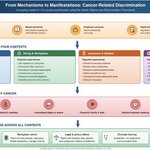
Cancer-related discrimination extends beyond interpersonal stigma @PsyOnc
This scoping review identifies discrimination across social, workplace, insurance/welfare & healthcare settings, w impacts on psychological health, finances, care-seeking & QoL
onlinelibrary.wiley.com/doi/…

Online ACT may offer support 4 survivors living w painful chemotherapy-induced peripheral neuropathy @PsyOnc
While the primary endpoint was not sig, meaningful improvement in pain interference was seen in 47% vs 24%, w reductions in pain catastrophizing
onlinelibrary.wiley.com/doi/…

Psychosocial needs don’t end when treatment does @PsyOnc
Across the childhood cancer continuum, needs persist - but evolve from emotional shock & uncertainty to disrupted relationships, autonomy challenges, and fear of relapse
onlinelibrary.wiley.com/doi/…

What does “acceptable” cancer screening actually mean? @PsyOnc
Among 393 studies, only 4% defined acceptability and 14% used theory, with wide variation in how it was measured
onlinelibrary.wiley.com/doi/…

Different PROMs, comparable outcomes? @PsyOnc @EORTC_QLG
Crosswalks across commonly used psychosocial PROMs may help harmonize #PROs, enabling comparisons and data pooling across cancer studies
onlinelibrary.wiley.com/doi/…

Among men with low- to intermediate-risk #ProstateCancer, affect shaped how information was interpreted, options were weighed, and personal values and autonomy were prioritized @PsyOnc @DrFrankJPenedo @DrTracyECrane
onlinelibrary.wiley.com/doi/…

Can digital tools help personalize PTSD care after HCT?
In a SMART trial of 477 survivors, stepped care, starting digitally & escalating non-responders to therapist-delivered CBT-PTSD, was associated w the greatest symptom reductions @PsyOnc @DocApplebaum
onlinelibrary.wiley.com/doi/…

Better sleep support for AYA with cancer
The #CanSleep stepped-care intervention showed promising results, with significant reductions in insomnia symptoms following both self-managed and individual CBT-I @PsyOnc
onlinelibrary.wiley.com/doi/…

Tailored psychosocial care matters.
A pilot study found modified Dignity Therapy to be feasible & acceptable for sexual & gender minority people w cancer, providing space for connection, meaning, identity & belonging @PsyOnc @BillyRosaPhD @HMChochinov
onlinelibrary.wiley.com/doi/…

This study identified 23 features specific to scan-associated anxiety, highlighting its emotional, cognitive, behavioral, physical & interpersonal dimensions
= Scanxiety as a distinct, time-bound experience surrounding scans & results @PsyOnc
onlinelibrary.wiley.com/doi/…

Psycho-Oncology retweeted

Understanding #Cancer Clinical Trial Participation in Rural Communities: A Qualitative Focus Group Study.
onlinelibrary.wiley.com/doi/…
@PsyOnc @APOSHQ @crisbergerot
#CancerResearch #ClinicalTrials #RuralHealth


Expanding the #PsyOnc workforce is essential to meet the growing needs of cancer survivors @PsyOnc
The @APOSHQ PSO Virtual Academy demonstrates that virtual training is a feasible, acceptable, & effective strategy to build capacity for evidence-based care
onlinelibrary.wiley.com/doi/…

Cancer survivors experience complex psychological symptoms that may not fit traditional diagnostic categories
This study shows the HiTOP framework is a reliable, valid approach to better characterize mental health in survivorship @PsyOnc
onlinelibrary.wiley.com/doi/…

A new tool for clinical practice and research!
The 7-item Ottawa Clinical Fear of Recurrence–Self-Report (OCFR-SR) provides a brief, reliable, and valid way to identify clinically significant fear of cancer recurrence among survivors @PsyOnc @cancer_K2A
onlinelibrary.wiley.com/doi/…

Caring for someone with cancer can take a profound emotional toll
Through co-design with caregivers, researchers adapted an online CBT program to better address caregivers’ unique challenges and unmet psychological needs @PsyOnc @joshaw
onlinelibrary.wiley.com/doi/…

Up to 95% of people w cancer experience sleep problems
In the #Sleep4All2 study, patients valued internet-based CBT-I combined with brief psychologist phone support, highlighting that human guidance boosts motivation, engagement, and confidence @PsyOnc
onlinelibrary.wiley.com/doi/…

Nature-based immersive virtual reality may offer a simple, nonpharmacological way to reduce anxiety and distress in people with breast cancer. This meta-analysis supports its promise as a supportive care intervention across the cancer journey @PsyOnc
onlinelibrary.wiley.com/doi/…

Culturally responsive psychosocial care matters. The Mind Over Matter (MOM) program was feasible, highly acceptable, and reduced anxiety and depression among Black and African American women w cancer @PsyOnc
onlinelibrary.wiley.com/doi/…

Suicide prevention must be part of comprehensive cancer care
🚨This meta-analysis highlights key risk factors while revealing a critical gap: current psychosocial interventions have limited evidence of effectiveness @PsyOnc
onlinelibrary.wiley.com/doi/…

Which interventions work best for fear of cancer recurrence? This network meta-analysis of 61 RCTs (6,932 patients) found that CALM, comprehensive therapy, ACT, mindfulness, and CBT were among the most effective approaches for reducing FCR @PsyOnc
onlinelibrary.wiley.com/doi/…
