

Venturing into the world of psychedelic drug development, research, investing, and more. Sharing insights and interviewing leading figures in the field.
Joined November 2021
- Tweets3.3K
- Following947
- Followers2.1K
- Likes15.5K




Pinned Tweet
New Frontiers in Psychedelic Research: Iboga Microdosing with Dr. @burtontabaac & Teresa Yung
youtube.com/watch?v=CAuwS8cB…

Psychedelic Vantage retweeted

$CMPS $DFTX $HELP $STIM
COMP360 will have an ICER review.
Why it matters for adoption: The Institute for Clinical and Economic Review (ICER) is an independent nonprofit. It's separate from the FDA and has no say in whether a drug gets approved, but its review can shape what payers think a drug is worth paying for, and that affects how easily patients can access it.
Today, ICER published a draft scope for Compass's psilocybin 25 mg (COMP360) in treatment-resistant depression [1].
It will compare COMP360 to Spravato, rTMS, and IV ketamine. The patients are adults with depression who haven't responded to two or more antidepressants in their current episode.
What we know about the analysis so far:
- A five-year time horizon, because it's still unclear how long the effect lasts. A lifetime analysis only if the evidence supports it
- A health care system view (direct medical costs), plus a separate analysis adding patient and caregiver productivity and time spent in treatment
- Results as cost per quality-adjusted life year (QALY), along with response, remission, relapse, retreatment, side effects, and costs
The model's structure, inputs, and assumptions come in the analysis plan in January.
Full Timeline:
- Comments open through Nov 10, 2026
- Revised scope on Nov 18
- Analysis plan on Jan 22, 2027
- Draft evidence report on Mar 16, 2027 (comments through Apr 12)
- Public meeting of ICER's New England Comparative Effectiveness Public Advisory Council (CEPAC) panel on May 20, 2027
- Final report on Jun 18, 2027
As a reference, ICER reviewed Spravato in 2019 and MDMA in 2024, both in the same year as FDA decisions.
For Spravato:
FDA came first, then ICER:
- FDA advisory committee (Feb 12, 2019)
- FDA approval (Mar 5, 2019)
- ICER draft evidence report (Mar 21, 2019)
- ICER's public meeting (May 23, 2019)
- Final report (Jun 20, 2019)
FDA's advisory committees voted 14-2 (1 abstain) that benefits outweighed risks, despite only one positive short-term trial, and FDA required strict supervised dosing [2]. One panelist, Walter Dunn, called it a potential "game-changer" but said "the issues of cost and patient accessibility need to be addressed" [2].
Separately, ICER's panel voted 0-17 that the evidence wasn't adequate to show Spravato was better than IV ketamine, and 0-17 versus TMS, ECT, or antipsychotic add-on therapy [3]. ICER put a fair price at $17,700 to $25,200 a year against a $32,400 list price, a 25-52% discount, and rated it low value for money [4].
ICER also issued an affordability alert, warning that at list price only about 16% of eligible patients could be treated before added spending exceeded its national budget limit, well below the roughly half experts expected to be offered it [3][4].
Major commercial plans still cover it, though with step-therapy and prior-authorization rules that vary widely.
For MDMA:
Timing ran in the opposite order of Spravato. ICER weighed in before the FDA did:
- ICER draft evidence report (Mar 2024)
- ICER's public meeting (May 30, 2024)
- FDA advisory committee (Jun 4, 2024)
- ICER final report (Jun 27, 2024)
- Lykos announced the FDA rejection (Aug 9, 2024)
ICER’s draft rated the evidence for Lykos’ MDMA-assisted therapy for PTSD as insufficient. It pointed to functional unblinding (nearly everyone on MDMA could tell they got it) and to concerns about how the trials were run.
ICER's panel voted 14-1 that the evidence wasn't strong enough to show the therapy did more good than harm compared with usual care. With the evidence that uncertain, ICER didn't estimate a fair price [5].
FDA's advisory committee then voted 9-2 that the trial data didn't show MDMA-assisted therapy was effective for PTSD, and 10-1 that its benefits didn't outweigh its risks [6]. In August, Lykos announced that the FDA had declined to approve it and asked for another Phase 3 trial [7].
Looking ahead, ICER's COMP360 review will give an outside read on cost-effectiveness that could shape reimbursement and payer rules.
In a 2022 survey of 51 US payers, 79% said ICER's recommendations had at least occasionally influenced their coverage decisions over the prior two years (20% said often) [8][9]. As the figure shows, payers rated ICER the most useful of five value frameworks and often described it as at least somewhat useful for formulary decisions (90%) and pricing negotiations (82%) [8].
As an example, New York Medicaid can use an ICER review to set a target rebate for a drug. A rebate is money the drugmaker pays back to the state Medicaid program after it buys the drug, which works like a discount. If the drugmaker won't agree to that rebate, the state can require prior authorization, making access more restrictive [10].
Because ICER is comparing COMP360 to Spravato, IV ketamine, and rTMS, its verdict can shape how payers weigh it against treatments they already cover.
Overall, ICER's review will show how cost-effective COMP360 is compared with treatments already in use, like Spravato, IV ketamine, and rTMS. That matters for access in two ways.
1) The results can shape payer rules like prior authorization, which control who can get the treatment.
2) They can affect reimbursement rates, which drive clinic economics. If reimbursement is too low, prescribers may not prescribe it, and clinics may not set aside as much capacity for it.
In my Substack series, Beyond Approval, I will explore this in more detail: beyondapprovalpsychedelics.s…


So it's public, ICER will review COMP360 psilocybin for treatment-resistant depression
icer.org/news-insights/press…

Helus Pharma Highlights Clinical Program Advancements at Investor Presentation Held on October 21, 2026
$HELP
ir.helus.com/news-releases/n…
Psychedelic Vantage retweeted

AbbVie: 'The Next Frontier of Psychedelic Science'
AbbVie just published an article on its website about psychedelics.
"It’s important to note that the investigation and use of psychedelic medicines is not new", one of its staff says in an interview.

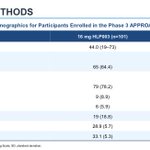
Baseline Demographics for Participants Enrolled in the Phase 3 APPROACH Trial
$HELP
Link: helus.com/wp-content/uploads…

Psychedelic Vantage retweeted

Lilly wants to study and improve the psychedelic ibogaine, its neuro leader says
@ky_lahucik and @maxonwifi for Endpoints.
endpoints.news/lilly-interes…

Helus Pharma Appoints Dr. Suresh Durgam to Board of Directors
$HELP
ir.helus.com/news-releases/n…
Compass Pathways Joins Forces with Leading Mental Health Organizations to Mark First-Ever U.S. Treatment-Resistant Depression (TRD) Awareness Day
$CMPS
ir.compasspathways.com/News-…
Psychedelic Vantage retweeted
$CMPS $DFTX $HELP $STIM
J&J's Spravato just had its best quarter ever: $624M in Q3, up 36% YoY. US sales were $559M (+38%), and it's at $1.68B YTD (+40%) [1].
With more patients hitting their deductibles and using leftover FSA dollars by year-end, I expect Q4 to continue higher. For reference, another 7% QoQ growth from Q3 to Q4 would translate to $668M in sales in Q4 and $2.34B in FY26.
In this scenario, to reach the $3B–3.5B in 2028 sales J&J has targeted, per Reuters [2], Spravato would need to grow 13–22% annually over the next two years, even as growth slows from 40%+. In a recent conference, Compass management said they see "no reason why they will not hit that number" [3].
On the call, CEO Joaquin Duato called it "impressive growth… reflecting strong demand in treatment-resistant depression," and J&J credited "strong physician adoption and increased patient demand" [4].
In addition to growing physician and patient adoption, certified treatment centers are increasing by roughly 500 per quarter, to about 8,500, per Compass [5]. Given all of the above, I expect Spravato to keep growing and meet its sales targets, even if COMP360 launches next year.
More importantly, a point worth emphasizing: even though people with TRD have few treatment options, Spravato reaches only about 100K of the 2.8–4.0M US adults with TRD, roughly 3% [6]. Perhaps that grows to 4–5% in a few years, but the vast majority of people with TRD still wouldn't be getting it.
Why that gap exists, and what it means for whether other psychedelic medicines will scale, is what my Beyond Approval series aims to answer.
As I will argue, whether psychedelic medicines reach patients depends on an interconnected healthcare ecosystem of patients, providers, treatment centers, payers/PBMs, specialty pharmacies, and regulators. Their decisions, shaped by clinical evidence, economics, and policy, influence access and how care is delivered. Which medicines ultimately scale will depend on how each product's profile fits within that ecosystem.
I'm writing the next part now, which uses the patient journey as a framework for deriving the seven drivers of psychedelic medicine adoption. With each chapter thereafter, going into more detail on each one.
Subscribe here: beyondapprovalpsychedelics.s…

Psychedelic Vantage retweeted

Very good:
Safe & Effective Psychedelic-Assisted Therapy is Always Psychotherapy: An Open Letter to the FDA
caseypaleosmd.substack.com/p…
Psychedelic Vantage retweeted
NIMH Grant Opportunity
The National Institute of Mental Health (NIMH) is set to share a grant opportunity to support the implementation of ‘rapid-acting psychotropic interventional drugs’, or RAPIDs, which includes ketamine and psychedelics.
The program is geared around real-world effectiveness and expects to award $20M across three projects.
It will be posted tomorrow, October 10th.
Read more on our website: psychedelicalpha.com/news/p%…

Psilera Greenlit to Initiate Phase 2 of NIH Grant for Alcohol Use Disorder
prnewswire.com/news-releases…

Helus Pharma to Host Investor Presentation on October 21, 2026
$HELP
ir.helus.com/news-releases/n…
Compass Pathways Celebrates Opening of New U.S. Office in Jersey City, New Jersey
$CMPS
ir.compasspathways.com/News-…
Helus Pharma Announces Completion of Legal Name Change
$HELP
ir.helus.com/news-releases/n…
MAHA Summit:
At 11:30 into the stream: PSYCHEDELIC MEDICINE, THE NEXT FRONTIER
Link: youtube.com/live/62sLYB4Ulds
Featuring:
Rob Barrow, CEO, Definium Therapeutics $DFTX
Michael Halstead, CEO, Helus Pharma $HELP
Kabir Nath, CEO, Compass Pathways $CMPS
Moderated by Matt Zorn, deputy general counsel, HHS

Psychedelic Vantage retweeted
This morning, psychedelic drug developers appeared on a panel at the MAHA Summit titled 'Psychedelic Medicine: The Next Frontier'.
CEOs of Compass Pathways, Definium Therapeutics, and Helus Pharma appeared on a panel moderated by HHS' Matt Zorn.

Compass Pathways Appoints Kelley Boucher as Chief People Officer
$CMPS
ir.compasspathways.com/News-…
Psychedelic Vantage retweeted
$CMPS $DFTX $HELP $STIM
I missed this last week, but there were additional clues regarding reimbursement for clinical services and monitoring of COMP360, a key variable that determines whether providers prescribe COMP360.
In a recent interview with BioPharma Dive, Chief Patient Officer Steve Levine indicated that they expect reimbursement to be higher per hour for every hour they're in the chair using COMP360:
"Yes, it’s a longer period of observation, but that’s also why we did the work we did a few years ago to put the reimbursement framework in place for these sites, so that regardless of how long somebody’s in the chair, they’ll be reimbursed for every one of those hours, and actually at a rate we expect to be higher than what they’re being paid for Spravato today."
Still some uncertainty around how reimbursement will be negotiated with payers along with payer rules, but Compass should have good line of sight into this given the close, ongoing conversations they're having.

$CMPS $DFTX $HELP $STIM
Some useful details (some new/some not) from the @COMPASSPathway team this past week regarding pricing and commercial launch readiness, particularly at the Deutsche Bank 2026 Healthcare Summit and TD Cowen Neuropsychiatry Summit.
1. Drug Pricing: Compass cited roughly $50–$65k as the annual cost of Spravato and said it expects COMP360’s annual drug pricing to land around that range. Its assumption of three COMP360 doses per year on average implies about $17–$22k per dose.
Lori Englebardt, Chief Commercial Officer: "Right now, currently, on average, SPRAVATO is in the range of anywhere from $50,000 to $65,000 annually. We have, based on our discussions with payers, but also given the product profile and the value proposition that we're bringing, you can expect pricing on an annualized basis to be around that. We will be pricing on a per dose basis...
We believe that will be somewhere in the two to four range, which means an average of three [annually]. The reason I say two to four is not to be silly, but it is to articulate that there will definitely be patients that probably only need two, and there will be patients that probably need four. The average will be somewhere in the three range."
2. REMS/Label: Compass expects a broad label that could describe two initial doses at least three weeks apart, followed by additional treatment at the clinician’s discretion for a total of roughly 2-4 treatments per year. It also expects a REMS similar to Spravato’s, using much of the same clinic infrastructure, with the only key difference being six hours of monitoring instead of Spravato’s minimum two.
Steve Levine, Chief Patient Officer: "We expect a fairly broad label to essentially say for the treatment of treatment-resistant depression. As far as the dosing, we have studied up to four doses in a year in our COMP006 trial. They were up to three in the COMP005 trial. We looked at an initial dose in two different ways. One was a single initial administration in COMP005. That was our placebo-controlled trial. In our three-dose, low-medium-high 006 study, we looked at two initial administrations, three weeks apart. What we have seen from that study with the two initial doses three weeks apart, as well as from the part B data, the blinded part B data from the first study, where that second dose was given a bit later, typically between weeks 10 and 14, is that for many participants, there was a significant additional benefit of having a second dose.
Ultimately, we think that that will translate into a label that may talk about initiation of treatment as two doses no sooner than three weeks apart, with additional treatment at clinician discretion or as clinically indicated."
3. Commercial Reach: Compass estimates there are about 8,000 Spravato-certified sites today, growing by roughly 500 per quarter. It says approximately 80% of Spravato volume comes from 20% of sites. They are currently building out a sales team to develop prescribing-site engagement and a referral network, targeting all 8,000 clinics and roughly 2,000-2,500 nearby referring physicians, including psychiatrists and PCPs.
Lori Englehardt, Chief Commercial Offider: "These sites are growing at about 500 sites a quarter. So whereas there are about 8,000 now, by the time we launch, if that trajectory continues, there will be quite a few additional clinics that will be prepared to administer multi-hour treatments by the time we launch. This has been pretty remarkable growth. These sites are growing because they are growing in anticipation of additional multi-hour treatments coming to market...
We have already started our sales force hiring to make their offers contingent upon approval, to which they will cover all of these 8,000 sites. Most importantly, they will also cover referring physicians. So those physicians that are surrounding outside of these interventional psychiatry treatment centers to make sure that physicians who have treatment-resistant depression patients in their practice understand what the opportunities are for new products coming to market."
4. Reimbursement: Compass expects sites to have existing billing pathways available at launch while the psychedelic service codes remain in Category III. It also plans to seek a dedicated drug code for buy-and-bill after approval and estimates that moving the service codes to Category I could take about 18 months. It is also hiring field reimbursement specialists to help sites navigate billing for the time spent supporting and monitoring patients. Regarding billing at launch, Lori Englebert, Chief Commercial Officer, mentioned, "no site should be disadvantaged versus providing Spravato"; however, they also indicated this could contribute to a slower ramp-up period post-launch.
Lori Englehardt, Chief Commercial Officer: "We know the number one reason that physicians won't prescribe, and Steve alluded to it previously, if you don't get reimbursed or it's not easy to get reimbursed, they likely won't prescribe the product.
The patient has a bad experience because they're not well prepared, or they don't understand what is happening, or they themselves can't get the product reimbursed, then the sites will likely not prescribe. So we're trying to remove all those barriers, and because of that, it will take some hand-holding along the way to make sure that sites are well-trained, well-educated, and fully prepared, and can hopefully get the reimbursement codes through easily. Due to that, we anticipate the launch to be somewhat slow coming out of the gate, just because this is a new product, and sites are going to want to get a little bit of clinical experience before they start doing additional ramp. We do expect, if we do it well, that that ramp will be quite dramatic, and most likely be a pretty dramatic increase in fast fashion. Go slow to go fast."
Reiteration of Timeline: Compass continues to expect completion of its rolling NDA submission in Q4 2026 and a potential launch in H1 2027, subject to FDA approval and federal and state rescheduling. COMP360 received a national priority voucher carrying an FDA target of 30–60 days for review of a submitted application (some skepticism mentioned about whether they can meet this target). Federal law then gives the DEA up to 90 days to reschedule (April EO could shorten this timeframe). Following federal rescheduling would be state rescheduling. Compass estimates that 44–45 states, representing about 93% of the U.S. population, could reschedule within 30 days of federal action.
Overall, Compass appears to feel confident in its commercial launch plans and seems to have a good line of sight into regulators and treatment centers. I remain slightly cautious about reimbursement at launch. The existence of billing codes is helpful, but actual coverage, payer rules, payment rates, and clinics’ confidence that they will be paid adequately for a six-hour visit will matter for adoption. Uncertain and confusing billing pathways partly contributed to a slower Spravato roll-out back in 2019. Englebert has described feedback with payers as "overwhelmingly positive," so we shall see, and this will be something to continue to monitor.
Psychedelic Vantage retweeted
$CMPS $DFTX $HELP $STIM
Some useful details (some new/some not) from the @COMPASSPathway team this past week regarding pricing and commercial launch readiness, particularly at the Deutsche Bank 2026 Healthcare Summit and TD Cowen Neuropsychiatry Summit.
1. Drug Pricing: Compass cited roughly $50–$65k as the annual cost of Spravato and said it expects COMP360’s annual drug pricing to land around that range. Its assumption of three COMP360 doses per year on average implies about $17–$22k per dose.
Lori Englebardt, Chief Commercial Officer: "Right now, currently, on average, SPRAVATO is in the range of anywhere from $50,000 to $65,000 annually. We have, based on our discussions with payers, but also given the product profile and the value proposition that we're bringing, you can expect pricing on an annualized basis to be around that. We will be pricing on a per dose basis...
We believe that will be somewhere in the two to four range, which means an average of three [annually]. The reason I say two to four is not to be silly, but it is to articulate that there will definitely be patients that probably only need two, and there will be patients that probably need four. The average will be somewhere in the three range."
2. REMS/Label: Compass expects a broad label that could describe two initial doses at least three weeks apart, followed by additional treatment at the clinician’s discretion for a total of roughly 2-4 treatments per year. It also expects a REMS similar to Spravato’s, using much of the same clinic infrastructure, with the only key difference being six hours of monitoring instead of Spravato’s minimum two.
Steve Levine, Chief Patient Officer: "We expect a fairly broad label to essentially say for the treatment of treatment-resistant depression. As far as the dosing, we have studied up to four doses in a year in our COMP006 trial. They were up to three in the COMP005 trial. We looked at an initial dose in two different ways. One was a single initial administration in COMP005. That was our placebo-controlled trial. In our three-dose, low-medium-high 006 study, we looked at two initial administrations, three weeks apart. What we have seen from that study with the two initial doses three weeks apart, as well as from the part B data, the blinded part B data from the first study, where that second dose was given a bit later, typically between weeks 10 and 14, is that for many participants, there was a significant additional benefit of having a second dose.
Ultimately, we think that that will translate into a label that may talk about initiation of treatment as two doses no sooner than three weeks apart, with additional treatment at clinician discretion or as clinically indicated."
3. Commercial Reach: Compass estimates there are about 8,000 Spravato-certified sites today, growing by roughly 500 per quarter. It says approximately 80% of Spravato volume comes from 20% of sites. They are currently building out a sales team to develop prescribing-site engagement and a referral network, targeting all 8,000 clinics and roughly 2,000-2,500 nearby referring physicians, including psychiatrists and PCPs.
Lori Englehardt, Chief Commercial Offider: "These sites are growing at about 500 sites a quarter. So whereas there are about 8,000 now, by the time we launch, if that trajectory continues, there will be quite a few additional clinics that will be prepared to administer multi-hour treatments by the time we launch. This has been pretty remarkable growth. These sites are growing because they are growing in anticipation of additional multi-hour treatments coming to market...
We have already started our sales force hiring to make their offers contingent upon approval, to which they will cover all of these 8,000 sites. Most importantly, they will also cover referring physicians. So those physicians that are surrounding outside of these interventional psychiatry treatment centers to make sure that physicians who have treatment-resistant depression patients in their practice understand what the opportunities are for new products coming to market."
4. Reimbursement: Compass expects sites to have existing billing pathways available at launch while the psychedelic service codes remain in Category III. It also plans to seek a dedicated drug code for buy-and-bill after approval and estimates that moving the service codes to Category I could take about 18 months. It is also hiring field reimbursement specialists to help sites navigate billing for the time spent supporting and monitoring patients. Regarding billing at launch, Lori Englebert, Chief Commercial Officer, mentioned, "no site should be disadvantaged versus providing Spravato"; however, they also indicated this could contribute to a slower ramp-up period post-launch.
Lori Englehardt, Chief Commercial Officer: "We know the number one reason that physicians won't prescribe, and Steve alluded to it previously, if you don't get reimbursed or it's not easy to get reimbursed, they likely won't prescribe the product.
The patient has a bad experience because they're not well prepared, or they don't understand what is happening, or they themselves can't get the product reimbursed, then the sites will likely not prescribe. So we're trying to remove all those barriers, and because of that, it will take some hand-holding along the way to make sure that sites are well-trained, well-educated, and fully prepared, and can hopefully get the reimbursement codes through easily. Due to that, we anticipate the launch to be somewhat slow coming out of the gate, just because this is a new product, and sites are going to want to get a little bit of clinical experience before they start doing additional ramp. We do expect, if we do it well, that that ramp will be quite dramatic, and most likely be a pretty dramatic increase in fast fashion. Go slow to go fast."
Reiteration of Timeline: Compass continues to expect completion of its rolling NDA submission in Q4 2026 and a potential launch in H1 2027, subject to FDA approval and federal and state rescheduling. COMP360 received a national priority voucher carrying an FDA target of 30–60 days for review of a submitted application (some skepticism mentioned about whether they can meet this target). Federal law then gives the DEA up to 90 days to reschedule (April EO could shorten this timeframe). Following federal rescheduling would be state rescheduling. Compass estimates that 44–45 states, representing about 93% of the U.S. population, could reschedule within 30 days of federal action.
Overall, Compass appears to feel confident in its commercial launch plans and seems to have a good line of sight into regulators and treatment centers. I remain slightly cautious about reimbursement at launch. The existence of billing codes is helpful, but actual coverage, payer rules, payment rates, and clinics’ confidence that they will be paid adequately for a six-hour visit will matter for adoption. Uncertain and confusing billing pathways partly contributed to a slower Spravato roll-out back in 2019. Englebert has described feedback with payers as "overwhelmingly positive," so we shall see, and this will be something to continue to monitor.
Link to full paper:
journals.sagepub.com/doi/10.…
Disclosure: long $BETRF

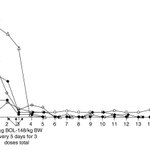
ALT Karst et al. (Cephalalgia, 2010)

4/7
Is there any human signal?
Yes.
Karst et al. (Cephalalgia, 2010) tested racemic 2-Br-LSD (BOL-148) in a small pilot in cluster headache. Authors reported reduced attack frequency/intensity, without hallucinations in that study, after just 3 doses - lasting for 4 months.
That is historical, racemic mix data. BETR-001 is the selected active stereoisomer. Different molecule package; same chemical family.