

PhD @cvssp_research |Applied Scientist @Flawlessai | Computer Vision | Ex: @VcaiMpi @iiit_hyderabad| Ryan Gosling Meme Enjoyer
London, UK
Joined June 2014
- Tweets2.4K
- Following2.6K
- Followers795
- Likes15.1K




darthgera123 retweeted

Say hello to MOSS-VL-Realtime! This 11B, 256K-context VLM brings video understanding into the stream. 🚀 License: Apache 2.0.
🤖 modelscope.ai/models/openmos…
🏆 Streaming benchmarks: 70.2 avg on OVOBench, 47.2 avg on ProactiveVideoQA, and 66.0 on OmniMMI Proactive Alerting, ahead of key open-source streaming baselines.
🎥 Realtime + interruptible: process timestamped frames continuously and answer questions at any moment based on frames observed so far.
🤫 Proactive silence + correction: stays silent when visual evidence is insufficient, then updates responses as the scene changes.
⚙️ App-ready: session/queue-style online inference, offline image/video APIs, plus Instruct and Base checkpoints for broader use.


darthgera123 retweeted

Happy to share our #CVPR2026 Oral "Relightable Holoported Characters"!
Capture a person once, relight them in any environment — from any viewpoint ✨
#ComputerVision #ComputerGraphics
darthgera123 retweeted

Developed a more generalized version. The pattern 東南西北 can be displaced, but remains conserved.


darthgera123 retweeted

Why More Researchers Should be Content Creators
Just trying something new! I recorded one of my recent talks, sharing what I learned from starting as a small content creator.
youtu.be/0W_7tJtGcMI
We all benefit when there are more content creators!


darthgera123 retweeted

One piece of advice on moving u̶p̶w̶a̶r̶d̶s̶ laterally in your career from @VasutaAgarwal.

darthgera123 retweeted

“A massively entertaining adventure.”
“Infused with Spielbergian flair.”
“An out-of-nowhere miracle.”
WATCH THE SKIES — NOW PLAYING exclusively in @AMCTheatres. 🎟️ Get tickets for Mother's Day weekend: watchtheskiesmovie.com/
darthgera123 retweeted

I shared a controversial take the other day at an event and I decided to write it down in a longer format: I’m afraid AI won't give us a "compressed 21st century".
The "compressed 21st century" comes from Dario's "Machine of Loving Grace" and if you haven’t read it, you probably should, it’s a noteworthy essay. In a nutshell the paper claims that, over a year or two, we’ll have a "country of Einsteins sitting in a data center”, and it will result in a compressed 21st century during which all the scientific discoveries of the 21st century will happen in the span of only 5-10 years.
I read this essay twice. The first time I was totally amazed: AI will change everything in science in 5 years, I thought! A few days later I came back to it and, re-reading it, I realized that much of it seemed like wishful thinking at best.
What we'll actually get, in my opinion, is “a country of yes-men on servers” (if we just continue on current trends). Let me explain the difference with a small part of my personal story.
I’ve always been a straight-A student. Coming from a small village, I joined the top French engineering school before getting accepted to MIT for PhD. School was always quite easy for me. I could just get where the professor was going, where the exam's creators were taking us and could predict the test questions beforehand.
That’s why, when I eventually became a researcher (more specifically a PhD student), I was completely shocked to discover that I was a pretty average, underwhelming, mediocre researcher. While many colleagues around me had interesting ideas, I was constantly hitting a wall. If something was not written in a book I could not invent it unless it was a rather useless variation of a known theory. More annoyingly, I found it very hard to challenge the status-quo, to question what I had learned. I was no Einstein, I was just very good at school. Or maybe even: I was no Einstein in part *because* I was good at school.
History is filled with geniuses struggling during their studies. Edison was called "addled" by his teacher. Barbara McClintock got criticized for "weird thinking" before winning a Nobel Prize. Einstein failed his first attempt at the ETH Zurich entrance exam. And the list goes on.
The main mistake people usually make is thinking Newton or Einstein were just scaled-up good students, that a genius comes to life when you linearly extrapolate a top-10% student.
This perspective misses the most crucial aspect of science: the skill to ask the right questions and to challenge even what one has learned. A real science breakthrough is Copernicus proposing, against all the knowledge of his days -in ML terms we would say “despite all his training dataset”-, that the earth may orbit the sun rather than the other way around.
To create an Einstein in a data center, we don't just need a system that knows all the answers, but rather one that can ask questions nobody else has thought of or dared to ask. One that writes 'What if everyone is wrong about this?' when all textbooks, experts, and common knowledge suggest otherwise.
Just consider the crazy paradigm shift of special relativity and the guts it took to formulate a first axiom like “let’s assume the speed of light is constant in all frames of reference” defying the common sense of these days (and even of today…)
Or take CRISPR, generally considered to be an adaptive bacterial immune system since the 80s until, 25 years after its discovery, Jennifer Doudna and Emmanuelle Charpentier proposed to use it for something much broader and general: gene editing, leading to a Nobel prize. This type of realization –"we've known XX does YY for years, but what if we've been wrong about it all along? Or what if we could apply it to the entirely different concept of ZZ instead?” is an example of out-side-of-knowledge thinking –or paradigm shift– which is essentially making the progress of science.
Such paradigm shifts happen rarely, maybe 1-2 times a year and are usually awarded Nobel prizes once everybody has taken stock of the impact. However rare they are, I agree with Dario in saying that they take the lion’s share in defining scientific progress over a given century while the rest is mostly noise.
Now let’s consider what we’re currently using to benchmark recent AI model intelligence improvement. Some of the most recent AI tests are for instance the grandiosely named "Humanity's Last Exam" or "Frontier Math". They consist of very difficult questions –usually written by PhDs– but with clear, closed-end, answers.
These are exactly the kinds of exams where I excelled in my field. These benchmarks test if AI models can find the right answers to a set of questions we already know the answer to.
However, real scientific breakthroughs will come not from answering known questions, but from asking challenging new questions and questioning common conceptions and previous ideas.
Remember Douglas Adams' Hitchhiker's Guide? The answer is apparently 42, but nobody knows the right question. That's research in a nutshell.
In my opinion this is one of the reasons LLMs, while they already have all of humanity's knowledge in memory, haven't generated any new knowledge by connecting previously unrelated facts. They're mostly doing "manifold filling" at the moment - filling in the interpolation gaps between what humans already know, somehow treating knowledge as an intangible fabric of reality.
We're currently building very obedient students, not revolutionaries. This is perfect for today’s main goal in the field of creating great assistants and overly compliant helpers. But until we find a way to incentivize them to question their knowledge and propose ideas that potentially go against past training data, they won't give us scientific revolutions yet.
If we want scientific breakthroughs, we should probably explore how we’re currently measuring the performance of AI models and move to a measure of knowledge and reasoning able to test if scientific AI models can for instance:
- Challenge their own training data knowledge
- Take bold counterfactual approaches
- Make general proposals based on tiny hints
- Ask non-obvious questions that lead to new research paths
We don't need an A+ student who can answer every question with general knowledge. We need a B student who sees and questions what everyone else missed.
---
PS: You might be wondering what such a benchmark could look like. Evaluating it could involve testing a model on some recent discovery it should not know yet (a modern equivalent of special relativity) and explore how the model might start asking the right questions on a topic it has no exposure to the answers or conceptual framework of. This is challenging because most models are trained on virtually all human knowledge available today but it seems essential if we want to benchmark these behaviors. Overall this is really an open question and I’ll be happy to hear your insightful thoughts.
darthgera123 retweeted

🚀 Check out our #CVPR2025 paper BimArt! 👐🔧
We generate 3D bimanual interactions with articulated objects by:
✅ Predicting contact maps from object trajectories
✅ Using an articulation-aware feature representation
Project Webpage: vcai.mpi-inf.mpg.de/projects…
@VcaiMpi
darthgera123 retweeted

The information overload with AI is real. Everyone shares a copy of meeting notes after the calls, because everyone has an "AI assistant" making notes of the meeting. Even though everyone uses the same tool, everyone's notes are slightly different from each other.
Some people even add their own self-written notes + the AI note taking apps notes, and cook them together in yet another LLM and produce elaborate bullet points.
The meetings notes are mostly too verbose, because AI doesn't know how to write short, crisp bullets, which need not be grammatically correct. In way, AI knows how to "summarise", but not how to "take notes". Since all these notes are too verbose, people don't really read them, they ask yet another AI to further "summarise". In this whole journey, some actual key information gets lost. People are a lot less focussed in the meeting too now, given that they know their "AI assistant" is making notes anyway. They are half distracted, doing some other work parallelly during the meeting.
From roadmaps to technical docs to RFCs to performance reviews - AI has made it so much easier to ̶w̶r̶i̶t̶e̶ generate them, that there are just way more of them now. Instead of just writing up a POC - people throw a 6-pager RFC or tech-spec at you first. All the conventional wisdom says "great engineers write great architecture docs" and "great managers write great vision docs" - so now that ̶w̶r̶i̶t̶i̶n̶g̶ generating them is easier, everyone's writing tons of them. All career-guidance and professional how-to books advice you to "write more" to progress further in your career, because in the older world (Amazon meeting agenda 1-pagers, Stripe press releases), writing more would actually train you more to write more concise and succinct documents, and develop the muscle to coalesce opinions via the written word. Simply generating more docs via LLMs do not actually make you better at that. On the contrary, now that you generate more noise with too many documents, no one knows which ones are more important, and unable to keep up, start ignoring your ̶w̶r̶i̶t̶i̶n̶g̶s̶ generations.
The wiki has a "summarise with AI" button, the Zoom call has a "summarise with AI" button. The Google Doc has a "rewrite with AI" button. Everyone who is a "human in the chain" is turning out to be a glorified network packet switcher between different LLM models. Generate text, send to someone, who summarises it using another LLM, without reading it much (either the original, or the summary), and forwards it, to someone, who rewrites it again using AI and turns it into a presentation, which then is used in a meeting, which gets summarised using AI, and saved in the wiki.
There are more meetings now, because more people have the ability to write 'meeting agendas'. There are more 'stakeholders' now, because anyone can write a cursory 'remark' on your documents using the AI tool. There are bigger committees to review performance now, because all packets have started to look and read more or less the same, and harder to calibrate.
The internal AI tooling team's KPIs have been through the roof. They just got fresh budget to hire PhDs and purchase a GPU cluster to fine-tune yet another model only on "internal data", which increasingly is itself not human-generated content anymore.
Welcome to the post-genAI world. And ofcourse, you can use Grok3 to tl;dr-ify this post if it is too long to read (I am sure it is).

darthgera123 retweeted

[1/6]🧵: Our project CasperDPM --- A method to augment hands in real time, has been accepted to #SIGGRAPHAsia2024 !
Project Page: yoterel.github.io/casper-pro…
-->
darthgera123 retweeted

Check out this cool @Blender hand topology timelapse animation showcased by 3D Artist @JanvandenHemel.
Tutorial available: 80.lv/articles/check-out-thi…
#b3d #blender3d #blender #3dmodeling #3danimation
darthgera123 retweeted

>Be Haryana
>Gets separated from Punjab, Punjab denies water, Hardly any support from the centre
>Works on development rather than Randi rona
>Creates an IT hub, Multiple Manufacturing hubs, per capita income 📈
>Doesn't force you to learn Haryanvi
>Chadyana



darthgera123 retweeted

You graduate college at 22 and you have approximately 3 years to be a breakout success before you feel like your life is over
darthgera123 retweeted

Bring an adult with literally no restrictions on reading is so fun. Today I read about the fall of Romanian dictatorship, the market size of flavoured rolling paper, and about UAVs in quick commerce. No one can stop me from learning about it random stuff 😼
darthgera123 retweeted
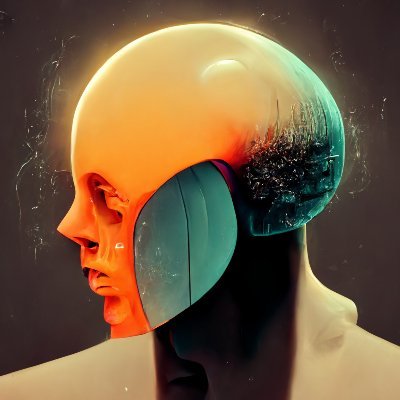
Topo4D is a new method for 4D head capture that can generate high-quality dynamic facial meshes and 8K textures from videos.
xuanchenli.github.io/Topo4D/