


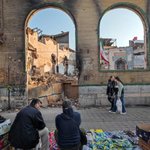
What does life look like for Tehran’s elite seven months after the war?
The Instagram page Rich Kids of Tehran offers a glimpse into a world of wealth, privilege and luxury, raising questions about the contrast with the realities facing ordinary Iranians.
A story worth a closer look: instagram.com/therichkidsoft…

RKOT retweeted
تقریباً «یک ماه» قبل از کشته شدن رهبر جمهوری اسلامی «علی خامنه ای»، فرمنادهان و مسئولان کلیدی و ارشد نظام، این اکانت که نزدیک به کارکنان @SharghDaily است اعلام کرد:
یک «منبع ناشناس» که به گروههای اصلاحطلب در ایران نزدیک بوده ادعا کرده که تا زمانی که علی خامنهای و اطرافیانش در قدرت هستند، ایران عملاً نمیتواند با آمریکا به توافق برسد.
به گفته این منبع، فقط بعد از مرگ خامنهای ممکن است شرایط برای مذاکرات واقعی فراهم شود. حتی گفته که این اتفاق (مرگ او) ممکن است هر زمانی رخ بدهد و شاید بتواند جلوی اقدام نظامی آمریکا را بگیرد.
یکماه بعد جنگ شد، و امروز شاهد این رویکرد هستیم.
انقلاب فرزندان خودش را میخورد
RKOT retweeted
Iran’s regime is likely to approach any prospective agreement with the United States tactically rather than ideologically. Faced with sustained economic pressure and internal constraints, Tehran may calculate that limited compliance with U.S. terms serves its near-term objective: regime stability.
Given the finite timeline of a potential Donald Trump presidency, Iranian decision-makers could pursue a strategy of strategic patience accepting constraints in the short term while preserving the capacity to reverse course under a future U.S. administration perceived as more favorable. However, such compliance would likely be conditional and reversible. Iran’s core ideological posture and regional ambitions are unlikely to fundamentally change, suggesting that any agreement would function as a pause rather than a transformation.
Domestically in the U.S., a renewed or modified Iran deal could become a political asset. Figures such as JD Vance may frame the agreement within a broader foreign policy narrative during a presidential campaign, either as a success to build upon or as a point of contrast, depending on its terms and outcomes.
Concurrently, Iran is expected to continue deepening strategic ties with non-Western powers. Engagement with China and Russia particularly in defense and economic sectors would provide Tehran with alternative channels to rebuild military capacity and mitigate Western pressure, regardless of the status of U.S. negotiations.

RKOT retweeted

“The United States to Blockade Ships Entering or Exiting Iranian Ports on April 13 at 10:00 A.M. ET. Thank you for your attention to this matter!” - President Donald J. Trump

At least three planes from Tehran have landed in Rawalpindi’s Nur Khan airbase in the last hour, where both the Iranian and the US delegations arrived.
The planes belong to Pouya Air, which is an Iranian cargo airline considered to be affiliated with the Iranian Revolutionary Guard Corps (IRGC), specifically supporting the Quds Force and Aerospace Force.
The airline operates out of Mehrabad International Airport, which was recently bombed in US-Israeli attacks.
Iran’s regime is likely to approach any prospective agreement with the United States tactically rather than ideologically. Faced with sustained economic pressure and internal constraints, Tehran may calculate that limited compliance with U.S. terms serves its near-term objective: regime stability.
Given the finite timeline of a potential Donald Trump presidency, Iranian decision-makers could pursue a strategy of strategic patience accepting constraints in the short term while preserving the capacity to reverse course under a future U.S. administration perceived as more favorable. However, such compliance would likely be conditional and reversible. Iran’s core ideological posture and regional ambitions are unlikely to fundamentally change, suggesting that any agreement would function as a pause rather than a transformation.
Domestically in the U.S., a renewed or modified Iran deal could become a political asset. Figures such as JD Vance may frame the agreement within a broader foreign policy narrative during a presidential campaign, either as a success to build upon or as a point of contrast, depending on its terms and outcomes.
Concurrently, Iran is expected to continue deepening strategic ties with non-Western powers. Engagement with China and Russia particularly in defense and economic sectors would provide Tehran with alternative channels to rebuild military capacity and mitigate Western pressure, regardless of the status of U.S. negotiations.
5 years later - @marcorubio did what Biden couldn’t wouldn’t


Officials at the U.S. Department of State have been in contact with us regarding the regime’s children currently in the United States. We are working with them to appropriately address the status of these individuals residing in the U.S. At this time, we are unable to provide further details. All official statements will be released directly through the U.S. Department of State @StateDept and Secretary Marco Rubio @marcorubio.


