

Real-world physics explained with clear visuals and simple breakdowns | Physics educator & content creator ⚛️
Joined October 2011
- Tweets9.6K
- Following3.9K
- Followers18.5K
- Likes1.6K





THE DAY CERN WAS BORN
On September 29, 1954, the CERN Convention officially came into force, creating CERN with 12 founding European states.
What began as a European effort to rebuild fundamental physics after World War II eventually became one of the world's major centers for particle physics.
The laboratory would later become home to some of the most powerful particle accelerators ever built.
And its story began with a simple idea:
Science could bring countries together.


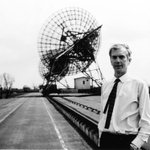
On September 27, 1918, Martin Ryle was born.
He wanted radio telescopes to see the universe with much greater detail.
His solution was aperture synthesis.
Instead of building one enormous telescope, signals from separate antennas could be combined to produce the resolving power of a much larger instrument.
The idea transformed radio astronomy.
Ryle shared the 1974 Nobel Prize in Physics for his pioneering work in radio astrophysics.

On September 26, 1905, Einstein published his paper on special relativity.
It began with two simple ideas.
The laws of physics are the same in all inertial frames.
The speed of light in vacuum is the same for every observer.
From these principles came a new view of space and time.
Time is not absolute.


How do you photograph something you cannot see?
Donald Glaser found a way.
His bubble chamber turned the invisible paths of charged particles into visible tracks of tiny bubbles.
Each track carried information about the particle that created it.
The invention earned him the 1960 Nobel Prize in Physics.
Sometimes, the invisible leaves a trace.




Real World Physics retweeted

طفل فلسطيني يتصدى لمستوطنين خلال هجومهم على المواطنين ومنازلهم في الضفة الغربية
#فيديو

A photocopier works with electricity and light.
Carlson used a photoconductive material whose electrical conductivity changes when exposed to light.
A charged surface forms an invisible electrostatic image.
Charged toner particles then reveal that image on paper.
A familiar machine built on physics we rarely notice.


Every pixel is a photon path integrated backwards through Schwarzschild spacetime; nothing here is drawn by hand. The arch over the top is the far half of the disc, its light bent over the hole; the ring underneath is that same far half, seen under it. The gas orbits at 0.25c to 0.50c, so the left side runs toward you and the right side away: a brightness difference of 75.8×. The dark disc's radius is exactly 3√3 M. Now the harder question: why is the approaching side white rather than just brighter?
On September 18, 1907, Edwin McMillan was born.
In 1940, he and his colleagues discovered neptunium, the first element beyond uranium.
Uranium has 92 protons.
Neptunium has 93.
Their work opened the door to a new region of the periodic table.
There was more matter beyond uranium than nature had revealed.


