

Nuclear engineer turned rocket scientist, general radiation expert consulting on radiation topics
San Francisco, CA
Joined November 2020
- Tweets299
- Following184
- Followers158
- Likes311



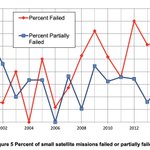


New blog about why some new #space companies choose to ignore #radiation testing, and why that can be acceptable! As well as a comparison on different approaches new space companies tend to take.
spaceradiationservices.com/p…


Need to be in Davis, CA for 10 am on Sunday. @British_Airways cancels my Saturday 3 pm flight at 5 am and their customer service number isn’t working. So last minute that I can’t booked anything online, so I have to go to Heathrow in person to try and get on a flight. Thrilled!

This accurately describes the experience of anyone who has ever worked with Moog.. Expensive and late, leaving massive holes in your project.

Can the SDA's Proliferated Warfighter Space Architecture (PWSA) constellation be both over-discussed, and yet under-analyzed?
I think yes
In my next newsletter post I plan to share an analysis of the SDA's procurement strategy + how the agency's planned LEO satcom + missile-tracking constellation represents a massive opportunity for space companies
In the meantime however, here is a table about the PWSA's initial satellites (Tranche 0) that isn't making the final cut of that upcoming post
A few additional fun facts:
· Not included in this graphic is SpaceX's $150M launch contract for 2 T0 launches, which occurred on 4/2/23 and 9/2/2023
· Including launch costs, the average T0 satellite cost $28M; excluding launch costs, the average satellite cost $22M ($14M per Transport Layer satellite vs $43M per Tracking Layer satellite)
· York supposedly had a few growing pains delivering these initial satellites, but has continued to win additional contracts from the SDA
· Moog (bus supplier for L3Harris' 4 Tracking Layer satellites) experienced delays in deliveries of microelectronics and space system components that has resulted in the last 4 T0 satellites having yet to be launched
· SpaceX hasn't bid on additional PWSA satellite manufacturing contracts given that its mass-produced Starlink satellite buses don't fit RFP specs; however, the company has won an initial contract from the SDA (along with Kuiper and Aalyria) for a study on LEO backhaul capability “to provide a resilient path to quickly move broadband data between edge and main networks"

Matthew Gill retweeted

NEW: we need to talk about UK graduate wages, and the idea that Britain sends too many people to university.
American readers should stick around for the UK/US comparisons 👀
Let’s start with this: the UK graduate wage premium has fallen substantially over the last 25 years


Yet another #radiation beam line - this week was atmospheric neutrons at ChipIR. This is my “local” beam line (2 hours away). The view walking over the incoming beam on its way to the spallation source is pretty amazing :)

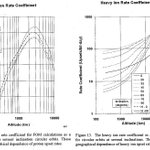
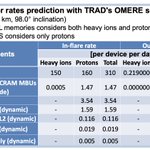
I was tagged in a post asking about typical failure rates for "radiation-induced faults, sources of data, impact of altitude and Error Correction Codes, etc." I get asked this a lot, so here is my usual answer for anyone wrestling with this question 🧵
buff.ly/3PsuJo9


5) How do event rates change with orbit
The Petersen figure of merit method is an approximation technique used to correlate ground test data with on-orbit event rates. It’s a really convenient way to plot visual trends and show how bit flips and reset rates change with orbit

Not a perfect answer, but it’s the best I have. Would love to get other people's opinions :)
Longer form version is on the blog buff.ly/3PsuJo9

Matthew Gill retweeted

What would happen if a nuclear reactor were lit on fire, dropped from 100 ft, crashed at 400mph, or intentionally blown up?
NASA wanted to find out, as they planned to launch a reactor into space in the 60s (which they did!)
Here’s how it went (🧶 1/n):
When times are tough, do what you do best.

are the british drinking their way out of a recession?

ALT Guardian article reads: UK economy returns to slender growth as spending in pubs lifts output. GDP rose by 0.2% in April, with rising car sales and reduced impact of strikes also playing a part. The UK economy eked out a return to growth in April as rising car sales and customers spending in pubs and bars helped output to recover from a wave of public sector strikes in the previous month.
Matthew Gill retweeted

For my SpaceDotBiz newsletter this week, I'm sharing Part 2 of my interview with @michaelpcassidy, who was founding CEO of the space startup Apollo Fusion, which sold to Astra for $145M.
We talked about advice he'd give space founders, pivoting startups, & a ton more
🧵👇
1/10