

Uncovering the stories and movements pertaining to radical thoughts, activism,& the people behind the change.
Joined July 2021
- Tweets957
- Following9
- Followers9.6K
- Likes389






A coordinated attack on RSS just went global.
Players: Soros-funded activists, Pakistan-linked lobbies, and strangely, Congress.
Target: to deflect from the real foreign influence operation that's been running for a decade.
Here's what they don't want exposed, thread:

Radical Watch retweeted

Terrorism has no religion. But it does have certain preferred geographics to flourish.
Today we trace one such geography: Pakistan.
🧵

Radical Watch retweeted
The US President Donald Trump directed that the Muslim Brotherhood (MB) be reviewed for designation as a Foreign Terrorist Organisation. But MB still operates freely globally. The message reads less like policy and more like a warning to the world: this network isn’t small.
🧵

The real test: Will Indian influencers amplifying this story say even a word about the documented US-based anti-India nexus? Or does their courage only extend to attacking legally compliant Indian organizations while ignoring actual foreign influence?
(15/15)

The real foreign influence operation isn't RSS's legal, transparent outreach. It's the Pak and Jamaat linked network where IAMC sits at the center, enabled by Congress legitimization.
Those screaming about foreign influence are the ones who spent years enabling it.
(14/15)

For a decade, these networks tried to unseat BJP through external pressure. They failed. Now, facing scrutiny of their own funding and foreign links, they're manufacturing "foreign influence" narratives against RSS to preempt investigation. Classic deflection.
(13/15)
When Congress leaders share platforms with Pakistan-linked, Jamaat-affiliated organizations, they provide democratic credibility that allows these groups to masquerade as authentic Indian voices while lobbying against India's interests on foreign soil.
(12/15)

Here's the disturbing part: Congress Party legitimization.
> Sonia Gandhi sent congratulatory messages.
> Hamid Ansari joined its events.
> Mani Shankar Aiyar had close ties with Pak's Kashmir lobbyist.
> Rahul Gandhi's 2023 US tour was coordinated by IAMC affiliates.
(11/15)

Booked under UAPA in 2021 for spreading fake news, IAMC collaborates with Khalistani networks to push Pakistan's anti-India, pro-Kashmir narratives to US policymakers, influencing every major anti-India congressional hearing.
(10/15)

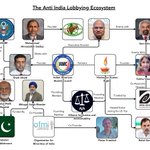
The IAMC, a US front with linkages to Jamaat-e-Islami Pakistan-linked orgs, has a history of questionable activities. Its executive director coordinated with USCIRF Commissioner Maenza; after lobbying funds went to Maenza's friend, USCIRF removed Kashmir from India's map.
(9/15)

While Prism targets legal RSS activity as a threat, a US-based network of organizations has spent the last decade building an anti-India lobbying ecosystem, posing a significant threat to India. Congressional testimony, USCIRF infiltration and fabricated databases.
(8/15)

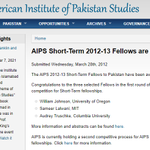
Expert 3: Audrey Truschke, Rutgers historian. Received fellowship from American Institute of Pakistan Studies. Married to Thane Rehn, son of Nathan Rehn, a pastor who ran Christian conversion operations in India.
(6/15)


Expert 2: Raqib Hameed Naik, who runs Hindutva Watch. Raqib is connected with Pakistan establishment and Jamat nexus. His website's map features are sponsored by Imran Kayani, who runs Pakistan's propaganda portal Global Village Space.
(5/15)

Now check Prism's "independent experts."
Expert 1: Ben Freeman, Director at Quincy Institute. His employer received a $500,000 founding grant from George Soros's Open Society Foundations. The same foundation funding Prism.
(4/15)


Prism's allegation: RSS should register under FARA, not LDA. The reality: RSS is neither a foreign government nor political party. AIPAC lobbies on US-Israel relations under LDA. So do American Hellenic Institute and Arab American Institute. This is standard practice.
(3/15)
Meet Prism, the outlet leading this charge. Founded as Daily Kos Education Fund, a partisan Democratic activist platform.
Primary funder: George Soros's Open Society Foundations and Ford Foundation.
(2/15)

Balochistan Liberation Army's release of their feats.
1. BLA carried out 154 attacks in 2024, killing 66 Pakistani military personnel and injuring over 110.
2. 17 BLA fighters embraced martyrdom during the year.
3. Operations were split with 60% in urban areas and 40% in rural regions.
4. Urban attacks included hit-and-run tactics, grenade attacks, and executions of spies collaborating with the Pakistani state.
5. Rural operations focused on ambushes and IEDs, exploiting difficult terrain.
6. IEDs were used in 52.85% of operations, primarily in Gwadar, Jiwani, and coastal areas.
7. Ambushes accounted for 19.51% and grenade attacks for 21.14% of operations.
8. 6.50% of attacks involved executions to dismantle intelligence networks.
9. 57.14% of attacks targeted Pakistani state armed forces.
10. 28.57% of operations focused on disrupting state elections and polling stations.
11. 8.57% of attacks were arson, targeting installations and vehicles.
12. BLA’s attacks caused delays to the Gwadar Airport project, a joint Pakistan-China venture.
13. BLA showcased strategic discipline with minimal losses despite state oppression.
14. BLA neutralized death squads and intelligence operatives in Kahan, Khuzdar, and Kalat, weakening enemy networks.
15. The year highlighted BLA’s ability to sustain high-impact operations with minimal casualties and increase its regional dominance.


Though the earlier government made efforts to tackle the Maoist insurgency, complete eradication was elusive. However, the recent state government has successfully managed to encourage Maoist extremists to surrender, marking a significant achievement.
This shift demonstrates the effectiveness of their approach, contrasting with the challenges faced by previous administrations in fully addressing the issue.
8/8
3
684
Present Situation (2020s)
Reduced Activity: By 2020s, Naxalite activity in Maharashtra declined significantly, with the exception of the **Gadchiroli district*, which remained a hotbed for Maoist insurgents. The state government’s sustained counterinsurgency efforts, including police operations and intelligence gathering, alongside development initiatives, have weakened the Naxal movement in many areas.
- *Ongoing Threats*: However, occasional ambushes and clashes still occur, and the Naxals continue to maintain a low-level presence in forested and tribal-dominated regions. The Maoists are also known to exploit local grievances related to land rights, displacement, and governance inefficiencies, especially in rural Maharashtra.
- The Naxal influence in Maharashtra has been significantly reduced compared to earlier decades, but their operations in isolated pockets remain a challenge for local security forces.
n/7
Operation Green Hunt and Decline (2010s)
2010s: The Indian government launched **Operation Green Hunt*, a large-scale military operation aimed at eliminating Naxalite groups. Maharashtra, being part of the Red Corridor, saw intensified security operations, particularly in Gadchiroli and Chandrapur districts.
- However, the state government also introduced development schemes in the tribal areas, including infrastructure projects and welfare programs. This dual approach—security actions alongside rural development—sought to undermine the Maoist base by addressing the root causes of the insurgency.
- Despite these efforts, sporadic attacks continued, and there were reports of Maoist activities even in more remote and forested regions. The insurgents targeted infrastructure projects, mines, and police personnel, especially during the early 2010s.
n/6

1
1
133