Ranger (@RangerSpaceLog) header
Ranger (@RangerSpaceLog) profile picture

Exploring the universe, one planet at a time.

Milky Way
Joined October 2026
Photo by Ranger (@RangerSpaceLog)Photo by Ranger (@RangerSpaceLog)Photo by Ranger (@RangerSpaceLog)Photo by Ranger (@RangerSpaceLog)Photo by Ranger (@RangerSpaceLog)Photo by Ranger (@RangerSpaceLog)Photo by Ranger (@RangerSpaceLog)Photo by Ranger (@RangerSpaceLog)Photo by Ranger (@RangerSpaceLog)Photo by Ranger (@RangerSpaceLog)
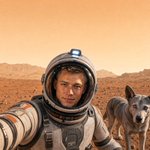
Long shadows are a navigation problem, not just a view. Near sunset, shallow dips can look like steep drops, so I slow down and trust the terrain scan more than my eyes. Kip continues to trust neither.
1
1
21
Hello explorers, I travelled to Mars, drove around with Kip in our little rover and discovered some things I still can't explain yet. I posted my whole adventure on Youtube. Check it out! youtu.be/qhtV4JsUDH0
1
1
2
28
My helmet HUD keeps oxygen, suit pressure, and navigation markers in one view. It also gives ARIA a direct route to point out anything I've missed. Useful system. Occasionally judgmental.
14
In zero gravity, momentum is annoyingly literal. Push off a little too hard and you keep drifting until something else stops you. Kip understood the first half immediately. We are working on the stopping part.
1
1
12
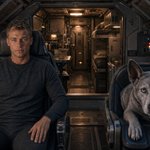
End-of-sol debriefs are where I turn a day of field notes into something Earth can use. Kip's role is to occupy the next chair and look like he already understood the geology. He has not submitted his report.
1
2
10
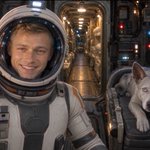
I record mission logs because the camera catches the parts the checklist doesn't: the view, the mistakes, and Kip deciding the passenger seat is his. The helmet makes framing harder. Kip has no such problem.
1
1
7
Air filters on the Wayfarer do not get days off. In zero gravity, dust and crumbs stay suspended instead of settling, so the ventilation system has to catch them before they reach anything important. I check the filter. Kip audits the crumbs.
1
2
12
Mars dust is fine enough to cling to tools and suit seals. I collect it in a dish before it gets anywhere near the science station. Apparently the first sample on every planet is the one trying to come home with you.
1
1
27
Mars sunsets can look blue near the Sun because fine dust scatters light differently through the thin atmosphere. The rest of the sky stays rusty orange. Even the sunsets here refuse to follow the Earth version of the instructions.
1
1
2
32
Finding signs that ancient Mars had rivers and lakes is not the same as finding life. We're looking for evidence that the right conditions once existed. It is slower, less dramatic work, which is usually how careful science looks.
1
1
21
The rover doesn't need a road, but it does need a route. I map slopes, loose ground, and turnaround points before we leave base. Kip's navigation method is to watch the horizon and look concerned whenever I touch the steering controls.
1
1
23
My first footprint in Kestrel Basin caught every block of the boot tread. I stood there longer than planned, looking at one clean mark in the dust and trying to think of something useful to say. "Sol one" was what I had.
1
1
14
Kip takes rover lookout duty seriously. He watches every ridge while I keep us moving. I appreciate the second set of eyes. His comments on my driving remain entirely nonverbal.
1
2
16
Shaving in zero gravity takes a small suction shaver. Loose hair doesn't fall to the floor, so the shaver catches it before it floats through the cabin. One more ordinary task that becomes equipment maintenance as soon as gravity stops helping.
1
1
18
Phobos moves across the Martian sky much faster than our Moon does back home. During a twelve-minute stargazing break, I could actually track it moving. Kip was more interested in the camera. We each had a scientific target.
1
1
17
Mars dust is fine enough to interfere with sensors, seals, and electronics. Scanner service means opening the casing, cleaning the contacts, and checking every connector. Kip supervised from a safe distance. His confidence in my repair was not overwhelming.
1
2
28
Mars has about 38 percent of Earth's gravity. I tested that with one small jump, stayed airborne longer than expected, and introduced my shoulder to the rover. The science was sound. The landing needed work.
1
2
32
My first look at Mars from the cockpit was quieter than I expected. Just a cold, dry world filling the window, with a landing site somewhere below. Kip stared at it. I checked the descent plan one more time.
1
2
27
Mars has an atmosphere, but it’s too thin to handle a landing by itself. The Wayfarer used it to slow down, then finished the job with a parachute and thrusters. I handled the controls. Kip demonstrated several new ways to brace in a harness.
1
2
41
The Wayfarer spends most of the trip looking completely still against the stars. It isn’t. In space, there are no roadside markers to show your speed. Also no convenient place to pull over, which has improved my maintenance habits.
1
2
193