

The AI career edge. Prompts, tools, and strategies that get you promoted, paid, and future-proof.
Planet Earth
Joined May 2020
- Tweets3.2K
- Following34
- Followers485
- Likes7.9K





Nobody wants frozen french fries.
Until McCain figured out how to make restaurants need them.
Great leaders don't just solve problems — they create demand for solutions nobody knew they wanted.
Follow @Read_Grow_Lead
When industries collapse, leaders adapt.
1. Your industry expertise becomes worthless if the industry dies — pivot before you're forced to.
2. Western companies failed in batteries because they couldn't compete on cost, not innovation.
3. Smart leaders read market signals 2-3 years ahead, not when the writing's on the wall.
4. If you're waiting for perfect conditions to make your move, you've already waited too long.
5. The best pivots leverage your existing strengths in new markets — don't start from zero.
6. Your team's survival depends on your ability to kill what made you successful yesterday.
Follow @Read_Grow_Lead
2
You don't need the biggest budget.
You need the deepest obsession.
Two ski bums beat billion-dollar weather services because they cared more about snow than anyone else.
Follow @Read_Grow_Lead
1
The math always wins eventually.
Tesla's Semi costs 2x a diesel truck upfront.
But here are 5 reasons why smart fleet managers are already placing orders:
1. Fuel savings hit $200,000+ over the truck's lifetime — diesel costs keep climbing while electricity stays predictable.
2. Maintenance drops 90% because electric motors have 20 moving parts vs 2,000+ in diesel engines.
3. Driver retention improves when your trucks are quieter, smoother, and don't smell like exhaust.
4. Insurance premiums drop because Tesla's safety systems prevent the crashes that cost millions in liability.
5. Regulatory compliance gets easier as emissions standards tighten and carbon taxes spread.
The companies calculating total cost of ownership are making moves.
The ones stuck on sticker price will be playing catch-up in 5 years.
Follow @Read_Grow_Lead
4
Store closures teach brutal lessons.
Here are 6 hard truths from Macy's extended shutdown timeline:
1. Admitting you were wrong about timing shows more strength than stubborn adherence to bad plans.
2. "Flexibility" is corporate speak for "we underestimated how messy this would be."
3. Your people deserve honest communication about timeline changes, not sugar-coated updates.
4. Dragging out painful decisions creates more uncertainty than quick, decisive action.
5. Every delayed closure costs money you could be investing in what's actually working.
6. Markets punish indecision harder than they punish bold moves that don't work.
The lesson?
Make the hard call faster.
Your stakeholders will respect brutal honesty over optimistic timelines.
Follow @Read_Grow_Lead
3
Your security certifications mean nothing.
If your vendor can't explain their supply chain in 60 seconds, you're already compromised.
Follow @Read_Grow_Lead
4
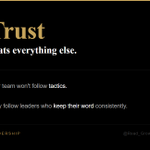
Your company's true values show up when life happens to your employees.
Not in the mission statement on your wall.
4
CEOs stay quiet for good reason.
Here's what 20 years taught me about when leaders speak up:
1. Your words become permanent — screenshots live forever and context dies quickly.
2. Half your customers will hate whatever position you take — math doesn't care about your principles.
3. Employees judge you harshly when politics enter the workplace — they want stability, not your opinions.
4. Competitors use your statements against you — silence gives them nothing to weaponize.
5. Shareholders panic when you rock boats — your job is growing value, not starting fights.
6. The media twists everything — your nuanced view becomes a clickbait headline.
The smartest leaders focus on what they control: their company, their people, their results.
Follow @Read_Grow_Lead
8
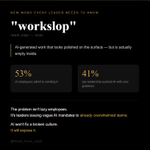
Your AI strategy isn't failing because of technology.
It's failing because you haven't changed how humans work.
Follow @Read_Grow_Lead
6
Great leaders disagree beautifully.
They attack ideas, never people.
They ask "What am I missing?" instead of "Why are you wrong?"
Your next promotion depends on mastering this skill.
Follow @Read_Grow_Lead
2
Most AI safety policies ignore teenagers completely.
They're not kids, they're not adults, and generic content filters miss the mark entirely.
Smart companies are finally building age-specific guardrails that actually work.
Follow @Read_Grow_Lead
9
AI safety isn't optional anymore.
OpenAI just launched their Safety Bug Bounty program — paying researchers to find vulnerabilities before bad actors do.
Your company needs this mindset too.
Follow @Read_Grow_Lead
82
Your AI policy isn't working.
You're writing rules for tools you don't understand while your competitors are already shipping.
Stop governing tomorrow's problems with yesterday's frameworks.
Follow @Read_Grow_Lead
5
Your university's entrepreneurship program isn't the problem.
The VC boys' club deciding who gets funded is.
Follow @Read_Grow_Lead
3
Your biggest weakness as a leader?
Thinking you need to have all the answers.
The best CEOs I know ask more questions than they answer.
Follow @Read_Grow_Lead
2
Most CEOs won't tell you this.
The job isn't about having all the answers.
It's about asking better questions and admitting when you're wrong.
Follow @Read_Grow_Lead
2
Leadership isn't about glory moments.
It's about the brutal decisions when everything's falling apart.
Here's what separates real leaders from pretenders:
1. You make the hardest cuts first, not last — fire fast, hire slow when survival's on the line.
2. You take full ownership when things go sideways — no deflecting, no excuses, just brutal honesty.
3. You communicate more during crisis, not less — transparency builds trust when trust is all you have left.
4. You stay calm when everyone else is panicking — your energy sets the temperature for the entire organization.
5. You focus on what you can control — market crashes happen, but your response defines your legacy.
6. You protect your team's morale while making impossible decisions — leadership is holding two truths at once.
The market will test you.
Your investors will doubt you.
Your team will look to you for answers you don't have.
That's when you find out if you're actually built for this.
Follow @Read_Grow_Lead
6
Leaders aren't born with blueprints.
Here's what 20 years of watching great leaders taught me:
1. They start small and stay curious about what works.
2. They pivot without shame when the market tells them to.
3. They build trust before they build empires.
4. They hire people smarter than them in areas they don't understand.
5. They stay close to customers even when they have 10,000 employees.
6. They measure progress in decades, not quarters.
7. They know when to bet big on something they've tested small.
Most "overnight successes" took 30 years to happen.
Your next move matters more than your master plan.
Follow @Read_Grow_Lead
3
Your biggest decisions will be made with incomplete information.
The leaders who win aren't the ones waiting for certainty—they're the ones who act when they have 70% of the data.
Follow @Read_Grow_Lead
1
6
Your biggest competitor isn't another company.
It's your customer's indifference.
McCain sold frozen french fries when nobody wanted them by making restaurants need what they didn't know they needed.
Follow @Read_Grow_Lead
5