


Beyond the Hard Problem retweeted

This is incredible.
This machine is capable of cleaning up 100 million kg of plastic ocean waste, and as of 2025, it has already collected about 500,000 kg of plastic.
It aims to remove 90% of ocean plastic by 2040.
Beyond the Hard Problem retweeted

Bravo Denis Noble!
Good description of Penrose non-computability in conscious processing and the Orch OR theory.

We do things more slowly than AI, but we produce surprise: out-of-distribution behavior like creativity. Like Beethoven, who brought novelty to classical music. Denis Noble hypothesizes that this capacity for ‘surprise’ comes from vast stochasticity. A bacterium has over 20 billion water molecules. Imagine the amount of stochasticity happening in a human body. Would silicon based AI be capable of out-of-distribution surprise behavior?


Beyond the Hard Problem retweeted
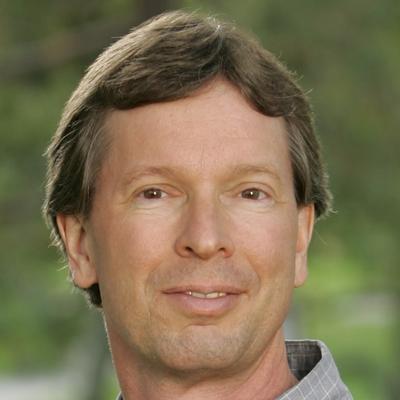
A little over a week from now, I’ll be in New Jersey for a rare East Coast event.
We’ll explore the possibility that spacetime is not fundamental, and what that might tell us about the nature of reality.
Join us: hvstage.org/event/donald-hof…
Thank you!
Beyond the Hard Problem retweeted
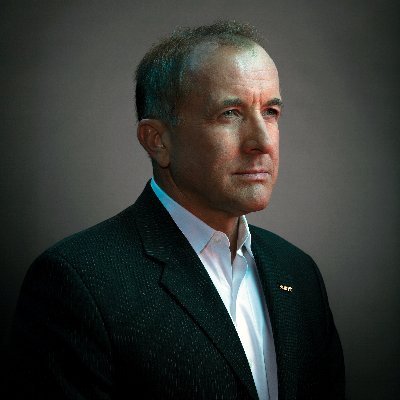
Does Consciousness Break the Laws of Physics?
Physicist Avshalom Elitzur thinks so—and argues in our conversation that accounting for consciousness may require changing the laws of physics.
Say what?
skeptic.com/michael-shermer-…
Beyond the Hard Problem retweeted

We often assume that our memories are stored in our brains, just like a hard drive stores data. bit.ly/4AfiMbS
In this talk, philosopher Victoria Trumbull argues this is a radical mistake: she argues that the brain enables memory without containing it, and that time itself stores memory.

Beyond the Hard Problem retweeted
The Science of Consciousness 2026 is 3 weeks away, October 11-16. We have 700 registrants, and group rooms and bungalows at Paradise Point Resort in Mission Bay, San Diego are almost filled and close in one week. Program and other info at tsc2026.org
Beyond the Hard Problem retweeted
I don’t think that. But I do think some conscious human A-hole could program an AI to do so.


Beyond the Hard Problem retweeted

A stunning sunset at Stonehenge. Pure magic. 🤩

ALT A stunning sunset at Stonehenge. Pure magic. 🤩
Beyond the Hard Problem retweeted
The Science of Consciousness 2026
Tsc2026.org at Paradise Point Resort in San Diego October 11-16 sponsored by UCSD is filling up quickly. Lead organizer Arnaud Delorme has done a great job and abstracts for plenary, concurrent and posters are on the website.
Here’s my abstract for the session ‘Which came first, life or consciousness?
tsc2026.org/abstracts_html/s…
My favorite abstract is from Kassandra Ori-McKenney in the Psychedelics plenary titled ‘Psychoplastogens and the microtubule cytoskeleton’. Here it is:
tsc2026.org/abstracts_html/k…
Beyond the Hard Problem retweeted

Brian Stafford, MD, reflects on his remarkable transition from a successful academic career in psychiatry to guiding wilderness-based practices aimed at what he calls an “eco-awakening”: a shift from an ego-centric to an eco-centric mode of consciousness.
youtu.be/_Mjx9iqQmXk

Beyond the Hard Problem retweeted
Congratulations to Sir Roger Penrose and colleagues from Oxford, Ulm and Ben-Gurion Negev Universities for experiments linking Einstein’s gravity with quantum mechanics. They proved equivalence theory which extends spacetime curvature to tiny quantum scales, as Penrose predicted. With larger superpositioned masses they can test Penrose Objective Reduction at times t=h/E, also proposed as the origin of consciousness. Preparations for those experiments are underway.
eurekalert.org/news-releases…
Beyond the Hard Problem retweeted
Why did Plato choose to write in dialogue, and what makes that choice still matter today?
In this talk, philosopher Angie Hobbs unpacks Plato's method to show why his work remains a genuine source of insight in the 21st century.
Tap here to watch "Why Plato Matters Now." iai.tv/video/why-plato-matte…
Beyond the Hard Problem retweeted
Our new paper ‘Home-administered unfocused ultrasound in subjective cognitive decline and dementia: An open-labeled, uncontrolled feasibility pilot study’ will be published soon in Frontiers in Aging. Here’s a preprint;
researchgate.net/publication…

Beyond the Hard Problem retweeted
Penrose's claim that consciousness relies on non-computable quantum mechanics has been dismissed for decades: quantum states, critics say, collapse far too fast in a warm brain to matter.
bit.ly/4xw9jLD
But neuroscientist Mike Wiest argues new evidence of stable quantum states at much higher temperatures means we must take the idea seriously again.

Beyond the Hard Problem retweeted

Nobel Prize-winning physicist Roger Penrose thinks we've been using the wrong word for decades, and the wrong word is quietly warping how we think.
His argument is straightforward but hits hard:
"The name is wrong. It's not artificial intelligence. It's not intelligence. Intelligence would involve consciousness. Well, if it's a machine, it's not conscious."
For Penrose, the field confused raw computational muscle with actual understanding.
"People have lost the plot. They've lost it in the power of computing. The thing is that computers have got so powerful that they've lost the thread of what they're doing. But I think consciousness is something different. It's not computational."
The label itself, he thinks, has put people into a kind of trance:
"People are so hypnotized. The trouble is that AI is a bad term. It means artificial intelligence. Now intelligence in my view is conscious. That's what intelligence is about."
His proposed fix: call it Artificial Cleverness. AC, not AI.
He draws the line using math students as an example:
"You have mathematics students. Some of them understand what they're doing. Some are just clever. They can repeat what they've learned. They know how to do it very cleverly. They can calculate very well, but they don't necessarily understand what they're doing."
That gap between calculating and understanding is exactly the gap between today's systems and real intelligence.
Cleverness can be engineered. Consciousness, Penrose argues, cannot.
Worth sitting with: when you call a system intelligent, are you describing what it does, or silently assuming something about what it is?
Interested in AI?
Follow @AiEvolutio58513 and never fall behind.
I track ChatGPT, Claude, and every tool quietly changing how we work and create, then hand you the tested signals.

Jimmy Carr channeling Peter Thiel with something worth sitting with:
"Minus the screens from any room, we're still living in the 1970s. Nothing's happened in physics since 1972. String theory has not got us anywhere."
But here's where it gets interesting:
"Take the compute power of AI and point it at physics… everything else in science is stamp collecting. Physics is the real thing. That gave us every bit of technology we have. What happens when you point AI at that?"
He lays out two possible roads: 50× productivity and genuine human flourishing, or a future that goes "another way."
AI unlocks physics within a decade. What do you want to come first: limitless energy, gravity control, new materials, or something we don't even have a word for yet?
Interested in AI?
Follow @AiEvolutio58513 and never fall behind.
I track ChatGPT, Claude, and every tool quietly changing how we work and create, then hand you the tested signals.
Beyond the Hard Problem retweeted
A Quantum World May Live Inside Your Cells—and It Could Upend Everything We Know About Human Consciousness - Popular Mechanics apple.news/AarVl5BAuQ3CBpMb3…

Beyond the Hard Problem retweeted
Elon Musk told Jamie Dimon why Earth cannot keep up with AI. He didn't talk vision. He talked physics.
Musk: "I think we can do probably somewhere around 1 terawatt per year of AI space compute from Earth, but we can do 1,000 terawatts or more from the Moon."
One terawatt. That is the hard thermodynamic ceiling of this planet.
Every reactor. Every solar array. Every grid upgrade humanity can engineer. The whole thing tops out at one terawatt of AI compute.
Earth is not a launchpad anymore. It is a lid.
So the Moon becomes the answer. Not for symbolism. For physics.
Musk: "Because the Moon has no atmosphere and about one-sixth Earth's gravity, you can use an electromagnetic accelerator… You don't need to use rockets to do AI data centers into deep space from the Moon. You can literally just shoot them like a railgun type of thing."
This is not a research base. This is a frictionless industrial platform on a celestial body.
Mine the surface. Build solar arrays and thermal radiators locally. Mount an electromagnetic launcher. Fire AI superclusters straight into deep space.
No rockets. No atmosphere. No fuel burn on exit.
A thousand terawatts. A 1,000x multiplier on the physical ceiling of compute.
And the Moon is only step one.
Musk: "We can build a self-growing city on the Moon faster than we could do so on Mars."
The Moon is the production floor. Mars is the long game.
Musk: "If you warm up Mars, you could one day make Mars like Earth, meaning with liquid oceans and life and where you could walk outside without a spacesuit type of thing."
Musk: "I call Mars a fixer-upper of a planet, but it's got a lot of potential."
A fixer-upper. That is how the richest person alive describes an entire planet.
The rest of the industry is stuck negotiating permits for a single server farm.
Musk is engineering a magnetic launch system on the Moon to fling compute into orbit.
For ten thousand years, humans looked at the night sky and invented gods.
Musk looks up and sees bandwidth.
We assumed the whole point of spaceflight was discovery.
It was always infrastructure.
Earth was never the destination. It was the starting point.
Interested in AI?
Follow @AiEvolutio58513 and never fall behind.
I track ChatGPT, Claude, and every tool quietly changing how we work and create, then hand you the tested signals.
Elon Musk, the richest man alive and co-founder of OpenAI, on AI:
"It has the potential of civilization destruction."
Asked whether AI could reach a point where humans simply can't turn it off, he didn't pause. "Yeah. Absolutely. That's definitely the way things are headed, for sure."
But the detail that actually haunts you is why he started OpenAI. He spent late nights debating AI safety with Google's Larry Page. Every time Musk raised concern for humanity, Page fired back with "specist" as an insult, meaning Musk was wrong to favor humans over digital minds. Musk's response: "I'm fully a specist. Busted."
Sit with that. The real danger was never a machine that turns hostile. It's that certain people building what they openly call a "digital god" quietly stopped caring which species survives the process. The frightening variable was never the intelligence. It was the aim.
Interested in AI?
Follow @AiEvolutio58513 and never fall behind.
I track ChatGPT, Claude, and every tool quietly changing how we work and create, then hand you the tested signals.
Beyond the Hard Problem retweeted

IMPORTANT🚨: THIS IS NOT MILKY WAY GALAXY!
You’re staring at billions of stars in the Andromeda galaxy, captured by the Hubble Space Telescope—and almost every one likely has planets.
Let that just sink in.
Beyond the Hard Problem retweeted
Lewis Carroll was a mathematician before he was a storyteller, and Wonderland is laced with mathematical ideas, argues Minh-Hoang Nguyen.
Science and mathematics once promised that reason could reach a complete, final understanding of the world. But from Carroll's paradoxes to Gödel's incompleteness theorems, mathematics tells a different story about itself.
Nguyen argues that reality, like Wonderland, is fundamentally incomplete. The belief that we live in a closed system awaiting full explanation is a philosophical mistake.
Read the full article. iai.tv/articles/godel-and-le…
