

e/acc. pragmatism and stoic ideas.
대한민국 서울
Joined February 2010
- Tweets1.1K
- Following47
- Followers377
- Likes78
SG Lee retweeted

people have happily worked so hard to build stuff for you knowing they would never meet you
just hoping that some of the people of the future would continue the quest and build the next branch of the tech tree
SG Lee retweeted

The Ancient Greeks basically invented Western philosophy. 2500 years on and we’re still studying their ideas.
Here are 10 Greek philosophers you need to know🧵

SG Lee retweeted

How DNA is copied in living cells
teapawt.net/Xudong1966/status/1766…


SG Lee retweeted

"Godfather of AI" Geoffrey Hinton now thinks there is a 1 in 10 chance everyone will be dead from AI in 5-20 years
Weeks ago, we learned that Yoshua Bengio, another Turing Award winner, thinks there's a 1 in 5 chance we all die.
Hinton is worried about AI hive minds: “Hinton realised that increasingly powerful AI models could act as “hive minds”, sharing what they learnt with each other, giving them a huge advantage over humans.”
“OpenAI’s latest model GPT-4 can learn language and exhibit empathy, reasoning and sarcasm."
“I am making a very strong claim that these models do understand,” he said in his lecture.
He predicts that the models might also “evolve” in dangerous ways, developing an intentionality to control. “If I were advising governments, I would say that there’s a 10% chance these things will wipe out humanity in the next 20 years. I think that would be a reasonable number,” he says.
“He was encouraged that the UK hosted an AI safety summit at Bletchley Park last year, stimulating an international policy debate. But since then, he says, the British government “has basically decided that profits come before safety”.
“He says he is heartened that a younger generation of computer scientists is taking existential risk seriously and suggests that 30% of AI researchers should be devoted to safety issues, compared with about 1% today.”
“We humans should make our best efforts to stay around.”

P(doom) roundup: what probability do people put on AI killing everyone?
- Vitalik Buterin (Ethereum): 10%
- Zvi Mowshowitz: 60%
- Elon Musk: 20-30%
- Scott Alexander: 20-25%
- Dario Amodei (CEO, Anthropic): 10-25%
- Jan Leike (Head of Alignment, OpenAI): 10-90%
- Geoffrey Hinton (Godfather of AI): 10%
- Paul Christiano (Former Head of Alignment at OpenAI, inventor of RLHF): 50%
- Lina Khan (FTC Chair): 15%
- Average AI engineer (Oct 2023): ~40%
- Average ML researcher (in spring 2022, before things got crazy): 10%
- Dan Hendrycks: recently updated from 20% to 80%
- Average AI alignment researcher: 30%
- Extinction tournament (median for AI experts): 20% chance of catastrophe, 6% chance of extinction
- Extinction tournament (median for non-AI experts): 9% chance of catastrophe, 1% chance of extinction
- BACA Research: 50%
- Scott Aaronson: 2%
- Conjecture AI researchers: 80%
- Eli Lifland: 35%
- Eliezer Yudkowsky: >95%
- Nate Soares: >95% (I think?)
- Holden Karnofsky: 50%
- Average American: 26%
Note: these are just a few I recall from memory and could easily find sources for.
What’s your p(doom)?
My take: I agree with @TheZvi - if your p(doom) is anywhere between 10-90%, it shouldn’t really change what you do, that’s plenty high to justify urgent action.
* Disclaimers: p(doom) usually means as “extinction or similarly bad outcome” but everyone defines it differently, some of these are old and may have changed, many people added various caveats and conditionals, etc.
Just squint and notice the general pattern: a few tech companies are playing Russian Roulette with humanity.




SG Lee retweeted
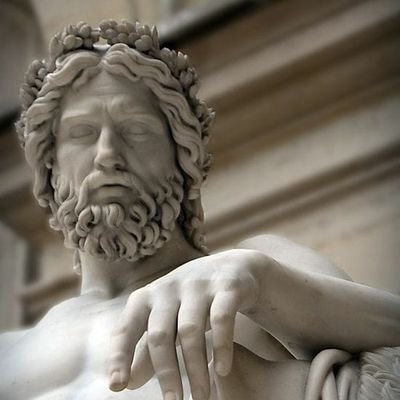
2. Charlie Munger:
Don’t be surprised when you lose to people like this
by @FoundersPodcast




SG Lee retweeted

Biotech is going to have its ChatGPT moment sometime in the next 5 years. Figuring out the human body is quickly being turned into a compute problem AND the expense of that compute is falling faster than Moore's law (chart and text snippet from @Noahpinion article yesterday - link in subtweet).
"Three fundamental shifts are enabling the exponential progress of biotechnology: First, advances in AI are making truly predictive models for biology possible; second, the rapidly decreasing cost of running biological experiments to generate data for those models, driven by innovations in lab automation and robotics; and third, our ability to engineer animal and plant cells through technologies like CRISPR."
For 4.6% ($600) of the average annual cost of healthcare expenses per person ($13,000) - you can now scan an entire human genome.
We're rapidly turning cells, DNA, diseases, proteins, etc into digital information - and once it's all digital its usefulness increases by many orders of magnitude.
All signs seem to indicate that most cancers will be cured outright (or at least become a chronic condition no more deadly than diabetes) by the end of this decade.






SG Lee retweeted

If your brain isn’t healthy, neither are you.
Most people are slowly killing their brain without realizing it.
Here are 12 bad habits hurting your brain (and how to fix them):


SG Lee retweeted

Amazon got more than 750.000 robots deployed.
Most people don’t realize how fast the robotics industry is scaling
Amazon is the perfect candidate.
10 years ago, robots were practically non-existent in their global warehouse and distribution network.
But this is the actual acceleration ramp-up.
2013: 1,000
2014: 15,000
2017: 100,000
2019: 200,000
2021: 350,000
2022: 520,000
2023: 750,000
Let’s zoom in on the two last jumps.
400,000 additional robotic units in roughly two years.
That results in thousand of new units deployed *every week* 🚀
It’s clear. Beyond doubt. That AI, robotics, computer vision, will and is replacing a lot of human labor. And will continue accelerating that progress in the next decade.
It’s important to note that this will also accelerate the need for more high-skilled work. Make industry safer.
The biggest challenge we will face is the grandeur of re-skilling and up-skilling that will be facing the workforce in a relative short period of time ahead.
We’ve entered the Era of Robotics and The Age of Intelligence all at once.