In Defense of Boris Groys: Communism as the Triumph of Materialism Over Material Necessity
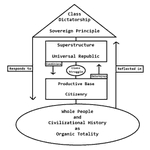
Troves of idiots have taken to criticism of Boris Groys's definition of communism, particularly his assertion that communism represents the subordination of economics to politics, reveals a peculiar misunderstanding among those who profess to be Marxists. Groys is accused of idealism, of elevating the political superstructure above the economic base, and of abandoning historical materialism in favor of some abstract sovereignty of language. Yet these criticisms fail to recognize the fundamentally dialectical character of his argument.
What Groys describes is not the negation of materialism, but its ultimate historical realization: the development of the productive forces to such an extraordinary degree that material necessity ceases to dominate human existence, allowing conscious human purposes, desires, and ideas to become the principal determinants of social life.
The confusion arises from treating communism as though it were simply an extension of the economic conditions that characterize capitalism or the transitional stages of socialism. Marx and Engels never conceived of communism as the immediate abolition of material necessity through political proclamation. The historical development of the productive forces, the transformation of the relations of production, and the progressive liberation of humanity from necessary labor constitute the material foundations upon which communist society becomes possible. The dictatorship of the proletariat, the successive stages of socialist development, and the eventual dissolution of class antagonisms are not incidental to this process. They are its historical prerequisites. Communism, in its fully developed form, belongs to a society whose productive capacities have advanced far beyond the limitations imposed by scarcity, inefficient organization, and the compulsory expenditure of human labor.
It is precisely here that Groys's argument becomes interesting. His distinction between the numerical language of economics and the political language of conscious decision-making should not be interpreted as an assertion that language somehow produces material reality. Rather, it can be understood as describing a historical transformation in which the economic process becomes so thoroughly developed, rationalized, and technically sophisticated that its administration increasingly ceases to be the central preoccupation of human society. Production becomes a question of highly developed technical organization, while the determination of what ought to be produced increasingly becomes a question of conscious human intention.
I have spent many years working in manufacturing, engineering, and product design, visiting factories throughout the world and participating directly in the development of manufactured products. Two contrasting experiences illustrate this distinction more effectively than any abstract philosophical formula.
Consider two factories, which I will call Factory A and Factory B.
Factory A represents an extraordinarily advanced productive organization. Its logistics are sophisticated, its engineering departments highly competent, its machinery modern, and its productive capacity so thoroughly developed that the ordinary problems of manufacturing have largely been anticipated and resolved. When designers enter such a factory to discuss a new product, the conversation is not dominated by whether a particular machine exists, whether a component can be sourced, or whether some elementary manufacturing operation can be accomplished. These questions have already been addressed by the productive organization itself.
Instead, the discussion becomes almost entirely conceptual. What should this product be? What form should it take? What new possibilities can its materials and construction make available? What human needs might it satisfy, and what entirely new expectations might it create? The designers are, in a very real sense, liberated to operate as idealists. Their attention is directed toward possibilities rather than immediate constraints. They are free to imagine something that does not yet exist because the material apparatus necessary to realize their imagination has already been developed.
Factory B represents the far more common experience. Its logistics are inadequate, its machinery outdated, its engineering capabilities limited, and its organization perpetually struggling against elementary productive constraints. Here the same meeting becomes an entirely different affair. Rather than discussing the ideal form of a product, the designers must concern themselves with the availability of hardware, the limitations of machinery, the sourcing of materials, the costs of individual operations, and innumerable technical obstacles. Every creative proposition encounters some immediate material limitation. The designer must become an engineer, a logistician, a purchasing agent, and frequently a troubleshooter of the most elementary manufacturing processes.
In Factory B, one is compelled to become what might be called a vulgar materialist. Every discussion is subordinated to the immediate question of what can actually be accomplished under existing conditions. In Factory A, by contrast, the very sophistication of the material apparatus permits the discussion to transcend these immediate limitations.
The distinction is not that Factory A has somehow escaped material reality. Quite the opposite. Factory A is capable of entertaining the ideal precisely because its material foundations are so extraordinarily developed. The apparent freedom of ideas is the consequence of the prior development of productive forces.
This is the dialectical inversion that Groys's critics fail to recognize. The more completely humanity masters the material processes of production, the less those processes need to dominate the conscious purposes of human activity. Material development creates the conditions for the relative sovereignty of the ideal.
What appears at first to be a contradiction of materialism is actually its dialectical fulfillment.
The significance of this transformation becomes clearer when we consider Engels's famous formulation in Anti-Dühring, where he describes the replacement of the government of persons by the administration of things and the direction of processes of production. This is not merely a proposal for more efficient government. It describes a profound historical transformation in the relationship between humanity and its material conditions of existence.
Under capitalism, enormous quantities of human labor are consumed simply maintaining the conditions necessary for production. Workers spend their lives negotiating shortages, inefficiencies, organizational failures, competitive pressures, and the endless demands of accumulation. Even extraordinary technological advances frequently fail to liberate workers from these conditions because the purpose of production remains subordinated to the reproduction and expansion of capital.
Communism transforms this relationship. The progressive development of productive capacity, combined with the abolition of capitalist relations of production, makes possible a society in which the administration of material necessities occupies a diminishing proportion of human activity. The economy does not disappear, nor does production cease to be material. Rather, production becomes increasingly rational, automated, and socially coordinated, while human beings become progressively liberated from the necessity of devoting the greater part of their lives to its maintenance.
This also explains the importance of the argument, frequently emphasized by the communist writer Jehu, that the real measure of communist development is free time.
The success of communism cannot be adequately measured simply by the quantity of goods produced, the sophistication of machinery, or the aggregate magnitude of economic output. These are indispensable material prerequisites, but they are not the ultimate purpose of communist development. Its success must also be measured by the degree to which these productive achievements liberate human time.
Imagine a society in which the ordinary worker is required to devote only one day a week to necessary production. The remaining time becomes available for intellectual development, artistic activity, scientific investigation, social participation, and the cultivation of entirely new human capacities. Even within the remaining hours of productive activity, the character of labor itself changes. Rather than spending forty, fifty, or sixty hours each week struggling against elementary logistical and technical limitations, people increasingly participate in determining what should be created, how production might be improved, and what new possibilities humanity ought to pursue.
The distinction between necessary labor and freely undertaken creative activity begins to dissolve, not because work has magically ceased to involve material processes, but because those processes have become sufficiently developed to permit an entirely different relationship between human beings and production.
Marx himself approaches this question in the Grundrisse, where he describes the reduction of necessary labor time and the expansion of disposable time as fundamental consequences of the development of productive forces. In Capital, Volume III, he likewise distinguishes the realm of necessity from the realm of freedom, explaining that genuine freedom develops beyond the sphere of material production, even as the rational organization of necessary labor remains its indispensable foundation.
Groys's conception can be understood within precisely this historical movement.
When he describes communism as the subordination of economics to politics, the crucial question is what stage of historical development is being considered. If one imagines an underdeveloped society attempting to abolish economic necessity through political declarations, the criticism of idealism is entirely justified. No amount of sovereign political language can manufacture machinery, overcome material shortages, or substitute for the development of productive capacity.
But this is not the conception of communism being defended here.
The sovereignty of politics becomes meaningful only insofar as the material conditions necessary for its realization have already been established. At a sufficiently advanced stage of communist development, society no longer organizes its fundamental purposes around the imperatives of economic survival or capital accumulation. The question of what ought to be produced becomes increasingly a question of what humanity consciously desires to accomplish.
Politics, understood here not as the perpetuation of a coercive state apparatus but as the collective determination of social purposes, assumes a new character. It ceases to be principally the administration of antagonistic class interests and becomes the conscious articulation of human possibilities.
This is where Groys's emphasis on language acquires its philosophical significance. Language permits the formulation of purposes that are not reducible to existing quantitative economic relationships. Human beings can deliberate over what does not yet exist, imagine new forms of life, and determine collective objectives that cannot be derived simply from the numerical calculations of production.
Of course, these purposes never arise outside material history. Even the most imaginative conception is formed by human beings whose capacities have been produced through definite historical conditions. Ideas do not emerge literally from nothing. Yet once the material prerequisites of freedom have been established, the range of possible human purposes expands enormously. Human desire is no longer overwhelmingly organized around the satisfaction of immediate necessities.
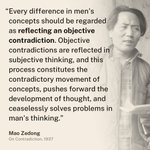
This is a thoroughly Hegelian contradiction. The development of material production, seemingly the most concrete and objective activity of human society, produces the conditions under which human freedom increasingly expresses itself through conscious purposes, ideas, and self-determination. The material development of humanity culminates in a form of existence in which material necessity no longer appears as the immediate master of human life.
The ideal does not abolish the material. The material makes the freedom of the ideal possible.
There is consequently something profoundly undialectical about dismissing Groys's formulation merely because it appears to privilege politics over economics. Such a criticism freezes the relationship between base and superstructure into an eternal mechanical hierarchy. It assumes that because material production conditions political and intellectual life, political and intellectual life must forever remain subordinated to the immediate requirements of material production in precisely the same manner.
But historical materialism is not the doctrine that humanity must remain eternally enslaved to economic necessity. It is the explanation of how the historical development of material conditions makes possible new forms of human freedom.
The entire revolutionary significance of communism lies in this transformation.
A society that has achieved extraordinary productive abundance but continues to compel its population to spend the majority of its waking hours laboring under economic necessity has not realized the highest possibilities of communism. It has merely developed its productive apparatus without completing the corresponding transformation of human life.
Conversely, a society in which necessary labor has been radically reduced, material production is consciously organized, and human beings possess unprecedented freedom to determine their own activities has begun to realize the very conditions under which Groys's formulation becomes intelligible.
The critics who dismiss his argument as idealism mistake the final result of a historical process for an attempt to evade that process. They see the sovereignty of conscious human purposes and assume that Groys has abandoned the material foundations of society. What they fail to consider is that the sovereignty of those purposes might itself be the greatest achievement of material development.
Communism is not the triumph of ideas over matter in the abstract. It is the historical triumph of humanity over the material necessities that previously constrained the development of its ideas.
The highest realization of materialism is therefore not a society eternally preoccupied with material necessity, but one in which the development of material production has finally made freedom from that necessity possible.
In this sense, Groys's apparent idealism is not necessarily a repudiation of Marxism. It can be understood as an attempt to describe the historical condition toward which Marx's conception of communist development ultimately points: a society in which the productive forces have advanced so far, and the realm of necessity has been so thoroughly mastered, that the conscious determination of human purposes becomes the principal content of social existence.
Factory A provides only a limited glimpse of this possibility, and it remains embedded within capitalist relations of production. Yet even there, the contrast is unmistakable. The more completely the material problems of production have been resolved, the more freely human beings can concern themselves with what ought to exist.
Communism would universalize this possibility, abolishing its confinement to the privileged boardrooms of advanced capitalist manufacturing and making it the common condition of human society.
The final irony is that those who condemn Groys for idealism may themselves be defending an extraordinarily impoverished conception of materialism, one incapable of imagining the historical conditions under which humanity might finally transcend the domination of immediate economic necessity.
They have mistaken the means for the end. The development of production is indispensable, but the ultimate purpose of that development is the liberation of humanity. And that liberation necessarily includes the freedom to imagine, to create, and to decide collectively what kind of world ought to exist.
If it bothers you that Communism elucidates and lifts up these contradictions to a higher level, then this line of thinking isn't for you.