

Behavioral Scientist PostDoc @HarvardMed @MGHneurosurg PhD Psychology @UVA Genomic & Neuro Tech Moral Cognition | Decision Making | Bioethics | Emotion
Joined October 2015
- Tweets209
- Following425
- Followers363
- Likes208



Pinned Tweet
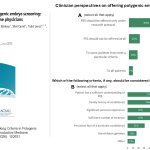
Polygenic embryo screening is being marketed commercially – but how do IVF clinicians view it?
• General approval is low (12%)
For specific uses:
• 59% approved of health-related embryo selection
• 6% approved of trait-based selection
🧵 Survey findings in NPJ Genomic Medicine

Rémy Furrer retweeted

Not ready for primetime. Study finds clinicians have differing views on whom to offer #PES, for what conditions, and how to factor PES scores and rankings when prioritizing embryos for transfer. bit.ly/4wfM8EU #PolygenicEmbryoScreening #PGT #REI #IVF

What are IVF doctors’ views on polygenic embryo screening (PES/PGT-P), and what criteria go into their decisions?
New survey results from 152 clinicians published in @GIMJournal.
@GLMhealthtech @ShaiCarmi @ToddLencz
Link in comments.

Study: Decision-making criteria in polygenic embryo screening: A survey of reproductive medicine physicians
gimjournal.org/article/S1098…

My letter responding to @TheEconomist’s “designer baby” editorial is out. The editorial cites our study on public attitudes toward polygenic embryo screening but omits a key finding: attitudes became less favorable when participants considered potential concerns. Pub. link in🧵

Link to our study: jamanetwork.com/journals/jam…
Link to the published letter:
economist.com/letters/2026/0…

Out in @NatureHumBehav
How Polygenic Risk Scores are communicated matters.
We argue that a PRS is a "probabilistic estimate of risk based on population-level DNA associations." It is not, in itself, a "genetic predisposition." rdcu.be/fji4T
Collab with E. Turkheimer


This does not deny the biological relevance of genetic variants. The point is ontological: a PRS is a model-relative estimate. Understanding it as one estimated risk factor among many can help preserve agency for preventive health behavior.
Free Link: rdcu.be/fji4T
Rémy Furrer retweeted

1/ New review paper out today! "Mental Models of Causal Structure in Economics and Psychology" with MIT cognitive scientist @RaBhui and econ theorist Heidi C. Thysen. How do people come to believe that one thing causes another—and what happens when those beliefs are wrong? 🧵

Rémy Furrer retweeted

We just published this paper in Genetics in Medicine examining how different populations view and use the concept of "eugenics" when discussing polygenic embryo screening.
EUGENICS AND POLYGENIC EMBRYO SCREENING... gimjournal.org/article/S1098…
Overall caution was clear: 58% said risks outweigh benefits, while 16% said benefits outweigh risks.

Full survey results (open-access) in @Nature_NPJ Genomic Medicine:
nature.com/articles/s41525-0…
You can read more of our “PEER” research group’s findings on polygenic embryo screening here:
polygenicembryo.org
@GLMbioethics @SPereira_PhD @ShaiCarmi @ToddLencz
Clinicians (n=144) showed low overall approval of people using polygenic embryo screening:
• 12% approved.
• 42% neither approved nor disapproved.
• 46% disapproved.


Rémy Furrer retweeted

There’s a deep difference between sentences like:
(1) Jane caused the glass to break.
vs.
(2) Jane broke the glass.
A surge of experimental philosophy research has led to some surprising discoveries about sentences like (2)
[Thread]

Rémy Furrer retweeted

New paper now out in Physics Report:
If you're interested in information theory, complex systems, and emergent properties, this is the paper for you: a comprehensive review paper designed to bring anyone up to speed on information theory for complex systems scientists.

Rémy Furrer retweeted

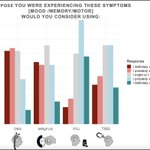
Study Provides a Window Into Public Perceptions About Technological Treatment Options for Brain Conditions
Published in @Device_CP, @RemyFurrer @armerner_psych and colleagues conducted a survey of over 1,000 U.S. adults to examine perceptions of four neurotechnologies: massgeneralbrigham.org/en/ab… doi.org/10.1016/j.device.202…
