
Raised by Reptiles book project. Finding my way back to the ancestors so I can be a better dad.
Joined March 2022
- Tweets5.4K
- Following650
- Followers273
- Likes8.7K





Pinned Tweet
It’s a developmental disorder. Human’s are born with reptile traits fully developed. Fronto-temporal lobes must mature via exposure to education. But emotional/spiritual traits must develop via modeling of others. We lost much of what we need to model about 12,000 ya. Let’s talk.
5
47
Wow!

An ancient human figurine carved from Baltic amber, dating back to the Neolithic or Bronze Age and historically associated with the regional Narva culture...
Crafted from Baltic amber (succinite), which was prized in prehistoric Baltic communities for ritual, protection and trade. Features a rounded head, a distinct triangular or stylized face with a clearly marked nose and brow ridges and an abstract body. Perforations or drillings on the sides (near the arms/shoulders) indicate it was likely worn as a pendant or protective amulet. Similar pieces belong to collections from prehistoric sites along the Baltic coast, such as the famous Juodkrantė (Schwarzort) amber treasure.
. . .
The Treasure of Juodkrantė is a collection of Neolithic and Bronze Age archaeological amber artifacts discovered in the Curonian Lagoon near Juodkrantė, Lithuania.
The amber collection was unearthed during industrial dredging operations between 1860-1890 in the Curonian Lagoon by the firm Stantien and Becker, which excavated roughly 75,000 kg of amber from the area.
The original find comprised 434 rare prehistoric amber pieces, marking the dawn of the ancient Baltic amber culture and the start of the historic Amber Way.
The main collection was moved to Königsberg and largely disappeared during World War II. Only a small fraction—about five original artifacts—survived and are housed at the Museum of Geology at Göttingen University in Germany. Replicas can be viewed in local exhibitions like the Nida Amber Museum.
The collection contained intricately carved amber pendants, V-holed double buttons, cylindrical and tubular beads, and rare human (anthropomorphic) and animal (zoomorphic) art figurines. The collection featured unique miniature sculptures, including the largest Baltic anthropomorphic amber figure (thought to depict a woman) and schematized animal heads (such as a horse).
The collection highlights the sophisticated 4th-3rd Millennium BC processing traditions of the regional Narva culture, where amber was valued not just for ornament, but for ritual and protection.
#archaeohistories

3
Do people sense loved ones for years after a loss?
In a random US phone survey, a 2006 study found people most often described dreams, sounds, a felt presence and conversations, suggesting such contact may be lifelong and more common than thought.
doi.org/10.2190/40UP-PKC5-D4…

5
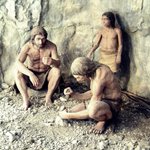
Did Neanderthals bury their dead?
After 12 years of fieldwork at France's La Chapelle-aux-Saints, a 2013 study found the pit was dug by people and the body covered quickly, evidence supporting an intentional Neanderthal burial at a long debated site.
doi.org/10.1073/pnas.1316780…

4
Nice read.

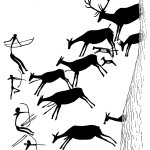
WHERE DID THE EARLY PEOPLE OF ZIMBABWE WHO LEFT PAINTINGS IN CAVES MIGRATE TO?
The early people who created the cave and rock shelter paintings across Zimbabwe were primarily ancestors of the San (also known as Bushmen or Basarwa), Later Stone Age hunter-gatherers.
Zimbabwe has one of the world’s densest concentrations of rock art, with thousands of sites (over 3,000 documented in the Matobo Hills alone, a UNESCO World Heritage area). These paintings, mostly on granite shelters and boulders, depict animals (especially kudu and other antelope, giraffes, elephants), humans in various activities (hunting, dancing, trance-related scenes), plants, and distinctive geometric forms known as “formlings.” They date mainly from roughly 13,000–2,000 years ago (Later Stone Age), though human occupation of some shelters goes back much further (Middle Stone Age levels tens of thousands of years old). Direct dating of paint is difficult, but painted rock spalls in deposits at sites like Pomongwe Cave support ages of at least ~10,000–13,000 years for some of the art.
Origins and long presence in southern Africa
The San and related Khoisan-speaking peoples represent some of the deepest-branching modern human lineages in Africa. Genetic evidence indicates their ancestors diverged from other human populations very early (estimates often in the range of ~200,000–360,000 years ago) and remained relatively isolated for long periods in southern Africa.
By the Later Stone Age, San-related hunter-gatherer groups were widespread across southern Africa, including what is now Zimbabwe, Botswana, Namibia, South Africa, and parts of neighboring countries.
Later migrations and displacement
Significant population changes began in the last ~2,000 years:
Around 2,000 years ago, small groups of East African-related pastoralists arrived in southern Africa. They mixed with local San groups, contributing to the ancestry of Khoekhoe (herder) populations.
Starting in the early centuries CE (roughly 1,800–2,000+ years ago, with earlier signs farther north), Bantu-speaking agro-pastoralists expanded southward and eastward from regions farther north/west in Africa. They brought ironworking, pottery, crop cultivation (sorghum, millet, etc.), and cattle/sheep herding.
In the Zimbabwe region, early Bantu-related groups appear by around the first few centuries AD, with later developments leading to Iron Age societies and eventually states such as those associated with Great Zimbabwe.
These incoming farming and herding populations gradually displaced or absorbed many San groups. Hunter-gatherers were often pushed into more arid or marginal environments (such as the Kalahari) where farming was less viable.
Interactions included trade, intermarriage, cultural exchange (e.g., some Bantu groups sought San rainmaking knowledge), and conflict over resources. Some San remained in parts of Zimbabwe or mixed with newcomers; small communities of San descendants (such as the Tshwao/Tjwao) still live in areas like Tsholotsho in western Zimbabwe.
Later colonial-era pressures (from the 18th–20th centuries) further reduced and marginalized remaining San populations through land dispossession, violence, and assimilation.
The painters of Zimbabwe’s rock art were local Later Stone Age San hunter-gatherers whose ancestors had deep roots in southern Africa. Their way of life and artistic tradition persisted for millennia until the arrival of pastoralists and especially Bantu-speaking farmers led to large-scale demographic, economic, and cultural shifts that reduced their presence across much of the landscape, including Zimbabwe. The art itself remains one of the most vivid records of their world.

19
Were our ancestors more equal than we imagine?
A 2015 paper argued cooperative hunting, cooking and weapons that let groups check would-be bosses helped replace primate dominance with egalitarian bands whose leaders had to persuade rather than command.
doi.org/10.1086/681217

3
Could lithium be linked to lower dementia risk?
Following 16,238 people in Denmark prescribed lithium from 1995 to 2005, a 2008 study found dementia rates in those who kept taking it fell to the general population's level, an encouraging association.
doi.org/10.1001/archpsyc.65.…

2
What signs do grieving people notice from loved ones?
Interviewing 9 men and 9 women, a 2005 study described visions and dreams, lost things found, symbolic messages and sightings, concluding that after-death communication is a common part of grief.
doi.org/10.1177/089801010527…

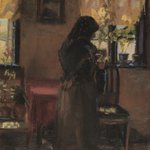
ALT Vilhelm Hammershoi's painting Interior, Sunlight on the Floor, an empty quiet room with window light falling across the floor
7
Is abstract design older than our own species?
A shell from Java's Trinil site with a geometric engraving, about 430,000 to 540,000 years old, suggests Homo erectus could make abstract marks, a 2014 find that stretches the evolution of the human mind.
doi.org/10.1038/nature13962

14


Did Neanderthals care for their sick and injured?
Reviewing healed injuries and survival with impairments, a 2018 paper argued Neanderthal healthcare was widespread, rooted in strong social bonds and a compassionate, knowledgeable response to suffering.
doi.org/10.1080/00438243.201…

4
Could minerals in tap water relate to mental health?
Comparing water lithium in all 808 cities and wards of Japan with suicide rates, a 2020 study found higher lithium was associated with lower rates, mainly in men, a pattern worth more research.
doi.org/10.1111/bdi.12983

13
Beautiful

The Consequences of Sound
Time is swallowed by every sound, by every move, akin to how time is created when photons are slowed by matter. The light that comes to us is timeless. Only when it is forced to slow do we live inside the interruption. Our lifetime is the art we make of those intervals.
Remove your glasses sit down on the beach and reflect as I did this AM to write this.
Most people think stress is the problem, but it is a sign of something deeper. When you lose control of how you feel, everything suffers because you have been programmed for survival.
The mind will not shut off.
It scans, reacts, and replays the same patterns.
You feel anxious without knowing why.
You cannot focus.
You cannot relax.
You feel stuck.
Calming music does not pull you out;
pretty sounds do not stop the loop.
Something taken to soften the edge only dulls it for a while. Scrolling or shows switch the channel,
yet the moment you stop the survival program is still running.
The larger refinery of attention has narrowed to threat. Mitochondria continue their work, but the intervals they help create are spent defending rather than refining. Time is wasted instead of stored.
The adult clock ticks louder.
Possibilities shrink.
Regrets mount.
I went deep into Nature this AM and let her sounds reset the mechanism. The waves this morning were powered by golden ratios all around me.
They delivered.
Watching the consequences of sunrise brought the mind out of turbulence and into a vortex of power.
Shoes came off at the water’s edge.
Vortices crashed all around.
The brain began to sense the coherence of sound and to participate in the symphony.
Eyes open, ears attuned, the sticky moment loosened.
Calm imbibed the soul.
The body regained control.
The mind reconnected to the cosmos.
Sound and its golden-ratio frequencies have consequences: the mind finally slows, the rough edges of the signal smooth, and within minutes we feel like ourselves again, savage and wild, returned to the default state the Matrix of Nature was built to support.
This is not distraction.
It is a denser interruption.
Nature’s matrix is the original electromagnetic sensor, corralling light and vibration the way mitochondria corral electrons.
Standing inside it forces arriving energy through a more efficient tick-tock. More of the timeless light is stored, on the water we still carry, in the electronic readiness of the cells, in the newly ordered intervals of attention. The survival scan quiets because a larger coherence has been restored. We invest in time instead of racing through it. The quantum conversion resumes: what arrives becomes memories not yet lived, opportunities we create rather than endure.
Many who step outside each morning and simply participate, pressing play by being present with the waves, the light, the vortices, discover the same shift. It is non-invasive. It works on the device already in the head and chest. There is nothing to figure out. The art of the lifetime includes these returns. Each one slows the light more thoroughly, stores a little more duration, and leaves the flame brighter for whoever stands beside us when we come back in.
The paradox yields.
New eyes open.
It is not yet so late.
Many people using Nature's Golden Ratio frequencies every AM were right where you are now, wondering if this would actually do anything for them. When we go outside and press play its impossible not to feel the difference. It's passive audio that works on the device in your head and chest.
I dare you to begin.
My friend, Rick began this exact journey 20 years ago every AM and he changed his life and now his legend lives inside the Rock n Roll HOF. He was inducted last night. Congrats, my friend.
There are deep consequences related to the sounds found in Nature.
I suggest you tap them.


4
Can honoring the dead at home ease grief?
Interviewing 20 Japanese widows in early mourning, a 1969 study found most kept ancestor worship customs that honor a loved one's presence and were less depressed and anxious than those who didn't.
doi.org/10.1176/ajp.125.12.1…

5
Did people give color meaning 92,000 years ago?
Testing whether ochre at Israel's Qafzeh Cave was mined for its color, a 2003 study found it alongside finds unrelated to everyday tasks, a pattern the authors saw as consistent with early symbolic culture.
doi.org/10.1086/375869

3

With Thanksgiving coming, why do we share food so freely?
A 2013 meta-analysis of 32 study populations of human foragers and other primates found reciprocity shapes food sharing about as much as kinship, a sign giving back runs deep in our evolution.
doi.org/10.1098/rspb.2013.16…

5
Could trace lithium in tap water relate to everyday mood?
Re-examining data from 609 residents of five Japanese cities, a 2017 study found more lithium in drinking water was associated with lower depressive temperament scores, a clue worth testing.
doi.org/10.5234/cnpt.8.7

8
Can extraordinary experiences after a loss help people heal?
Following 12 bereaved people who had such experiences, a 2005 study found 11 reached an adaptive grief outcome, supporting the view that continuing bonds with a loved one can be healthy.
doi.org/10.2190/FM7M-314B-U3…

ALT William Bouguereau's 1877 painting The Virgin of Consolation, comforting a grieving mother
3
When did people start wearing symbols?
Shell beads from Morocco's Grotte des Pigeons, about 82,000 years old and coated in red ochre, show bead-making in Africa at least 40,000 years before similar ornaments appear in Europe, a 2007 study reports.
doi.org/10.1073/pnas.0703877…

5
Makes sense.

Unusually large handaxes weighing up to 3 kilograms have puzzled archaeologists because they are so unwieldy, but their function may have been purely symbolic newscientist.com/article/259…

4