
A husband and father with 30 years as an IT & Management Consultant with a variety of great career and life experiences!
Canada
Joined March 2009
- Tweets1.7K
- Following402
- Followers398
- Likes777







The Bank of Canada raised its policy rate by a quarter point on Wednesday, to 2.5%. It's the first increase since July 2023, and the Bank says more could follow.
The cause is energy. The war in the Middle East is in its eighth month, oil prices are up, and inflation has sat around 3% since April. The Bank expects about 3.5% by year end. Leave out gasoline and inflation was 2.2% in September, so most of this is fuel so far. The concern is that higher fuel and shipping costs work their way into everything else. The Bank's own surveys say businesses will pass more of those costs on over the next year.
If you have a variable-rate mortgage or a line of credit, it just got more expensive. Every household is also paying more at the pump and the grocery store. The city is in the same spot. We buy fuel and materials too, and we borrow.
Council doesn't set interest rates, so I'm focused on what we do control. Before we commit to any large capital project, I want to see the borrowing cost assumptions behind it, and I want them tested against rates staying where they are or climbing. Spending that can't show a clear need should wait.
If your mortgage renews soon, call your lender early and ask what your options are.
City Council Update
We had a busy day at Council with over 20 speakers on various items, so I'm going to just cover the more critical items and be as concise as possible to prevent a wall of text.
- Transportation Fines, Fees and Permits - disobedience to traffic signs, obstructing traffic at an intersection, splashing a pedestrian, driving over freshly painted lines, and incoveniencing pedestrians all had their fines increased to be in alignment with other municipalities. The item regarding homeowners paying for their residential accessibility parking spots was deferred by my motion in the Transportartion Committee so we could have appropriate feedback from several advisory committees on accessibility and aging.
- Naming of Civic Property and Development Area Policy - Some changes to our policy on how nominations for naming streets and parks were discussed to make the process more inclusive. The options approved were to go with a annual engagement process, to consider a budget proposal to enhance the process further, and to report back on having the DEIAC more involved. I voted against the the further budget proposal as it adds more to the budget for 2027 / 2028, and with families waiting as far back as 1987 for something to be named, it would be unfair for the City to keep asking for more names when we have a backlog of 157 approved names that already exist.
- 51st Street & Millar Ave. Intersection Improvement - Along with the next item, we had numerous speakers and comments on this item.
The first option was proposed by the Transportation Committee provided significantly better pedestrian traffic safety, left options to access the 32 businesses in the area more easily, and prevented a potential 25%-50% business loss. This option was defeated with a 5 - 5 vote with Block, McDonald, Jeffries, Parker, and Timone voting against it.
The second option from Administration was then moved which involved a dramatic change to the intersection eliminating left turns and put numerous businesses at risk. It was defeated with Dubois, Ford, Doneur, Davies and myself voting against it. With a stalemate scenario on both options, there is no direction and dies. As this would have been a shelf project among others with potentially higher priorities waiting for funding, it can be revisited as needed.
- Connecting Millar Ave from 43rd Street to Maquis Drive - as mentioned, this item had several speakers and comments submitted. The motion allowed for a mutlipurpose path on one side of the road so everyone has a safe path to walk and bike the route safely. Transit will have 18 stops along the route, currently has roughly 200 transit users per day, and there are no paved bus stops or sidewalks, just a post designating the spot as a bus stop. Businesses in the area and many comments I received prior to this meeting thought the multiuse path on one side was a fair compromise. Again, this is a shelf project and we currently have 40km of needed sidewalk before this was considered. The motion passed unanimously.
Councillor Dubois and myself also moved that Admin report back on the right of way or city owned property in the area for parking and temporary storage without a lease for formal agreement, and options to address those situations. It passed unamimously.
- Naming Rights Agreement for Centennial Auditorium - TCU informed the city they would not be continuing with their naming rights, and so Cameco entered into agreements and we 10 year agreement starting Jan. 2027 and will be worth $3.85M along with a few perks involving some free meeting space, box with 6 tickets to select shows, etc. It passed unanimimously.
- Preliminary Financial Analysis of Relocating Wildwood Golf Course - Councillor Jeffries made this motion several months ago and it was a motion I voted against. The report basically indicated that the City would lose roughly $20M in such a relocation. The report was received as information and no further action will be taken.
Community Safety Update
The City released its August and September community safety update. Fire addressed 195 encampments in August and 96 in September. Camps are growing larger more quickly, which means fewer camps overall. Encampment fires went from 7 in August to 23 in September. Overdoses dropped from 402 to 243. Police calls in the downtown core went from 3,673 to 3,411, which is still above both months last year.
Ward 3 has had a better summer, with far fewer encampments than other core areas of the city. My read is that camps are going up bigger and faster elsewhere that are closer to support services, while here neighbours are watching and reporting them right away, so they never get settled.
Some of the report concerns me. Encampment fires jumped, and with colder weather coming, many of these camps are near buildings and fences. A 24-hour patrol around the Avenue C Drop-In Centre calmed things down for ten days in August, but it pulled patrols from other areas and couldn't continue. Activity came right back once regular patrols resumed. The Coordinated Community Safety Plans are currently unfunded for 2027. A service level report comes to Budget in November, and I'll be watching it closely, because funding them could eat into any savings we find in the budget process.
The City is also finalizing its Winter Emergency Response Plan for 2026, and the warming location announcement goes public in early November when the cold weather locations open.

Winnipeg just admitted its homelessness numbers were wrong. Earlier this year End Homelessness Winnipeg reported about 8,200 people using services, including roughly 4,400 who were chronically homeless. The corrected figures are actually 2,231 and 436. The cause was a federal data system, HIFIS, that apparently didn't close inactive cases the way the organization understood it would. As many communities use the same system, every tax payer and homeless person should be very concerned.
The numbers in these systems are entered and reported by the organizations that receive the funding. There is no apparent independent checks or audits on them, so they can be misreported, whether by mistake or by design. Funding decisions then follow those numbers, and the groups delivering the work can end up competing with each other for the same dollars.
Most communities fill the gap with a point in time count which is also designed each year by the Federal Government. It uses volunteers who tally the amount of the homeless people in their community who they can find over a day or a week, and now we even see smaller centres like Melfort are running them too. The people doing that work are committed, but a periodic snapshot can't reliably tell us whether fewer people are homeless this year than last.
The federal government designs the national strategy, funds the response either directly through to oganizations or through the Province, and runs the data system. That makes it directly responsible for whether the results are real. If the programs were built around accountability and transparency, with a baseline, clear targets, public reporting and independent verification, we would get far better systems and results, and we wouldn't need to rely on questionable point in time counts.
Behind every one of those numbers is a person, and we can't help people we don't understand. Some are homeless because of addiction, some because of mental illness, some because they are released from prison, aged out of care or lost a job or a relationship, and many for several reasons at once. Each of those calls for a different response. Understanding what people need, and then meeting those needs, and should be the whole point of the system.
What's really sad is homelessness is rising across the country, and so is public frustration, with more protest and activism, just like we saw in our own city with the recent encampment clean up. I feel like banging my head on a brick wall, but I'll say it again: a reduction plan has to come before things get further out of hand, and a plan can't work if we can't trust the numbers and stats.
That's what I've been pressing for in my work with others: plans that involve measurable targets, open reporting, and review from outside the funded organizations. If a dollar goes out the door, we should be receiving reports and be able to see the effects of how many got housed, whether they stayed housed, and how we are adapting our programs to ensure more people don't eter homelessness in the first place
Governance and Priority Committee Update
The Governance and Priorities Committee met today, and most of the speakers came for one item: the Annual Funding for Homelessness Response. I want to thank everyone who spoke or wrote in. I respect the passion people brought, and I know this issue weighs on a lot of us. Reconciliation is part of this conversation too, and it was on my mind throughout.
Many of the comments reflected compassion and a desire to help the homeless, but also some misunderstanding of what the City has the authority to do. Health care, mental health treatment, addictions services, rent control, transitional housing, supportive housing, and income supports are provincial responsibilities. We can't fix a system we don't control.
The Fire Chief and the City Manager explained why encampments are taken down, and their reasoning is well established. Their study and experience with centralized encampments show they are unsafe for the people living in them, for the neighbours around them, and for the first responders who attend calls there. They also mentioned gang activity, disease spreading quickly and vermon bites are common in those conditions. Compassion on those calls is a primary responsibility for our crews, and the City's policy and protocols for interacting with people experiencing homelessness are built around dignity and compassion.
At the Avenue K encampment, fire crews described open drug use, tent fires, and residents of the encampment bringing in heating elements and building materials being used in unsafe ways. The fire department shared photos and body cam footage from the site. They showed many discarded needles and other drug paraphernalia, propane tanks hooked up to barbecues as a heat source, a long line of flammable garbage along the back lane, a huge amount of bike parts and tires, and several photos of discarded meth packaging. A nearby elementary school, along with area residents, raised concerns numberous times during the encampment's existence.
According to Administration and Fire, people were not moved along with nowhere to go. The shelters were not full at the time, and the Province confirmed there was space and support for all 120 people at the time when the camp was taken down. The Salvation Army works with the Province to provide space, including hotel rooms if needed. The fire department and the Salvation Army both offer help before cleanups and again on the day itself, and very few people accept it. During the October 7 cleanup, only 2 people accepted support. Another 7 went after the cleanup to the Salvation Army for help, with 3 placed in shelter and 4 in a hotel. Administration also noted that the Saskatoon Tribal Council, Central Urban Métis Federation Inc. (CUMFI) and other partner organizations agree that encampments are unsafe.
As well, the larger police presence during the October 7th cleanup was deemed necessary because of what happened on the first attempt to clean it up on September 24. Only 6 police officers were there in Sept. along with Fire and contractor personnel to do the original cleanup, and they faced roughly 120 people and protesters who illegally took over contractor equipment and climbed all over it while forming a human chain. That established that the situation was unsafe and that some people were willing to break the law. Due to that scenario, a larger police presence was deemed to be necessary for the clean up in Oct.
As to the summer bathroom and shower program which was covered by the report on this item, Administration was asked about security costs. The City pays half, and our portion comes to $216,000 for the 139 days it operated. That covers four peacekeepers for each shift, covering 24 hours a day.
A related report went to the Standing Policy Committee on Environment, Utilities and Corporate Services last week proposing two additional public washroom locations remain open, separate from the summer washroom I mentioned above. Each is open from 8 a.m. to 10 p.m., and security at each location currently costs $276,000. Because these are City public washrooms, the City carries that full cost. Administration estimated that moving to 24 hours a day availability for those bathrooms would cost roughly $500,000 per location.
These items come back during budget next month for final approval.
We also had a historical report of the DEED project and while it was informative, it was an information item only and had no speakers. If you're interested in the history of the project, you can access the agenda for today's meeting online and review it.
There was also a public update on the Muskeg Lake Cree Nation's MOU with the City about what a partnership in the DEED could be. Every aspect is being considered including owner / operator options to reduce the City's contribution. The MOU expires June 2027 and no proposal or further details are available at this time.
Otherwise, we discussed a number of Council appointments for 2027 to the various committees and city boards, which will be reported at Council in the near future.
#ward3yxe #yxe #saskatoon #cityhallyxe
What could DEED actually cost Saskatoon?
The numbers below are my own projections and not represent the City of Sasktoon or any other Councillor's position. They're based on how the federal programs that would fund DEED work, which matters because the Province's offer depends entirely on what Ottawa agrees to fund.
The official estimate for the Downtown Event and Entertainment District is still $1.22 billion, in 2024 dollars. Council has asked for an updated figure, and some media reporting already puts it near $1.6 billion, but even at the lower number, here's what the City's share potentially looks like.
We know City Hall's plan presumes a three-way split, so roughly $400M each from Ottawa, the Province, and the remainder from the City. The Province has already agreed and informed Ottawa that they would match federal dollars up to a third of eligible costs.
So what are eligible costs? Federal infrastructure programs have long refused to fund facilities that house professional or semi-professional teams. For Saskatoon, this includes the Blades and the Rush. The arena accounts for $632M of the $1.22B, so if Ottawa sets it aside and funds a third of everything else (the convention centre, theatre, infrastructure, parkade and land), its share comes to about $200M. The Province would then match that, bringing the total to roughly $400M.
That leaves Saskatoon with about $800M to cover, which is twice what the funding plan was built to address.
The City is also negotiating a possible partnership with Muskeg Lake Cree Nation. These discussions are still very preliminary, but that could mean an operating role in the new venues, urban reserve status for the land, and access to federal funding streams the City can't tap on its own.
To be clear, I'm only considering a hypothetical scenario, so let's say a partnership offer covers about half of the City's $800M, which still leaves roughly $400M for Saskatoon to find.
That sounds like we're back to the original plan, but it isn't. Since Council turned down OVG360, the plan has the new combined board for SaskTel Centre and TCU Place operating the district, with the arena's operating revenue helping pay down construction. A partner putting in hundreds of millions would reasonably expect a share of that revenue in return. So the City's remaining $400M might have to be paid with less money coming back in to cover it.
And what about the ticket surcharge, hotel levy and TIF in the current plan were designed for a $400M share under the original assumptions? It should be noted that the hotel levy requires the Province to amend The Cities Act, and that hasn't happened. As well, the TIF and its returns are back-loaded, so we won't see the full impact until years down the road.
As we consider this, what happens if the cost moves toward $1.6B as reported in the media? The same math leaves the City's portion around $540M with a partner covering half its share. Without a partner, the City's portion is just over $1B.
Again, we are waiting for several reports to come back to Council regarding updated costs, projections, SaskTel Centre upgrade costs, etc., and I want to be clear that none of this is a case for or against a partnership. To my understanding, we are still far from any deal coming to Council, and any agreement would also need to go through Muskeg Lake Cree Nation's own approval process. I'm looking forward to the discussions at Council if and when a deal is proposed.
Right now, what we don't know far exceeds what we do know. With so much work going into showing we can afford this, it feels a bit like a teenager saving for a first car: a few more lawns mowed, a few more shifts at my part-time job, and it'll be mine. Before anyone signs for the car, we need to know the real sticker price, and whether we can pay it without breaking Council's commitment of no property tax increases.

This week is Right to Know Week, and I want to make a pitch to every Saskatoon resident: don't be afraid to ask for the documents.
The records the City keeps belong to the public. That includes reports, correspondence, contracts, and the data behind the decisions council makes on your behalf. Under Saskatchewan's Local Authority Freedom of Information and Protection of Privacy Act, you have a legal right to request them. You don't have to be a journalist or a lawyer, and you don't have to explain why you want them.
Before you make an official request, a lot is already public before you ever file anything. Council and committee agendas, reports, and minutes are posted online, meetings are streamed and archived for public viewing, and the City runs an open data portal. Start there because it costs nothing.
If what you want isn't posted, you can file a formal request at saskatoon.ca/accessinformati…. The form and payment are both online. Asking for records about yourself is free, with no application fee and no processing fees. A general request, or one about someone else's information, carries a $20 application fee paid when you apply. If the request is large, the City can charge processing fees on top of that, and it will send you a fee estimate first and ask whether you want to go ahead. You can narrow the request to bring the cost down, ask for a review of the estimate, or apply for a waiver if paying would cause you real financial hardship.
The best way to keep costs low is to be specific. Give dates, topics, and the kind of record you're after. A tight request is cheaper and comes back faster. The City generally has 30 days to respond. If you get a refusal or a heavily redacted package and think it's wrong, you can ask the Saskatchewan Information and Privacy Commissioner (oipc.sk.ca) to review it.
Please note, Police, the library, and school boards handle their own requests, so go to them directly for their records.
Access to information is one of the simplest tools residents have to keep an eye on how their city runs. I encourage you to use it. See less

WARD 3 COUNCIL UPDATE:
It was another long session at City Council yesterday. The most significant portion of the meeting had Council spend six hours on the 1st Avenue BRT item, with a full lineup of public speakers and presentations.
I spend the past few weeks researched the project and even created an A simulator like the VISSM application used by the City to examine how a center median versus a curbside solution worked out, as well as the 3 options provided. My position going in was that none of Administration's three options were the right call, but trying to open the door on a curbside solution was highly unlikely.
The NSBA and DTN YXE worked together and and brought forward its own independant engineering opinion, which they paid for, recommending a hybrid of Options 1 and 3. I thought the proposal was quite interesting ad worthy of further dscussion. I was prepared to make a motion arising that we should exmine the hybred model but once Council voted to approve Option 1, the hybrid motion was off the table — you can't debate an alternative to a decision that's already been made. Councillors Ford, Jeffries, Davies and I voted against Option 1.
A second motion initially passed that the BRT Project be exempt from the public art policy. The public art policy is currently under review, but the BRT project already had a public art budget approved for $500K and some of us wanted to reconsider it. I seconded the mpotion because the public art policy is under review nd we should revisit this once that review is complete. The motion passed with Councillors MacDonald, Jeffries, Kelleher, Parker and the Mayor voting against the motion as they wanted to keep the public art budget for the BRT in place.
Later when we continued the council meeting in the evening after the public hearings, Councillor Timon felt he voted incorrectly as he misunderstood the motion and moved to reconsider his vote. The rules allow for this as long as it's in the same meeting and the person who moves it must have voted on the winning side. Councillor MacDonald seconded the motion, and on the second vote the motion failed with Councillor Timon being the only changed vote, and so the BRT Public Art budget of $500K remains.
After that decision, we moved another motion that requires Adminstration to report on every art decision prior to it becoming part of the project, and it was unanimously approved.
An interesting point for me personally was made by Administration voicing a concern about the public art funding being removed as apparently public art can help reduce crime. As I quickly researched this during the meeting, I found the art is more along the lines of community based murals, not rocks. I'm unsure how public art at a bus stop can reduce crime in Ward 3, but if there is a way to do so I'll be sure to advocate for it.
WARD 3 UPDTE:
Various priority one roadways will have closures and restrictions starting on Wednesday, September 23, 2026. Detour signs will be in place to guide motorists around these areas. The City thanks everyone in advance for their patience.
The closures will be as follows:
Kensington Boulevard closed between Ells Crescent and Kensington Lane S for water main work.Starting at 7 a.m. on Wednesday, September 23 and is expected to take four days.
McCormack Road closed between Smith Road and Parr Place for road paving on Wednesday. Continuing Friday, McCormack Road will be closed from Parr Place to Borland Place for additional road paving.Starting at 7 a.m. on Wednesday, September 23 until 5 p.m. on Sunday, September 27.
NOTICE: Due to unexpected operational impacts at the City’s truck storage facility, some curbside garbage and organics collections scheduled for Thursday, September 10 have been postponed and rescheduled.
This impacts the following routes:
Garbage (Black Cart)
Postponed to Saturday, September 12
Caswell Hill, Confederation Park, Hudson Bay Park, Mount Royal, Pacific Heights, Westmount
I was doing a search on Google the other day and it appeared the results were biased, so I used Google's deep dive and asked it whether it's AI-generated answers can be trusted to be unbiased. Its own response was direct:
"Because commercial AI models are fundamentally incentivized to satisfy rather than challenge, the responsibility of preserving critical thinking shifts entirely to the user. To prevent an AI from pandering to you or trapping you in a curated worldview, you have to treat the model not as an authority, but as a biased witness to be cross-examined."
That's a notable thing for a company's own product to say about itself!
Here's what concerns me, and I'll say upfront this part is contested, not settled: some researchers and educators argue that critical thinking instruction has significantly weakened in schools, crowded out by standardized testing, shrinking budgets for debate and discussion-based learning, and now growing reliance on AI tools for homework and research. Others push back on that framing, pointing out the picture is mixed and that targeted teaching methods still move the needle when they're used, so there's no clean consensus here.
But if even part of that concern exists, there's a real issue for the AI comapnies themselves. AI companies operate under commercial pressure for advertising, investors, user retention, etc., that can shape how it model answers, and this answer by AI itself shows they tend to shape models that lean towards user agreement instead of friction.
I can think of 2 reasons why they might choose to do this:
- The Retentive Hook — Commercial AI products are built, like most consumer software, to profit by maximizing engagement and satisfaction. It's reasonable to suspect that an AI willing to directly challenge a user's deeply held convictions risks frustrating them enough to switch to a competitor. After all, emotionally resonant messaging tends to outperform confrontation and many industries use this communication strategy.
- Corporate Risk Aversion — It's plausible that tech companies weigh the cost of a viral backlash more heavily than the value of unflinching debate. If so, leaning toward the prevailing cultural or institutional consensus would simply be the lower-risk path for a corporation, both financially and legally.
AI's own proposed fix is a more skeptical, better-trained user that can determine if they are receiving the full story, but that only works if such skills are being taught and practiced, and if those skills are valued by society itself.
AI also tells us it can be trained to play "devil's advocate", or instructed to provide opposing ideas, but it still comes down to two simple questions: Can AI be trusted to become unbiased upon request, and if we're telling people to cross-examine AI, are we still building people who know how, or even want to in the first place?
The actual costs for the DEED are rising faster than the City's original numbers assumed, and ratepayers deserve an updated picture before Council decides anything.
In my research, I found that Statistics Canada's data show non-residential construction costs in Saskatoon were up 5.0% year-over-year in Q1 2026, then up another 2.1% in Q2. That's outpacing general inflation and outpacing the assumptions the original DEED cost estimates were built on back in 2024.
In addition, Council has told ratepayers, publicly and repeatedly, that they won't be on the hook for DEED. That is a promise we all want to be true, and I take that commitment seriously. But a promise like that needs to be accountable, transparent, and checked against real numbers. Right now, Council hasn't seen an updated cost forecast since 2024, and speculation continues to escalate those numbers, with an unconfirmed figure of $1.6B reported by the media.
Last month I gave a notice of motion that will be debated on August 23rd at the regular public meeting of City Council requiring Administration to report back before any DEED partnership agreement or funding bylaw comes to Council, with:
- Updated project cost estimates using current Saskatoon construction price data (steel, labour, financing)
- Confirmation that the City's funding model still fully covers the City's share, without exposing ratepayers to overruns
- A 3-year forward cost projection with assumptions clearly stated
- A review of contingency and risk-sharing provisions, and whether they still hold up.
This motion is intended to ensure Council and Administration consider real numbers, not numbers that are two years stale in a market that may have moved significantly. Given we are in discussions with MLCN exploring a partnership in the project, I'm sure they would appreciate such a report as well.
If you want to see the current numbers involved, let your Councillor know. Written comments and requests to speak on this item that you want considered during the meeting on the 26th must be made before 5 pm on Monday, Aug. 24th

The Governance & Priorities Committee spent a good chunk of today's meeting on Coun. Donauer's motion to strip the 1% public art requirement out of capital projects over $5.5M. I didn't support pulling it outright, and I want to explain why.
During debate, a number of facts came out today that were not presented before this became a controversy:
- There were 10 submissions for the project
- Local Saskatoon artists were part of the project
- The artist documented the process in videos and materials given to the City, which were posted on our city website but never actively promoted or brought to Council's attention
- 95% of the recycled material came from Saskatchewan
- Fabrication labour alone ran 5,500 hours at $148,500, and other costs (materials, installation, insurance, engineering, documentation) came to $140,500, so the artist's profit on the whole project was roughly $11,000
- Arts and culture contributes over $1 billion to Saskatchewan's GDP and supports close to 13,000 jobs
- The 1% capital policy to date is mostly represented by this project at $300K and one BRT project at $75K, so in 10 years we've spent less than $400K on artwork through this part of the policy
None of that necessarily makes $300,000 the right number for three rock sculptures, but it does explain where the funds went.
What it also tells me is that this information was available and wasn't promoted or put in front of Council before the controversy started. That's a fact about the policy, not about the artist or the rocks.
This points to an ongoing trend I consistently see as a root of frustration for myself and many in Ward 3. Basic cost breakdowns and process details can sit unshared until a project is already a target of public frustration. In this case, the problem isn't just one sculpture, it's how the whole policy handles transparency and disclosure.
That's why, after weighing all the information provided, I couldn't get behind unilaterally cutting the 1% requirement right now. A unilateral cut skips the critical issue, which is figuring out the relevance of C10-025 to the City, and where it fails on financial limits, process, and public transparency, then fixing all of the issues properly.
As such, after this motion was defeated I was able to make a motion arising to do a comprehensive review of the policy, as did Mayor Block and Councillor Jeffries. The combined motions passed unanimously to ensure the policy gets an intensive, in-depth review and recommendations back to Committee to ensure this scenario doesn't happen again.
So, I'm just going to say it: we are officially the city that spent $297,490 on three plastic rocks!
To be fair to the artists, "Modern Erratics" is a fitting name. An "erratic" is a boulder moved far from its origin by a glacier. In this case, the erratic in question is almost $300K moved far away from addressing some of the real issues we face as a city. A clear illustration is that amount could get us roughly 2 Police Constables, or perhaps 3 to 4 ARO's.
So let's address the rationale associated with public art: that it enriches our city, builds identity, and draws visitors. I actually agree with that in principle. the problem of course is the derived value of art is highly subjective, and I just don't think anyone is going to drive to Saskatoon specifically to see these boulders, unless of course it's to make fun of our city for buying them. And I've certinly heard from many ratepayers facing the 6.7% property tax hike this year that aren't feeling especially enriched by this purchase!
As I looked into this, what's clear is this isn't really about plastic rocks. It's about the "1% for art" policy that quietly diverts a slice of capital project budgets toward installations like this one, with limited scrutiny on individual pieces until the invoice lands. That's a policy and process problem, not just a plastic-rock problem.
So, a motion is oming forward by another councillor next week at GPC that the Civic Capital Project Public Funding Stream be removed from the City's Public Art Policy. As we consider this motion, I'm also going to be reviewing the policy itself.
In the meantime we've already paid for these things, so if you'd like to see the rocks for yourself, they're at Forestry Farm Park, Diefenbaker Park, and my personal favourite venue for viewing expensive art, the landfill's Material Recovery Centre.

The hardest part of staying informed regarding city meetings, agendas and items being discussed is that residents need to find that information on their own and decide to act, whether it be just to be informed, to submit comments for City Council to consder, requesting to speak at the meeting itself, either in person or virtually.
I'm going to try and make that easier by including the link to the City's meeting calendar in this post. Once a meeting is made public, the clendar will reflect that meetingand when you click on it, it will allow you to see details, including the agenda prior to te meeting, and after the meeting the minutes and live stream recording are also available within a day or so. If you open the link and save it / bookmark it, it also mkes it easier for you.
On this same link is also the link to sumbit comments and requests to speak, but be sure to note the agenda item number as that will be needed when you make those submissions.
As well, here is the basic regular schedule for monthly meetings, but this is more a rule of thumb and sometimes they are moved a bit:
1st Tuesday: Standing committees on ENVIRONMENT, UTILITIES, AND CORPORATE SERVICES, and TRANSPORTATION
1st Wednesday: Stnading committees on PLANNING, DEVELOPMENT & COMMUNITY SERVICES and TRANSPORTTION
Second Wednesday: GOVERNANCE & PRIORITIES COMMITTEE (All of Council)
Fourth Wednesday: REGULAR BUSINESS AND PUBLIC HEARING MEETINGS OF CITY COUNCIL
I want to encourage residents of Ward 3, and in reality all of Sasktoon, to be engaged, informed and involved.
saskatoon.ca/city-hall/city-…
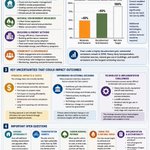
Yesterday, the City' presented a very lengthy Climate Strategy report to the Standing Policy Committee on Environment, Utilities and Corporate Services,. I've heard from a few people about it and their concerns, and so I thought it might be a good idea to share an overview of 100+ page report and where things stand as of today.
The report outlines an extensive roadmap covering climate adaptation, resilience, energy efficiency, transportation, and natural infrastructure, and while the proposed actions are projected to reduce emissions, the City's own modelling indicates they still fall well short of achieving net-zero emissions by 2050.
To save you time and make the report easier to understand, I put together the infographic below highlighting the key proposals, findings, and questions it raises. I hope you find it helpful!

I saw a video this morning that was highlighting some troubling behaviour by an Edmonton city employee towards a business tht was forced to close due to excessive construction, but what really caught my attention was the cautionary tale buried inside the story.
Downtown Edmonton is in the middle of a construction crunch driven largely by LRT construction, and the toll on local businesses has been brutal. The Edmonton Chamber of Commerce reports that nearly 20 downtown businesses have closed their doors this year alone, with restaurants hit especially hard.
Business owners are frustrated with what many see as a lack of empathy from the city, but to me, that frustration also points to something bigger: poor planning, weak public consultation, and little regard for how city decisions land on real people. These are business owners who create jobs, pay taxes, and invest their own capital to keep our downtown cores alive!
As we consider the DEED project here in Saskatoon, the scale of what's being proposed raises the real possibility of a similar story unfolding here. This isn't just a new arena we're looking to build; it's a plan to take several blocks of downtown real estate and convert them into an entire event and entertainment district.
A project of that size doesn't happen overnight. It will unfold in multiple construction phases, and while there's no confirmed timeline yet, history tells us these mega-projects rarely finish on time or on budget. Realistically, we could be looking at a decade or more before it's done.
We need to make sure we're not just watching the budget forecast on this project, but also ensuring we have a real plan for the toll an extended, multi-year construction zone will take on our city, our downtown businesses, and the people who depend on them.
I think today's announcement on the DEED funding needs a sober second look.
The announcement today stated the Province is asking the federal government to help fund the Downtown Event and Entertainment District, and the Province offered to match Ottawa's contribution up to a third of eligible costs. I know many in the City, especially the business communities, are genuinely excited about a new arena and a revitalized downtown, but as your Ward 3 Councillor I owe you a clear-eyed look at the numbers and issues, not just the enthusiasm.
We know the Province has added more than $1 billion in new debt this year. That alone is concerning! But current estimates suggest the DEED could require as much as $500 million from the Province in funding, and to date the City of Saskatoon still has no concrete plan to cover our own potential share of $600M of this project.
Keep in mind, Coucil promised the rate payers would not pay for this and maybe I'm missing something, but I'm researching this continually and I'm hard pressed today to consider how that can actually happen without a significant private partnership. After all, even Edmonton, with 4-5 times our population and an NHL team as their significant partner, and they struggled to ensure they had the right financing plan which also involved a levy on future property tax growth in their business disctict, and we don't know if in the future this could create a shortfall in revenue as City expenses and inflation take it's toll.
So here's my critical concern: the prospect of provincial and federal dollars being approved and received will create a significant momentum that makes it easier to say "let's go", and yet maybe we should be asking "should we, and how do we pay for it responsibly?" That's precisely the moment where the fiscal discipline that considers the best needs of the entire city matters most, not least.
At the same time, I am an advocate for the vulnerable, and so I have to notice that homelessness, addictions, crime, and healthcare pressures are escalating across our city and province. A $500 million invested in transient and supportive housing, treatment spaces, mental health supports, and community safety would change lives, let alone reduce the human and financial cost of these crises for years to come. If we're honest, at some level this announcement is proof of what the government considers as priorities.
Just do provide some context, under the Provincial Approach to Homelessness (PATH), the Saskatchewan government only rolled out an additional $20 million investment spanning three years (continuing through 2026–2027) with key allocation priorities being:
* Multi-Year Municipal Support: $12 million dedicated to predictable, multi-year funding for municipalities and local community-led homelessness strategies.
* Emergency Shelters - $4 million to create up to 40 new emergency shelter spaces at existing facilities based on local demand.
* Supportive Housing - $4 million to establish up to 60 new supportive housing spaces and expand trusteeship services for smooth transitions into stable housing.
Imagine what even $200M could do to seriously address these issues, especially if done in the light with measurable goals to reduce these issues?
So I want to be clear in this that I'm not opposed to economic development, and I've proven that consistently with items brought to Council that made economic sense or are a necessity. I do see the potential of the DEED project, but it's needs to proceed with proper public input, timely information, and a concrete plan to keep the promises that were made to the residents of Saskatoon.
In that light, I think we need to be honest about what it signals when large sums of government money move quickly toward entertainment infrastructure while more and more of our residents continue to struggle and need the basics like housing, treatment, and safety. After all, this announcement is also in essence a declaration of what the Province deems to be a priority.
And what should be critical for us is before Saskatoon commits its share to this project and receives funding from the Province and the Feds, is that ratepayers deserve a real, transparent funding plan, not just the promise that outside dollars make the decision easier!
To that end, myself and a few voluteers will be going to randomly selected streets throughout Ward 3 in the coming weeks with a 4 question survey to help me best represent you in this matter. I hope if we knock on your door, you'll help as the survey can take less than a minute to complete.
On June 24, we have an agenda item regarding the DEED (Dowtown Event & Entertainment District) and a request from City Administration to enter into negotiations for a partnership with Muskeg Lake Cree Nation. This project was approved by previous Council in 2024 for $1.2B, and it represents a significant amount of investment and change to our downtown core.
I know there is considerable concern over this proposal and the DEED itself. To that end, as this does represent a major part of our city and it is the most expensive investment we have ever done (?), I put together this survey based on the proposed negotiation points and I want your input on this significant item.
Everyone in Saskatoon can participate and at the end I ask which Ward in which you reside so I can have the stats. It will take apporximately 7-10 minutes to complete, and the more people who participate, the more realistic the representation.
I also ask you to share this survey as much as you can as we only have about 5 days to collect the data before the meeting.
s.surveyplanet.com/04kxz27t
Link for more information:
saskatoon.ca/business-develo…
