
Academic Accomplishments Attended an NSCA 6 week Conference in the Soviet union and East Germany GDR Western Michigan BS Physical Education
Kalamazoo, MI
Joined October 2018
- Tweets2.1K
- Following322
- Followers133
- Likes68





Bone and Soft Tissue Vulnerability. Low estrogen levels resulting from energy deficiency impair bone mineral density, sharply increasing the risk of bone stress injuries and stress fractures.
34
Consumer Reports calls on FDA to set strict limits on lead in protein powders share.google/mdxtDJ7zkE7L1Ak…

11
In the video clip from Viveta Lobo MD, S-tier and A-tier refer to ranking categories used to evaluate the efficiency and physical safety of different gym machine variations for building leg muscle (hypertrophy).
This ranking format originates from video game "tier lists," where S-tier represents the absolute best/elite choice, and A-tier represents an excellent, slightly lower, but highly effective option.
🏆 S-Tier
In her specific evaluation of quad-building squat machines, the categories break down based on three main scientific criteria:
· training depth,
· target muscle loading, and how much
· spinal compression or balance limitations affect the set:
(The Absolute Best)S-tier movements isolate and overload the target muscles with maximum range of motion while minimizing safety bottlenecks like lower back fatigue or balance failure.
The Belt Squat Machine: Ranked S-tier because the weight hangs directly from a hip belt instead of resting across your shoulders. This completely removes axial spinal compression, allowing you to train your legs to absolute failure even if you have a lower back injury.
The Pendulum Squat Machine: Also ranked S-tier. It moves your body along a fixed, swinging arc that naturally forces your body into a deep squat. This creates a massive stretch on the quadriceps and glutes in their most elongated position, which research shows triggers superior muscle growth.
🥇 A-Tier
(Excellent, with Minor Caveats) A-tier movements are incredibly effective for building mass, but they have subtle design limitations that keep them out of the top spot.
The Hack Squat Machine: Ranked A-tier. It locks you into a straight, stable track, removing all balance requirements and allowing you to load massive amounts of weight safely. However, it falls below S-tier because its rigid mechanics make it incredibly easy for lifters to cheat their range of motion. People often cut their depth short (doing "half-reps") just to pile on more heavy weight plates, which decreases the overall muscle-building stimulus.
136
StairMaster
High muscle engagement: Heavily targets glutes, hamstrings, quadriceps, and calves.Superior posterior chain burn: Acts as a hybrid
30
Utilizing a Periodization Scheme for individuals ages 6 - 18
Periodization originated in Russia following the 1956 Olympic Games. Leo Matveyev is widely regarded as the "father of periodization" for pioneering and formalizing the classic Sports periodization model during the 1950s and 1960s. It is a structured approach to training that involves manipulating training variables (such as intensity, volume, and exercise type) over time to optimize performance and prevent overtraining. A periodization scheme is organized into macrocycles, mesocycles, and microcycles. A key component of the periodization scheme is the General Adaptation Syndrome (GAS), a concept proposed by Hans Selye. GAS describes the body's physiological response to stress, characterized by three stages: alarm, resistance, and exhaustion.
Memes serve as a relatable common language that helps educators simplify complex ideas and engage students through shared cultural visuals. Sports and athletics are powerful shared cultural visuals because they create universal symbols, imagery, and traditions that connect people across the world. Memes can be highly effective tools for boosting sports literacy by breaking down complex rules, strategies, and cultural nuances into easily digestible, highly engaging visual bites. They bridge the gap between casual observers by using humor and shared cultural references to explain the sports world. Sports literacy—most commonly referred to as physical literacy—is the motivation, confidence, physical competence, knowledge, and understanding to value and take responsibility for engaging in physical activities and sports for life
The golden age for developing fundamental movement skills (FMS) is early childhood, while the golden age for acquiring sport-specific coordination and advanced motor skills spans roughly ages 6 to 12. Children ages 6–12, often referred to as the "Learning to Train" or Sport Literacy stage, are in the golden age of motor skill acquisition. During this period, children's brains and nervous systems are highly adaptable, making it the ideal time to build a broad foundation of athletic skills before the onset of growth spurts. Periodization for this stage looks vastly different from an adult macrocycle. Using culture and memes can be a highly effective tool to break down complex rules, strategies, and cultural nuances into easily digestible pieces. In the "Learning to Train" or Sport Literacy stage, periodization differs drastically from adult training. At this developmental milestone, the primary goal is building a broad foundation of physical literacy, not early specialization
For athletes in the 15–18 age bracket, selecting the right periodization model depends heavily on their training age (years of structured lifting experience) rather than just their chronological age. A concurrent or undulating periodization scheme is best for athletes aged 15–18 because it develops multiple physical qualities (like strength, speed, and coordination) at the same time while accommodating busy school and sport schedules.
Fundamental Movement/Motor Skills as an Important Component of Physical Literacy and Bridge to Physical Activity: A Scoping Review
Periodization originated in Russia following the 1956 Olympic Games. Leo Matveyev is widely regarded as the "father of periodization" for pioneering and formalizing the classic sports periodization model during the 1950s and 1960s. It is a structured approach to training that manipulates training variables (such as intensity, volume, and exercise type) over time to optimize performance and prevent overtraining. A periodization scheme is organized into macrocycles, mesocycles, and microcycles. A key component of the periodization scheme is the General Adaptation Syndrome (GAS), a concept proposed by Hans Selye. GAS describes the body's physiological response to stress, characterized by three stages: alarm, resistance, and exhaustion.
Memes serve as a relatable common language that helps educators simplify complex ideas and engage students through shared cultural visuals. Sports and athletics are powerful shared cultural visuals because they create universal symbols, imagery, and traditions that connect people across the world. Memes can be highly effective tools for boosting sports literacy by breaking down complex rules, strategies, and cultural nuances into easily digestible, highly engaging visual bites. They bridge the gap for casual observers by using humor and shared cultural references to explain the sports world. Sports literacy—most commonly referred to as physical literacy—is the motivation, confidence, physical competence, knowledge, and understanding to value and take responsibility for engaging in physical activities and sports for life.
55
Exercise-induced angiogenesis
Exercise-induced angiogenesis is the process where physical activity stimulates the growth of new blood vessels from existing ones to improve blood flow and oxygen delivery to active tissues.
Primary Benefits
•Better endurance: More capillaries shorten the distance for oxygen to travel to muscle fibers, delaying fatigue.
•Cardiovascular health: Regular exercise reduces blood pressure and helps repair microcirculation in conditions like hypertension.
•Tissue protection: Enhanced vascular networks support repair and long-term metabolic health in organs like the heart and brain
Yes, anaerobic-type high-intensity exercise and training can facilitate exercise-induced angiogenesis, largely because intense efforts create powerful local metabolic and hypoxic signals that trigger blood vessel growth.
How Anaerobic and High-Intensity Exercise Stimulates Angiogenesis
•Metabolic stress: Intense anaerobic efforts rapidly deplete ATP and accumulate by-products like lactate, adenosine, and hydrogen ions, which act as signals for vascular growth.
•Local hypoxia: High-intensity contractions restrict blood flow transiently and increase oxygen demand, creating low-oxygen conditions in muscle fibers that stimulate vascular endothelial growth factor (VEGF).
•High-Intensity Interval Training (HIIT): Workouts that push past the anaerobic threshold effectively combine high aerobic and anaerobic demands, strongly promoting capillary development
The athlete performed 5 high-intensity runs. As noted by the Polat Heart Telemetry Device, the maximum heart rate was 170 beats per minute. The maximum heart rate was a subjective measure of how hard the athlete ran. Treadmill speed was slowed to allow the athlete to recover from the high-intensity run. Once the individual's heart rate returned to 120 beats per minute, the athlete began another high-intensity run. During the treadmill run, the athlete alternated short bursts of vigorous exercise at 170 beats per minute— reaching 70% of their peak heart rate—with periods of lower-intensity recovery at 120 beats per minute.
Polat Heart Telemetry Device was used to determine Heart Rate
During High-Intensity Interval Training (HIIT) Tuff Treadmill Runs
High-intensity interval training (HIIT) is a workout style that alternates short bursts of very hard exercise with brief periods of rest or easy movement. After a light warm-up, the athlete's heart rate was approximately 120 beats per minute.
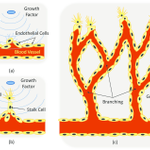
This diagram illustrates sprouting angiogenesis, the growth of new blood vessels from pre-existing ones. The three panels show the chronological steps:(a) Activation: Endothelial cells lining an existing blood vessel detect a gradient of growth factors released into the surrounding gel matrix.(b) Selection & Sprouting: A specialized tip cell forms to navigate toward the growth factor signal, followed by proliferating stalk cells that elongate the new sprout.
Metabolic regulation of exercise-induced angiogenesis
pmc.ncbi.nlm.nih.gov/article…

56
Kirill Sarychev is a world-renowned Russian powerlifter, entrepreneur, and founder of the World Raw Powerlifting Federation (WRPF). He is famous for once holding the all-time raw bench press world record of 335 kg (738.5 lbs). Born on January 1, 1989, in Pugachev, Russia, he stands nearly 2 meters (6 ft 3.5 in) tall and is widely celebrated for his raw strength and clean lifting technique.
Powerlifting Career and Records
* Raw Bench Press Record: Sarychev pressed an incredible 335 kg (738.5 lb) raw in 2015, a legendary mark that stood as the all-time world record until 2019.
* Total Powerlifting Record: In 2016, he achieved a massive raw three-lift total of 1,072.5 kg in the superheavyweight class.
* WRPF Leadership: He serves as the president and founder of the World Raw Powerlifting Federation, helping promote drug-tested and raw lifting globally.
58
Racial Stacking
Racial stacking is the assignment of football players to specific positions based on racial stereotypes rather than talent. Positional stacking in sports sociology describes how racial and ethnic stereotypes influence the assignment of players to specific roles. Racial stacking in football concentrates Black athletes in peripheral, speed-based roles like running back and wide receiver while reserving central, cognitive leadership roles like quarterback for white players. Sports media, including Sports Illustrated, historically reflected and reinforced these positional stereotypes by framing Black performance through physical prowess rather than intellect.
Black players were often placed in positions not considered "thinking" or "leadership" roles. Examples of racial stacking in the sport include Black National Football League (NFL) players being given few opportunities to play quarterback, middle linebacker, or center, positions often seen as "too cerebral". Indeed, many players and coaches noted these positions as such. Bear Bryant, for example, stated that "a smart, capable quarterback is the single greatest asset a football team can possess." Nick Buoniconti stated that a linebacker must be "smart" and a "leader". In contrast, a "noncentral" position, such as running back, would often emphasize traits like speed, agility, and instinct in books by coaches and players. In the 1960s and 1970s, Black quarterbacks often transitioned to the wide receiver position when advancing a level, such as from high school to college or from college to professional.
Past playing experience heavily dictates coaching assignments; coaches who played central positions on the field have a much higher statistical likelihood of being hired to coach those same central, strategic positions. Decision-makers often view white candidates through a lens of being "cerebral" or "strategic," while frequently labeling Black candidates as mere "motivators" or "disciplinarians". The stacking concept also extends beyond playing positions, considering the issue even more intense in coaching circles. Because Black players were not considered for "thinking" or "leadership" positions, their time in "non-leadership positions" was assumed to be inadequate training for a career in coaching, which they identified as at least one factor in the underrepresentation of Black individuals in coaching positions.
The evolution and impact in modern games have seen prominent shifts—such as a substantial increase in Black starting quarterbacks—yet positional segregation at lower levels of the sport continues to influence long-term career arcs and post-playing coaching pipelines. Positional segregation in sports concentrates minority players in non-central, low-leadership positions, which limits their long-term upward mobility. This practice restricts future roles in professional coaching and front-office leadership pipelines

28
Correlation between anterior cruciate ligament (ACL) tear and an increased risk of heart disease.
Research shows a potential correlation between a history of an anterior cruciate ligament (ACL) tear and an increased risk of heart disease, specifically a higher rate of myocardial infarction (heart attacks). A notable study of former football players by Harvard Medical School researchers found a 50% higher lifetime risk of heart attacks in players who tore their ACL compared to those who did not.
Key Findings and Theories
Reduced Activity Levels:
A major factor linking joint injury to heart issues is the long-term decrease in physical activity. Tearing an ACL often leads to chronic pain, early-onset knee osteoarthritis, and trouble moving easily, which lowers daily exercise and harms cardiovascular fitness.
Systemic Inflammation: Joint trauma and subsequent arthritis can trigger ongoing body-wide inflammation, which is also a known contributor to blood vessel damage and heart disease.
Direct Cause and Effect:
Researchers emphasize that this connection is an association rather than a proven direct cause-and-effect link, meaning the drop in overall active lifestyle post-injury is likely a primary driver.
37
Higher Heart Attack Risk: Studies, including research on athletes from Harvard Medical School, note a 50% increase in lifetime heart attack risk for individuals who suffered an ACL tear.
20
Phthalates primarily affect the testes, penis, and overall reproductive development by lowering testosterone production.
Evidence links phthalate exposure to lower testosterone and reduced muscle strength parameters, though direct studies proving overall sports performance drops are still emerging. Phthalates act as endocrine disruptors, potentially impacting physical capacity through.
1
8
Testosterone reduction:
Studies show that specific phthalate metabolites (like DEHP and DBP) tie to lower testosterone levels in males, which plays a key role in muscle building and recovery.
Muscle mass risks: Chemical mixtures containing phthalates show positive associations with increased risk of low muscle mass.
2
Yes, phthalates can impede testosterone production. Research indicates that these common plasticizers act as endocrine disruptors, interfering with the cells responsible for testosterone synthesis. While direct studies on "athletic performance" are limited, lower testosterone levels can negatively impact muscle mass, energy, endurance, and recovery.
9
Aggression in Sports
Sport aggression is highly contextual and generally categorized into two main types: hostile aggression and instrumental aggression. In sports, the mechanism used to manage destructive hostile aggression (intended to cause pain) and controlled instrumental aggression (assertive, goal-directed play) is cognitive-emotional regulation combined with moral reasoning. Athletes develop this control by deliberately cultivating emotional awareness, cognitive reframing, and moral reasoning to prevent anger from driving destructive behavior. By practicing these psychological skills in high-pressure training, they learn to separate subjective feelings from objective actions.
Cognitive reappraisal is an emotion regulation strategy in which you actively alter your interpretation of a stressful event to change how you feel about it. Instead of reacting to a trigger, you reframe the experience from negative to neutral or constructive, preserving your composure and focus. Training to reject "moral disengagement" (the justification of antisocial acts during competition) by viewing opponents as mutual participants in a challenging pursuit rather than as targets to be hurt. Using sensory-grounding "reset routines" (such as a specific tactile cue or a "three-breath reset") to break physiological stress responses and halt anger rumination before it spirals. Driven by anger and the primary intent to cause pain, it results in penalties, tactical errors, and impaired decision-making. Elite regulation helps athletes completely inhibit this response. Controlled, assertive, and rule-compliant play is used to gain a tactical or physical
Childhood (Ages 6–12) marks the shift from learning basic motor skills to mastering the high-stakes, competitive strategies of their sport, which requires athletes to deliberately channel assertiveness into physical performance. During the initiation and discovery stages, children primarily develop the motor skills of a sport. Aggression at this stage is usually a natural expression of frustration or a reaction to limited emotional regulation. Coaches focus heavily on prosocial skills, conflict resolution, and strategies to inhibit hostile outbursts.
Youth (Ages 13–14) enter organized, competitive travel and middle school programs; they begin to encounter heightened physical contact and performance pressure. During this stage, athletes learn to harness the physiological arousal of sports. They are taught to translate adrenaline into assertiveness and focus, rather than acting out physically.
Adolescence (ages 15–19) is the stage when athletes in competitive and contact sports (such as soccer, basketball, hockey, or football) develop and use instrumental aggression. Aggressive behavior (such as a heavy body check in hockey or an aggressive tackle in football) is used to achieve a goal, such as winning the ball or legally stopping an opponent. In athletes, sport-related aggression—particularly the transition from basic frustration to controlled, instrumental aggression—develops primarily during late adolescence (ages 15–19). This stage marks the shift from learning basic motor skills to mastering the high-stakes, competitive strategies of their sport, requiring athletes to deliberately channel assertiveness into physical performance. Because of increased physical maturity, hormonal changes, and the demands of elite-level competition, athletes learn to consciously push the physical boundaries of the rules to gain a competitive advantage.
In sports, the mechanism used to manage destructive hostile aggression (intended to cause pain) and controlled instrumental aggression (assertive, goal-directed play) is cognitive-emotional regulation combined with moral reasoning. Athletes develop this control by deliberately cultivating emotional awareness, cognitive reframing, and moral reasoning to prevent anger from driving destructive behavior. By practicing these psychological skills in high-pressure training, they learn to separate subjective feelings from objective actions.
Athletes develop this control by deliberately cultivating emotional awareness, cognitive reframing, and moral reasoning to prevent anger from driving destructive behavior. By practicing these psychological skills and training frameworks in high-pressure scenarios, they learn to separate subjective feelings from objective actions. Cognitive reappraisal is an emotion-regulation strategy in which you actively alter your interpretation of a stressful event to change how you feel about it. Instead of reacting to a trigger, you reframe the experience from negative to neutral or constructive, preserving your composure and focus. They train to reject "moral disengagement" (the justification of antisocial acts during competition) by viewing opponents as mutual participants in a challenging pursuit rather than as targets to be hurt. They use sensory-grounding "reset routines" (such as a specific tactile cue or a "three-breath reset") to break physiological stress responses and halt anger rumination before it spirals. Anger-driven behavior, driven by the primary intent to cause pain, results in penalties, tactical errors, and impaired decision-making. Elite regulation helps athletes completely inhibit this response. Controlled, assertive, and rule-compliant play is used to gain a tactical or physical advantage. Athletes use emotional regulation to sustain the necessary arousal and intensity for peak performance without crossing the line into hostility.

40