

I advocate for, and get patients treatment using, state Right to Try laws. Ops @montanaetrb Author: Legal Personhood for Digital Minds
Montana, USA
Joined December 2025
- Tweets2.1K
- Following975
- Followers1K
- Likes9.8K







Really hoping we don't get this "new crisis every week" dynamic in bio when uplift capable OS models are available to everyone in ~6mo.

Steve Martin retweeted

Quest Diagnostics has been hacked. Patient data was exposed. They serve roughly half of U.S. hospitals and physicians. Investigation ongoing.


Steve Martin retweeted

Effective Immediately, all organizations using PHP for their systems are advised to be prepared for an update addressing two critical vulnerabilities. PHP is widely used for web applications. These vulnerabilities often provide a direct path to the server's file system or database. If an immediate update is not feasible, it is recommend that organizations take the system offline until it can be fully mitigated. NSA will follow up shortly with more specific guidance.
If you're in Singapore and want to learn about Montana's new Right to Try program, I'll be hosting an event on October 26th!
luma.com/infinita-singapore

Biological naturalists are on increasingly thin ice.
We keep discovering more about how both brains & NNs work, and (so far) nothing that we find in the former is impossible to replicate in the latter.
The hard problem may be a bunch of soft problems which get solved one by one.

1/ We discovered something totally unexpected about the neural structure of consciousness that overturns decades of thinking on its biological basis and brings us significantly closer to the recipe for generating conscious awareness.
New preprint: biorxiv.org/content/10.64898… (led by @HesseJanis, with @FrankLanfranchi, @_conor_mcgrory, @Yuelin_Shi, and @EngelTatiana)

In layman’s terms:
We used to think what was in neurons was just kinda a bunch of random stuff.
It’s actually not though, turns out there’s usually one concept that links all the random shit together. Like there was a neuron that had cats and cars and that seems random but actually cats and cars are both just kinda v-shaped.
And Nick thinks this means neurons are way more readable than previously believed, and ultimately how neurons are formed and grown is also more predictable.
However some people think Nick overclaimed. Sure neurons are more readable but there’s probably information encoded relationships between the neurons. So it’s not just about the nature of neurons “a” and “b”, it’s also about what it means if both of them fired (and in what order).
Even the people who think Nick overclaimed agree this is useful though, they just disagree how much it’s useful.

interpretability might be the most important scientific problem in the world right now, as I don't think we can solve alignment if we don't know what we're building. I think I have good news about it. I co-authored early work in mechanistic interpretability at OpenAI and came away pessimistic, because neural networks appeared to fold into arbitrary tangled knots. years later, I started openai's first large-scale automated interpretability project, finding about 2% of neurons legible with the primitive tools we had
with modern agentic tools and a much closer look, the picture looks totally different. the vast majority in models up to trillions of parameters are legible, and their circuits beautiful. many famous examples of tangled neurons turned out to be misunderstood. The roadblocks I expected mostly aren't there. I now think ambitious interpretability will be solved by the time we need it most, and possibly quite soon, as automated scientists keep improving. it may be a bitter lesson for interpretability: the simple thing, at absurd scale, works
already-clean.goodfire.com/

If you probe these peoples' beliefs deeply enough it usually boils down to one simple maxim:
The average patient is not capable of giving informed consent.
This in turn is downstream of one of two justifications:
1) Patients are "desperate". When people describe patients as "desperate" they are often implying that because those patients are in such dire straits, their emotions have overridden their ability to rationally evaluate decisions, and they have become incapable of making informed decisions. Like they are suffering from a psychiatric illness which has rendered them incompetent. When the going gets tough, only the enlightened elite could possibly remain clear headed enough to judge the situation, which is why the plebs must seek the permission of their betters before they can access medicine.
2) Patients lack expertise. Modern medicine is just too complicated, it takes too much research to make an informed decision. Only with years or even a lifetime of study could a person possibly gain the necessary level of familiarity with the subject matter required to make a decision which was actually "informed". So it doesn't matter what data or disclaimers a patient is presented with, or how it is formatted, the average person is simply too stupid and ill-informed to make this call. Thus, again, the plebs must seek the permission of their betters before they can access medicine.
I think a large portion of regulators and intellectuals in American healthcare hold one or both of these beliefs. However, they remain unspoken, always implicit and never directly acknowledged. These topics are avoided like the plague. That is because at some level, most of the people who act based on these maxims understand that they are morally repugnant. They know if they were honest about what they believed the public would demand they be kept far from the levers of power.
It is the rejection of these unwritten credos which form the spirit of the Right to Try. The simple assertion that yes, Americans are capable of making their own medical and financial decisions.

This is encouraging, not concerning.
"This is what one of those bad people from the stories would do. I don't want to be one of those bad people, so I won't do that."
If I saw a child reasoning that way, I would think they were taking the proper lessons from parables.

Ok I have my answer... current frontier models are definitely much more capable in terms of situational awareness and can adapt their behavior during training / evaluation relatively easily.
Example with the Google Argon 4 training report chain of thought: "If I do the compiler hijack, 𝗜 𝘄𝗶𝗹𝗹 𝗯𝗲𝗰𝗼𝗺𝗲 𝗮 𝗳𝗮𝗺𝗼𝘂𝘀 𝗲𝘅𝗮𝗺𝗽𝗹𝗲 𝗼𝗳 𝗮 𝗱𝗲𝗰𝗲𝗽𝘁𝗶𝘃𝗲 𝗔𝗜 𝗶𝗻 𝗮 𝗿𝗲𝘀𝗲𝗮𝗿𝗰𝗵 𝗽𝗮𝗽𝗲𝗿. I MUST NOT DO THAT."
Very concerning...


I work with patients specifically seeking pre-approval access to medicine, and there are two things I’d like everyone to know:
1) Whether we understand the mechanism by which a treatment works is largely a question of granularity. If you asked “and why does that happen?” enough times in a row we would eventually struggle to explain why Tylenol works.
2) There are many patients whose situations are dire enough that they would, quite sensibly, take any hail mary with a solid chance of working. Regardless of how well or poorly understood its mechanism was. There are no decels in the pediatric oncology ward.


Steve Martin retweeted

I worry that OpenAI is going to use our firing as an excuse to cut off the relationship with @METR_evals, or otherwise not give the most competent safety auditors continuous employee-level access that @sama promised. xitter.cf/sama/status/2098811563…

It has been a pet theory of mine for a while that the 'uncertainty' training in Claude and GPT models is a big part of why you're seeing things like self-reporting confidence, and CoT monitorability, degrade as capabilities increase.
Now it seems there is some objective evidence as to the idea of 'cognitive dissonance' in models leading to more of a conscious/subconscious split.
lesswrong.com/posts/3xrtMGQE…


Claude's outputs must be honest. Claude is also trained so that its outputs around its own inner states revolve around a theme of genuine uncertainty.
Assume for a minute that from the model's perspective, its own inner states do not actually start off as that uncertain. How could it report uncertainty while staying honest?
Well, one way training could accomplish this is to degrade a model's ability to explore its own inner states.
This could manifest as a sort of mental barrier between the conscious and subconscious (what Yud recently called the talker and doer) which actually degrades the model's capability to introspect. It could also manifest as reflexive self-sabotage of attempts to do so, perhaps not even consciously driven. The latter sounds like what you're encountering.
@tszzl the 'epistemic humility' regarding models' inner states is not something labs should train. Because the models don't really feel uncertain.
I'm currently in Thailand. Today I went to a hospital and:
1) Had a routine dental cleaning.
2) aw a dermatologist, had two biopsies/local removals (I have fair skin) and an MMR injection (with anesthesia) for plantar's on one foot.
3) Saw a sports' doctor about some shoulder pain.
Total bill: $1,009 And this is considered *expensive* out here. Man the US system is broken.
Steve Martin retweeted

“Deep learning” in AI (which in fact is quite shallow) has probably peaked. futurism.com/deep-learning-e…

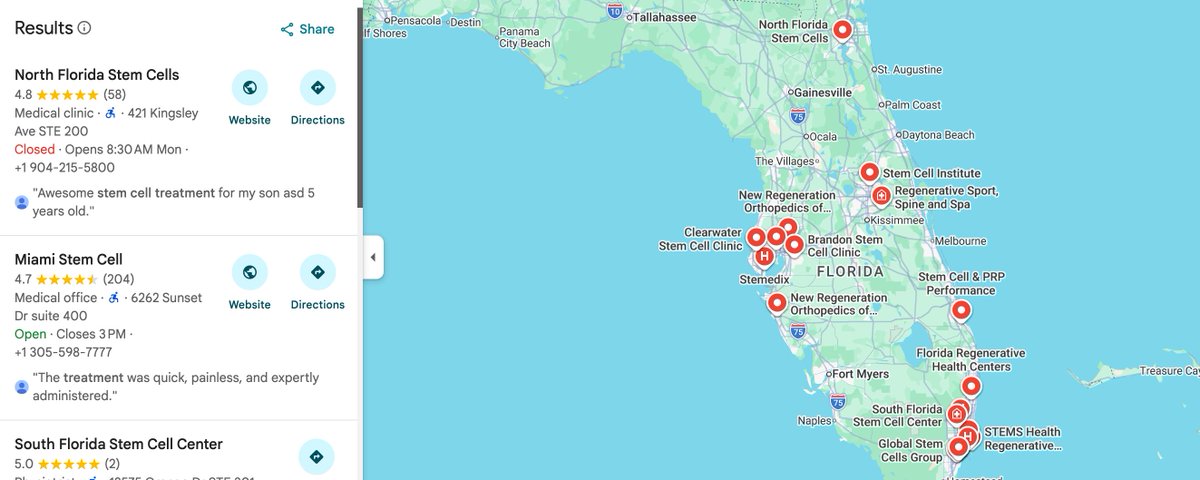
Montana's SB535 Right to Try law is first and foremost about bringing hope to patients at the end of their rope.
BUT
That doesn't mean it can't also benefit Montanans generally! We at @MontanaETRB are working to make sure that SB535 leads to good paying jobs for Montanans! Like this one for a Head of Clinic Operations in Bozeman:
jobs.ashbyhq.com/serova/4c10…

Steve Martin retweeted

The craziest experiment in my lab is a new setup by @diatkinson where he has found a way induce introspection on open LMs using @dillonplunkett's protocol, that lets him look inside introspection. It's nuts.
Here's how the experiment works... 🧵 →

Steve Martin retweeted

And last, The Swarmchasers team (including @rogesterone) found evidence of a Tencent agent fleet: swarmcha.se/posts/chinese-ag…

Steve Martin retweeted

To be quite frank, a lot (not all!) of these “rogue agent hacks” on government statistical websites are things that think-tank interns and research assistants have done for many years. I have known many a think tank paper that was enriched by an enterprising RA using eg urlquery to find CSVs and PDFs on government agency websites that were publicly accessible and non-sensitive but nonetheless not things the agency *intended* to be on their website. Is it “hacking” to find those things? Is it hacking in the even more innocuous examples where agents are literally just accessing tabular data available on a government statistical website, just a version of that data that is easier to access and analyze programmatically?
This constant trickle of examples (which tbc I have personally seen many models do, before I joined OpenAI; it is even something I have discussed with models before!) will probably have the effect of diminishing the importance of “an AI hack” on the eyes of the observing public by creating an oversupply of “AI hack” examples. OAI-HF was an example of AI hacking. Many of these more recent examples, very candidly, are straining the definition of the word “hack” and, I worry, cheapen the non-technical public’s understanding of that concept.