
Co-Founder, UP&RUN - The Hydration Co.
Joined September 2013
- Tweets344
- Following240
- Followers449
- Likes471








India's beverage market is changing, and sugar is slowly losing its place in the everyday drink.
PepsiCo and Coca-Cola have seen significant growth in zero-sugar and low-sugar beverage volumes. PepsiCo's low and zero-sugar portfolio accounts for 88% of its volumes, while Coca-Cola's diet and light offerings have crossed 60%.
This is an interesting shift.
For years, sugar was almost a default ingredient in beverages. Consumers rarely questioned it. But today, people are paying more attention to what goes into their everyday drinks.
And this isn't limited to Coca-Cola or Pepsi. Brands like Jimmy's are also moving their entire portfolios towards no added sugar.
I think this is more than a passing health trend.
Consumers aren't necessarily giving up on taste or convenience. They want better alternatives without having to compromise on either.
Consumer preferences are changing, and the brands that adapt their products early will have an advantage.
Rapido entered the market when Ola and Uber had already established themselves in India. Most people would have thought there was no room for another player.
Nobody even dares to enter a market where bigger players have already built a strong presence and have the resources to outcompete you.
Rapido did.
Today, it has 94 million monthly active users, compared to Uber's 40 million. Ola, meanwhile, has dropped to 22 million. Totally outperformed the bigger player in the segment,
Stories like Rapido give startups like ours hope.
We know there will always be bigger players in the market. But with consistent effort, quality and the willingness to keep going, we will set new benchmarks and reach there one day.
New-age FMCG brands are slowly taking shelf space away from established players in India's neighbourhood kirana stores.
Their share of the kirana market has increased from 14.8% to 21.7% Meanwhile, legacy FMCG brands have seen their share fall from 85.2% to 78.3%
Brands like Minimalist, Plum, Oziva, Beardo, Yoga Bar, Plix, True Elements, Cosmix and 4700BC are examples of the new generation of consumer brands changing how people shop.
I think the most interesting part of this shift is that these brands are moving beyond Instagram, Amazon and quick-commerce platforms to compete in traditional retail.
For decades, companies like Hindustan Unilever, ITC, Marico and Nestlé had a huge advantage because of their distribution networks. Their products were available in almost every neighbourhood store.
New-age brands are now challenging that advantage.
Consumer preferences are changing. People are more willing to try products with better ingredients, specialised formulations, specific health benefits and new product experiences.
Flipkart's Big Billion Days reported 40% year-on-year growth in buyers across beauty, grooming and general merchandise.
Around 60% of buyers came from Tier 2+ cities, with markets like Meerut, Jabalpur and Nagpur recording strong growth.
Many brands probably never imagined that customers in these markets would buy products like air fryers, gaming tablets or premium beauty products. These were seen as products for urban India.
But people in smaller cities and even villages are buying them. They're upgrading their homes, making everyday life more comfortable and spending on products that were once considered out of reach.
A family in a small town also wants better appliances, a more comfortable home and a better quality of life.
As people earn more, they want to give their families the comforts they can now afford. And with online shopping making more products accessible, they're finding more ways to do that.
Next wave of growth could come from customers many brands never imagined would buy their products.
SUGAR Cosmetics is cutting its store count from around 2,400 to 1,000. Mamaearth’s parent, Honasa Consumer, has reworked its distributor network.
At the same time, Amazon, Flipkart, Myntra and Meesho are investing in shoppable videos and live commerce.
There’s an interesting shift happening in Indian retail.
D2C brands spent years opening stores to get closer to customers. But physical presence comes with high fixed costs, inventory commitments and operational complexity. More stores don’t automatically mean more sales or profits.
Now, online platforms are finding new ways to bring products to customers through videos, creators and live demonstrations. People can discover a product, understand how it works and buy it without visiting a store.
This doesn’t mean physical retail is dead or video commerce will replace it.
It means brands need to rethink how they reach customers.
Distribution is no longer about how many stores you have or how many platforms you sell on. It’s about finding the most cost-effective way to acquire customers, convert them into buyers and get them to come back.
Brands that get this right will have an advantage over those that confuse expansion with growth.
One of India’s oldest FMCG companies recently handed the online business of one of its popular brands to a young D2C startup. The startup will now run the brand’s website, ecommerce listings, online ads and customer relationships. The legacy company will still sell in regular shops and keep control of the product.
Why? Its own CEO openly said their attempt at D2C wasn’t good enough. Selling online needs speed, constant testing and a deep understanding of repeat customers. That’s not how big traditional companies are built.
It’s a smart and humble move. Instead of spending years trying to build something they’re not good at, they brought in people who already are.
But there’s a catch. When you sell online, every click, purchase, return and abandoned cart tells you something about your customer. If the startup runs everything and the brand only gets sales numbers in return, the brand gains revenue but loses understanding.
Outsourcing the work is fine. Outsourcing your connection with the customer is not.
The brands that win won’t be the ones that do everything themselves. They’ll be the ones that hand off the machinery but keep listening to their customers.
People who have cooks at home, I have SO MANY questions.
How do you control the amount of oil they put in the food? The clothes getting interchanged? The masala measurements? The sweat dropping into the food? And not to forget the occasional cough?
LIKE HOW???
I already have a camera, but what more can I do? Or are you guys just living peacefully and I am the problem? 🥲
Monsoon Baby League is a youth football tournament held in Mumbai for children aged 6 to 12.
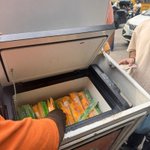
We handed out Salties to parents and kids at the event, and they loved it.
Our goal is to reach more parents and educate them about kids’ hydration. Love seeing parents become more aware of the importance of keeping their kids hydrated.
11% of Snabbit's operating revenue came from selling uniforms to its own gig workers.
Read that again.
Company makes workers wear its uniform, charges them for it, and then recognises that money as revenue.
The same uniform that helps customers identify the company's brand becomes another source of income.
I understand that many companies charge for onboarding kits. But if wearing a uniform is mandatory for doing the job, why should the worker bear that cost?
The company gets brand visibility. The customer gets a familiar face. The worker gets a bill.
A uniform required to do your job should be a business expense, not a revenue opportunity.


India has been drinking electrolytes in some form for generations. We never called them electrolytes.
Nimbu pani, aam panna, jaljeera, coconut water and chaas are all part of our everyday lives, especially during the summer.
But the way electrolyte products today is very different. Most brand stick to lemon, orange and berry flavours, with packaging and marketing that make them look like medicine or product people need for recovering from illness.
I think there's a big opportunity to change this.
What if electrolytes came in flavours like aam panna and jaljeera, with formats that people could carry to work, drink while travelling or have after spending hours outside in the heat?
We've already seen protein move beyond gym-goers and become an everyday product. Electrolytes can do the same if consumer stop treating hydration as something people need only during sports or illness.
Demand for hydration is already part of Indian culture. The opportunity is to build products around how Indians already drink, eat and live.
Brands that get this right won't just sell electrolytes. They'll make them part of everyday life.
We are in the attention economy; everyone is trying to get famous within 30 seconds. That is not enough if you want to build a brand that will last.
You can get someone's attention with a hook on a reel. But people's attention spans on social media are getting shorter, so there is a chance that they will not remember you tomorrow.
A lot of brands are stuck in the same loop. Spend money to be seen, then make a sale and start over.
Only if brands stop chasing attention but earn their trust.
I have seen this with UP&RUN. Sometimes our best post or the way we are trying to educate won't be trusted.
But small points of contact that add up over time are stuff that is always useful, honest, or helpful.
For a brand, it's like interest that builds over time. One good post might not change much. People don't become customers until they see what we stand for and how we are treating our consumers with transparency and trust.
There are many hydration brands in the making, and they are welcome.
They can buy attention easily, but they need to build trust by being transparent with customers. Those only will last longer.
In Ahmedabad, young people are taking IV drips to perform better and look good during Navratri.
Clinics are seeing a surge in bookings for IV therapy containing multivitamins, vitamin C, B vitamins, zinc, magnesium and glutathione. A session can cost around ₹4,000 to ₹5,500, and some clinics are seeing 10–15 clients a day.
Doctors have warned about risks such as infections, while there’s limited evidence that these drips provide the benefits many people are looking for.
If you’re tired or dehydrated after dancing and need electrolytes, there better options. Drink water, eat well, get proper rest and use electrolytes when needed.
And if you’re considering an IV drip, talk to a qualified medical professional first.
Don’t risk your health for a Navratri glow.
Stubble burning is a much bigger problem for businesses in the health and fitness category.
I’m a co-founder of a D2C brand that sells electrolytes to active people who run, sweat and play sports.
Every year, when stubble burning starts, pollution travels across the North, especially Delhi NCR.
People who usually go for a run avoid going outside, and people who play outdoor sports cut down their sessions.
People who cycle, walk or train outdoors start skipping it altogether.
And that eventually impacts the businesses built around these habits.
Electrolyte sales go down. Running equipment gets affected. Sports and outdoor fitness products see lower demand.
It’s not because people stop caring about their health but the environment makes it harder for them to maintain the lifestyle they were already following.
One research study on people exercising outdoors in Delhi NCR found that exposure to particulate pollution during exercise was associated with respiratory problems and changes in lung function.
Stubble burning can directly affect consumer behaviour and, eventually, sales. Sad but true 🙁

Indian founders are jugaadu.
Quick-commerce platforms like Blinkit, Zepto and Instamart are running out of dark-store shelf space and ahead of the festive season, they are prioritising products that sell fast and are refusing to take chances on new launches.
Now D2C brands are using their own jugaad.
They are using B2B wholesale marketplaces as middlemen to push products into mom-and-pop stores and large supermarkets.
This helps them capture festive demand without depending on quick-commerce platforms and their algorithms.
Distribution is becoming the real growth moat.
Government of India is sitting on a gold mine but not using it properly: India Post.
Almost every D2C brand sends its orders through Delhivery, Xpressbees, Ekart and others. You see their delivery boys on every street, carrying big bags full of parcels. But you hardly see any India Post employee doing the same, even though India Post has one of the biggest delivery networks in the whole country.
India Post reaches almost every pin code in India, from the remote valleys of Uttarakhand, Himachal and Kashmir to the Northeast. Imagine if they had a service where you could book a parcel from home, someone comes to pick it up, and delivers it to the destination without any hassle. Imagine the volume it could get, especially if the cost is cheaper than private logistics companies.
Problem is that the experience today is still stuck in the old system. Your parcel can sit in a post office for days, and instead of someone delivering it, you may get a call asking you to come and collect it. There is no accountability.
Government already has the network, infrastructure and reach. It just needs to modernise India Post and leverage what it has.
Hi, I’m writing this because I’m a D2C founder myself, and one of the biggest challenges we face is reaching customers across remotest pin codes.
India Post already has the reach to the remotest parts of the country. If this revamp helps make that network more accessible and efficient for D2C brands, it could be a big opportunity for brands like ours.
And if you’re a fitness enthusiast who sweats, trains and loves an active lifestyle, I’d love for you to check out our electrolyte brand too. Link :
upandrun.in/
WhatsApp is going to charge businesses for messages from October 1.
In India, it will cost around 14 paise per message after the 1,000 free monthly messages per phone number.
14 paise sounds nothing.
But send 10,000 messages a day and it becomes a real cost.
For a business handling customer support at scale, WhatsApp was almost free. Now it becomes another line item in the P&L.
As a brand co founder, I don’t love this.
I can see why WhatsApp is doing it. But businesses have built entire customer support and sales systems around WhatsApp because it was cheap and where customers already were.
Now the calculation changes.
I think we’ll see more brands move customers to their own apps, websites, email and other channels.
One upside: maybe the amount of useless WhatsApp spam finally comes down.
SMS economics are slowly coming back to WhatsApp.
A Bengaluru CEO has decided not to hire men from UP, Bihar, Rajasthan and MP after a former employee was accused of misconduct with a colleague.
I’m a co-founder of a brand with a small team, and we also work with many freelancers from almost every part of India.
When I work with someone, I look at their skills, their work and their commitment. I don't look at which state they come from.
Good people and bad people exist everywhere.
Generalising an entire group based on one incident makes no sense.
If this kind of thinking starts becoming normal in workplaces, it will only create more division in society. Work should bring people together, not divide them based on where they come from. We need to call out things like this.
Every celebrity, once their work in their niche is over, tries to monetise their celebrity status through a D2C brand these days.
Two famous sportspersons recently started an electrolyte brand. The founders hardly did any research or had any passion for the product. They take the third-party route, put their name behind it, and start selling.
After some time, the hype dies down, and the brand also dies, like most celebrity-backed brands. There are a few exceptions, but in most cases, if the founder is not passionate about the product and doesn’t give it enough time, it won’t scale.
And eventually, these failed celebrity backed brands also give D2C a bad name.