

Bringing theory, policy, and practice together to solve common problems in the field of criminal justice.
Minneapolis, MN
Joined March 2012
- Tweets1.2K
- Following921
- Followers792
- Likes1K






New policy brief from the Robina Institute on Minnesota's unusual Hernandez rule. Under the rule, the counts sentenced first that day become criminal history for the counts sentenced after them.
Authors Kevin Reitz and Emma Walsh-Alker trace where the rule came from, some of the concerns around its use, and options for revisiting it: z.umn.edu/bq4m

Produced as part of the Robina Institute’s research partnership with the Minnesota Sentencing Guidelines Commission, with support from @Arnold_Ventures
After a comprehensive multi-year review of the state's felony sentencing framework by the MN Sentencing Guidelines Commission, new guidelines went into effect on 8/1. The updates revise criminal history scoring methods and create a new mitigating factor for first-time offenders.
Learn more about our Minnesota Sentencing Guidelines Commission Research Support Project here: z.umn.edu/bjv9

In the article, Robinson and Rennie reveal how legislatively authorized discounts (often 50% to 75% or more) distort publicly announced prison terms. They argue for transparency rather than longer sentences to restore public trust. Read the full article: z.umn.edu/bh9r

A recent University of Illinois Law Review article, “Truth and Deception in Criminal Sentencing” by Paul H. Robinson & Hugh Rennie, cites several of our Prison Release: Degrees of Indeterminacy Project state reports. Find all of the project state reports: z.umn.edu/bh9t

A recent University of Illinois Law Review article, “Truth and Deception in Criminal Sentencing” by Paul H. Robinson & Hugh Rennie, cites several of our Prison Release: Degrees of Indeterminacy Project state reports. Find all of the project state reports: z.umn.edu/bh9t
Robina Institute retweeted

.@RobinaInstitute spent 2.5 years supporting that review through our partnership with the Commission. I presented on it yesterday at the National Association of Sentencing Commissions conference.
Proud of our research team, and of the MSGC staff we worked alongside throughout.
Robina Institute retweeted
Minnesota's sentencing guidelines changed on August 1st — the first comprehensive revision since the guidelines took effect in 1980. The amendments substantially change how the criminal history score is calculated and added a new mitigating factor for first-time offenders.

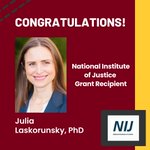
Congratulations to @RobinaInstitute Research Director Julia Laskorunsky (@jl_crim) & @UMDCriminology Asst. Professor Robert Stewart, who have been awarded a Safety and Justice Challenge (@safety_justice) grant to fund a new project examining pretrial detention in Cook County, IL!

Kevin R. Reitz will be a panelist at tomorrow’s “Re-Punished for the Past: Criminal Records and Sentencing,” a webinar from @SentencingProj that will examine the role of sentencing commissions and highlight recent reforms in MN, PA, and WA. Register here: z.umn.edu/b6en
The @SentencingProj has released a new report that examines sentencing policies and outcomes in MD, MN, PA, and WA for individuals sentenced to 10 years or longer, building on Robina's work on prior record enhancement.
The report finds that criminal records can account for a large share of already lengthy prison sentences, often adding years or even decades to sentences, without evidence of community safety benefits. Read the full report here: z.umn.edu/b40w

As part of the Minnesota Sentencing Guidelines Commission Research Support Project, Robina Institute researchers wrote to endorse the Commission’s proposed amendments. See the full letter of support here: z.umn.edu/b1zh
The letter highlights research that supports several of the key proposed changes, which are intended to increase sentencing proportionality and modernize the guidelines.