

CEO & Co-founder @NOETIK_AI Using AI to actually solve cancer.
San Francisco, CA
Joined February 2011
- Tweets4.4K
- Following2.8K
- Followers7.7K
- Likes21.4K







Ron Alfa retweeted

AI is designing more molecules than ever. But when will that pay off for patients?
In this week’s The Prototype newsletter from @Forbes, @TheAlexKnapp looks at why AI drug development hasn’t yet lived up to its potential. He spoke with our co-founder and CEO @Ronalfa about what he sees as the real barrier.
Ron explains: “Pharma has dozens and dozens of programs in their pipelines. The problem is not ‘How do we make more molecules?’ – the problem is, ‘How do we get things to work in patients more efficiently so we’re not spending billions of dollars on failed drugs?’”
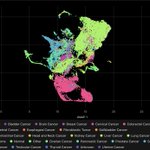
That’s exactly what Noetik’s biological foundation models are built to do. By connecting standard tumor imaging to the genetics underneath, they help predict how a drug will affect each patient. Our new partnership with Memorial Sloan Kettering Cancer Center (MSK) adds clinical care and patient outcomes data to that mix.
Read more: forbes.com/sites/the-prototy…

Ron Alfa retweeted

Our latest @MenloVentures healthcare AI report is out: healthcare AI is on fire. We've never seen technology adoption like this. Maybe we can finally start making real progress on access, cost and outcomes!

Healthcare is now AI’s biggest vertical market.
Spend grew 2.5x to $3.7B this year, more than double legal ($1.8B) and more than legal and finance combined.
It started in paperwork: scribing and billing. Now it’s moving into drug discovery, patient engagement and clinical decision support. Clinical copilots alone grew 5.5x to $550M.
Our 2026 State of AI in Healthcare report from @grgyap, @jpsanday, @CroomBeatty, @hu_j, @derekgxiao and @sabrinarlu: mnlo.vc/2026-healthcare-ai-r…

Ron Alfa retweeted

Dream bigger. @elonmusk showing most do not push the boundaries of perceived reality hard enough and remain limited by small ambitions perceived as insurmountable barriers.

Ron Alfa retweeted

in April, we published a launch essay for @tacitlabsco
that outlined a thesis for frontier AI research in biology -
1. if we want models to be useful for curing disease, we must evaluate them on tasks with roughly that shape and complexity. optimize directly on the thing you care about - i.e. discovering & developing a drug
2. we should aim to model the biotech (process, reasoning, decision-making), rather than the underlying biology. biology is an empirical science - develop better empirical methods rather than treating it as an analytical domain
3. the most difficult part of all of this will be verification of those empirical methods with signal that actually matters (does the proposed drug actually work in a human?). biological time is a tough wall to run up against (most expensive forward-pass of all time). figuring out how to turn scientific problems into learning problems is a first-class research problem
4. if we believe (1) and (2), and we do a bunch of good work and figure out some clever solutions to (3) then we unlock increasingly agentic discovery/development, with the logical extreme being this concept of the "zero-person biotech", which is now (somehow) percolating in mainstream discourse
5. (4) has extremely exciting implications for the overall economics and practicalities of how we develop novel therapeutics (broadening viable aperture to rare disease, n-of-1 trials; new mechanisms of distribution) all of which are net positive for the world. much to be optimistic on here
discovering and developing a drug is one of the most complex and long-horizon tasks in the broad spectrum of human endeavors. inarguably one of the most important and high-impact research directions in AI today


Ron Alfa retweeted

Incredible watching everyone waking up to what @NOETIK_ai has been doing for years
Great for humanity. A lot more drugs are going to get approved in the coming years.

Ron Alfa retweeted

I agree.
Robots are the non-biologist's abstraction of how scaling in biology scales. Imagine people in the 1940s pouring money 100x money into automating the vacuum tube factory than inventing the transistor. Imagine putting everything into giant CPU factories instead of inventing the GPU.
We are disproportionally thinking/resourcing innovation in biology as if it's car manufacturing. There is ample opportunity to improve, redefine and scale measurement in front of us.
I recently talked to someone at a robot-first science factory with near billion in funding boasting how they measure ~1000 mutants a week. A team of 4 at Dyno scaled the equivalent assay multiplexing by 25x. 1 person can run it. The robot is scaling the wrong layer.
I'm not against robots and I think they will have the role to play. But I think their impact on biology is overblown, especially on how it scales in performance per dollar deployed. The danger is we become so obsessed with vacuum tube factories that we don't fund the transistors of biology.
Complex physical value chains are somewhat path dependent, once you build a highway instead of a subway, you have to deal with a lower efficiency, higher pollution world. Most current robotic approaches are a crude, and poorly scalable, way to scale biology.

Ron Alfa retweeted

I'd like to share a little about what I've been working on at my new company @ultrametricai with my cofounder @tylerlastovich. We have been exploring how we could automate the startup itself, leaving founders with more time to focus on their exact mission.
Enter our first release of the Open Startup Repo: github.com/ultrametricai/ult…
A common foundation for transparent automation of the startup.
After close to 20 years in silicon valley, backing hundreds of amazing founders & startups, being in the trenches of founding Heyzap (YC08), then solo founding @golden, going through 2 acquisitions and working behind the scenes with some of the iconic companies today, I'm witnessing the largest change to how we work I could have imagined - a truly monumental era of creative abundance.
I believe the next generation of companies will largely run themselves: from operations, code, product upgrades, growth, vendor control & selection, process execution, special situations, strategy etc etc. That leaves founder time for 'the art' at the very niche core: the (currently) unautomatable, the special leaps humans tend to make, and north star setting.
We want founders to go super deep into the main problem they are trying to solve and not get held up doing anything else, from searching for domain availability with trademark checks to setting their company up, to running their processes on autopilot.
So to help that broad foundational layer for starting and running a company, we have spent around a year exploring how to help founders focus on their mission across different verticals, geos, stages and initial starting conditions.
Our first few attempts at making something useful actually failed as the market and AI was moving so fast; it just got absorbed into the models or other product releases. We saw polsia happen, openclaw, then grokbot, muse, dots, etc era as the astras, fables, opuses, kimis and jevs rolled out. What seemed to have been missing along the way was a common repo to identify, unify, open and normalize all the lego bricks that startups have to interact with (vendors, processes, business logic, law, best practices, surface areas, art of the possible).
As the number of software vendors blew up, the interfaces to drive them multiplied, the international startup founder blew up as silicon valley moved from a specific location to a state of mind and global movement. Unlimited pre seed funding in unlimited vertical sub markets and permutations has brought us to the age of infinity but we have yet to achieve being able to type into an agent a very simple sentence with very complex implications 'just setup my company and make $1m/m'. We have ended up with a hybrid mismash of computer use, API calls, plugins, shifting surface areas (API/MCP/CLI/plugins/chats/musish futures), and changing model absorption to vendor balance making it an exciting and unstable time.
As our first step we started to rank all the vendors that startups interface to when going about their journey in terms of how agentically controllable they are via their APIs, MCPs, CLIs etc and computer use compatibility as we are largely switching from a UI driven world to the agentic control surfaces and onto full automation. We have 100 ranking areas you can check out with an overall open ranking here: ultrametric.ai/overall
Then we looked at the processes that startups do and how the vendors rank for the sub steps or process as a whole and how this changes across geos. Open processes: ultrametric.ai/processes
Then we started to hack on an open repo for startups that would contain all the components we are going to need for a common foundation for founders across the globe even if our gov processes vary so much from Bengaluru to SF or Lisbon to Shenzhen. The founder spirit is geo-invariant.
We have looked at special founder/startup situations, the business logic that will make open modules for the startup that we can hack on together, ranked law firms, government services and interfaces, stacks that go well together. We have mapped the law and lore that maps to startups and the schemas that make up the data objects and documents. But also the open documents and the missing gaps. MUCH TO DO.
All the BS processes and fluff work that founders waste their time on needs to goto zero. I want to see more supersonic planes, cancer drugs, seemingly impossible missions done and increase the bang for buck founders have with their funding.
This is a work in progress and we are keen for the community to come hack on the repo with us here: github.com/ultrametricai/ult…
Lets get into the structure of the general repo and the visualizations we made on ultrametric.ai site with example links:
- Open rankings: ultrametric.ai/overall
- Open rankings example (online payments): ultrametric.ai/arena/payment…
- Open ranking example 2 (cap table): ultrametric.ai/arena/equity-…
- Open processes: ultrametric.ai/processes
- Open process example (Incorporate C-Corp) ultrametric.ai/processes/inc…
- Open situations that founders face: ultrametric.ai/situations
- Open startup simulator (you can test our different initial starting conditions): ultrametric.ai/startup-sim
- Open modules (e.g. cap table, payroll logic etc - we'd love help improving these) ultrametric.ai/open-modules
- Open law (we are interested in how law changes the processes, situations and normalizing this over time) ultrametric.ai/open-law
- Open lore (we are interested in the historical lore of startups, the rules of thumb and heuristics that might guide your agent): ultrametric.ai/open-lore
- Open fields (we are interested in how the schema for the data connects to the open modules, business logic, open documents and artifacts of each process eg how is a EIN defined?) ultrametric.ai/fields
- Open documentation (eg SAFE notes and missing! docs) ultrametric.ai/open-document…
We have looked at YC companies as well in terms of which ones do well agentically: ultrametric.ai/yc
We are interested in stacks and how people are changing their work: ultrametric.ai/stacks
We are interested in what is automatable and where the agentic ceiling is currently and how to push that up in all areas: ultrametric.ai/rankings/proc…
There is more for you to explore and a lot more coming in terms of how you will be able to navigate business in an optimal way in your chosen surface area; whether you are hanging in grokbot, dots, muse, claude, terminal, chat, or whatever is coming up in this exciting time.
We have a lot of data to collect, clean up and help agents navigate the vast landscape emerging functionality the entire startup ecosystem has to offer.
Come join us getting your vendor in, ranked or that access pattern you have wanted or getting the data more accurate in terms of which vendor is best for a process or steps. Or open a module of something that currently cost money that could be free.
Also come play in our discord for founders and join the chaos (we can solve each others issues including fund raising tips from me personally): discord.com/invite/3aHky836q…
It's time to lift all the boats in the harbor and I'm extremely excited as to what the community of hackers and painters will hack into the repo, what asks they will have and whether we can shift normalization of processes globally, gov agentic interfaces and have common repo for founders that grows over time. I expect a lot of experimentation along the way, bugs and upside...
I appreciate our backers having faith in us as well from @ycombinator with @garrytan to @immad doing a sizable check (congrats on $1bn rev homie) to @darbyw (congrats on Stripe buying @clerkyinc), @drewhouston form @Dropbox and also @pioneer_fund @tomerlondon cto @GustoHQ and hopefully this is 'boring' and complex enough for Charlie Songhurst :> @delingpole @Liquid2V @ivolo from @segment @ryanpowe @sonicaghi of @kong @DellyTamer+ other supporters (@michaelwfrank, Fundamental ventures and if I missed you sorry moving fast!).
[And don't worry, all vendor rankings are open scoring methods so no favors are being done if someone backed us and is a vendor they have to compete with how agentic and automatable they are just like anyone else.]
PS: we have bugs and many quality upgrades to make but thought better to go out early and fix as a community.
PPS: we have other stuff to launch we just thought this was a great place to start and have 200 PRs coming out pretty soon but I still want to know what is broken or doesnt make sense or inaccurate.
Special thanks to current and past team members for getting us here and all the experiments we did you know who you are.


Ron Alfa retweeted

Also I'm pretty concerned with this class of LLM fused models in general. I think it's increasingly difficult to tell how much training / test leakage is going on, how much is just retrieval from memory / lookup, weird shortcuts vs actual generalization based on sound reasoning.
Ron Alfa retweeted

Agentic models can act, observe consequences, and decide what to do next.
This is great for coding, but if you want them to do science, lab experiments take forever.
To fix this, we made a lab-in-the-loop with zero latency!
1/10


Ron Alfa retweeted

Ideas don’t save lives. Drugs do. Herceptin saved my life. It has saved 3 million lives since 2006.
Next week I’m meeting Dr. Dennis Slamon, the scientist who discovered Herceptin. For over a decade, he fought through skepticism, funding crises, and regulatory hurdles to get Herceptin to women battling one of the deadliest forms of breast cancer.
I asked survivors what they wanted to tell him. Their stories poured in.
They sent photos with the children they lived to raise. They told me about proms, graduations, grandchildren, falling in love and growing older. Women from the earliest Herceptin trials wrote about still being here more than 25 years later.
I put their stories in a book. Next week, I’ll place it in Dr. Slamon’s hands. You can see it here: katerouch.com/blog/giftoftim…
🙏 Josh Miller @joshm for making this meeting happen.
To the next generation of cancer researchers - keep pushing. This is what your work can mean.

Ron Alfa retweeted

Excited to share our official launch, featured exclusively in @endpts, by @RLCscienceboss! Hear from our cofounders @AmitDeshwar, @juliapeng__, and Melissa J. Moore on how we're using AI foundation models to create better, more durable mRNAs - and open up new therapeutic frontiers.
endpts.com/modernas-former-t…


Ron Alfa retweeted

Life is a repeat game and an infinite game. People who don't understand this won't win in the long run.
Life is long. Choose to work with good people.
Ron Alfa retweeted

1/ Must-read from Kim Branson at GSK: intelligence means "learning which differences matter, preserving them in a usable form." branson.kim/p/world-models-a…
2/ We talk a lot about AI memory. but knowing what to forget matters as much as what to store. That's what compaction does in-chat, in-session, and across sessions
3/ That's hard for one person with one agent (and frankly, not optimized even with recent model releases). It's much harder across a team, its integrations, its uploads, and everywhere real work happens
4/ if you're thinking about this too, reply or DM me :)

Ron Alfa retweeted

People in Cell will really be like “you believe in running better trials? that pales in effectiveness to my strategy, building a Biological World Model” and then not build a Biological World Model
Ron Alfa retweeted
I've attempted to map everything in oncology in a public website and open source repo for all.
The site is trying to get all cancers, products, technologies, bottlenecks, people, startup opportunities with 1000+ ideas for upgrading the field.
If you have a loved one with cancer and you are technical or can engineer, go take a look, file improvement requests or bugs or help with the open repo and make this the best open and free info resource for individuals, researchers and educational use.
This should save people time, aid AI oncology projects and generate positive action. If you are not technical just complain in this thread about broken or annoying or things you want and I'll fix them live.
Some of the interesting pages:
Treatments: onco.cc/drugs
A gallery of the molecules being used onco.cc/molecules/
And targets: onco.cc/targets/
The technologies in oncology: onco.cc/technologies/
1100 ideas for helping oncology: onco.cc/ideas/
Bottlenecks on oncology: onco.cc/bottlenecks/
Open questions (LETS GO RESEARCH PEOPLE) onco.cc/open-questions/
Startup requests (LETS GO STARTUP PEOPLE) onco.cc/startup-requests/
Mechanics of cancer: onco.cc/mechanics
Battlefronts: onco.cc/fronts/
Isotope supply: onco.cc/isotopes
Key papers: onco.cc/key-papers
Pipeline funnels: onco.cc/pipeline
Cancer by type: onco.cc/cancers/
Institutional rankings: onco.cc/institutions/
The startups: onco.cc/startups/
Heros and heroines : onco.cc/heroes/
Key medical people: onco.cc/people/
Here is the project roadmap: onco.cc/roadmap/
Models and data sets: onco.cc/models/
There are other views as well, take a browse.
Try making a PR if you have an upgrade to this on the repo here: github.com/judegomila/OnCo
If you are biologically/medically minded and something is wrong, file a bug as well or say on the thread and we will get it fixed live.
If this is a useful project star the repo and help get it calibrated.
I've tried to add some other languages but I cannot speak them so tell me if that doesnt work well.
I believe we will crack oncology and having total information dominance is key to the problem.
Let the feedback flow!


Ron Alfa retweeted

Mark Zuckerberg: “Meta delayed shipping Muse for several months to focus on safety and security. We didn't call for everyone else to do this before we would. We just did it as part of our day-to-day work because it was clearly the right thing for people and for us.”

Last month I wrote about how we can build a positive and safe future for everyone: meta.com/thefutureisforevery…
Every lab has the responsibility and incentive to move at the pace required to train its models safely, and the ability to take its own actions to ensure that happens.
The reality is:
- People won't want to use agents that are misaligned with them and that don't do what they ask, so labs have a strong natural incentive to make their models more aligned.
There is a lot of debate about slowing progress on capabilities until alignment catches up. My view is that trust and alignment are quickly becoming the most important capabilities that will differentiate agents and models. Any lab that doesn't focus on alignment will fall behind.
- Labs face significant liability if their models cause harm, so they have a strong incentive to prevent this as well.
Meta delayed shipping Muse for several months to focus on safety and security. We didn't call for everyone else to do this before we would. We just did it as part of our day-to-day work because it was clearly the right thing for people and for us. I'm proud of the security foundations we've built.
- Engaging independent evaluators and advisors is industry best practice. MSL already does this today in several areas because it helps produce better work. Other labs can just do this too. In general, it would be helpful for there to be a larger and more diverse ecosystem of evaluators.
- Committing the significant majority of compute towards serving people rather than racing towards recursive self-improvement is one of the best ways to ensure we develop this technology safely. Meta has made this commitment and other labs can do this as well.
I believe the key to building a positive future for everyone is maintaining the right balance of power. This is within our power to do.