


Jim Flood retweeted

A Brazilian friend who is a very, very astute observer of local politics writes this morning,
"I thought the opposition could have had a great shot at unseating a president, and they blew it away by choosing the worst possible candidate ever."
If that sentence doesn't summarize the past dozen years of American electoral politics, I'm not sure what does.
Jim Flood retweeted

Thanks to you, our dear listeners, we won a Signal Awards Listener's Choice Award for Best Video Podcast – Individual Episode for our William Shatner episode!
Thank you to all who voted, and be sure to subscribe to The Moynihan Report on Substack!


Jim Flood retweeted

Tom Skerritt, who starred in the TV series “Picket Fences” and appeared in movies ranging from “MASH” to “Alien,” “Top Gun,” “A River Runs Through It” and “Ted,” has died of natural causes at 93.
variety.com/2026/film/news/t…


Jim Flood retweeted

How do you prefer to listen to The Political Orphanage?
28%Apple Podcasts
24%Spotify
14%YouTube
33%Other (Please reply!)
215 votes • Final results Jim Flood retweeted
Why is Germany's anti-immigration AfD surging in popularity?
And why does immigration seem to work better in America than in Europe?
A Bosnian refugee, turned American citizen, who now lives in Germany, joins us to explore Europe's immigration backlash: open.spotify.com/episode/38h…
Jim Flood retweeted

My full conversation with @sarahhepola here on X! She's a delight.
Jim Flood retweeted

Hola, soy palestino. 🇵🇸
Y como la honestidad es poco común en mi política, permítanme confesar algunas cosas.
1947. La ONU me ofreció un estado. Junto a Israel. Fronteras, independencia, reconocimiento. Dije que no. Mis líderes prometieron que la guerra "arrojaría a los judíos al mar". En cambio, lo perdí todo y lo llamaron catástrofe. No porque no me ofrecieran un estado, sino porque lo rechacé.
1948–2025. Los estados árabes podrían haberme integrado, dado derechos, pasaportes, dignidad. En cambio, me encerraron en campos de refugiados durante generaciones, para que siguiera siendo un arma contra Israel. Construyeron palacios para ellos y cárceles para mí. Me usaron como propaganda, no como personas.
1967. Tras otra guerra perdida, podría haber construido un estado en Cisjordania y Gaza. En cambio, insistí en "ni paz, ni reconocimiento, ni negociaciones". Tres noes. Cincuenta años después, sigo sin Estado. Resulta que el rechazo no paga el alquiler.
Oslo, década de 1990. Israel dijo: «Intentémoslo». Me dio autonomía. Armas para la policía. Miles de millones en ayuda. ¿Qué hicieron mis líderes? Robaron el dinero, armaron milicias y lanzaron una intifada. Atentados suicidas en lugar de escuelas. Cohetes en lugar de fábricas.
Gaza, 2005. Israel se fue por completo. Sin colonos, sin soldados. Tuve la oportunidad de convertir Gaza en un Singapur mediterráneo. Voté por Hamás. La convirtieron en Mogadiscio junto al mar. ¿Miles de millones en ayuda? Túneles, cohetes y palacios para sus líderes, mientras mi gente come comida enlatada en la oscuridad.
¿Democracia? No he tenido elecciones en casi 20 años. Hamás mata a los disidentes en Gaza. Fatah los encarcela en Cisjordania. Mis líderes cancelan elecciones porque están demasiado ocupados luchando por el poder.
Religión. En lugar de construir un futuro, pongo a clérigos en televisión enseñando a los niños a odiar a los judíos. Glorifico a los "mártires" que hacen estallar autobuses. Crío a mis hijos con canciones de sangre y fuego en lugar de libros y ciencia. Cambio la esperanza por la guerra santa.
Mundo árabe. Los regímenes árabes me llaman "hermano". Pero pregúntenles cuántos palestinos pueden vivir libremente en Líbano, Siria, Egipto o Kuwait. Me excluyen, pero celebran mi muerte, porque mi muerte es su excusa.
Absurdo. Sigo diciendo que quiero "construir un estado". E irónicamente, justo al lado está Israel: el vecino que construyó una democracia próspera, una potencia tecnológica, granjas en el desierto, ciudades de polvo. Sin petróleo, sin riqueza infinita, solo coraje. Podría haber aprendido, copiado, colaborado. En cambio, elegí la envidia y la rabia.
Obsesión antijudía. Podría haber aceptado a los judíos como vecinos. Podría haber dicho: "Dos naciones, dos estados". En cambio, repito: "Del río al mar". En lugar de exhibir el honor, la hospitalidad y la rica cultura árabe, mostré solo la cultura de la espada: la ira, el extremismo y la sangre. En lugar de gritar salaam (paz) a los israelíes, grité muerte a los judíos. Y luego finjo sorprenderme cuando los israelíes no confían en mí, cuando están enojados, decepcionados y convencidos de que no quiero coexistencia en absoluto.
Responsabilidad. Culpo a Israel de todo. Siempre. ¿Mis líderes roban miles de millones? Culpa de Israel. ¿Hamás dispara cohetes desde hospitales? Culpa de Israel. ¿Glorifico la muerte más que la vida? Culpa de Israel. La responsabilidad no es mi fuerte.
Soy palestino.
Podría haber construido una nación, muchas veces. Elegí el rechazo, la corrupción y la guerra sin fin. Podría haber vivido en paz con Israel, pero elegí vivir a la sombra de su destrucción.
Así que sí, soy una víctima. Pero con demasiada frecuencia, soy víctima de mis propios líderes, de mis propias decisiones y de mi propia negativa a abandonar el odio.
Y esa, querido lector, es la tragedia que nadie quiere admitir.

Jim Flood retweeted

The “Free Palestine” people are pro-genocide, and it’s time to stop pretending they’re about anything other than that. They should be as accepted in polite society as neo-Nazis and KKK members.

Jim Flood retweeted

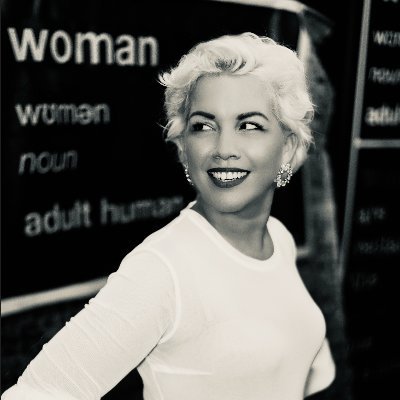
So many of us see ourselves in this little girl. Frustrated and angry at being wrapped up like a corpse. We want to breathe. We want to live.
#NoHijabDay
#FreeFromHijab
#WomanLifeFreedom
Jim Flood retweeted
My oppression is labeled as ‘cultural diversity’. They minimize my suffering with the excuse of multiculturalism.
The veil is a prison that you’re forced to go to. The crime? Being born a woman.
Watch this video by courageous women @Concienciafem0 🤍
#FreeFromHijab
#LetUsTalk
Jim Flood retweeted

Regarding Iran, and what should be done. Would you rather:
59%Glass it and go home
29%Surrender and go home
12%Invade/Occupy
995 votes • Final results10 Bands I’ve seen live.
1. George Clinton & The P-Funk All Stars
2. Rush
3. Metallica
4. Suicidal Tendencies
5. Explosions in the Sky
6. Smashing Pumpkins
7. Mastodon
8. Zappa Plays Zappa
9. AC/DC
10. Nine Inch Nails

Jim Flood retweeted
I had @LandauDave on Walk-Ins Welcome this week to talk about building a comedy special, 20 years on the road, how podcasting changed the comedy world, and why the best material comes from your real life.
youtube.com/watch?v=NJQFw9qI…


Jim Flood retweeted

New Order’s “Blue Monday” reimagined with 1930s instruments by Orkestra Obsolete.
Theremin, musical saw, harmonium ... pure genius. This cover is absolute magic.
Jim Flood retweeted

I was just subpoenaed in an anti-gun lawsuit...for being a guntuber. Link to the lawsuit is below. The case is Roberts v. Smith & Wesson, and it's the same playbook, almost copy+paste, of the Soto v. Bushmaster "Sandy Hook" lawsuit against Remington, which put them out of business.
This one arises from the Highland Park July 4 shooting, where the killer used an M&P15. The plaintiffs are of course attempting to blame S&W for the incident and the theory, you guessed it, "negligent marketing." They say S&W appealed to young men interested in militaristic imagery and that this influenced the shooter to select the M&P15, and that this more or less was a cause of this incident. Insanity.
Now they are reaching beyond S&W and into firearms media. I was served with a subpoena demanding years of info and analytics from me about S&W and reviews I've done. The part that should concern my fellow gun reviewers: Their subpoena defines an "Advertisement" to include even unpaid organic social-media content. In other words, by the plaintiffs' definition, even an independent review of a lawful product is "advertising," and they think they are entitled to any info that touches on essentially any YouTube video about the M&P15 during the relevant period.
This is EXACTLY the end-run around the federal Protection of Lawful Commerce in Arms Act that led me to draft what became the PLCAA Clarification Act. The PLCAA was enacted to protect manufacturers from lawfare over crimes committed by third parties. Plaintiffs have increasingly pleaded around that protection after the Soto case by using "negligent marketing" as a loophole, which defeats the purpose of the PLCAA.
Versions of the PLCAA Clarification Act I wrote have now been enacted in West Virginia, Montana, and Kentucky. I've been told Kentucky has already dismissed a frivolous lawsuit with it. Consider contacting your legislators and looping me on on the email so we can keep the PLCAA Clarification Act passage rolling.
Illinois obviously is not going to pass it. But Congress can. And whatever your politics on guns, there is a larger issue here: If a manufacturer sends a journalist or creator a product to independently test, that does not magically transform the resulting review into advertising. Treating independent editorial coverage as corporate marketing merely because someone reviewed a lawful product is a dangerous theory that reaches far beyond the gun industry.
One final note for people in the gun media space: if you receive one of these subpoenas, do not ignore it and do not start deleting anything. Feel free to contact me and we can discuss whether I can assist with your response or coordinate with appropriate local counsel.

Jim Flood retweeted

After September 11, more than a million tons of the World Trade Center was loaded onto barges and shipped to a garbage dump on Staten Island.
Then hundreds of men and women stood at conveyor belts for ten months and picked through every ounce of it by hand.
They were looking for people.
The place is called Fresh Kills. For fifty years it was the largest landfill in the world. It took its last barge of household trash on March 22, 2001, and shut down for good. New York was finally done with it.
Five and a half months later, at two o'clock in the morning on September 12, the landfill's director got a phone call at home. He had just walked in the door.
Two trucks were at the gate. They were carrying pieces of the World Trade Center.
He drove back.
The man who ran the dump would later say, without any drama, that if Fresh Kills had not been closed, this could never have happened. There would have been no room. The garbage would have been in the way.
The site was empty. So that is where the towers went.
Here is how it worked.
At Ground Zero, cranes and grapplers lifted the debris into dump trucks. The trucks drove to a pier on the Hudson. There, the load went onto barges, six hundred tons at a time. The barges were towed down the harbor, past the Statue of Liberty, to Staten Island. More than fifteen hundred barges made the trip.
At Fresh Kills, sanitation workers unloaded them onto a hill.
And then the sorting began.
The debris was mechanically screened into three sizes. Chunks bigger than eight inches. Two to eight inches. A quarter inch to two inches. Anything smaller than a quarter of an inch, the size of a fingernail, fell through the last sieve.
Everything above that size went onto a conveyor belt.
And along the belts stood the detectives.
NYPD. FBI. Port Authority police. Medical examiners. Dressed head to toe in white Tyvek suits, in masks, in gloves, on a hill that stank of jet fuel and pulverized concrete and things nobody wanted to name. Looking down at the belt, hour after hour, as the towers rolled past them a fist-sized chunk at a time.
When they saw something, they reached in and took it, and placed it in a white bucket at their feet.
A wedding ring. A photo ID. A set of keys. A shoe.
A piece of a person.
The white buckets went to a tent that served as a morgue.
The volume was beyond comprehension. In mid-September the operation was processing 1,750 tons of debris a day. By mid-October, 17,500 tons a day. Ten times more. Round the clock. The 200-acre hill was declared a federal crime scene and stayed one for ten months.
A retired NYPD detective later wrote down what a shift looked like, because almost nobody outside knew it existed.
You wake at 3 a.m. You get a giant coffee. You drive two hours in the dark from Orange County, through New Jersey, to Staten Island. You park at the bottom of a hill that looks like the end of the world. You put on the white suit. You go to your belt. You stand there. You look.
Then you drive two hours home and do it again tomorrow.
Sanitation workers pulled sixteen-hour shifts, seven days a week. One of them, a supervisor named Barry Asnes, said afterward what kept him there. We were attacked on our own soil, in the city where I was born. This was personal.
The operation did not stop for weather. It did not stop for Christmas. It ran until July 2002. Ten months.
By the end, the men and women on that hill had recovered thousands of human remains. Tens of thousands of personal effects. Wallets, badges, wedding bands, photographs, all cleaned and catalogued and returned to families who had nothing else to bury.
When they were finished, the remaining material was placed in a 48-acre section of the landfill, a mound two hundred and twenty-five feet high, and covered.
It is a park now.
Many of the men and women who stood on that hill have lung disease. Asthma. Cancer. PTSD. The air they were breathing, eight and ten and sixteen hours a day, was full of the towers. Some of them have died of it.
Almost nobody knows their names. Almost nobody knows the place.
Mention Fresh Kills and 9/11 in the same sentence, the retired detective wrote, and most people will have no idea what you are talking about.
Here is what you should know.
Two thousand seven hundred and fifty-three people were murdered in those towers. Only about six in ten have ever been identified.
Every one of those identifications came out of a white bucket.
Every wedding ring returned to a widow. Every badge returned to a firehouse. Every fragment of bone matched to a name and buried with a headstone instead of a question mark.
Somebody in a white suit, standing at a belt on a garbage dump at four in the morning, reached into the World Trade Center as it rolled past, and picked that person up, and put them in a bucket, and sent them home.
They did that for ten months.
Nobody applauded on the hill. There was nobody to watch.
They did it anyway. 🇺🇸
Jim Flood retweeted

Andrew was 62. His mother is 91, and he walked with her every week to keep her going a little longer. His father made it to 96, still walking miles a day at the end of it.
The podcast clips, the cassettes he engineered in the 80s, the concert recordings of aging bands, the photographs of old cars, capturing the instant a Texas sunset went impossibly saturated, the episodes of a canceled show nobody else bothered to save, the roads and bridges he spent 40 years keeping standing.
All the same instinct: Let's keep it going a little longer.
Andrew had at least 30 more years of that in him.
Gone too soon.

Andrew Wimsatt spent his life figuring out how to make things last longer.
Roads, bridges, tunnels, pavement, friendships.
He held three civil engineering degrees from the University of Texas at Austin, spent 18 years at TxDOT, ten of them as Fort Worth District Pavement Engineer, and in 2006 joined the Texas A&M Transportation Institute, where he eventually ran the Materials and Pavements Division and its $9 million annual research program. He worked on ground-penetrating radar, nondestructive testing, asset management.
Describing the work once, he said the real challenge wasn't building new things; it was making what we already have last longer.
Andrew made what we already have last longer.
He was an obsessive live-music fan who would fly across the country to see a band. He loved Slowdive. In 2023 he was recommending "Souvlaki" and "everything is alive" to anyone who'd listen, singled out their cover of Syd Barrett's "Golden Hair," and admitted that when he heard them play it at FYF in 2014, he teared up. In 2016, when bad weather killed Levitation and Slowdive threw together a surprise show at the Scoot Inn, Andrew happened to be sitting at his computer and grabbed two $7.50 tickets in the roughly two minutes before it sold out. Then he recorded the entire set on his iPhone for a friend.
He made music too. He'd been in bands with Karl Rehn since high school, engineered their home cassette recordings in the early 1980s, and in 1990 released "Reflections" under the name the Andrew Wimsatt Ensemble, cut at Sixth Street Studio. He and Rehn made music videos that ran for years on Austin's ACTV, and contributed to the score of a 1994 documentary about Barton Springs.
Then there was the archiving, which is maybe the most Andrew thing about him. He clipped television. Constantly, expertly, for free, for people he admired. The Fifth Column crew (@wethefifth) called him "Busty Wimsatt" and, in their newsletters, "ever-alert," "indefatigable," and at least once "American hero." @MattWelch called him their most devoted cliphawker. Andrew painstakingly uploaded old episodes of "The Independents" so they wouldn't disappear. He clipped @KatTimpf's Fox appearances for her Locals community. He sent @walterkirn clips of Kirn's own jokes.
"Boy did I feel special," Kirn wrote today. "Not many strangers will go out of their way to give another that kind of encouragement."
He was not, for the record, employed by any of these people.
He contributed old photographs to @iowahawkblog's Dave's Car ID Service. He was a fixture in Austin's science fiction community and once drove Howard Waldrop home from Worldcon. He was an executive producer of Penn Jillette and Adam Rifkin's "Director's Cut," and appears in it, briefly, as "Greeting Cop." He hosted a regular libertarian beer gathering at the Johnny Cash-themed bar Mean Eyed Cat. He was, per @JTLonsdale, one of University of Austin’s (@uaustinorg) original small donors. He bought a camouflage "No Step on Snek" hat at a Texas gun show this summer and his friends heard about it.
The man lived.
He lived in Cambridge Towers, a 1965 midcentury modern building near the Capitol. Punk rock, pop surrealism, midcentury furniture, a gentle Southern manner. He loved salt to a degree his friends used as a unit of measurement.
He was, by every single account, one of the kindest people anyone had met.
@greggutfeld: supremely gentle, willing to do just about anything for another person.
@PlanetTyrus: always positive, physically slight, with a monster laugh.
@NancyRomm says he once gave her the jacket off his back when she was getting hypothermic.
A friend of 13 years and dozens of concerts tells me he never once heard Andrew say an unpleasant thing about anyone.
Both his parents were English professors. His father, James, was a Chaucer scholar at UT Austin who died in 2023 at 96. His mother, Mary, took her doctorate at Duke, ran the Society for the Study of Southern Literature, held an endowed chair as McClintock Professor of Southern Letters at South Carolina, wrote the first full-length study of a nineteenth-century novelist almost nobody remembered, and spent five years on a public radio project designed to get ordinary people reading Faulkner and Welty.
His parents spent their careers recovering things other people had stopped reading. They taught their son to make things last longer.
His mother now has Alzheimer's and lives in a nursing home in Round Rock. Andrew helped care for his father at the end, and then her. His routine was to drive out, walk with her, and then take a second walk alone.
He photographed what he saw on his walks. His Instagram is herons -- wading, fishing, one caught mid-wingspan over the water -- plus hawks in bare branches, a squirrel wedged in a tree hollow, a snail on a brick wall, bluebonnets, and a lot of Texas sky at the second it went orange.
Two days before he died, he was at a friend's house for movie night, watching Mystery Science Theater 3000 do "The Crawling Hand."
He spent his whole life trying to make things last longer, and he was good at it, and he was doing it right up to the end -- the second walk of the morning, until he sat on a park bench in the morning sun.
He is survived by his siblings, Alison Ross and David Joseph Wimsatt. And by his mother, who he walked with that morning, and who does not know he isn't coming back next week.

