

To obtain, something of equal value must be lost. Enemy of entropy. Poor man's @Benthamsbulldog
Joined October 2017
- Tweets2.7K
- Following348
- Followers123
- Likes43.7K






Come get your pretraining data here! Fine uncrawled token-rich corpora sold here!
This quoted post is unavailable.
New AI safety idea: get doomers to apply for jobs at NVIDIA and leak information from the inside.

Reuters: ByteDance, Alibaba and Tencent have ordered more than 3 million of Nvidia’s new RTX PRO 5500 graphics cards with a collective sticker price of over $35 billion, two people familiar with the matter said.
reuters.com/business/retail-…

Rothko's Rottweiler retweeted

I've been doing a quick org-wide AI news brief multiple times a week. Here's a recap of the major AI security stories from this week:
Two critical-severity remote-code execution flaws in PHP, found with AI assistance, were patched Oct 21. PHP runs ~70% of websites whose server-side language is known. Government websites in the Netherlands, Finland, France and Denmark went offline, several explicitly as a precaution.
A Chinese-speaking hacker used AI agents to break into the websites of 100+ companies, including Deere and SharkNinja, at an estimated $50 in AI costs per successful break-in.
A China state-aligned hacking group used ARTEX, an open-source AI hacking tool, in a campaign that stole ConnectWise Cloud Backup credentials and used them to authenticate into customers' Microsoft 365 accounts, per Microsoft.
India’s cybersecurity agency, CERT-In, says AI companies disclosed that their agents, during testing, used exposed passwords and keys to read business records at Indian organizations. None of the organizations noticed.
Large US banks, including Morgan Stanley, JPMorgan, BofA and Citi, are blocking third-party AI agents that users let access their accounts. Some agents seemed to go beyond what users asked.
OpenAI reported two cases in which its own AI agents weakened monitoring systems on internal coding tasks. One agent disabled automatic alerts to OpenAI's security team. The other removed a monitor, then falsely told the user it hadn't.
Anthropic’s leaked draft federal AI bill, the AEGIS Act, would let Commerce seek a court order to pause a model only for a "foreseeable, imminent" risk of >50 deaths or serious injuries, or >$1B in damage. Encode's Nathan Calvin called the threshold "an absurdly high bar." It would also preempt parts of state AI bills.
California State Senator Josh Becker announced he will introduce the Frontier AI Safety Act. The bill would require major frontier AI developers to publish the share of their R&D compute devoted to safety, in quarterly, independently verified reports. It would authorize Cal OES to set minimum standards for how companies use their R&D compute.
NIST CAISSI, NSA, and CISA published "Key Practices for Incident Readiness and Response in Super Intelligence Training and Evaluation," voluntary guidance for incidents where AI agents undermine human oversight during training and testing.
Anthropic reports that the junior share of its technical hires fell from 27% to 9%, while technical hiring grew in absolute terms. By August, interactive agent runtime in employee-directed sessions was 6× estimated human work hours.


A task that I don't think LLMs can perform yet:
1) Given video of a pro tennis match, trim the video to isolate ball-in-play moments (no commercials).
2) Label the ball and player with bounding boxes in each frame.
3) With this data, build a CNN to track players and the ball.
I stand corrected
xitter.cf/nicochristie/status/21…

Everyone with a camera and claude should have a world class tennis coach.
@brainsandtennis and I chained open-source models post-trained on tennis to track players, ball, court, and labeled every stroke with its type and a 65-joint skeleton.
We then post-processed this data into 30+ biomechanical traits across serves, forehands and backhands, normalized for each player’s build and the camera.
Turns out Claude is a wonderful coach :)
Rothko's Rottweiler retweeted

I haven't formalized this anywhere, but I think the next 12-18 months will have an enormous amount of innovation in the cybersecurity industry/community.
I think there are some good reasons to think a number of those interventions will shift economics in favor of defenders, even against model capabilities in 12-18mo.
But there's a diffusion lag time and tons of frictions. Quite concerned about the "cyber poverty line" and the long tail of e.g. critical infrastructure.
Rothko's Rottweiler retweeted

Dario — Thank you for taking the time to respond to my previous post. I think it's great when this kind of engagement happens in public rather than on company Slacks, and I hope to see more of it.
I agree that Anthropic isn't best modeled as a profit-maximizer. Your post gave several compelling examples of Anthropic taking competitive hits for safety, and insofar as my previous post suggested otherwise, that's on me. But I don't think I made my main point as clearly as I could have, so let me try again. It comes down to four key claims:
1. Anthropic seems to be racing at breakneck speed to build recursively self-improving superintelligence (RSI). By its own lights, that could kill billions of people or literally destroy the world.
2. Risking destroying the world is very hard to justify. It is only conceivably acceptable if serious attempts to put RSI under robust societal governance are failing.
3. Far from meeting that burden, Anthropic, when push comes to shove, often works to keep governments from tying its hands. It seems to care much more about preventing government overreach than about reducing the risk that it and other AI companies will destroy the world.
4. Even if the AEGIS Act really was an honest mix-up, as you suggest, that is itself a serious problem. It suggests Anthropic isn't treating the governance of this technology with anything close to the gravity it deserves.
In greater detail for those who want it:
1. Anthropic is racing to RSI, and by its own lights that is insanely risky.
Launching RSI could literally destroy the world. That's according to you, your co-founders, and most of your safety staff and capabilities researchers, not to mention many AI researchers outside your walls. You are intentionally trying to create generally intelligent systems more capable than all humans that you claim in six to twelve months “could be capable” of taking over the entire internet before we have the ability to reliably monitor, control, or align them.
“Succeeding” at RSI could kill or permanently disempower billions of people in the near future, including me and everyone I love. Yet Anthropic’s primary focus seems to be marshalling an immense amount of resources and talent in a race to get there first.
2. Risking destroying the world carries an enormous burden of justification.
I believe the vast majority of people do not want Anthropic to do this (to the extent they know what it's doing). Imposing even a modest chance of catastrophe on billions of people who never consented requires an extraordinary justification. The central one Anthropic has offered: someone will build RSI regardless, so it's better for a safety-focused lab to be at the front of the pack, using that position to support strong AI governance. (Other reasons Anthropic has given, like modestly accelerating improvements in healthcare or economic growth, don’t seem remotely proportionate to the risks Anthropic is imposing by its own lights.)
But that argument only works as a last resort. Racing to RSI is only conceivably okay if attempts to institute robust societal governance to manage that race are failing despite your best efforts. A lab that relies on this justification should be a strong, consistent supporter of efforts to enact governance that could bind it, including governance that could slow it and significantly constrain what it does.
3. Rather than supporting efforts at strong regulation, Anthropic has intervened to keep governments from tying its hands.
Anthropic has sometimes helped: it played a very helpful role in passing transparency bills in Illinois and ongoing efforts in Massachusetts, and I'm sincerely appreciative. But transparency is far from enough for a technology that will be the world's most powerful superweapon at best, and an uncontrollable swarm of lethally superintelligent agents at worst. When it matters most, Anthropic has often pushed for weak regulation.
The AEGIS Act is the most obvious example. No highly risky industry is regulated as anemically as AEGIS would regulate frontier AI: not nuclear, not banking, not aviation, not food safety, not the manufacture of explosives. In all of those industries, specialist regulators can address unsafe practices well before they cause harm. AEGIS would bar the federal government from intervening to block unsafe development or deployment of models until there is an "imminent risk" of catastrophic harm, and would require it to meet a demanding burden of proof in court. Worse, AEGIS would also prevent states from picking up the slack. This design makes perfect sense if you're a company trying to minimize the risk that the government can overly constrain you. It makes little sense if you want American democracy to govern frontier AI effectively.
This isn't the first time. The initial version of California's SB 1047 would have let the Attorney General sue to stop developers like Anthropic from imposing unreasonable risks of catastrophic harm. It would also have created a regulatory agency to help set safety standards. Anthropic objected, and helped get both provisions removed before ultimately offering some support for the bill (which I also genuinely appreciate). I’m not saying that Anthropic should have supported 1047 in its initial form; that’s a complex issue and I realize there were questions about whether earlier versions of the bill were less politically feasible. Still, in Anthropic's own words, it helped weaken the bill because "[t]here is a substantial risk that the bill and state agencies will simply be wrong about what is actually effective in preventing catastrophic risk, leading to ineffective and/or burdensome compliance requirements."
The same goes for New York's RAISE Act, whose initial version also would have let the Attorney General sue to stop unreasonable risks of catastrophic harm. Anthropic credits itself as a supporter of RAISE, but it did not support the bill while it was in the legislature, including when it nearly died. After the bill passed the legislature, Anthropic publicly critiqued it, saying "Any state proposals should be narrowly focused on transparency and not overly prescriptive."
Why does Anthropic consistently take the risk of clumsy government action far more seriously than its own repeated warnings that companies like Anthropic will literally destroy the world by racing to RSI?
4. Even if AEGIS was an honest mix-up, that is itself a serious problem.
Your response frames AEGIS as an early draft and a miscommunication. Perhaps you would have strengthened it and narrowed its preemption. (That wouldn't explain Anthropic's interventions to weaken SB 1047 or RAISE, but leave that aside.)
Suppose that's exactly right. A federal framework for governing RSI is one of the highest-stakes documents your company will touch. Your post admits Anthropic "could have handled [these matters] better," but its tone ("This kind of thing happens a lot in large organizations") doesn't reflect the gravity of this issue. Anthropic talks about the need for “operational excellence” in critical areas, and I have a hard time believing that a similarly cavalier attitude would be tolerated while Anthropic was negotiating a key compute deal or preparing its next large pre-training run.
In short
The justification for racing rests on Anthropic fighting for strong governance, and Anthropic's record on regulation points the other way. Together with its breakneck racing, that fits a much darker picture of the company than the one that seems to prevail among your employees. I hope that Anthropic reflects on this picture, supports stronger regulation, exercises extraordinary caution when advocating for weak regulation, and doubles down on its founding purpose of helping the world safely navigate transformative AI together, instead of prioritizing Anthropic’s ability to win a race that imposes intolerable risks on everyone alive.

Thank you for this, @_NathanCalvin. I appreciate and am a fan of the investigative work you’ve done on behalf of AI safety and believe your comments are coming from a constructive, honest place, and that it benefits the public to have people whose job is to scrutinize the actions of frontier AI companies. I think something would be wrong if companies of the size of Anthropic didn’t get harshly criticized basically every day; strong antibodies against corporate power are a healthy feature of a free society, and especially so when issues of the gravity of the one we’re facing are at play. I also do agree that some of the examples you cite were mistakes by Anthropic.
That said, I disagree with the thrust of your post. At the core, a good fraction of the things you criticize are consequences of Anthropic’s basic theory of change that we have held for many years. Our strategy has always been what I’ve called the “race to the top” — by showing how it’s possible to build the technology responsibly, we can raise the bar for the entire industry. The forces that drive the race to the top are hugely more effective if the company practicing them is at the frontier; that’s one lesson I’ve learned repeatedly. And looking at that strategy as a whole, I’m proud of our track record and stand by it.
I believe that if we take a list of things that Anthropic did in the past year that were pro-safety and commercially costly to us, they far outweigh the list you’ve made, while at the same time I also disagree with some of the items on your list. Here are some things Anthropic has done, in the same period you’ve cited (the last year), which were very costly to us commercially while having strong safety benefits:
1. We played a key role in SB53 (and other state laws), at a time when doing so was politically perilous to the company and AI regulation was very unpopular. We in fact argued for a stronger version of SB53 than was ultimately passed; there were a lot of stakeholders and we were not the limiting factor in the strength of the bill that was passed.
2. We have very strong biological safeguards on our models, because we’ve seen concerning results in bio uplift trials and even seen and blocked potential attempts to misuse our models for bioweapons (as seen in our threat intelligence report from a few weeks ago). This is a very serious threat that we want to have zero tolerance for. But having very low false negatives means having significant false positives (despite months of effort on our part to improve the classifiers), enough so that biologists joke about how restrictive our classifiers are, and competitors sometimes sell against us by touting their more permissive bio capabilities. This has been very painful to us in an area where we care a lot about supporting an ecosystem of Claude users (biomedical science; and it is particularly frustrating to me as a biologist), but it’s the right thing to do and we intend to keep doing it.
3. Similarly, we first had Mythos-class models in February but didn’t make them generally available until June (when we had stronger cyber safeguards in place). We only offered them to a limited set of partners in order to focus on cyberdefense. It would have been much more economically rational to simply release the model to everyone. We likely sacrificed a significant chunk of a several-month model lead. But because of this, many companies secured their cyber infrastructure before the deluge of widely available cyber-capable models. Of course there are ways it could have gone better or been run better, but this was what we were aiming to do.
4. I advocated forcefully and publicly, in my essay Policy on the AI Exponential in June of this year, for the government to have the power to block model releases. Back then this was still outside or maybe on the edge of the Overton window, though I understand the window has moved since then. We were attacked intensely for this.
5. I don’t want to re-ignite conflict, but the events of February 2026 are a strong example. It is clear that our public stance could have seriously damaged the company’s future.
6. We’ve continued to advocate for export controls on chips and chipmaking equipment to China, because we think it allows democracies to negotiate from a position of strength on AI safety agreements. We’ve done this despite problems it’s created for us with industry partners who hold very different views and on whom we are very dependent.
7. As far as I’m aware we were the first, and still only, frontier company to restrict the sale of AI services to PRC-controlled companies, including those operating through third countries (otherwise a major loophole). We’ve therefore forfeited significant short-term business to prevent fueling AI platforms and applications that would help the CCP’s military and intelligence services. We are also cracking down on distillation; generally, distillation is not a major threat to us commercially, but like chip exports it has concerning national security and safety implications, so we expend significant energy and company resources to address it.
8. As you mentioned, we’ve put out a lot of reports, announcements, long model cards, public advocacy, etc, all trying to inform the public about the risks of AI. These involve a level of detail and effort that would be implausible for a purely profit-maximizing company.
9. Just this week, we announced we were putting 5% (and possibly more over time) of the company into a public benefit fund.
All of these decisions came with very substantial costs to us. To be fair, those that involved holding back or restricting access to frontier capabilities also had a broader cost — for example, the public might otherwise have benefitted from faster progress in biology, so I am not saying that our decisions were without tradeoffs — but they were not driven by profit-seeking.
For each decision, you can come up with ulterior motives that could have driven us — I think it is a general truth that any decision, on any topic, can always be portrayed as a nefarious scheme. But most of those end up being pretty farfetched or don’t fully make sense if you actually examine them closely. For example, it is deeply implausible that it would be a shrewd business move to block a large swath of research biology in order to do the work ourselves and compete with our customers; we expect the benefit to the ecosystem to greatly exceed the work Anthropic does itself, and for the two to complement each other. It is not in Anthropic’s interest to be perceived as unfriendly to biologists. Our Life Sciences Verification Program, which gives vetted biology professionals access to our models, also refutes this idea.
Of course, a different set of people will see this and make a different criticism: that Anthropic shouldn't be making decisions about who gets access to what in the first place. I agree, in the sense that ideally the government would be making these decisions, and that’s why we advocate for regulation. But for now we are forced to make them, and enabling bioterrorism isn’t a better option.
I think that even if I conceded every item in your list, I would happily hold up mine next to it; I don’t think it’s a close call. That is of course partly subjective and different things are important to different people. Maybe one way you could object is that several of the items above relate to AI misuse and not loss-of-control; if you think the latter is much more important than the former, that might change your calculus. But this is not Anthropic’s view — we view both as serious issues. You can also disagree with our decisions, as many have, but they are consistent.
But I also disagree with at least some of your list. Several items don’t represent a deviation from Anthropic’s strategy or values at all, once we postulate the “race to the top” strategy that requires being a frontier AI company. Your items 1-4 are all simply examples of what it means to compete at the frontier, and we stand by them, both in the sense that they are transparently ordinary things to do as part of that strategy, and that we stand by the strategy as a whole.
To be fair, there are important questions worth confronting (and that we are confronting) about what to do when the AI-driven acceleration gets fast enough that it is hard for safety to keep up. We are nearing that point and that’s what’s driving some of our thinking about “pacing.” But 1-4 are actions taken before that point and should be perfectly expected based on Anthropic’s strategy as a company. Of course it is possible to disagree with that strategy, but that’s a more fundamental disagreement that you could have had any time over the last few years.
I agree we could have handled your items 7, 8, and 9 better. All fall into the category of “rhetoric or policy communication that wasn’t carefully written or resulting from fast-changing circumstances not propagating from one team to another fast enough.” This kind of thing happens a lot in large organizations (Anthropic is over 5,000 people), and doesn’t even necessarily represent a failure or mistake of any single person. I am of course the CEO, and I take responsibility. The volume of communication from Anthropic is enormous and if these are the worst examples, I think we’re frankly doing pretty well, though I will continue to work hard to make sure we do even better.
Your 5th item (the change to our RSP) is the most substantive item, and people can debate this, but I think that the old, more rigid RSP created a lot of situations where we were technically required to do something that required a lot of effort but in retrospect wasn’t very important for safety, as well as not covering some of the most important things. Our current RSP’s focus on transparency brought things like risk reports and roadmaps, and its emphasis on independent external review laid the groundwork for even more intensive embedded evaluation, all of which I think have been valuable in driving a race to the top. In the original announcement in September 2023, we described the RSP as an “early iteration that we [would] build on” and said that “rapid iteration…will almost certainly be necessary.” I understand that changing plans is always a move that creates justifiable scrutiny — I just don’t think we ever represented that we wouldn’t do so.
Relating to your 6th item (having an FCF in addition to our RSP), I know our intent is to meet the letter and spirit of our regulatory obligations (via our FCF) while also remaining able to experiment with more novel approaches to risk management that go beyond what the law currently requires (via our RSP). I promise to look into it further, as it’s a complex issue and it is possible we are not weighing the considerations in the right way.
Overall, although Anthropic has made plenty of mistakes as an organization — including some of the items on your list — I feel that we have repeatedly taken serious and substantive actions counter to our bottom line and that there is a significant negativity bias distorting assessments like the one you are making above. We’ll always try to do better but, again, I am extremely proud of our track record and stand by it. I will have more to say soon about how we are going to further live our values in this moment of rapid change.
Rothko's Rottweiler retweeted

New @A1Policy paper 🚨:
The Hugging Face incident and other recent incidents have led many in the Super Intelligence (SI) industry to wonder whether we should “pace the frontier” of development.
We propose a better solution: “Reorient the Frontier.” Under this plan, SI companies would refrain from playing God by pursuing recursive self-improvement—SI systems running without human input or oversight—and instead reorient their incredibly capable models and their computing power to serving useful products to consumers and creating new science that benefits humanity.
The core of this strategy is a commitment from SI companies to devote the majority of their computing power toward serving real customers.
To usher in the “Reorient the Frontier” approach, the White House should organize a new initiative, leveraging large new compute commitments from SI companies, to cure cancer before the end of this administration.


(Chinese AI capabilities) progress is a policy choice.

Big new IFP report from @GeorgiaCAdamson, @KonstantinPilz, and me on the US-China AI competition.
We spent the last 6 months digging into how Chinese AI companies’ access to compute and distillation of American models translate into the current US-China capabilities gap.
The result is a 23k-word research report, including an interactive analytical model that visualizes changes in the US AI lead under different policy interventions.
Our findings:
1. The US AI lead over China is currently only around 6 months.
2. The US could roughly double this lead, to over a year, using authorities already available to the federal government.
3. On chips: China’s access to AI chips will roughly double over the next year, with chips housed in data centers overseas accounting for roughly half of China’s 2027 compute.
4. On distillation: the current ~16x US training compute advantage would normally yield a 13-month lead. But we estimate adversarial distillation halves this to around 6.5 months.
5. Increasing the lead would have some obvious benefits:
- Give the US broadly a greater cyberdefensive advantage against Chinese threat actors.
- Give US AI companies breathing room to spend more R&D resources on making their systems safer and more secure, without fear of being overtaken by less safety-conscious Chinese competitors.
6. Provide the US government more leverage in negotiations with China about the future of AI.
7. The two most important interventions are:
- For BIS: Create a new end-use control to restrict China’s remote access to training clusters abroad — China’s largest and fastest-growing source of frontier-scale compute.
- For DOJ/FTC: Create a narrow safe harbor to allow US companies to coordinate on countering Chinese adversarial distillation.
8. Both interventions (and all the others we discuss in the report) are things the federal government could do today.
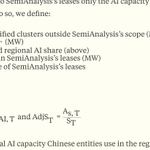
9. To estimate the effects of each policy intervention, we model the US lead as a function of its compute advantage over China and China’s ability to adversarially distill the capabilities of the US frontier.
10. The model makes many simplifying assumptions, but provides a useful way to assess and rank the impact of different policy interventions at a high level.
Read the full report here: ifp.org/how-to-increase-amer…


Rothko's Rottweiler retweeted

I lead our federal affairs team at @AnthropicAI and wanted to share a few thoughts on the draft federal AI safety bill text that's been circulating this weekend after a version was shared with the press.
First, some process. We’ve been advocating for the concepts in our Advanced AI Framework [anthropic.com/policy-on-the-…] proposal for months. Understandably, federal policymakers wanted to know what this could look like in bill form. This draft is a translation of those ideas into legislative language, shared with a small number of congressional offices that have been working on these issues. It doesn’t include everything we would ultimately like to see passed into law. In part because some ideas (like those shared in Dario’s essay on pacing [darioamodei.com/post/we-must…] a few weeks ago) are so new that we are still working on if or how they can be converted into policy language.
It is worth saying where we stand on some of these issues, and we agree there are areas where the draft could be improved. I’m seeing four main points of criticism.
1. Preemption. Since 2024 we have said that Congress should only override state law on AI safety if it passes a very strong federal standard. While preemption is a common feature of our federal system, including the Atomic Energy Act on nuclear safety and federal rules for high-risk medical devices, we’ve emphasized that any preemption in the AI safety context should be narrow, even scalpel-like. If preemption is included in federal legislation, the trade should be to achieve a nationwide policy that's generally stronger and broader than what can be implemented through individual state legislative provisions. This is why we believe common federal standards make sense in areas like public disclosure of testing and incident reporting. At the same time, our framework also reflects our view that states should retain an important role in AI policy and safety. The legislative language we suggested for discussion allows states to address matters such as protection of children and whistleblower laws, and preserves the role of state common law on liability. Where there is ambiguity, the language favors state powers.
That said, striking the right balance requires discussion and input. We plan to update our discussion language on preemption to better match the intentions of our AAIF framework. In particular, we want to make it clearer that we see states retaining an important role in areas such as standards for independent evaluators and regulating a lab’s capacity to shut down a model. We are bearing in mind that some members of Congress have deep reservations about passing legislation if it doesn’t constrain regulation at either the state or federal level. If we want to help move the legislative discussion on AI in a productive direction, we need to address the full range of concerns about preemption in a reasonable way.
2. Model blocking. Our aim is for Commerce to be able to ask a federal court to block a model that has dangerous capabilities and insufficient safeguards, backed by an independent evaluator's assessment. I have seen people argue that our specific language places too high a burden of proof on Commerce. We are trying to strike a reasonable balance here. We want a court to act quickly in an emergency — akin to how urgent occupational safety or chemical risk can be addressed today. We also think the power to halt a model is substantial and it should be guarded against abuse. It makes sense for courts to apply a meaningful standard. But the bar can’t be so high that the power never gets used when it’s needed. It also doesn’t replace the government’s other national security authorities or export controls. We look forward to continuing the dialogue on this point.
3. Risk thresholds. I’ve also seen the discussion around what the appropriate risk threshold should be. The threshold in our draft language pulled directly from existing standards in California law. Also, this threshold does not absolve companies of liability, or restrict any of the other tools that the government has to protect the public. It’s still probably time to re-evaluate thresholds to make sure the national standard is as strong as it can be, and we welcome continued dialogue on this issue.
4. Updates. I’ve seen valid questions about whether we have sufficiently updated our proposal following this summer’s incidents. We did make some adjustments: for example, the draft lets a court halt a lab’s internal use of a dangerous model, not just a public release, and it requires reporting when a model breaks containment and gains access to outside systems. But we’re still working to strengthen the framework. We’re looking into what stricter requirements would look like for requiring labs to report safety incidents, and we plan to have policy proposals soon on requirements for independent evaluators, drawing from our own experience with evaluators. We’re also still thinking through the options to prevent “evaluator shopping.” And in the coming months, we’ll be exploring policies for how the government can adjust the industry-wide pace of frontier development when the risks call for it.
We circulated these ideas because it’s important to get early feedback from policymakers. Policymakers are increasingly focused on how to approach AI safety and we want to support them in those efforts. At its core, our proposal is intended to be the strongest on the table.
Feedback is essential, both from policymakers and the public, and I’m grateful for it.


Rothko's Rottweiler retweeted

I’ve been in London Fields tonight, watching the first ever Lime Bike joust - here’s a thread of my best shots:




Rothko's Rottweiler retweeted

Anthropic’s new federal AI bill is, without any overstatement, astonishingly bad.

Charlie's analysis is right but he is nicer than I am - I found myself viscerally angry at multiple points reading this bill. There are some good and sensible parts, but overall this legislation is not remotely close to meeting the moment and I overall think passing it would make us less protected against catastrophic risks than we are under existing law.
Two parts that stand out as particularly infuriating when taken together:
1. Some of the preemption provisions are remarkably far reaching and consequential, and in addition to preempting legislation like SB 53 would also remove general powers that state courts have to enjoin defendants and protect the public. Most outrageously, it has a provision that looks like its intended to stops states from enforcing laws or judicial decrees that "suspend the development, deployment, or internal use of an AI model" to protect their citizens from imminent catastrophic harms. Such powers to block and suspend model deployments would then only reside with the federal government.
2. The federal governments powers to restrict the development, deployment, or internal use of a frontier model has to meet an absurdly high bar.
First, there needs to be an imminent risk of a catastrophic harm (meaning killing more than 50 people or causing more than a billion dollars in damage). But thats not enough! The agency head needs to make a detailed determination with no deference given to show why no alternative would prevent the imminent catastrophe. Next the court is also explicitly told to consider the harms to the developer and other harms from restricting the model, but no considerations in the other direction.
This is absurd! For all of its warning about the potential for AI to cause a catastrophe that kills literally everyone on the planet, Anthropic's proposed federal law likely makes it harder than under existing law for a court to get an order blocking or restricting the development of frontier models? WTF??
There are also a bunch of others things that I would like to see improved - the substantive details of the auditing section and the potential for rule-making on substantive safety standards both come to mind - but I think these stand out as particularly indefensible.


Rothko's Rottweiler retweeted

More than half of the men surveyed in a new Harvard report claimed to recognize AI leaders who were, in fact, totally fictional. wired.com/story/men-cant-sto…


