






andy rothman retweeted

KELLY: How many books have you written?
RANKIN: I have no idea.
KELLY: (Laughter).
RANKIN: I literally have no idea. I mean, it's maybe 40 books.
KELLY: Wow.
RANKIN: I need to count up one day...
Loved this book chat with Ian Rankin @Beathhigh
npr.org/2026/11/04/nx-s1-592…

andy rothman retweeted

Sharing a new piece in Foreign Policy with the fantastic Ma Xiao from PKU, unpacking some of the local govt dynamics behind China's industrial policy, and why they make Beijing's efforts to rein in overcapacity so difficult!
(By the way Xiao has done, in my mind, some of the most insightful research on this topic… Add his work to your reading list if you have not already done so!)
The general idea: we tend to talk about “China’s industrial policy” as if it is coherent. Many already understand that local governments have their own incentives and that implementation differs. But how do they actually bargain, compete, improvise(!), and sometimes push much further than Beijing intended?
We start with two puzzles:
Beijing planned for 12,000 km of high-speed rail by 2020; China ended up with roughly 40,000 km.
Beijing's auto ambition was to have a small number of large SOEs and JVs. Instead, many of the real stars like Geely, BYD, Nio, etc. are private firms backed by local governments, often finding ways around regulatory restrictions with local help.
Our key argument: local governments are (opportunistic) policy entrepreneurs.
They have few formal ways to push their interests at the top, so they cultivate allies, bargain through ministries, back private firms, launch things first and seek approval later… and compete intensely for one scarce resource: top leadership attention!
That “attention economy” is key. Hence the focus on showcase projects. And hence, when it comes to stuff that looks good on camera, e.g., EVs, drones, robotics, etc., they pile in.
The fiscal angle has of course been discussed too, but is also key: Local governments still have every incentive to prop up firms, protect employment, avoid bankruptcies, etc., especially in places with few alternatives. The Shenzhens of China can afford to let a zombie EV firm fail; an already fiscally constrained city heavily dependent on one or two industries has very different options.
Then there is the cadre system. Officials get credit for launching a mega project, then often rotate elsewhere before the costs / waste / downside risks show up. The average tenure of provincial and city leaders is only about three and a half years, so achievements have to show up fast.
We then use this framework to explain why rebalancing toward consumption is so hard: consumption is slow-moving, difficult to measure as a local KPI, and hard to credit to a particular locality… and why reining in local debt is so difficult, since debt-led growth shows up before the consequences do.
Full article below:
China’s Overcapacity Has a Mind of Its Own
Beijing can’t rein in its own industrial machine.
foreignpolicy.com/2026/10/26…

andy rothman retweeted

State officials have warned candidates for mid-to-upper level roles that they would assess their donor histories to ensure no Democratic donations.
Full story with @anna_c_kramer washingtonsun.com/administra…

Wait, so the US should oppose private Chinese firms building factories in Africa & employing Africans? FT: “it is the Chinese who are creating the most jobs . . African countries standing to benefit from the jobs created when Chinese companies migrate”

Good @FT article about Chinese companies opening factories in Africa to serve the US market, generally tariff-free b/w AGOA and most African countries not facing Trump 301 tariffs.
US needs to rethink rules of origin—low tariff US-Africa trade should not benefit China….


andy rothman retweeted
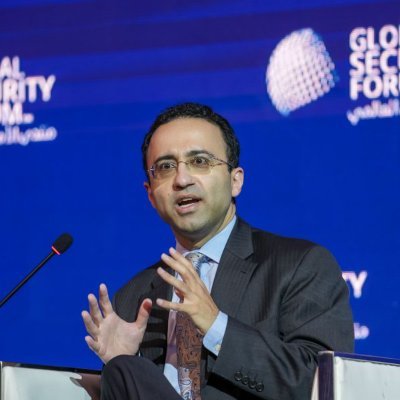
Denis Simon, now teaching at Schwarzman College at Tsinghua University, shared this warning with @khushboo228.
scmp.com/news/china/diplomac…


five of the six tech entrepreneurs receiving medals from trump are immigrants, on the same day his administration puts additional restrictions on foreign science students coming to the US

.@POTUS presents the National Medal of Science to Sergey Brin, @JensenHuang, @elonmusk, and @LisaSu, and the National Medal of Technology and Innovation to @MichaelDell and @satyanadella.
andy rothman retweeted

New from the New York Fed: "By February 2026, tariffs had contributed 2.9 pp to goods price inflation, and without them goods prices would have fallen slightly."
About one quarter of every point in higher tariff rates shows up in consumer prices within one year.
• A 10% across-the-board tariff yields a 2.6% rise in consumer goods prices after one year.
• About two thirds of the increase comes from pricier imports, which get passed through quickly.
• Another third comes from U.S. made goods, as producers face higher input costs and less import competition. This takes longer, about 6-12 months, to filter through.


How Fast Do Tariffs Pass Through into Consumer Prices?
By Mary Amiti, Sebastian Heise, and David E. Weinstein
nyfed.org/4j2HHcN

andy rothman retweeted

Beijing wanted more from Xi’s state visit to Washington
A much more important analysis of Summit than inaccurate takes on Xi's health....
scmp.com/news/china/diplomac…

andy rothman retweeted

China's rise as a manufacturing powerhouse has enabled Beijing to produce sophisticated high-tech products in large quantities — and at low cost.
The ‘China shock 2.0' phenomenon is impacting Europe's economy and leading companies with far-reaching consequences across the continent.
Read @JKynge's (@CHAsiaPacific) latest research on how the United Kingdom and European Union should respond to China's growing technological prowess.
Research paper | bit.ly/4hxy4jH |

andy rothman retweeted

NEW: Ken Paxton's office is investigating pediatricians for vaccinating children. He alleged a sprawling profit-driven conspiracy.
Pediatricians say the accusations are an attempt at intimidation.
🎁 nytimes.com/2026/10/05/healt…

“We have to stick to our legal processes,” Greer said!

Greer says no specific timeline set for enforcing US-China Board of Trade
scmp.com/news/us/economy-tra…


The Great Transshipment Scam – The White House whitehouse.gov/releases/2026…

Marc, please tell us why this troubles you:
The Exploratorium will require N95 or KF94/KN95 masks from 9 a.m. to 11 a.m. on Aug. 22, **to provide immunocompromised visitors a “safer experience,” **
** which falls outside the Exploratorium’s normal Saturday hours **

If you're feeling nostalgic about the COVID era, go to the San Francisco Exploratorim at 9am on the 22nd.
For 2 hours the museum will require everyone to wear a mask.
sfchronicle.com/entertainmen…


“When tariffs were relatively stable, prices for durable goods such as appliances, electronics, and furniture were declining by as much as 3% year-over-year. But in 2025, the effective tariff rate surged to over 11% and durable goods prices began increasing by 2% to 3%.”


andy rothman retweeted
Being a Muslim Republican at the Texas GOP Convention — @RobertDownen_ @TexasMonthly texasmonthly.com/news-politi…

andy rothman retweeted

Can African countries mimic Asia’s economic success? With Joe Studwell ift.tt/3hfmPWJ
