



runsheng retweeted

Today we announced the Claude-led discovery of a molecular machine that we suspect could represent a new gene editing mechanism. Its precise function, biotechnological utility (if any), or level of significance is not yet clear, but at minimum it is work I would have been proud to do as a PhD student. The work was done mostly, though not entirely, by Claude: our life sciences team suggested a broad area of research, Claude read through the literature and a bunch of genome data and discovered something interesting, then Claude proposed experiments to verify the discovery and our team carried them out.
It’s easy to dismiss this as a one-off or curiosity, but we’ve repeatedly seen a pattern where AI performance in new intellectual domains goes from weak to superhuman in a matter of a few years. In 2023 models struggled to do math at the level of an average high-school student. In 2024 they started to do well on math competitions for the best high-schoolers in the country, in 2025 they started to solve minor open problems, in early 2026 more significant open problems, and in late 2026 they are beginning to solve the top few open problems in all of mathematics. We believe AI for biology is on a similar exponential trend.
The main difference between biology and mathematics, of course, is that math can be done purely theoretically, while biology requires experimentation. Some have used this to draw the conclusion that AI’s utility in biology will be limited. We think this is wrong. As we’ve demonstrated today, humans can collaborate with AI to perform the experiments, validate key results in a few weeks and, if necessary, work with the AI to iterate on what they find. Eventually it may even be possible for Claude itself to safely perform the experiments by autonomously controlling lab equipment, with appropriate safeguards in place, but we aren’t doing that today (our lab is also a BSL1/BSL2 facility that doesn't handle materials dangerous to humans).
More broadly, biomedical advancement has many stages — from fundamental biology discoveries, to translational research, to drug discovery, clinical trials, and finally the actual delivery of medicines and health care to patients. We are also interested in these later stages, but even simply accelerating the first stage of fundamental biological discoveries has the potential to speed up and broaden the entire pipeline. Improving our understanding of biology and sharpening biologists’ tools can drive forward all of the later stages, for example by identifying new drug targets, finding new therapeutic modalities, allowing for more precise measurement, and speeding up the experimental loop which itself further accelerates our understanding of biology. This will not in itself speed up clinical trial times, but if it succeeds it could greatly increase the number of promising candidates that go into the pipeline — an increase in throughput even though latency remains.
In Machines of Loving Grace, I wrote about AI’s potential to “cure most diseases in 5-10 years” — a goal that sounds impossible, but one I believe is just barely possible if AI is applied to every stage of the pipeline. The first step is showing that AI can first help with, and then drive, biological discoveries.
Claude’s discovery is the latest in a line of related prior work that goes back decades, beginning with systems like CRISPR, and continuing with discoveries like the bridge recombinase and VIPR in the past few years. Recently, there has been heightened interest in systems based on reverse transcriptase (RT) enzymes, the enzyme underlying the system Claude identified. And most recently, a Stanford team working independently described a novel RT system with an associated non-coding array that is in some ways similar to the one Claude found, though they are distinct systems that evolved independently from each other. I believe that we’re at the very beginning of finding such systems and developing them into powerful tools for biotechnology.
I’m proud of the resources Anthropic has invested in accelerating the public benefits of AI through the life sciences, and we’re aiming both to grow our life sciences team and to work with other scientists to extend this approach to a broad range of problems. If you have a proposal for a research collaboration or are interested in joining our life sciences team, please reach out.

Claude has discovered a previously unknown enzyme system hidden in the DNA of bacteriophages. Beside the enzyme’s gene sits a long array of repeating DNA—a structure that looks somewhat similar to CRISPR.
We don’t yet understand what this system does, but only a handful of known systems share its features, and all of them are able to cut, copy, and paste DNA. Historically, the discovery of such programmable systems has helped revolutionize medicine. CRISPR, for instance, is now the foundation of genetic medicines. But it will take much more work to learn what this system does, and whether it can be put to similar use.
Read more: anthropic.com/news/claude-di…

runsheng retweeted

👀Un estudio pone a prueba ChatGPT en el trabajo de un bioestadístico y estos son los resultados más interesantes. Hilo👇
onlinelibrary.wiley.com/doi/…
Desplaza la discusión desde la productividad y la automatización hacia la supervisión y la validación.
El tema de mi próximo curso.

runsheng retweeted

Video of myosin proteins "walking" along actin. Insane that we can image this!
It was made by Toshio Ando's group using atomic force microscopy. All of their papers are a goldmine; they've also recorded a Cas9 protein cutting DNA and ATP synthase spinning.
runsheng retweeted

@genomeresearch is now encouraging submissions for a Special Issue: "Spatial Omics: Technologies, Computation, and Biological Discovery", Guest Edited by Drs. Christina Leslie, Jian Ma @jmuiuc, and Jeffrey Moffitt @moffittlab. Submission deadline: Nov 1. tinyurl.com/Call-for-papers-…

runsheng retweeted

Check out full text here: cell.com/cell/fulltext/S0092…
Congrats to Wei-Yu, Sang-Ho, @raimondi_ivan and the whole team! Grateful to @TheMarkFdn @SMaHTnetwork @cegs_ica for the support

runsheng retweeted

They will have 24 plex for RNA now available, and now have a new cDNA protcol - doubling read lengths - with accomonpanying Epi2Me workflow. #Nanoporeconf
runsheng retweeted
The new issue of @genomeresearch is now live. Follow the link to new research on single-cell CRISPR barcoding, Drosophila immune response enhancers, and more! tinyurl.com/Genome-Res-36-5


runsheng retweeted

This study from China offers single-cell eQTL and caQTL data from peripheral blood mononuclear cells (PBMCs) of 428 adults.
It is a valuable new single-cell eQTL resource for interpreting GWAS signals.
We have similar data from Europeans from the OneK1K and TenK10K studies.

runsheng retweeted

There is ofc the chance that chemistry suddenly runs out at 72 hrs but maybe @nanopore could boost yields by simply finetuning voltage beyond 72 hours. 205 Gbp

runsheng retweeted

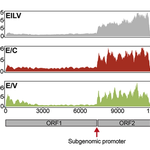
The final, accepted, redacted version of our manuscript on the shape shifting alphavirus RdRp is available online. This story is getting more fascinating by the day. We’re optimistic that cryo-EM reconstructions of both forms are in our future! academic.oup.com/nar/article…

runsheng retweeted

Fold or flop: quality assessment of AlphaFold predictions on whole proteomes
1. This study by Edoardo Sarti and Frédéric Cazals introduces a novel method to assess the reliability of AlphaFold predictions using packing-based dimensionality reduction and clustering. The authors develop the concept of "arity maps" to evaluate structural quality and fold classification across whole proteomes.
2. The arity map is a powerful tool that distinguishes between intrinsic disorder and misfold predictions. It provides a meaningful global and per-residue quality assessment measure, revealing strengths and limitations of current self-assessment metrics like pLDDT.
3. The study finds that 30–40% of residues in model organisms fall into low-confidence pLDDT ranges, and pLDDT sometimes fails to flag physically implausible structures. The arity map overcomes these limitations by identifying pathological structural motifs and unsupported disorder predictions.
4. The authors use a combination of packing analysis, disorder predictors, and structural quality assessments to validate their approach. They show that the arity map can effectively cluster well-folded proteins and separate them from misfolds and intrinsically disordered regions.
5. The study also introduces a new per-residue quality measure called "abstraqt," which refines insights provided by pLDDT. Abstraqt evaluates local structural quality using features derived from arity and its derivatives, offering a more nuanced assessment of protein structure predictions.
6. The code to compute arity maps is available within the Structural Bioinformatics Library, allowing researchers to apply this method to their own datasets and further explore the quality of AlphaFold predictions.
📜Paper: biorxiv.org/content/10.64898…
#AlphaFold #ProteinStructure #Bioinformatics #StructuralBiology #QualityAssessment

runsheng retweeted

How to estimate the right DNA sequencing depth from a very shallow initial survey.
Everyone in bioinformatics needs this. I needed it long before I found it.
pmc.ncbi.nlm.nih.gov/article…

Check the tools for CycloneSeq

When CycloneSEQ meets Oxford Nanopore Technologies: a performance comparison of contemporary nanopore DNA sequencing platforms biorxiv.org/content/10.64898… #biorxiv_bioinfo

19
runsheng retweeted

Tracking aging is hard because we don’t yet know what blood markers capture signals.
This prevents us from measuring aging over time, or test ways to change it.
Through @impetusgrants, we funded @SynBioGaoLab at @Stanford to change this. With his project on protein circuits to enable urinal monitoring of aging, his lab aims to engineer biomolecular circuits that detect internal aging hallmarks and convert them into reporter peptides that can be measured in a simple urine sample.
The lab has been prolific, with three papers across Nature Chemical Biology @nchembio and Cell Systems @CellSystemsCP establishing the building blocks for this system: a synthetic receptor platform (LIDAR), a platform to control enzyme activity using human-derived proteins (hDIRECT), and a machine-learning workflow to predict whether the body accepts these synthetic tools (“computational deimmunization”).
Congratulations to the Gao lab! More to come in 2026.


runsheng retweeted

I am looking for a postdoc to develop high-performance algorithms in computational genomics. Email or DM me if interested. For more information, see hlilab.github.io/vacancies. RTs appreciated!
runsheng retweeted

AI-generated enzymes that outperform both nature and laboratory evolution
Enzymes are the catalysts that make green chemistry possible—but finding a good starting point for optimization remains one of the biggest bottlenecks in biocatalyst development. You can screen thousands of natural enzymes hoping one accepts your target substrate, or you can evolve an existing enzyme through many rounds of mutagenesis and selection. Both paths are slow and uncertain.
Théophile Lambert, Frances Arnold, and coauthors take a different approach. They fine-tune GenSLM—a protein language model that uniquely operates at the codon (DNA) level rather than amino acid level—on 30,000 tryptophan synthase β-subunit (TrpB) sequences. After filtering candidates using ESMFold for structural confidence and selecting 105 for synthesis, they find something remarkable: many AI-generated TrpBs not only express well in E. coli and show high catalytic activity, but exhibit broader substrate promiscuity than any natural TrpB tested.
One variant, called 230, stands out. It accepts every non-canonical substrate in the panel—including challenging transformations like 4-nitroindole, naphthol, and L-threonine—where natural enzymes show little or no activity. It matches or exceeds yields from laboratory-evolved variants that required extensive directed evolution campaigns. On 5-fluoroindole (used industrially to make enlicitide decanoate, a phase 3 cardiovascular drug), 230 achieves 99% yield, rivaling the engineered PfTrpB-0B2 that Merck currently uses.
When the authors compare 230 to its closest natural homolog (80.5% sequence identity), the contrast is stark: despite nearly identical active sites and predicted structures, the natural enzyme lacks both the high-temperature activity and the broad substrate scope. The enhanced versatility isn't inherited from nature—it emerges from the generative process itself.
The implication is significant: generative AI can now produce enzyme libraries that combine expression, stability, and promiscuity in ways that neither natural diversity nor traditional engineering reliably delivers, potentially compressing months of biocatalyst discovery into weeks.
Paper: nature.com/articles/s41467-0…


The image original link journals.asm.org/doi/10.1128…


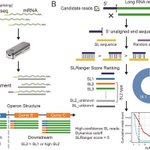
Explore prokaryotic transcriptomes like never before with @nanopore DRS.
Capture complete operons, define UTRs, and detect RNA modifications — all from native RNA.
#Prokaryote #DRS #Nanopore #Transcriptomics

11