

Interests-scientific integrity, data standards, transparency, FDA.20y+ background in reg affairs,10+ covering adcomms @FDAadcomms,Former FDA,IQVIA,Genentech,AZ
Northeast USA
Joined April 2014
- Tweets28K
- Following1K
- Followers6.4K
- Likes16.8K


Pinned Tweet
You gotta hand it to me, @US_FDA… this is Advisory Committee 2.0.

Proposal for improving the format of FDA Advisory Committee meetings
1. Begin the day with the Open Public Hearing. This could serve as a grounding start, giving committee members and the public a clear sense of stakeholder perspectives before the more technical discussion begins.
2. After the Open Public Hearing, move directly into questions and clarifications, rather than the traditional live sponsor and FDA presentations. Instead, post the briefing materials and prerecorded FDA and sponsor presentations sufficiently in advance for members to review them before the meeting. Since members are already expected to review these materials in advance, starting with questions would help preserve more of the committee’s time and attention for the most substantive part of the meeting.
3. Require (or strongly encourage) members to submit their questions in advance so they can be routed to the appropriate party (FDA or the sponsor). This would give responders time to prepare complete, well-supported answers instead of relying on predicted backup slides or improvising on the spot. When an adequate answer isn’t immediately available, the committee is often forced to move on due to time constraints.
4. Allow members to share additional relevant analyses or papers they believe would inform the discussion. Currently these materials are frequently mentioned only as a citation during the meeting, without the rest of the committee having access to the actual content. Making them available ahead of time would let everyone review the substance rather than just hearing a reference.
5. Provide committee members with a brief orientation in advance of the meeting so everyone begins with the same foundation despite their different areas of expertise. This could include common regulatory concepts, statistical terminology, meeting procedures, and other recurring concepts relevant to the committee’s work.
These changes would require adjusting the overall timeline so that members have sufficient time after the briefing materials and prerecorded presentations are released to thoroughly review them, submit questions, have those questions routed to the appropriate responders for preparation, and complete the orientation before the meeting.
The overarching goal would be to shift advisory committee meetings away from serving primarily as a venue for presentations and toward serving primarily as a venue for scientific deliberation.
This wouldn’t reduce transparency or the amount of information available to the public. The same briefing materials and FDA and sponsor presentations would still be publicly available. They would simply be shifted outside the live meeting so more of the meeting itself could be devoted to scientific deliberation.
I have other thoughts on ways to improve FDA advisory committees, but I’ll leave it there for now.
Jessica Adams retweeted

🧐What is the scientific community’s role toward restoring the public’s trust in health sciences research following the COVID-19 pandemic?
@HHSGov Chief Science and Data Officer Dr. Martin Kulldorff and I will examine this and other issues on Oct. 28 at 1:30pm ET, during the next NIH Scientific Freedom Lecture.
Webcast link in the replies.

If Galleri clears FDA only after being made to drop “early” from the indication for the GRAIL test, what does that mean for the new Medicare multi-cancer early detection (MCED) pathway? CMS must still find the test reasonable and necessary for prevention or early detection, which seems indication-specific. (Recall: the AdComm itself questioned whether the data support an ‘early’ claim and some members conditioned yes votes on dropping it.)
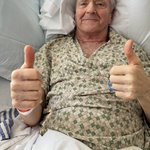
My dad went into surgery yesterday for a suspicious spot on his lung. They found cancer and ended up removing the upper lobe of his lung. I’m still waiting on details, but this photo just really gets me. He’s in his 80s, and here he is giving two thumbs up. ❤️
Say a little prayer for my pops.

Perhaps stated more directly: I keep noticing how often people answer the question of whether a product should be FDA-approved with arguments about whether it should be reimbursed. It’s almost becoming the default framing. I understand why, given the significance of FDA approval and its downstream reimbursement implications. But the approval standard wasn’t designed to answer both questions. The conflation seems to be getting worse, and I think there’s a structural problem underneath it.
I’ve been noticing more people struggle to separate whether a product should be FDA-approved from whether it should be reimbursed. There’s a reason for that: reimbursement so often follows approval in practice. But FDA approval was never designed to answer the reimbursement question. So we keep going in circles on this, and it feels like it’s getting worse.
Who is actually served by a topline trial announcement that essentially says only “endpoints met”? Investors? Would Moderna’s August announcement have included more detail if the Phase 3 DMFS results had been closer to Phase 2b?
Jessica Adams retweeted

The COINS rules are out and they are EXTREMELY broad on pharma. The focus had been whether certain kinds of China biotech transactions would be limited. As currently written, the rule limits deals for any pharma compounds. Public comments til Dec. 7.
endpoints.news/treasury-prop…

Jessica Adams retweeted

I am resigning from the White House with tremendous respect for President Trump and Bobby Kennedy.
They laid out a vision of combatting the entrenched, dark forces in DC that profit from Americans getting sick.
More policy and cultural change has happened around these goals in the past 2 years than any time in history - and I know this movement is just getting started.
It was an honor to advocate for MAHA moms in the administration and steer policies like Dietary Guidelines reform, psychedelic reform, removing soda from SNAP, removing food dyes, GRAS reform, and overhauling government food procurement.
The government opened a historic new NIH clinic! Scratch that, a center. Actually, a study with “Center” in its title, under an existing center.

For context, the timeline and sources:
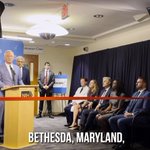
Oct. 5: Ribbon-cutting at NIH for the new clinic. (Video posted Oct. 8.)
xitter.cf/SecKennedy/status/2108…
Oct. 8: HHS announces the opening of a new NIH clinic dedicated to studying and caring for patients experiencing health problems following vaccination, as part of a broader vaccine safety initiative.
hhs.gov/press-room/hhs-stren…
Oct. 19: NIH describes the new Vaccinology and Immunology Center (VIC) as a research study within NIAID’s existing Vaccine Research Center (est. 1999). The study protocol is still being finalized, with launch anticipated before the end of 2026.
nih.gov/about-nih/nih-direct…

This week, I joined @NIHDirector_Jay, @DrOzCMS, and @DrSchwartzCDC at NIH to open a historic clinic dedicated to studying and caring for patients experiencing health problems following vaccination.
We must listen to patients and families who report vaccine injuries—not dismiss or gaslight them. President Trump and I are building a health system that takes them seriously, follows the evidence, and uses what we learn to make vaccines safer.
This is how we earn back trust in our public health institutions.
Looking back, I can see how the new NIH study may have evolved.
In June, it was described as a “VACCINE INJURY” research program. By October, it had become the “VACCINOLOGY AND IMMUNOLOGY CENTER,” a research study under an existing NIAID center.
It’s possible both the broader scientific framing and the organizational placement make sense. The broader name may address concerns that “VACCINE INJURY” made the research sound like it had a predetermined agenda, while placing the study under an existing center may help ensure continuity with established research standards, practices, and oversight.
Of course, an initiative operating at a higher organizational level might have offered advantages of its own, including more direct funding and greater flexibility to build something from the ground up.
I appreciate that initiatives evolve and aren’t always easy to communicate in real time. Whether this reflects a natural progression, intentional inflation of the announcement, some combination, or something else, we don’t know. But by the time of a ribbon-cutting ceremony, you’d hope for greater clarity about what was actually being opened.
None of this diminishes the potential importance of the research.
Let’s unpack the new NIH clinic. Or center. Or study.
1) NIH says it is establishing “a new research study called the Vaccinology and Immunology Center.”
2) Yes, the STUDY is called a CENTER.
This CENTER is located within NIAID’s existing Vaccine Research Center, established in 1999.
3) On Oct 5, HHS and NIH held a ribbon-cutting ceremony to celebrate its OPENING. The Oct 8 announcement described it as a historic new CLINIC dedicated to studying and caring for patients experiencing health problems following VACCINATION.
4) NIH now says the STUDY protocol is still being finalized, with launch anticipated before the end of 2026. Initial enrollment is expected to include several hundred participants, focusing on individuals with serious symptoms following VACCINATION OR long-term symptoms following INFECTION.
5) NIH added that through this CENTER it will:
• Investigate symptoms and potential biological mechanisms following vaccination or infection.
• Identify risk factors.
• Explore treatment options and connect patients with appropriate care.
• Use findings to inform vaccine safety and vaccination practices.
Well, glad we cleared that up.
To be clear, I’m not criticizing the research effort itself. I think it could very well be a meaningful development.
I’m talking about the communications, which frankly seem a bit of a mess.
Two weeks after a ribbon-cutting ceremony for a new CLINIC, NIH describes a STUDY called a CENTER, housed within an existing CENTER.
So is the new clinic this one study called a center? Or is there a broader center that will encompass additional studies?
I think the work may be worthwhile. The communications could be better.
For reference:
October 5 ribbon-cutting ceremony (video posted October 8):
xitter.cf/SecKennedy/status/2108…
October 8 HHS announcement:
hhs.gov/press-room/hhs-stren…
October 19 NIH statement and FAQ:
nih.gov/about-nih/nih-direct…

This week, I joined @NIHDirector_Jay, @DrOzCMS, and @DrSchwartzCDC at NIH to open a historic clinic dedicated to studying and caring for patients experiencing health problems following vaccination.
We must listen to patients and families who report vaccine injuries—not dismiss or gaslight them. President Trump and I are building a health system that takes them seriously, follows the evidence, and uses what we learn to make vaccines safer.
This is how we earn back trust in our public health institutions.