

Financial Planner @ Flynn Zito Capital Management | CFP® Professional /*********/ Securities offered through LPL Financial, Member SIPC https://teapawt.net/t.co/1BCl7sqzvA
Garden City, NY
Joined July 2023
- Tweets9.9K
- Following298
- Followers2.7K
- Likes19.2K


Ryan Haiss, CFP® retweeted

Inherited IRAs subject to RMDs are an instance in which I think asset location can be impactful.
Some will inherit these IRAs during their peak earnings years.
A jump from the 24% marginal tax rate to 35% is significant. Mitigating it to any extent can be huge.

Ryan Haiss, CFP® retweeted
The people I meet who feel the most financial stress often earn $250,000–$750,000 a year.
Not because they do not make enough.
Because higher income can hide financial problems for years.
Until those problems become very expensive.
Here is what I see over and over:
↓
Ryan Haiss, CFP® retweeted

Ryan is one of the people on here worth following.
Ryan Haiss, CFP® retweeted
Nice thread.
The key to success, financially, for retiring early (or ever) is to diversify income streams and account types based on your goals and numerous time horizons.
Different phases of retirement require different sources of money.
Ryan Haiss, CFP® retweeted
I hear this often from millennial high earners:
“I want to retire early.”
Or at least:
“I want work to become optional.”
Then I look at where their money is saved.
And I see the same problem almost every time:
↓
Ryan Haiss, CFP® retweeted

As someone who works with both:
• The hard part isnt the math, its human judgment. selling $8-10 million in a tender offer isnt the biggest issue. its a “how exposed do i want to be to my employer, what does my spouse think, what happens if this blows up, how will my identity cheer when money is no longer a scarcity problem, do I buy a crazy expensive condo in SF/NYC just because i can”
• AI cant actually “do the thing” yet. it cant place the trade. it cant open the SMA at aperio for custom indexing. it cant run the back office, handle compliance, get you into BCRED or a SpaceX secondary. it can talk about all of it. it cant execute any of it right right now, and I’m not sure you’d want it to anyway
• Claude isn’t on the hook when something goes wrong. someone has to be accountable when $20-40 million in illiquid equity is on the line
• Coordinatiom matters. the CPA, estate attorney, mortgage broker, equity desk at Schwab. someone has to quarterback while these people spend 80+ hours a week building. AI drafts the context. a human makes sure the living trust actually gets funded and the DAF gets established before year end
• The people building these models are the most clear eyed about the limits. they know they hallucinate. they know the nuance around equity comp and state specific taxation
• The commodity layer has already been crushed. generic allocation, basic TLH, cookie cutter financial plans. They can get those anywhere
• The real work is the “red zone”. pre-IPO equity comp (tender offers are fixed price events). lot level optimization. AMT thresholds. tandem ISO/NSO exercise. concentrated stock overlays. high minimum SMAs for aggressive loss generation. specialist judgment on non standard situations like future relo to a foreign country

Ryan Haiss, CFP® retweeted

Arguably my favorite chart that JPM puts out.
Missing just the 10 best days over the last 20 years costs you almost 5%. The kicker - those best days almost always follow the worst days.
Stay invested. Stay patient. Time in > Timing.

Ryan Haiss, CFP® retweeted

Great breakdown by Ryan.
Geopolitical risk does not mean aping into precious metals.
You need to look at your long term financial plan. The plan dictates your investments.
Zoom out & look at the charts within his thread.
Ryan Haiss, CFP® retweeted
Retiring with a pension?
You may face one of the biggest financial decisions of your life:
A monthly check for life
Or a 7-figure lump sum you control
Both have pros and cons. Here’s how to think about it:🧵
Ryan Haiss, CFP® retweeted

Each of our 3 kids have their own custodial investment account.
They use gift money and money they earn to fund it, and push all the buttons to buy FSKAX on their own.
We’re teaching them to invest part of every dollar that comes their way, and feeling confident enough to push the buttons themselves. They’re developing this habit now.
That’s how true generational wealth is built. By passing down the skills to create it.
We also have 529s for each of them, where we (the parents) invest to cover some of their future college costs (grandparents love contributing to those, too).
Nice breakdown by @RyanHaiss of the implications of UTMA custodial accounts.
Ryan Haiss, CFP® retweeted
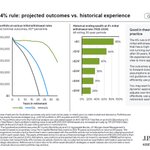
You’ve probably heard of the 4% rule—a popular strategy for retirement withdrawals.
But does it actually work today?
And are you playing it too safe—or not safe enough?
Let’s break down this chart from JPMorgan and what it means for your money 🧵

Ryan Haiss, CFP® retweeted

These were YTD returns as of 4/8/25:
S&P 500 -15.0%
Nasdaq 100 -18.5%
R2000 -20.7%
EAFE -3.5%
EM -7.8%
Now the 2025 YTD returns thru Monday:
S&P 500 +17.9%
Nasdaq 100 +23.3%
R2000 +14.2%
EAFE +28.8%
EM +34.5%
Staying the course worked (again):
awealthofcommonsense.com/202…

Ryan Haiss, CFP® retweeted
This chart is a perfect example of why so many investors underperform over time.
They take on more risk than they realize—and when volatility spikes, panic sets in. They sell at the bottom, wait too long to get back in, and miss the recovery.
If you have a sound investment strategy and financial plan, market dips aren’t a threat—they're an opportunity.
But in the moment, emotion takes over. Fear leads to knee-jerk decisions that derail long-term results.
Keep this in mind before making any changes. Often, the best move during market volatility is to do nothing—hard as that may be.
Partnering with a trusted advisor can help you stay the course when emotions run high. Your future self will thank you.

Ryan Haiss, CFP® retweeted
Update: The S&P 500 has rallied 28% off of the April lows to hit its first all-time high since February 19. $SPX


The S&P 500 fell 10.7% over the last 3 trading days which was the 11th biggest 3-day decline since 1950.
What has happened in the past following the biggest 3-day declines?
Stocks were higher over the next 1, 3, 5 years every time.
bilello.blog/newsletter

Ryan Haiss, CFP® retweeted
The S&P 500 fell 10.5% over the last 2 trading days which was the 5th biggest 2-day decline since 1950.
What has happened in the past following the biggest 2-day declines?
Stocks were substantially higher over the next 1, 3, 5 years every time.
bilello.blog/newsletter

Ryan Haiss, CFP® retweeted

Recently met with a prospect from social media…
They took advice from influencers that they don’t need an advisor and paying an advisor would eat into their wealth.
Prospect has been in a lowish risk portfolio since 2019, never sold any RSUs (company stock has gone down), and holding cash waiting for the next bear market.
This has resulted in about 500k less of wealth from opportunity cost.
Not everyone needs an advisor, but telling folks they don’t need one (or to just index) can do more damage than good.
Ryan Haiss, CFP® retweeted
Many people focus on tax-loss harvesting, but have you heard about tax-gain harvesting?
This strategy can be a game-changer for minimizing taxes in low-income years.
Here’s a scenario:
A young adult has over $100k in unrealized gains in a UTMA account set up by their wealthy parent. When they turn 21, they’re no longer a dependent, still in college, and have minimal income. This situation creates the ideal opportunity to take advantage of their lower tax bracket.
In 2024, single filers with income under $47,025 can pay 0% on long-term capital gains.
So, over a few years, you can:
1️⃣ Sell appreciated stock with minimal tax impact.
2️⃣ Reallocate the portfolio to be more diversified.
How about if you waited until this individual had a high earning job? They could have faced tens of thousands in taxes.
💡 Tax gain harvesting isn’t just about minimizing taxes today—it’s about making the most of every stage of life with a proactive strategy. Planning ahead can save on taxes, build wealth, and set you up for long-term financial success.
Disclaimer: This is for illustration only, not tax advice. Consult a tax pro before acting.
Ryan Haiss, CFP® retweeted
Financial planning is about more than just managing investments—it’s about answering the questions that shape your life.
Here are some of the biggest questions I hear from clients, and how addressing them can make a real difference in their financial future:
Ryan Haiss, CFP® retweeted

New research confirms it: Americans who work with CFP® professionals experience greater financial confidence and financial well-being than others. See the key findings from CFP Board’s inaugural Financial Planning Longitudinal Study report. Read the full report: cfp.net/news/2025/02/america…
