






Rysana retweeted

C++ port of TypeScript (targeting TS6) is now 100% at parity.
It's 25-750x faster and 5-20x lower RSS.
Matches TS6 1:1 on every test, every diagnostic is identical given the same inputs, and it is identical on all of the dozens of popular TS projects we compare on.
Some approaches can speed up conventional models for a subset of workloads, but (a) not as much, and (b) very inefficiently.
You can sometimes run multiple parallel requests to a normal LLM instead of doing a single big request.
Most of the time, this is not possible.
V2 can do any kind of thing a GPT or Claude model can do, and any kind of thing a Decision Model can do, all in one model.
Text, audio, vision, docs in.
JSON, code, text, odds, scores out.
Dynamic speed up to 10Mt/s depending on the nature of the task, latency as low as <1ms.


Rysana retweeted
I've replaced 150,000 lines of @tailwindcss tooling for Next.js with only a single file of pure @bunjavascript TS
-22 total deps, -99.94% of the code
It runs 33% faster than @tailwindcss/postcss
This approach is better in pretty much every way, especially supply chain risk
7/2026
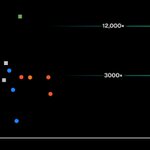
In less than two years, not only has >100k t/s gone from a record to very common, but >1M t/s has become normal as well,
(we see many billions of workloads in the 100k-10M range now every day),
...and we've even passed 10 Million t/s (per user) in some recent requests!

Moreover, all of the above is in new models that are much larger and more capable than those from 2024.
Every order of magnitude efficiency jump has been hard-fought and uncertain.
But we're now confident that Megahertz inference and <1 ms latency will soon be the new normal.


Rysana retweeted
For over a year, Rysana models have been efficient enough to do (at the same capability) AI inference in <1ms end to end that takes others >10,000ms in many cases.
Our goal is to reach reliable <0.1ms ASAP.
So this month, we've reduced networking/codec waste by up to >50x.
Rysana retweeted
We've created an exciting (to me at least) new benchmark @Rysana that solves a lot of issues with most LLM benchmarks and is very strong at identifying human-level capability. Much better signal than the analogous popular ones we've tried.
More to share on this soon, maybe.