
Help owners grow their company. Entrepreneur. Investor. Mentor. Husband, father, coach, Believer.
Charlotte, NC
Joined June 2009
- Tweets838
- Following86
- Followers425
- Likes550




Gratitude is retention, but only if it's specific.
The test: if you could have said it to anyone, it didn't land.
Net 28% of owners raised pay this year and openings didn't fall. Pay is table stakes.
Being seen is the part money can't do.

I asked a good basketball coach how he got his players to dive on the floor in practice.
"I recruit players that want to win. Then I give them an arena where they can go win."
He wasn't producing effort. He was selecting for it.
Look at what people have actually done.
19
"You're not short on applicants. You're short on reasons for a good one to say yes."
A strong candidate is already employed. They're weighing your opening against a job they have, and it isn't about pay.
Build a place worth saying yes to.
1
57% of owners say their biggest challenge is growing sales. 46% say hiring and keeping people.
They're the same list, read in a different order.
You don't grow past a leadership ceiling. You just hit it at a higher revenue number.

7
What does winning professionally look like? Is it just making money?
A job that pays you well, drains you, and doesn’t line up with anything you’re actually good at — is that winning?
It pays like winning.
1
35
Andrew West, on working with LEAD:
"I'm more capable and able to support my team than I ever would have been without LEAD."
That's the part that never shows up on a balance sheet.
43
Onboarding isn't paperwork.
It's the two weeks that decide whether someone becomes part of this, or starts the new year looking.
The person job-hunting in January usually decided in week two. They just stayed through the holidays to be polite.

1
10
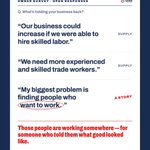
Owners wrote on September's NFIB survey:
"We could grow if we could hire skilled labor."
"My biggest problem is finding people who want to work."
The first is a shortage. The second is a story about the world.
The people who don't want to work are working somewhere.

6
Define the job. If you hired the right person, what does success look like 12 months down the road?
Good with people, or good with detail? Rarely the same person.
Most job descriptions don’t answer a single one of those questions.
10
What would break if you took 30 days off?
Not a vacation with email twice a day. Thirty days, phone off.
Would payroll run? Would the hiring call get made? Would anyone be told they did good work?
The ones you can't tick are the real work.
The Owner's Table. DM me.

A good person isn't weighing your job post. They're weighing how the interview was run and whether the person they'd report to is worth learning from.
They decide fast, and they're usually right.

6
Culture is a shared set of values and beliefs.
I’ve hired really good people and skipped the part where we aligned on it. From experience, it never lasted long term.
Personalities are workable. Values aren’t negotiable. Skills are teachable. Beliefs aren’t.
3
32% of owners can't fill their openings — 8 pts above the historical average.
The work doesn't shrink. It gets absorbed by whoever is most reliable. Then they get tired and start looking.
An unfilled role is a tax on the people who stayed.

8
Headcount multiplies whatever system it lands in. If nobody there says what good looks like, you've just bought a more expensive version of the same problem.

4
Replacing someone costs 0.6–1.3x their salary.
A $120k leader walking out = $72k–$156k.
Now count how many left you this year.
Turnover isn't weather. It's a line item.

6
Most people didn't start a business to create another job.
They started it to create freedom.
Then the business became dependent on them. Every decision. Every fire.
Your business should fund your life, not consume it.
That's what The Owner's Table is for. DM me.

2
Attract, hire and retain aren’t three problems. They’re one sequence.
Attracting is where you decide what good looks like. Hiring is where you apply that standard — or quietly lower it because the seat’s been open eleven weeks.
2
Eight people, one hour a week, in a meeting nobody would miss. That's a full-time salary. Growth costs money. Clarity is free.
7
