

Ex TradFi, Ex @wintermute_t Building @rosadeImar @homeDAO https://teapawt.net/t.co/lPd3KhgWvH
Paris
Joined February 2012
- Tweets1.2K
- Following1.2K
- Followers980
- Likes1.1K
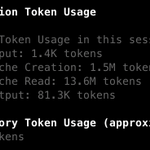







Terminal-bench leaderboard looks great until you realize
1.4K in → 81K out → 15M cache tokens.
Agentic workflows don’t scale like this, we’ve blown past the Pareto frontier.

What differentiates cross-chain solvers from the rest in the picture?
Cross-chain solvers are capital constrained.
Take Across, one of the largest bridging protocols. It routinely bridges around $1B monthly. Yet its largest relayer is the Across team itself, which maintains its edge despite running open-source code. What sets it apart? Capital — multiples more than any competitor.
Relayers are also pristine borrowers. Their balance sheets and income statements are open, auditable, and engraved on the blockchain. I posit that they are the best niche to start building robust, undercollateralized lending on DeFi rails.
Check out more on sfyl sub tack

So many people chasing the next DAT trade. There is no next DAT trade, there is no second best, the ticker is $ETH.
THE CASE FOR TREASURY COMPANIES (July 2025)
THE CONCEPT
Superficially, treasury companies seem to resemble exchange traded funds designed to provide exposure to cryptocurrencies. But the analogy is misleading. The true attraction of treasury companies lies in their ability to generate capital gains for their shareholders by selling additional shares at a premium over book value. If a trust with a book value of $10 and a 12% return on equity doubles its equity by selling additional shares at $20, the book value jumps to $13.33 and per-share earnings go from $1.20 to $1.60.
Investors are willing to pay a premium because of the high yield and the expectation of per-share earnings growth. The higher the premium, the easier it is for the treasury company to fulfill this expectation. The process is a self-reinforcing one. Once it gets under way, the trust can show a steady growth in per-share earnings, even if it were to distribute practically all its earnings as dividends. Investors who participate in the process early enough can enjoy the compound benefits of a high return on equity, a rising book value, and a rising premium over book value.
ANALYTICAL APPROACH
The conventional method of security analysis is to try and predict the future course of earnings and then to estimate the price that investors may be willing to pay for those earnings. This method is inappropriate to the analysis of treasury companies because the price that investors are willing to pay for the shares is an important factor in determining the future course of earnings.
Instead of predicting future earnings and valuations separately, we shall try to predict the future course of the entire self-reinforcing process. We shall identify three major factors which reinforce each other and we shall sketch out a scenario of the probable course of development. The three factors are:
1. The effective rate of return on the Treasury company's capital
2. The rate of growth of the treasury company’s size
3. Investor recognition, i.e., the multiple investors are willing to pay for a given rate of growth in per-share earnings
THE CATCH
Everything above is taken verbatim from Soros’ The Alchemy of Finance (p. 61). The only modifications were: “February 1970”, “Mortgage Trusts” and “Mutual Funds” for respectively “July 2025”, “Treasury Companies” and “Exchange Traded Funds”. Finally, “despite the fact that it” was replaced by “even if it were to” to better represent the lack of dividends for treasury companies ("T Cos").
Obviously, this thesis touches on T Cos for which the underlying offers yield-generation opportunities at the very least, as does real estate. Hence, we’ll be focusing on Ethereum T Cos while laying down our scenario, parting with the quotation framework but maintaining Soros' format.
THE SCENARIO
Act One: The stage is set in the wake of a deleveraging event. On-chain activity has dried up, establishing a stable floor for Ethereum's staking yield, while only the most robust DeFi protocols have survived, outlasting their centralized competitors. This pristine environment coincides with a flurry of regulatory strides, from ETF approvals to new legislation, channeling historic capital inflows into the digital asset space. This has spurred a multiplication of investment vehicles, which are now expanding beyond Bitcoin to capture the yield-bearing potential of assets like Ethereum, igniting the self-reinforcing process.
Act Two: As these Treasury Companies deploy capital, a new feedback loop emerges: their on-chain activity directly increases the base staking yield, boosting their own top-line revenue. By putting capital to work, they make their own vehicles more attractive, growing both ETH-per-share and yield-per-share. The market rewards this growth by maintaining the premium over NAV, which in turn enables accretive share issuance that further boosts yield-per-share. Competitors, attracted by these returns, enter the fray but, lacking a unique strategy, struggle to differentiate themselves.
Act Three: Increasing competition for capital forces T Cos to take greater risks to justify their book value premiums. This manifests in two ways: applying significant leverage to the balance sheet (the primary strategy for T Cos holding non-yielding assets like Bitcoin) and, for the rest, moving further down the on-chain risk curve to magnify yields. They navigate beyond blue-chip protocols, allocating to novel applications without a proven history—the DeFi equivalent of subprime. This flood of capital inflates the valuation of the underlying DeFi protocols themselves, and ultimately Ethereum’s valuation, further boosting the T Cos' NAV and masking the danger. Initial losses from minor protocol incidents are quickly overcome by the sheer momentum of the rising market.
Act Four: Investor disappointment from a major loss event will shatter the narrative and affect the valuation of the entire group. A lower premium coupled with slower growth and compressing yields will in turn crush the per-share earnings progression. The multiple will collapse, often turning a premium into a steep discount to NAV. The group will go through a violent shakeout period. After the shakeout, the industry will have matured: there will be fewer new entries, regulations may be introduced, and the surviving Treasury Companies will settle down to a more moderate, sustainable growth based on a more conservative strategy.
EVALUATION
The primary danger, at present, is that the self-reinforcing process may not get under way at all. In a serious market decline, investors may be unwilling to pay any premium, nipping the cycle in the bud. However, the survival and performance of MicroStrategy through the 2022 market decline suggests a degree of resilience, particularly for entities with savvy capital structures that favor long-term debt, itself unattainable for individuals. Furthermore, the macro-political environment appears uniquely favorable. The passage of landmark regulations cemented Bessent public strategy to rely on stablecoin for government funding, effectively its sole lifeline at the current deficit level. It is thus in the US government’s interest to foster a vibrant on-chain capital market. Ultimately, the stage is set to unleash the self-reinforcing process.
The return potential for these companies is multi-faceted, extending far beyond a simple staking yield. Take for example Sharplink Gaming. It could earn a base Yield-per-Share (YPS) of $0.401 from its initial equity through staking alone, assuming a 3% staking rate. It can resort to either equity issuance or leverage (most likely both) to magnify this number.
First, the company can issue shares at its premium to NAV. A quick back-of-the-napkin math shows that a 66% expansion of the asset base, funded by selling shares at the current 1.91x multiple, would increase the YPS from $0.401 to $0.476, assuming no market impact on both legs. This is a direct testament to reflexivity and how people’s perception, reflected in the book value premium, can shape better fundamentals. Second, through financial engineering, the company can add leverage. If Sharplink were to issue 0% convertible senior notes, as did MicroStrategy. At a 0.5x debt-to-equity ratio, again assuming no market impact, YPS would jump from $0.401 to $0.601, or $0.801 at 1x.
The existence of these two independent and powerful mechanisms for amplifying shareholder returns—one reliant on market sentiment, the other on access to capital markets— forms a compelling case for a significant and durable premium over book value.
If the reflexive process fails to launch, investors would find downside protection in the company's book value. A modest premium over NAV seems justified even in the absence of growth, given the baseline yield generation. The primary challenge for investors is not the thesis, but securing an entry at these low premiums, though opportunities have presented themselves punctually.
If the self-reinforcing process does get under way, shareholders in well-managed Treasury Companies should enjoy the compound benefits of a high return on equity, a rising book value, and a rising premium over book value. But in this thesis, there is a final accelerant: the T Cos' own activities—generating on-chain transactions and locking up supply—directly improve the fundamentals of the underlying asset itself, further amplifying the reflexive loop.

$SBET mNAV @ $23.32 = 1.37x
$BMNR mNAV @ $41.09 = 2.09x
Disclaimer: This isn't an apples-to-apples comparison. SBET is a more 'asset-light' pure-play treasury, whereas BMNR has an active mining business which alters the shape of its balance sheet/income statement.


THE CASE FOR TREASURY COMPANIES (July 2025)
THE CONCEPT
Superficially, treasury companies seem to resemble exchange traded funds designed to provide exposure to cryptocurrencies. But the analogy is misleading. The true attraction of treasury companies lies in their ability to generate capital gains for their shareholders by selling additional shares at a premium over book value. If a trust with a book value of $10 and a 12% return on equity doubles its equity by selling additional shares at $20, the book value jumps to $13.33 and per-share earnings go from $1.20 to $1.60.
Investors are willing to pay a premium because of the high yield and the expectation of per-share earnings growth. The higher the premium, the easier it is for the treasury company to fulfill this expectation. The process is a self-reinforcing one. Once it gets under way, the trust can show a steady growth in per-share earnings, even if it were to distribute practically all its earnings as dividends. Investors who participate in the process early enough can enjoy the compound benefits of a high return on equity, a rising book value, and a rising premium over book value.
ANALYTICAL APPROACH
The conventional method of security analysis is to try and predict the future course of earnings and then to estimate the price that investors may be willing to pay for those earnings. This method is inappropriate to the analysis of treasury companies because the price that investors are willing to pay for the shares is an important factor in determining the future course of earnings.
Instead of predicting future earnings and valuations separately, we shall try to predict the future course of the entire self-reinforcing process. We shall identify three major factors which reinforce each other and we shall sketch out a scenario of the probable course of development. The three factors are:
1. The effective rate of return on the Treasury company's capital
2. The rate of growth of the treasury company’s size
3. Investor recognition, i.e., the multiple investors are willing to pay for a given rate of growth in per-share earnings
THE CATCH
Everything above is taken verbatim from Soros’ The Alchemy of Finance (p. 61). The only modifications were: “February 1970”, “Mortgage Trusts” and “Mutual Funds” for respectively “July 2025”, “Treasury Companies” and “Exchange Traded Funds”. Finally, “despite the fact that it” was replaced by “even if it were to” to better represent the lack of dividends for treasury companies ("T Cos").
Obviously, this thesis touches on T Cos for which the underlying offers yield-generation opportunities at the very least, as does real estate. Hence, we’ll be focusing on Ethereum T Cos while laying down our scenario, parting with the quotation framework but maintaining Soros' format.
THE SCENARIO
Act One: The stage is set in the wake of a deleveraging event. On-chain activity has dried up, establishing a stable floor for Ethereum's staking yield, while only the most robust DeFi protocols have survived, outlasting their centralized competitors. This pristine environment coincides with a flurry of regulatory strides, from ETF approvals to new legislation, channeling historic capital inflows into the digital asset space. This has spurred a multiplication of investment vehicles, which are now expanding beyond Bitcoin to capture the yield-bearing potential of assets like Ethereum, igniting the self-reinforcing process.
Act Two: As these Treasury Companies deploy capital, a new feedback loop emerges: their on-chain activity directly increases the base staking yield, boosting their own top-line revenue. By putting capital to work, they make their own vehicles more attractive, growing both ETH-per-share and yield-per-share. The market rewards this growth by maintaining the premium over NAV, which in turn enables accretive share issuance that further boosts yield-per-share. Competitors, attracted by these returns, enter the fray but, lacking a unique strategy, struggle to differentiate themselves.
Act Three: Increasing competition for capital forces T Cos to take greater risks to justify their book value premiums. This manifests in two ways: applying significant leverage to the balance sheet (the primary strategy for T Cos holding non-yielding assets like Bitcoin) and, for the rest, moving further down the on-chain risk curve to magnify yields. They navigate beyond blue-chip protocols, allocating to novel applications without a proven history—the DeFi equivalent of subprime. This flood of capital inflates the valuation of the underlying DeFi protocols themselves, and ultimately Ethereum’s valuation, further boosting the T Cos' NAV and masking the danger. Initial losses from minor protocol incidents are quickly overcome by the sheer momentum of the rising market.
Act Four: Investor disappointment from a major loss event will shatter the narrative and affect the valuation of the entire group. A lower premium coupled with slower growth and compressing yields will in turn crush the per-share earnings progression. The multiple will collapse, often turning a premium into a steep discount to NAV. The group will go through a violent shakeout period. After the shakeout, the industry will have matured: there will be fewer new entries, regulations may be introduced, and the surviving Treasury Companies will settle down to a more moderate, sustainable growth based on a more conservative strategy.
EVALUATION
The primary danger, at present, is that the self-reinforcing process may not get under way at all. In a serious market decline, investors may be unwilling to pay any premium, nipping the cycle in the bud. However, the survival and performance of MicroStrategy through the 2022 market decline suggests a degree of resilience, particularly for entities with savvy capital structures that favor long-term debt, itself unattainable for individuals. Furthermore, the macro-political environment appears uniquely favorable. The passage of landmark regulations cemented Bessent public strategy to rely on stablecoin for government funding, effectively its sole lifeline at the current deficit level. It is thus in the US government’s interest to foster a vibrant on-chain capital market. Ultimately, the stage is set to unleash the self-reinforcing process.
The return potential for these companies is multi-faceted, extending far beyond a simple staking yield. Take for example Sharplink Gaming. It could earn a base Yield-per-Share (YPS) of $0.401 from its initial equity through staking alone, assuming a 3% staking rate. It can resort to either equity issuance or leverage (most likely both) to magnify this number.
First, the company can issue shares at its premium to NAV. A quick back-of-the-napkin math shows that a 66% expansion of the asset base, funded by selling shares at the current 1.91x multiple, would increase the YPS from $0.401 to $0.476, assuming no market impact on both legs. This is a direct testament to reflexivity and how people’s perception, reflected in the book value premium, can shape better fundamentals. Second, through financial engineering, the company can add leverage. If Sharplink were to issue 0% convertible senior notes, as did MicroStrategy. At a 0.5x debt-to-equity ratio, again assuming no market impact, YPS would jump from $0.401 to $0.601, or $0.801 at 1x.
The existence of these two independent and powerful mechanisms for amplifying shareholder returns—one reliant on market sentiment, the other on access to capital markets— forms a compelling case for a significant and durable premium over book value.
If the reflexive process fails to launch, investors would find downside protection in the company's book value. A modest premium over NAV seems justified even in the absence of growth, given the baseline yield generation. The primary challenge for investors is not the thesis, but securing an entry at these low premiums, though opportunities have presented themselves punctually.
If the self-reinforcing process does get under way, shareholders in well-managed Treasury Companies should enjoy the compound benefits of a high return on equity, a rising book value, and a rising premium over book value. But in this thesis, there is a final accelerant: the T Cos' own activities—generating on-chain transactions and locking up supply—directly improve the fundamentals of the underlying asset itself, further amplifying the reflexive loop.


Protocol Debt: Turning DAOs into Defensible Growth Engines
The 2022 crypto crash was the sector’s first credit crisis and led to a period analogous to the Great Depression. It exposed a system built on opaque, uncollateralized leverage—primarily servicing prop trading firms with reliable cash flows, but also hedge funds with much more volatile P&Ls. Some hedge funds became the first floating bodies as credit became scarce. The rest is history.
Fast forward to today, and a quieter, more robust on-chain credit market is emerging. After years of protocol-level hardening, uncollateralized lending is not only viable but has potential that extends far beyond trading firms. Many of DeFi’s leading protocols have matured into businesses with stable, predictable cash flows. Yet, they remain credit-starved, relying exclusively on equity—their native tokens—to fund operations and growth.
I posit this overwhelmingly defensive capital structure is no longer fit for purpose.
The reason mature protocols with positive revenues have favored token buy-backs over ambitious growth projects is a direct consequence of their unsustainably high cost of capital. When a protocol’s Weighted Average Cost of Capital (WACC) is composed entirely of high-risk equity, its investment hurdle rate becomes prohibitively high, shrinking the universe of acceptable projects to near-zero.
By finally tapping into debt markets, established DAOs can fundamentally re-architect their financial policies, slash their WACC, and unlock a new, more ambitious chapter of growth.
We’ll make our case by focusing mostly on Aave, a leading DeFi protocol. Most conclusions will generalize to comparable businesses. Furthermore, we’ll only detail the ideas we introduce. Feel free to harness LLMs to understand financial jargon such as WACC and Cost of Equity.
Estimating the Cost of Token
We first pin down each token’s baseline return with the equity-market CAPM—risk-free rate plus its S&P 500 beta times the 4% implied ERP. Because crypto swings harder than stocks, we then tack on an extra spread equal to the Bitwise-10/S&P 500 volatility ratio minus 1, scaled by the same ERP:
Ke = Rf + β_S&P * ERP + ((σ_BITW / σ_S&P) - 1) * ERP
This heuristic patches CAPM’s blind spot on idiosyncratic risk. A quick sanity check helps our case: it would be hard to argue that an $80 billion listed firm should still clear a lower hurdle rate than a $3 billion protocol.
Our model yields:
≈ 24% cost of equity for Uniswap and Aave
15.5% for Coinbase
Our 24% equity hurdle is almost certainly conservative. It ignores all Fama-French and crypto-specific factors. Nonetheless, this floor estimate will make our analysis more compelling.
The Equity-Only Trap
Because Aave is 100% equity-financed, its cost of equity is its WACC. Any new project must beat that lofty bar to add value, which is why the protocol has defaulted to recycling cash into token buy-backs.
Using the TokenLogic revenue dashboard:
Annualized revenues: ($50,864,081 / 174) * 365 ≈ $106.8 m
Annualized expenses: $63.3 m
Net profit: $106.8 m - $63.3 m = $43.5 m
Net margin: $43.5m / $106.8m = 41%
The operating metrics are impressive; few protocols can match a 41% net margin. Yet, at a $4b market capitalisation, the ROE is barely 1%. As such, each dollar used for buy-backs purchases an earning stream of just one cent per year, while token-holders require twenty-five cents. Buy-backs therefore destroy value; reallocating cash to higher-return projects is the rational alternative.
Aave V4: a superior use of cash
The V4 upgrade—dubbed the “largest budget in Aave DAO history” in an aave governance thread—required a mere $13m. Assume it lifts revenue a modest 10%:
Incremental revenue: 0.10 * $106.8m = $10.7m
Incremental profit: 0.407 * $10.7m ≈ $4.35m
Project-level ROE: $4.35m / $13m ≈ 33.5%
Even under a punitive 24% hurdle, the V4 upgrade delivers a project-level return exceeding 30%. This confirms that attractive reinvestment opportunities exist; they are simply starved of appropriately priced capital. Aave’s treasury policy should prioritise funding these initiatives and, when equity proves too costly, rely on debt—a long-proven strategy in traditional finance.
Lessons from a Leveraged World
This is a problem that traditional finance solved long ago. No mature, public company operates on a 100% equity-funded balance sheet. Introducing debt is a standard tool for optimizing capital structure and lowering WACC.
This might sound like financial jargon, but it has real-life implications.
Two recent examples from traditional markets illustrate this playbook:
Ørsted: As the Danish utility scaled its UK offshore wind farms, it shifted its capital strategy from pure equity funding to a 50% farm-down + project-bond stack. The company explicitly notes this model: "has reduced the cost of financing our projects significantly... and lowers the overall cost of capital." This lower WACC was the direct catalyst for committing to over 9 GW of new builds—more than doubling their installed capacity.
Netflix: After securing an investment-grade credit rating in mid-2024, Netflix immediately issued $1.8 billion in debt. CFO Spence Neumann stated the purpose was to gain: "balance-sheet flexibility [that] lets us keep reinvesting in the business." This flexibility, enabled by cheaper debt financing, was directly linked to their ability to commit over $1 billion to a new production hub—a long-term growth investment.
A balanced capital structure isn’t only an offensive tool—it also provides defence. Moderate leverage works as a poison-pill: it consumes the borrowing capacity that would otherwise tempt an acquirer. With reliable cash flows, an asset-light model and zero debt, Aave is almost a textbook acquisition target for leveraged-buyout funds. As the expected returns on such a deal rise, traditional investors will eventually find it worth clearing the legal hurdles to take control. That is unless Aave pre-emptively loads its own balance-sheet with cheaper debt.
Conclusion
Crypto protocols began life equity-only; that safety blanket has become a strategic straitjacket.
Mature, cash-flow-positive DAOs now face a weighted-average cost of capital north of 20%, throttling any project that can’t clear that bar. Their unlevered balance-sheets also leave them exposed as attractive acquisition targets.
On-chain, unsecured debt is therefore more than an incremental DeFi innovation—it is the unlocking mechanism for the sector’s next growth phase. By blending even a modest slice of debt into their treasuries, incumbents can slash WACC, widen the set of positive-NPV projects, and compete not only with one another but with traditional-finance peers.
THE CASE FOR TREASURY COMPANIES (July 2025)
THE CONCEPT
Superficially, treasury companies seem to resemble exchange traded funds designed to provide exposure to cryptocurrencies. But the analogy is misleading. The true attraction of treasury companies lies in their ability to generate capital gains for their shareholders by selling additional shares at a premium over book value. If a trust with a book value of $10 and a 12% return on equity doubles its equity by selling additional shares at $20, the book value jumps to $13.33 and per-share earnings go from $1.20 to $1.60.
Investors are willing to pay a premium because of the high yield and the expectation of per-share earnings growth. The higher the premium, the easier it is for the treasury company to fulfill this expectation. The process is a self-reinforcing one. Once it gets under way, the trust can show a steady growth in per-share earnings, even if it were to distribute practically all its earnings as dividends. Investors who participate in the process early enough can enjoy the compound benefits of a high return on equity, a rising book value, and a rising premium over book value.
ANALYTICAL APPROACH
The conventional method of security analysis is to try and predict the future course of earnings and then to estimate the price that investors may be willing to pay for those earnings. This method is inappropriate to the analysis of treasury companies because the price that investors are willing to pay for the shares is an important factor in determining the future course of earnings.
Instead of predicting future earnings and valuations separately, we shall try to predict the future course of the entire self-reinforcing process. We shall identify three major factors which reinforce each other and we shall sketch out a scenario of the probable course of development. The three factors are:
1. The effective rate of return on the Treasury company's capital
2. The rate of growth of the treasury company’s size
3. Investor recognition, i.e., the multiple investors are willing to pay for a given rate of growth in per-share earnings
THE CATCH
Everything above is taken verbatim from Soros’ The Alchemy of Finance (p. 61). The only modifications were: “February 1970”, “Mortgage Trusts” and “Mutual Funds” for respectively “July 2025”, “Treasury Companies” and “Exchange Traded Funds”. Finally, “despite the fact that it” was replaced by “even if it were to” to better represent the lack of dividends for treasury companies ("T Cos").
Obviously, this thesis touches on T Cos for which the underlying offers yield-generation opportunities at the very least, as does real estate. Hence, we’ll be focusing on Ethereum T Cos while laying down our scenario, parting with the quotation framework but maintaining Soros' format.
THE SCENARIO
Act One: The stage is set in the wake of a deleveraging event. On-chain activity has dried up, establishing a stable floor for Ethereum's staking yield, while only the most robust DeFi protocols have survived, outlasting their centralized competitors. This pristine environment coincides with a flurry of regulatory strides, from ETF approvals to new legislation, channeling historic capital inflows into the digital asset space. This has spurred a multiplication of investment vehicles, which are now expanding beyond Bitcoin to capture the yield-bearing potential of assets like Ethereum, igniting the self-reinforcing process.
Act Two: As these Treasury Companies deploy capital, a new feedback loop emerges: their on-chain activity directly increases the base staking yield, boosting their own top-line revenue. By putting capital to work, they make their own vehicles more attractive, growing both ETH-per-share and yield-per-share. The market rewards this growth by maintaining the premium over NAV, which in turn enables accretive share issuance that further boosts yield-per-share. Competitors, attracted by these returns, enter the fray but, lacking a unique strategy, struggle to differentiate themselves.
Act Three: Increasing competition for capital forces T Cos to take greater risks to justify their book value premiums. This manifests in two ways: applying significant leverage to the balance sheet (the primary strategy for T Cos holding non-yielding assets like Bitcoin) and, for the rest, moving further down the on-chain risk curve to magnify yields. They navigate beyond blue-chip protocols, allocating to novel applications without a proven history—the DeFi equivalent of subprime. This flood of capital inflates the valuation of the underlying DeFi protocols themselves, and ultimately Ethereum’s valuation, further boosting the T Cos' NAV and masking the danger. Initial losses from minor protocol incidents are quickly overcome by the sheer momentum of the rising market.
Act Four: Investor disappointment from a major loss event will shatter the narrative and affect the valuation of the entire group. A lower premium coupled with slower growth and compressing yields will in turn crush the per-share earnings progression. The multiple will collapse, often turning a premium into a steep discount to NAV. The group will go through a violent shakeout period. After the shakeout, the industry will have matured: there will be fewer new entries, regulations may be introduced, and the surviving Treasury Companies will settle down to a more moderate, sustainable growth based on a more conservative strategy.
EVALUATION
The primary danger, at present, is that the self-reinforcing process may not get under way at all. In a serious market decline, investors may be unwilling to pay any premium, nipping the cycle in the bud. However, the survival and performance of MicroStrategy through the 2022 market decline suggests a degree of resilience, particularly for entities with savvy capital structures that favor long-term debt, itself unattainable for individuals. Furthermore, the macro-political environment appears uniquely favorable. The passage of landmark regulations cemented Bessent public strategy to rely on stablecoin for government funding, effectively its sole lifeline at the current deficit level. It is thus in the US government’s interest to foster a vibrant on-chain capital market. Ultimately, the stage is set to unleash the self-reinforcing process.
The return potential for these companies is multi-faceted, extending far beyond a simple staking yield. Take for example Sharplink Gaming. It could earn a base Yield-per-Share (YPS) of $0.401 from its initial equity through staking alone, assuming a 3% staking rate. It can resort to either equity issuance or leverage (most likely both) to magnify this number.
First, the company can issue shares at its premium to NAV. A quick back-of-the-napkin math shows that a 66% expansion of the asset base, funded by selling shares at the current 1.91x multiple, would increase the YPS from $0.401 to $0.476, assuming no market impact on both legs. This is a direct testament to reflexivity and how people’s perception, reflected in the book value premium, can shape better fundamentals. Second, through financial engineering, the company can add leverage. If Sharplink were to issue 0% convertible senior notes, as did MicroStrategy. At a 0.5x debt-to-equity ratio, again assuming no market impact, YPS would jump from $0.401 to $0.601, or $0.801 at 1x.
The existence of these two independent and powerful mechanisms for amplifying shareholder returns—one reliant on market sentiment, the other on access to capital markets— forms a compelling case for a significant and durable premium over book value.
If the reflexive process fails to launch, investors would find downside protection in the company's book value. A modest premium over NAV seems justified even in the absence of growth, given the baseline yield generation. The primary challenge for investors is not the thesis, but securing an entry at these low premiums, though opportunities have presented themselves punctually.
If the self-reinforcing process does get under way, shareholders in well-managed Treasury Companies should enjoy the compound benefits of a high return on equity, a rising book value, and a rising premium over book value. But in this thesis, there is a final accelerant: the T Cos' own activities—generating on-chain transactions and locking up supply—directly improve the fundamentals of the underlying asset itself, further amplifying the reflexive loop.
Why actuators?
This small motor represents 45% of Unitree GO2 Pro BoM.
You might think, that's a quadruped, who cares, the future lies in humanoids.
Well think again! Humanoids have 2 to 4 times more motors. Actuators share of the BoM rises up to 75% of the robot's total cost.

The token buyback meta is the most fundamentally flawed strategy in DeFi today. It is symptomatic of DAOs’ unbalanced capital structures which stems from the sector’s tumultuous relationship with credit. Let me explain.
These funding costs create abysmal hurdle rates, hindering real growth and innovation. This unbalanced structure also neutralizes corporate defenses, effectively extending an open invitation for hostile leveraged takeovers. All while on-chain uncollat lending is becoming viable.
The case for protocol debt is clear. In the full post, I detail the arguments and evidences.
You can read the full thesis here: sfyl.xyz/blog/the-case-for-p…
Keen to hear people's thoughts and counterarguments.
