






Sam Lee retweeted

I take full responsibility for calling it first ‘the Queen’
there was a specific reason for it back then, in 2024 … while almost all peers’ CEOs were defrauding shareholders with insane comp packages, for absolutely no reasons (all booking huge losses) our bros’ were humble and much less/fairly retributed, during the biggest ramp up in BTC mining industry, with a long dated goal of shifting soon into AI, without excessively weighing or counting on shareholders support
all things changed in late 2025 / 2026 and I was - once again - the first to claim out out loud the reasons why the company’s leadership had taken a wrong & risky route, dismissing outright the Queen title:
1. worst deal ever in the cloud business (MSFT)
2. worst deal ever in comp to leadership (>$1.5b when announced)
3. the buyback of converts at stupid/crazy premium
4. the air cooled data centers claimed to be AI-ready (with only marginal retrofit costs) while it proving soon later it was a big lie (in fact, now entirely demolished)
Issue is not to be bullish & optimistic when there’s a reason for it. And generate a word/shortcut for it. Issue is to be blind when completely unnecessary. When you should instead pay 2x attention.
Flexibility is a key word here.
Management doesn’t fall in love with any investor. Never. They just need to pick the most loyal AND lowest cost of capital.
Investors should never fall in love with management. They just need to pick the management focused & delivering on shareholders return FIRST … and FOREMOST. Then, and only then, their annual paycheck. Where 80% is based on SHAREHOLDERS RETURN. Not 100% on being just employed.
Sam Lee retweeted

Steve Eisman literally explained why the biggest AI IPO of the year stopped mattering.
> Yesterday on CNBC, five days after Jensen Huang quit Nvidia, the investor Steve Carell played in The Big Short opened with the controversial part.
"I think the Anthropic IPO is not important anymore."
- The host asked where the stock lands. His answer: "I really don't care."
- His real worry: "how much are local and state governments going to slow AI data center construction."
A full moratorium, he says, would put the country into a recession overnight.
- But a 10 to 30% slowdown flips his read. Construction would be paid from hyperscaler cash flow, no new debt.
- That fight is already local. On November 2, Mooresville, North Carolina, voted for a 12-month pause on new data center applications.
> His second issue is what he calls Huang's "virtual vertical holding company."
> With Huang gone, he says, it is unwinding, and the neoclouds are about to get ejected. "It's going to be painful."
The winners, in his telling: the hyperscalers, because they "go cash flow positive."
Sam Lee retweeted

ELON MUSK: “The stock market is a very strange thing. It's kind of like Warren Buffett's sort of analogy, is the stock market's like having someone stand at the edge of your house and yell prices to buy or sell your house every day. And sometimes they take their meds and sometimes they don't.
So sometimes the person yelling the price of your house is having a good day and sometimes it's having a bad day. But it's still the same house. You're like, it's literally still the same house.
So Tesla stock goes up and it goes down, but actually it's still the same company. It's just people's perception of the future. I guess it's just very emotional.”
Sam Lee retweeted

The Federal Energy Regulatory Commission (“FERC”) has authorized our acquisition of Long Ridge Energy & Power. Closing is expected in the coming weeks.
The deal will add 1,600+ contiguous acres and a power plant currently authorized to sell 485 MW, expected to reach 505 MW nameplate in 1H 2027. Learn more: ir.mara.com/news-events/pres…
Sam Lee retweeted

Vertebrai is a bridge between power being ready and a data center being ready. Proud of the team putting nearly 10 years of MARA's computing experience to work for others with underused power.

Introducing Vertebrai, MARA’s managed flexible load service.
There’s power all over the grid that no one is using. A data center pays for it months before it can fill the space. A wind farm gets told to stop when the grid is full.
Vertebrai puts that power to work, then steps aside the moment it’s needed. Watch how it works:
Sam Lee retweeted

🇪🇸 The DeFi Technologies Capital Markets Series is coming to Spain for an invite-only VIP session during
@mmerge_io Madrid. 🔎
The agenda features the closing panel, “Opening Access to Digital Assets: Products, Platforms and Investor Demand,” alongside a keynote and three Asset Deep Dives on the infrastructure behind each asset, how adoption is progressing, and the regulated routes to exposure.
🎙️ About the panel
Institutional and private capital now reaches digital assets through exchange-traded products, venture funds, indices, and bank platforms that fit into existing custody and trading relationships. Each route solves a different problem and carries different constraints.
This panel puts the product side and the distribution side in the same room. It looks at what is being built, what investors are asking for, and where demand and available structures still do not match.
🎤 Panelists:
🔹 Andrea Disarò, Principal, Structured Products & Quantitative Analysis, @DeFiTechGlobal
🔹 @Forson, President, DeFi Technologies & Chief Growth Officer,@ValourFunds
🔹 Guillermo Barco Muñoz, Senior Product Manager Digital Assets, @Swissquote
🔹 Jacob Lindberg, Chief Revenue Officer, @ValourFunds
🔹 Soledad Contreras, Head of Partnerships, @CoinDesk
🤝 The session is built for asset managers, institutional investors, family offices, wealth managers, and capital allocators. It covers what assessment, selection, and regulated exchange-listed exposure look like inside a diversified portfolio.
📍 Palacio de Cibeles, Madrid, during MERGE
🗓️ 28 October 2026
If you are an asset manager, institutional investor, or allocator and would like to attend, reach out to 📩 [email protected]
@DeFiTechGlobal | @ValourFunds | @DigitalStillman

Sam Lee retweeted

O Messi jogando tetris deve ser assim teapawt.net/iTheWolfman/status/209…
Sam Lee retweeted

#Metaplanet: one post to sum it all
Over the past 24 hours I've posted a string of thoughts on Metaplanet's Q3 bitcoin sale and buyback. I've had time to digest it, so here it is in one place. And I've tagged the stakeholders at the end.
The context
In Q3 Metaplanet sold 10,000 BTC at an average ¥12.47M and bought 11,000 back at ¥13.63M, 9.3% higher. Against simply holding, the round trip on the 10,000 cost about ¥11.6bn (~$73M) before fees. The stated reasons are a US tax loss, worth a possible ~$97M deferred tax asset that isn't yet recognized, and showing rating agencies the company will sell BTC to meet obligations. No further details were given.
Taking the reasons at face value
1. Tax. US wash-sale rules don't apply to bitcoin, so a sale and a rebuy a few days apart books the same loss. Advisers may want some market exposure between the two legs so the trade has economic substance, and a few days covers that. Three weeks out of the market and a re-entry 9% higher is not necessary.
2. Liquidity. Strategy is the obvious reference. It holds ~4.2% of all bitcoin against ~$22B of converts and preferreds, and S&P's stated objection to its credit is the mismatch between bitcoin assets and dollar obligations. Between late May and early August it sold 6,948 BTC across five weekly 8-Ks, about 0.8% of its stack, each disclosed within days with the use of proceeds.
In contrast, Metaplanet holds ~0.2% of all bitcoin and has no listed preferreds. It sold 23% of its stack in one quarter and told shareholders after the quarter ended.
If they are saying the truth, then tell us which rating agency asked for that?
None of it adds up. I'm calling bullshit. I can smell it. It's not even good bullshit - which I at least would have acknowledged. It's an intellectually lazy cover up and an insult to our intelligence.
What the chain and the price tape show
- Aug 21 to Sep 1: exactly 10,000.0 BTC left Metaplanet wallets for a single Coinbase Prime deposit address, in odd-sized lots. ¥12.47M sits inside BTC/JPY's range for that window.
- The same 12 days, 10,000 BTC came back to new Metaplanet wallets from Coinbase Prime in round lots of 675 to 1,000. Net change across the window: zero.
- ¥13.63M was only reachable Sep 21 to 23. Even at the late-August high, a rebuy then would put the 11,000 BTC average near ¥13.1M, so the coins that came back in August can't be the disclosed repurchase.
- Sep 28 to 30: 12 tranches went to Coinbase Prime and came back within 13 to 88 minutes, plus a net +1,000 BTC on Sep 30. That's quarter-end movement, not the trades.
On Aug 12 Simon wrote: "No bitcoin was sold, and our holdings remain 43,000 BTC. All of our addresses are published, which is why the transfers were observable in real time." That was an accurate statement at the time. Nine days later, 10,000 BTC started moving from those published addresses to Coinbase Prime. The sale was disclosed on Oct 5.
x.com/gerovich/status/208767…
The scenario that actually makes sense
1. BTC ran from ~$64k to ~$80k between Aug 19 and the Aug 28 monthly expiry, up 24% in nine days. Short calls on roughly 4,000 to 5,000 BTC struck at $68k to $70k would have lost about $50M on that move.
2. Selling 10,000 BTC raised ~$790M, far more than a $50M loss needs. It was used as collateral for cash-secured puts, written to earn the call loss back in September.
3. BTC rallied from mid-September, the puts expire or close without assignment, and Q3 options revenue lands at ¥848M (~$5.4M), down 51% from Q2, despite having added $235M in debt which would have been plenty of collateral to generate a very healthy income in Q3.
4. Sep 21 to 23: 11,000 BTC rebought at ~$86k, roughly $950M against $790M received. The ~$160M difference was funded from a either the credit facility top up or a new BTC-collateralized debt source.
What this doesn't explain is the 10,000 BTC sitting in Metaplanet's wallets for the three weeks the company says it had sold them.
The backdrop
The trades fall in the weeks when executive compensation was under the most public pressure, and the questions raised then are still open.
- 10th series: the Aug 18 notice lists holders by category (CEO 276,000 units, two executive officers 141,000, two employees 42,000). It doesn't name the officers - this should be standard disclosure.
- MMXX: three consecutive securities reports said the CEO indirectly holds a majority of its voting rights. His Sep 6 statement says he is a significant but non-majority shareholder of its parent. I'm taking them at their word, but can't imagine it was just a typo. MMXX has lent tens of millions of Metaplanet shares to EVO, at a fee withheld "at MMXX's request". The issue is not so much with the owners of MMXX profiting from this arrangement, but the governance around the potential conflicts of interest here. For instance, did Simon have a say in the related board resolutions?
If Simon and Dylan are running the derivatives book, what was their emotional state during the timing of this trade? They gambled on a quarter of the stack, and lost money for shareholders in the process. Were they mentally and emotionally fit to make such a decision at that time?
Questions for management
1. The date, size and price of every sale and repurchase, and how long the proceeds sat in cash. If that's too much to ask, then the monthly P&L for the options book in Q3 - that would settle it.
2. Which rating agency asked for a demonstrated sale, and why the rebuy waited three weeks.
3. What the 10,000 BTC that returned to the published wallets between Aug 21 and Sep 1 were.
4. Any bitcoin borrowed or lent at Sep 30.
5. Why a sale of 23% of the treasury wasn't disclosed when it happened, when every movement that affects the long term treasury bucket is? Is that not in your opinion a a significant asset sale that should require timely disclosure?
6. Name the 10th-series holders, and put the remaining units to a shareholder vote, while participants abstain.
7. Also put the continuation of the advisory board members, and especially David Bailey to a shareholder vote. It's money down the drain and I suspect shareholders would agree.
8. Publish the MMXX Capital cap table, who approved the related board resolutions, and the fee MMXX earns lending shares to EVO.
My position
I hold Metaplanet shares and will sell them over the coming week. The more I weigh what management has done against what it has said, the less I trust its disclosures, and that now outweighs the upside I see in the business. There are other vehicles to express that upside, where I don't have to constantly second guess where I'm being deceived. And while some people may feel I have been too harsh lately, I actually think I've been too soft and biased towards them, because of my stake. Holding pulled my thinking toward finding reasons to believe them, and without a position I can write about the company with no stake in the answer. My size won't move the market, and I wish everyone reading this good fortune and success.
@gerovich @DylanLeClair @Shinpei3350
$MPJPY $MTPLF $DN3


One more thought on #Metaplanet
Another important and probably relevant dimension here is the timing of it all. Late Aug / early Sep when this trade was likely taking place, is when we were probably at peak pressure on X re the comp misalignment. If Simon and Dylan are leading the derivatives desk, I can't imagine their emotional state was well regulated around those weeks. With comp under severe scrutiny and pressure to disclose the beneficiaries of the 10th Series (which we still don't have by the way).
An on that note, a separate but important point: we still do not have ownership details on MMXX, despite the recent correction that he is apparently not a majority owner (anymore). Transparency is needed here given the clear conflicts of interest, and who approved any related board resolutions.
I am shocked and appalled at the continued lack of transparency around these very serious matters. If you have nothing to hide, then disclose the details.
$MPJPY $MTPLF $DN3
Sam Lee retweeted
One more thought on #Metaplanet
Another important and probably relevant dimension here is the timing of it all. Late Aug / early Sep when this trade was likely taking place, is when we were probably at peak pressure on X re the comp misalignment. If Simon and Dylan are leading the derivatives desk, I can't imagine their emotional state was well regulated around those weeks. With comp under severe scrutiny and pressure to disclose the beneficiaries of the 10th Series (which we still don't have by the way).
An on that note, a separate but important point: we still do not have ownership details on MMXX, despite the recent correction that he is apparently not a majority owner (anymore). Transparency is needed here given the clear conflicts of interest, and who approved any related board resolutions.
I am shocked and appalled at the continued lack of transparency around these very serious matters. If you have nothing to hide, then disclose the details.
$MPJPY $MTPLF $DN3
#Metaplanet
On further reflection, it was not simply a bad trade with 25% of their stack (selling to buy lower). It also wasn't any of the reasons given in the disclosure - they backed into those to try to PR a positive spin on it.
Here's what happened at #Metaplanet in Q3.
1. August: short calls on ~10% of the stack (~4,300 BTC) as BTC runs $63k to $80k. Net loss ~$50M. Settled in BTC that's only ~800 BTC of intrinsic, so no big sale needed yet.
2. Credit facility (or other debt source) upsized against the higher BTC value. Dashboard debt is +$235M in Q3.
3. Late Aug to early Sep Simon scrambles to cover the loss on stage short calls: sell ~10,000 BTC at ~¥12.47M (~$79k). That matches BTC prices on those days. Proceeds ~$790M.
4. The cash is used as collateral for cash-secured puts, aiming for ~$55-60M of premium to offset the call loss and show income.
5. Puts expire out of the money as BTC climbs to $85k+, so no BTC is assigned.
6. Sep 21-23: rebuy 11,000 at ~¥13.63M (~$86k). That matches the prices on those days. Cost ~$950M vs $790M received. The ~$160M gap is covered by the new debt.
7. Net: ~$73M price gap on the 10,000, ~$87M for the extra 1,000 funded by debt, and a Q3 options line of only ¥848M ($5.4M).
It fits their disclosed prices and Q3 timing. And if I’m completely off the mark, then @gerovich @DylanLeClair or @Shinpei3350 can simply correct me here (and I'll repost the correction), and share the transaction details and monthly results for BIG, for the benefit of all shareholders. Transparency doesn't cost anything.
But I've been around the block long enough to not just believe anything I'm told, and I doubt I'm wrong here.
$MPJPY $MTPLF $DN3
Sam Lee retweeted
#Metaplanet
On further reflection, it was not simply a bad trade with 25% of their stack (selling to buy lower). It also wasn't any of the reasons given in the disclosure - they backed into those to try to PR a positive spin on it.
Here's what happened at #Metaplanet in Q3.
1. August: short calls on ~10% of the stack (~4,300 BTC) as BTC runs $63k to $80k. Net loss ~$50M. Settled in BTC that's only ~800 BTC of intrinsic, so no big sale needed yet.
2. Credit facility (or other debt source) upsized against the higher BTC value. Dashboard debt is +$235M in Q3.
3. Late Aug to early Sep Simon scrambles to cover the loss on stage short calls: sell ~10,000 BTC at ~¥12.47M (~$79k). That matches BTC prices on those days. Proceeds ~$790M.
4. The cash is used as collateral for cash-secured puts, aiming for ~$55-60M of premium to offset the call loss and show income.
5. Puts expire out of the money as BTC climbs to $85k+, so no BTC is assigned.
6. Sep 21-23: rebuy 11,000 at ~¥13.63M (~$86k). That matches the prices on those days. Cost ~$950M vs $790M received. The ~$160M gap is covered by the new debt.
7. Net: ~$73M price gap on the 10,000, ~$87M for the extra 1,000 funded by debt, and a Q3 options line of only ¥848M ($5.4M).
It fits their disclosed prices and Q3 timing. And if I’m completely off the mark, then @gerovich @DylanLeClair or @Shinpei3350 can simply correct me here (and I'll repost the correction), and share the transaction details and monthly results for BIG, for the benefit of all shareholders. Transparency doesn't cost anything.
But I've been around the block long enough to not just believe anything I'm told, and I doubt I'm wrong here.
$MPJPY $MTPLF $DN3
I did some more digging on the #Metaplanet BTC sale/trade.
They sold 10K BTC and bought back 11K in Q3 to "prove liquidity". They give no dates but their public wallets fill in some of the gaps.
Aug 21 to Sep 1: exactly 10,000.0 BTC left Metaplanet wallets for a single Coinbase Prime deposit address, in odd-sized lots. The disclosed ¥12.47M average sale price sits inside BTC/JPY's range for that window.
The same 12 days, 10,000 BTC came back to new Metaplanet wallets from Coinbase Prime in round lots of 675 to 1,000. Net change across the window: zero.
The disclosed ¥13.63M average buy price was only reachable Sep 21 to 23. Even at the window's high, a late-August rebuy would put the 11,000 BTC average near ¥13.1M. The coins that came back in August can't be the disclosed repurchase.
Sep 28 to 30: 12 more tranches went to Coinbase Prime and came back within 13 to 88 minutes, plus a net +1,000 BTC on Sep 30. That's quarter-end movement, not the trades.
So for the three weeks between the sale and the rebuy, what were the 10,000 BTC sitting in Metaplanet's wallets? Unsold coins, borrowed coins, or something the filing hasn't described. Publishing the trade dates, sizes and prices would settle it.
Wallet flows are onchain. Exchange labels are Arkham's. Linking the flows to the trades is my inference.
There is absolutely no reason to need to prove they can sell 25% of their stack in a quarter; no one doubted they could; they have no listed prefs; they do not hold >4% of their BTC supply; the size of the trade is ginormous when comparing to the actual quarterly interest obligation on their debt; they could have done a series of smaller trades and closed them much sooner in time.
It doesn’t add up Simon. Do not insult our intelligence.
$MPJPY $MTPLF $DN3
Sam Lee retweeted

I would never hold or recommend any securities from Metaplanet ever again.
The industry can do their best to launder the reputation of Simon and Co but this "published note" should be the nail in the coffin.
They do not give a fuck.
Instead of the constant gaslighting and manipulation, why not put the compensation issue to a shareholder vote?
Calling the 10th series "founder turnaround equity" is a joke. The company was already public, already listed, already a failing hotel business. It pivoted to Web3 and NFTs before it pivoted to Bitcoin.
Gerovich chaired it from 2015. Eighteen days before this letter, the company's own filing called these "paid stock options" held by "certain officers and employees." Two of the five holders are employees... so by definition not founders.
The letter has an entire section titled "How they were priced, and the risk taken." It never states the price. The warrants cost ¥18 per unit. ¥8.28m for the whole pool, around $51,000. About $30,500 for Gerovich's 276,000 units, against a position still worth close to $200m.
On disclosure, the August 18 filing said the clause made it difficult for investors to ascertain the fully diluted share count and the extent of future dilution. This letter now says shareholders approved it with full knowledge.
Both cannot be true.
And what about the risk shareholders took? They were sold dilution in exchange for Bitcoin per share, while the anti-dilution clause held management's stake at 20% no matter how much stock was issued. Every raise diluted shareholders but management's pool was protected.
The irony is that they were the only ones completely protected from any dilution risk at all.
The note says "Metaplanet is fortunate to have a founder-led team whose interests are deeply aligned with all shareholders."
Evidently not.
Any talk about Japan's low cost of capital is irrelevant once you account for the permanent drag on the common stock.
Excessive compensation and a sleaze tax for management means the company will struggle to sustain a mNAV premium higher than its competitors ever again.
Anyway, forget what I think.
There is one simple test.
Let's see how shareholders really feel.
Put it to a vote.

Our Independent Directors have published a note to shareholders on the Series 10 warrants, with a Fact Sheet covering their history, their terms, and the changes the Board has made. As the note explains, Metaplanet's founder-led history is important context that much of the recent commentary has missed.
metaplanet.jp/en/announcemen…
Notably, VanEck has since removed the section of its recent report on the Series 10 warrants, stating that it did not meet its research standards.
With the warrant changes complete, our focus is on the next chapter: evolving Metaplanet into a global financial services innovator powered by Bitcoin. Thank you for your support. Our commitment to communication, transparency, and integrity continues.

Sam Lee retweeted
A short post on #Metaplanet
I won't go into details of what I think of the disclosures today. Some were good, some were not; although not unexpected.
But I find one point highly peculiar.
In Q3, Metaplanet sold 10,000 BTC at an average ¥12.47M and later bought 11,000 back at ¥13.63M, 9.3% higher. Against simply holding, the round trip cost about ¥11.6bn (~$73m) before fees.
The stated reasons are a US tax loss, worth 'a possible' ~$97m deferred tax asset that isn't yet recognized, and showing rating agencies the company will sell BTC to meet obligations. Both were available for the price of a bid-ask spread and US wash-sale rules don't reach bitcoin, so a same-day sale and rebuy books the same tax loss and proves the same willingness to sell.
Instead the company carried the price risk for an undisclosed stretch and paid roughly 75% of the tax asset's potential value to get back in.
That leaves two readings. Either a discretionary BTC trade went the wrong way and was described afterwards as a credit exercise, or the timing explains something the filing doesn't say.
I'm not buying it. And unfortunately there is little trust after what we've seen.
If they have nothing to hide, Metaplanet should publish the date, size and price of every sale and every repurchase, and how long the proceeds sat in cash.
This smells like an attempted trade gone wrong.
$MPJPY $MTPLF $DN3

Sam Lee retweeted
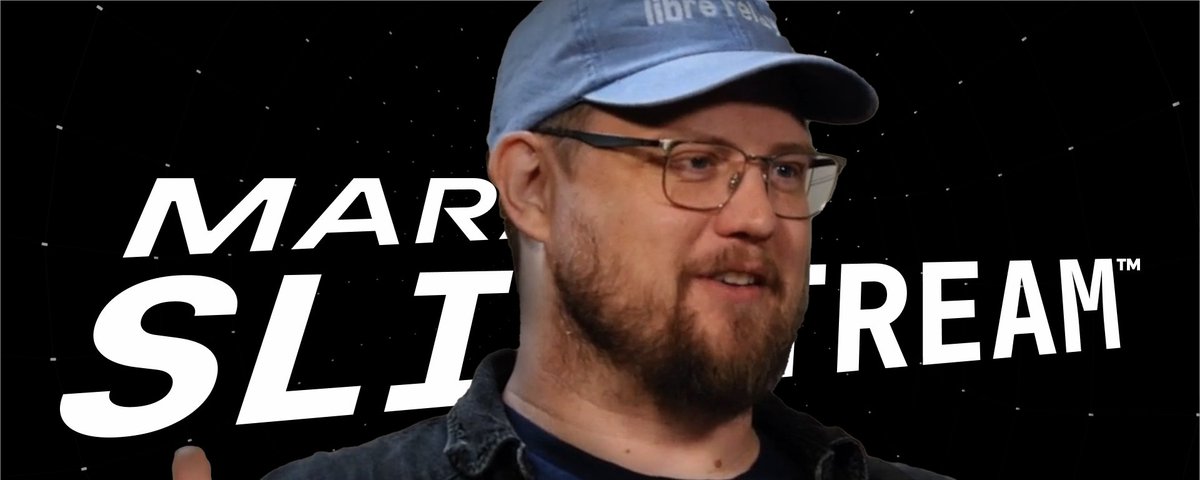
MFTV #18: Unpacking Private Mempools with Slipstream’s Peter Todd
🔗 YouTube: youtu.be/qbxEZs1nXgU
🌿 Spotify: open.spotify.com/show/033A7D…
In honor of Peter Todd’s (@peterktodd) recent appointment as lead maintainer of @MARA Slipstream, Isabel Foxen Duke (@isabelfoxenduke) sits down with the veteran Bitcoin Core contributor to explore Slipstream’s unique role in the #Bitcoin ecosystem — and private mempools in Bitcoin R&D.
Tracing a line from early Replace-by-Fee (RBF) testing to modern experimentation with Quantum Safe Bitcoin, Todd breaks down how the use of private mempools has historically fueled protocol innovation.
The episode covers the technical nuances of the Taproot annex, the computational hurdles behind optimal block packing, and his longstanding views on the use of Bitcoin for data availability.
TIMESTAMPS:
🎙️ The 10-year journey to get full RBF enabled on Bitcoin Core
🔓 Why Libre Relay relaxes standardness rules for non-standard transactions
🛠️ Explaining version numbers, CSV, and relative time locks
📜 Why the Taproot annex is Peter's favorite standardness rule to bypass
🏎️ How the Lightning Network actively depends on arbitrary data publication
🌐 Why the battle over DA is a "play fight," not a war
👀 The origins of OP_RETURN and early DA limits
⚡ Pre-inscription data use cases including Open Timestamps
🎲 Why optimal block packing presents computational hurdles

Sam Lee retweeted

Since Gerovich blocked me, I wrote an X crawler to see who else may have blocked me, and I found that, lo and behold, they're mostly just pro-metaplanet bot that I’ve never interacted with. For example, this "Andrew Kane" whose first tweet was Sept 8, 2026.
Apparently he rushed on the X after the MMXX Series 10 controversy only to defend Metaplanet 🤡, to be followed by only 66 others (mostly other suspicious accts), Dylan LeClair, and to block me. Not suspicious at all.
Btw, this is NOT andrew kane, it's Cameron Mathison pictured, who played Drew Cain on all my children... do the math.

Sam Lee retweeted

📅 Last week at the Data Intelligence Day by @_GIFEN in La Défense, strong discussions on how to cut technological dependence and keep control of #infrastructure🔒 Great to see such demand for on-premise #AI at #Exaion 🙌 Thanks to all who stopped by 🤝

Sam Lee retweeted
🎤Last week, our teams gathered for our latest all-hands at @HeklaTour and online 🚀 With @MARA CEO @fgthiel, we discussed Exaion’s next phase of #growth: our strategy remains the same, but the scale at which we need to execute is changing significantly 🎯


Sam Lee retweeted

Bagholders who think that refusing to criticise Metaplanet for what it did will somehow help the stock price recover quickly are living in a fool’s paradise.
Metaplanet’s stock price is, to a significant extent, a function of dilution and the company’s capital-raising strategy.