learning how to think, tinker and assume responsibility with integrity @MSKCancerCenter cofounder @https://www.agenticghx.org/ @AgenticKidsAI
New York City
Joined June 2011
- Tweets729
- Following1.6K
- Followers380
- Likes1.9K





Samuel Ahuno retweeted

We are introducing Beam today, a 500b open model that excels in coding, agentic, and scientific workloads.
Beam is very token-efficient, pre-trained from scratch, and scaled with the largest RL run documented openly we are aware of.
Getting here was challenging, rewarding, and personal.
I immigrated to the USA during childhood when my parents got jobs as scientists at PNNL, a national lab located in a rural town in Washington state.
Growing up, I developed an interest in physics because it was grounded in simple principles, was foundational, and had long-term impact.
Physics was the foundational science of the 20th century. The first general computer (ENIAC), the transistor, GPS, and much of modern technology had its roots in physics.
In 2016, during my graduate studies, I noticed the birth of a new foundational science - Artificial Intelligence.
AlphaGo, the superintelligent Go agent developed by DeepMind, had come out and made me feel what was about to come.
A neural network, trained to imitate human players, and then improve itself through trial and error, mastered the most intellectually challenging board game in the world.
What surprised me about AlphaGo is how it was conceptually simple, general, and scalable. The system could in principle improve itself forever, it was just a function of compute.
This is when I became “AGI pilled” as they say.
I switched from physics to AI because I thought this would become the root node science of the 21st century, much like physics was the root node science of the 20th century.
I believe that working on foundational science is not enough on its own. Foundational science must also remain open and widely accessible.
We remember Newton for his contributions to physics, but he was also an alchemist.
Alchemy was done in secret, because the artificial production of gold was deemed lucrative but also dangerous with the potential do destroy entire economies. Newton even wrote his alchemy notebooks in cypher.
On the other hand, Principia was published in the Philosophical Transactions of the Royal Society, the knowledge was made widely available, passed down for generations in what we now call Newton’s laws.
The computer, transistor, GPS were possible to build because physics as a science was open. Openness creates an ecosystem of innovation.
The notion of openness, which is a core tenet of scientific discovery, has also become a guiding principle for how foundational technology gets built and distributed.
The internet was built on open protocols. The most widely used operating systems are open. The field of cybersecurity exists because strong encryption protocols were made open in the 1990s.
Open also means safer. The best defence is a distributed one. Commonly used open source software is robust and battle-tested because it is inspected and patched by a community of developers.
AI is different but also similar to software in many ways, though with a much larger surface area of vulnerabilities. It is impossible for a small group of safety researchers working in secrecy to remediate all of the potential issues regardless of their intentions. It is like entrusting a handful of white blood cells to protect your body.
AI is both foundational as a science and a technology, and the safest way that also ensures the benefits of AI are distributed evenly is by making it open.
I’m excited for what developers and scientists build and learn from this model, and for Beam to play a small part in ensuring that AI is made widely accessible, safe, and beneficial to all.

Introducing Beam: a highly efficient agentic open model with 501B total parameters and 23B active.
- Frontier reasoning efficiency
- Advances the Western open frontier on coding & agentic tasks
- Trained end-to-end from scratch
Full weights release this month.
Learn more about Beam: reflection.ai/beam


we need a side bar in claude science session so we easily jump to specific conversation in the session. Scrolling to find specific conversation after long analysis session is tough @mgdurrant . can provide more details
1
64




but hey, 52.6% on Agentic Scientific Research is insane! @AlecTPhD @claudeai are we now falling back on fable 5 or Opus 5 in claude science queries? would be great if you can clarify!

It’s ahead of both Fable 5 and Opus 5 across our agentic coding and computer use evals.
On Terminal-Bench 4.0 in Claude Code, Fable 5.1 scores 55.8%. Fable 5 scores 42%, and Opus 5 scores 52.3% on the same setup.

1
109
congrats! @landau_lab

Congratulations to our @WCMEnglanderIPM colleague Dr. Dan Landau (@landau_lab) on being named Inaugural Chair of the Department of Systems and Computational Biomedicine @WeillCornell! #ArtificialIntelligence #LiquidBiopsy #genomics #biomedicine #DreamBig
news.weill.cornell.edu/news/…

1
83


Samuel Ahuno retweeted

Matrix multiplication is the basic computational operation that powers modern computing (including AI). Yet, the theoretical fastest speed at which computers can multiply matrices (omega ω) is still unknown and has been a longstanding challenge for complexity theory and computer science.
Today, we announce a new record for omega (ω<2.371177). This is the result of a great team effort between @GoogleDeepMind, our academic collaborators, and our Gemini-powered coding agent AlphaEvolve! 🧮
arxiv.org/abs/2608.16884v1

congrats!

Today, we're sharing that River AI has raised $1.1 billion, led by @generalcatalyst and @amppublic with strategic investment from @nvidia and @AMD. Additional investors include @ycombinator and @Temasek.
We imagine a future where your AI works entirely for you and deeply aligns with your values. Compared to the corporate chatbots of today, it will feel completely different: responsible, curious, and truly yours. Most importantly, you'll own everything: the hardware it runs on, the data it learns from, and the intelligence itself.
Our training API is already live and powering incredible work today. This new funding accelerates our push to bring the full personal AI stack to life.
Read River AI CEO Igor Babuschkin’s (@ibab) conversation with the New York Times to learn more: nytimes.com/2026/08/11/techn…

121

Samuel Ahuno retweeted

Every. single. enterprise company I talk to is building (or already has) one of these right now


Samuel Ahuno retweeted

Only about a quarter of human diseases have an approved therapy. By some estimates it's a few percent. Most of those treatments slow a disease rather than stop it.
Closing that gap is what the AI-cures-everything story promises. Build a system smart enough and the cures hidden in what we already know will fall out. I have worked at the intersection of machine learning and biology for three decades, and I believe #AI will eventually transform human health. The capabilities arriving now are extraordinary. But the promise rests on an assumption that is simply false: that we already understand human biology well enough for a clever enough reasoner to find the answers in it. We don't.
More than 90% of drugs entering clinical trials fail, a number that has barely moved in decades. In the large majority of those failures the molecule was engineered just fine. The mechanism it targeted was wrong. We are doing a pretty good job at manufacturing keys, but they are generally for the wrong locks. And because nobody wants to fail in the clinic, the industry has retreated to the locks it already trusts: 38 targets now have more than 50 programs against each of them, while the number of novel targets advanced per year fell from roughly 100 in 2015 to about 30 in 2024.
AI will not reason its way past this. Biology wasn't engineered. It is the product of billions of years of messy, stochastic evolution, and the variation that produced is too vast and too idiosyncratic to work out in the abstract. You have to measure it. Aimed at a biology this thinly sampled, AI will mostly help us generate failures faster.
I founded @insitro because getting to the right locks requires a different kind of system. We generate multimodal human and cellular data at scale, use machine learning to find causal drivers of disease, and test those hypotheses experimentally. Virtual Human™ is built for causal discovery; TherML™ turns what it finds into the right therapeutic intervention. It is working: first-in-class programs internally and with partners, three #ALS targets that Virtual Human™ identified and @bmsnews nominated, and additional collaborations with @EliLillyandCo and @GileadSciences .
Today we are launching Deep Phenotype: Scaled Biology, Deep Causality. Issue one is "Drug Discovery Has No Magic Wands," the first half of a two-part essay on the magical thinking currently running through our field and what I think it will actually take. After that you will hear from insitro's own scientists and engineers, people who work across computation and experiment because the problem requires both.
Getting this right is hard, and we do not have all of it worked out. I hope you will follow along and think it through with us.
DeepPhenotype.Substack.com

Samuel Ahuno retweeted

We've open-sourced MoonEP, our high-performance communication library for distributed MoE workloads.
Built to make expert-parallel communication more efficient at scale, MoonEP helps reduce communication overhead in large MoE training and inference systems.
Explore on GitHub:
github.com/MoonshotAI/MoonEP

Samuel Ahuno retweeted
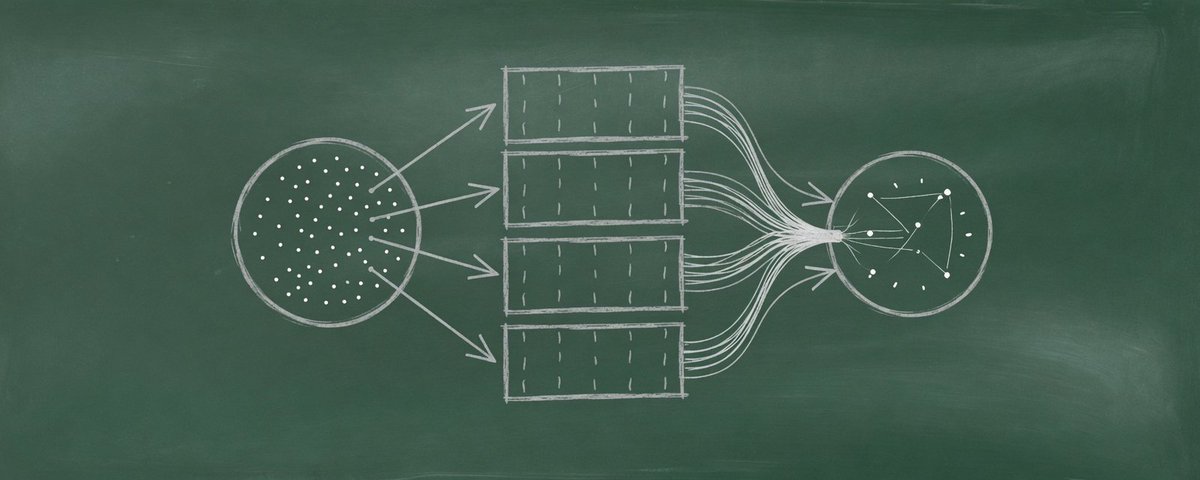
Humans try hard things, fail, learn, and get better through repetition.
AI models aren't as different as you might think.
Here's how models "learn" explained in simple terms.