

🌌 Exploring the mysteries of the universe | 🚀 Space • Science • Galaxies • Black Holes | ✨ Discover the extraordinary.
United States
Joined September 2021
- Tweets734
- Following1.2K
- Followers2.5K
- Likes56




🚨: 800 billion stars captured in a single frame.
This is the Sombrero galaxy, captured by Hubble.
31 million light-years away from us.


✨ "Beyond the veil of dust and stars"
Telescope: Celestron 8-inch
Imaging Camera: QHY8LC -10°C
Mount: Skywatcher NEQ6Pro
Guiding Camera: ZWO ASI662MC
Software: NINA, Siril, Photoshop
Lights: 72 x 300s
Calibration: 40 Darks, 40 Flats, 40 Biases


🚨: 800 billion stars captured in a single frame.
This is the Sombrero galaxy, captured by Hubble.
31 million light-years away from us.

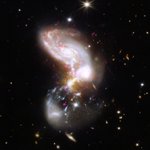
What a sight! Hubble, and Chandra’s combined data offers a new almost supernatural view of II Zw 096, two galaxies merging with a brilliant burst of star formation.
Credit: X-ray: NASA, CXC, SAO; Visible: NASA, ESA, STScI; Infrared: NASA, ESA, CSA, STScI. 🔭
#NASAWebb

🚨: The Big Bang is not the beginning of our universe — It’s actually the End of something else entirely.


Tonight's full moon.
A beautiful full moon has risen from the eastern sky.
Through binoculars, you can easily see the patterns of the rabbit and the crab, too.
Tonight, it looks like there will be many areas with cloudy skies across the country.

Remember that time when you spotted the remains of an exploded star that no one had identified before and Chandra followed up, revealing superheated debris? Together we helped scientists understand one of the youngest remnants in our galaxy, G306.3. We'll miss you, Swift!💜


Today, October 26 (Mon), is a full moon.
After sunset, a perfectly round moon will rise from the eastern sky. It'll be easier to see around 7 p.m.
The weather is a concern nationwide, but if it clears up, why not take it easy and gaze at the moon.


An incredible Heart-shaped nebula 💙
It is located in the constellation Cassiopeia, at a distance of over 7,500 light-years.


This is the heart of the Rosetta Nebula, where a cluster of very bright young stars is located. In the image, different colors have been used to indicate the presence of elements: red, for sulfur; green, for hydrogen; and blue, for oxygen. It is 5200 light-years from the Solar S.


