

I take pictures of objects in space, exposing the gems in the night sky.
Kelowna, BC
Joined June 2013
- Tweets773
- Following70
- Followers258
- Likes418




Sean Perdue retweeted

Happy #InternationalDayofWomenandGirlsinScience 🥳 in @FifthStarLabs Sky Guide app, we’re celebrating! Come read an article about 10 fantastic female astronomers, written by a female astronomer! You can decide if I’m fantastic or not 😜

Sean Perdue retweeted

The Draco Triplet damianpeach.com/deepsky23/dr… This small group of galaxies in the constellation Draco is around 140 million l.y. away. It consists of two spiral galaxies (left and right) either side of an elliptical galaxy at centre. 17"CDK with Morovian camera. LRGB. 3hrs total

Sean Perdue retweeted

NGC 1566: A Spiral Galaxy from Webb and Hubble
Image Credit & Copyright: NASA, ESA, CSA, STScI, J. Lee (STScI), T. Williams (Oxford), R. Chandar (UToledo), D. Calzetti (UMass), PHANGS Team
Explanation: What's different about this galaxy? Very little, which makes the Spanish Dancer galaxy, NGC 1566, one of the most typical and photogenic spirals on the sky. There is something different about this galaxy image, though, because it is a diagonal combination of two images: one by the Hubble Space Telescope on the upper left, and the other by the James Webb Space Telescope on the lower right. The Hubble image was taken in ultraviolet light and highlights the locations of bright blue stars and dark dust along the galaxy's impressive spiral arms. In contrast, the Webb image was taken in infrared light and highlights where the same dust emits more light than it absorbed. In the rollover image, the other two sides of these images are revealed. Blinking between the two images shows which stars are particularly hot because they glow brighter in ultraviolet light, and the difference between seemingly empty space and infrared-glowing dust.

Sean Perdue retweeted

Comet 62P/Tsuchinshan is currently traversing a rich field of galaxies in Virgo, as captured on February 4 by John Chumack. See how many background interlopers you can identify — they include NGC 4567/8, NGC 4596, NGC 4578, and NGC 4519.

Sean Perdue retweeted
The Pleiades: Seven Dusty Sisters
Image Credit & Copyright: Craig Stocks
Explanation: The well-known Pleiades star cluster is slowly destroying part of a passing cloud of gas and dust. The Pleiades is the brightest open cluster of stars on Earth's sky and can be seen from almost any northerly location with the unaided eye. Over the past 100,000 years, a field of gas and dust is moving by chance right through the Pleiades star cluster and is causing a strong reaction between the stars and dust. The passing cloud might be part of the Radcliffe wave, a newly discovered structure of gas and dust connecting several regions of star formation in the nearby part of our Milky Way galaxy. Pressure from the stars' light significantly repels the dust in the surrounding blue reflection nebula, with smaller dust particles being repelled more strongly. A short-term result is that parts of the dust cloud have become filamentary and stratified. The featured deep image incorporates nearly 9 hours of exposure and was captured from Utah Desert Remote Observatory in Utah, USA, last year.

Sean Perdue retweeted

The Artemis missions will bring astronauts back to the Moon. But they won't be a repeat of the Apollo missions. astronomy.com/news/2023/04/a…
Sean Perdue retweeted
Here’s a new version of the eruptive galaxy M82 in Ursa Major by Tony Hallas. Just incredible. This is as fine an image of an active galaxy shot by an astronomy enthusiast as I’ve ever seen!

Sean Perdue retweeted
Star Cluster IC 348 from Webb
Image Credit: NASA, ESA, CSA, STScI, and K. Luhman (Penn State U.) and C. Alves de Oliveira (ESA)
Explanation: Sometimes, it's the stars that are the hardest to see that are the most interesting. IC 348 is a young star cluster that illuminates surrounding filamentary dust. The stringy and winding dust appears pink in this recently released infrared image from the Webb Space Telescope. In visible light, this dust reflects mostly blue light, giving the surrounding material the familiar blue hue of a reflection nebula. Besides bright stars, several cool objects have been located in IC 348, visible because they glow brighter in infrared light. These objects are hypothesized to be low mass brown dwarfs. Evidence for this includes the detection of an unidentified atmospheric chemical, likely a hydrocarbon, seen previously in the atmosphere of Saturn. These objects appear to have masses slightly greater than known planets, only a few times greater than Jupiter. Together, these indicate that this young star cluster contains something noteworthy -- young planet-mass brown dwarfs that float free, not orbiting any other star.

Sean Perdue retweeted

This is the Omega #Nebula (M17), found in the constellation #Sagittarius - an area rich with Milky Way stars. M17 is 5,000 light-years from #Earth. I used my Celestron RASA 8-inch #telescope, ZWO ASI533MC color camera, and Optolong L-Pro filter. 2 hours of exposure time.


Sean Perdue retweeted
Check out the latest space news on YouTube now!

EVERYTHING we thought we knew about galaxy evolution could be wrong - quite literally!
youtu.be/0Ukz1pZMhEE




Sean Perdue retweeted
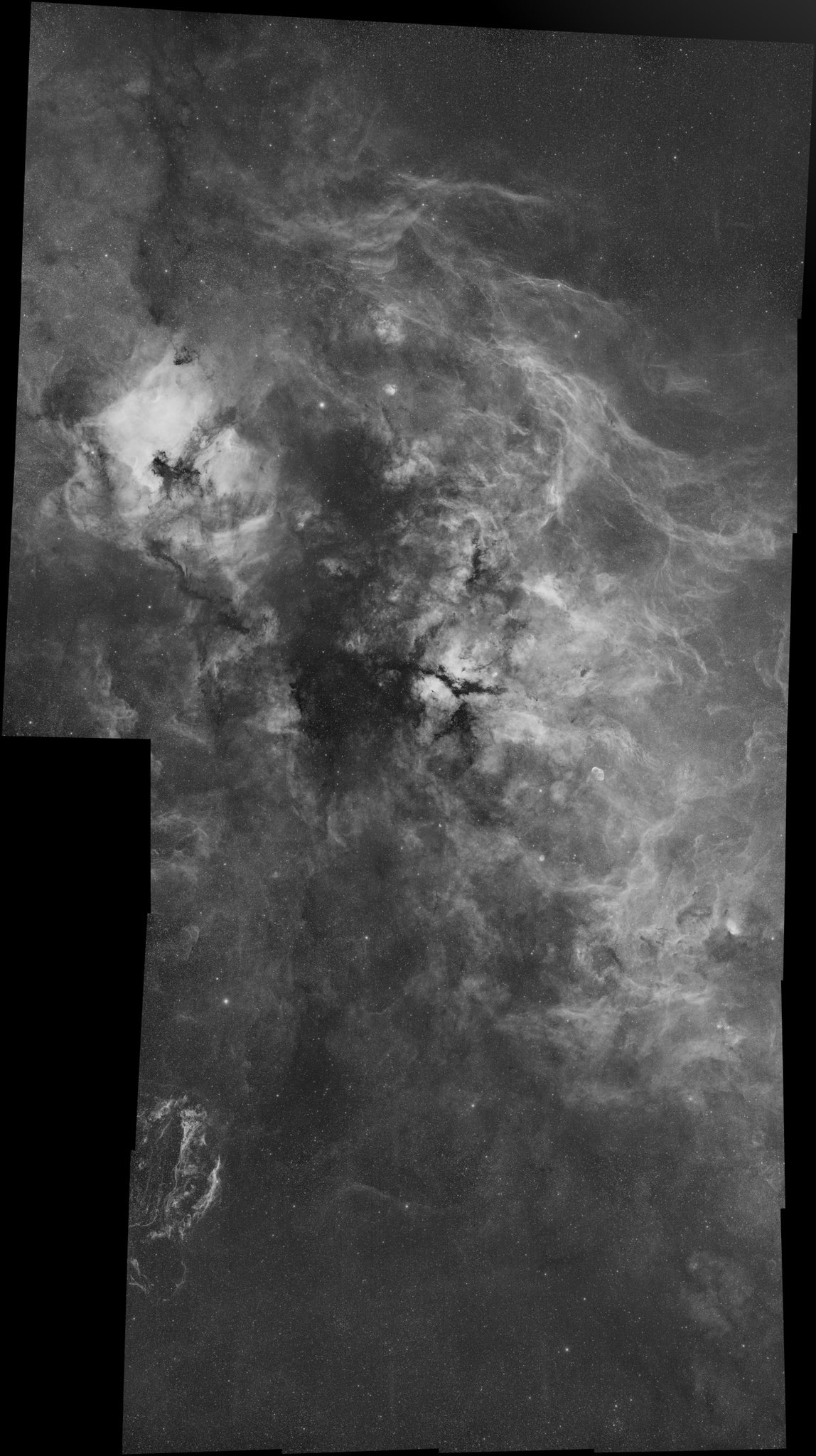
My first light from SRO, the North America nebula and friends. Final image size was a whopping 250 megapixels

Sean Perdue retweeted

A really wide view of the Lagoon and Trifid Nebulas (WIP). #Astronomy #Astrophotography – at Arizona, USA

Sean Perdue retweeted
Hi astronomy twitter! I'm working on an article about Noctilucent Clouds for @FifthStarLabs Sky Guide, and I'd love to showcase some of your images of them (with full credit, of course)! Drop me a line here if you've got something to show off! #NoctilucentClouds


Sean Perdue retweeted


NEW VIDEO INBOUND!!!
The last in our current series of Astronomy 101 videos: the Messier Catalogue
youtu.be/7fGXg5EQEvM
Sean Perdue retweeted
[RPT] The Milky Way's Black Hole: apod.nasa.gov/apod/ap220513.… by X-ray @chandraxray, IR @stsci ; Inset: Radio Event Horizon Telescope Collaboration
