

Central Secretary Information @PATofficialPK
Lahore
Joined August 2014
- Tweets4.8K
- Following509
- Followers32.9K
- Likes4.6K






NoorUllah Siddiqui retweeted

Khawab Kab Aate Hain? | When Do We See Dreams During Sleep? | Dr. Hassan Qadri
#DrHassanQadri #Khawab #Dreams #IslamicKnowledge #IslamicLecture #KhawabKiHaqeeqat
NoorUllah Siddiqui retweeted
When Your Blessings Increase, Give Sadaqah | Dr. Hassan Qadri
#DrHassanQadri #Sadaqah #CharityInIslam #Islam #Sadqa
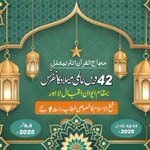
The celebration of the blessed birth of the Holy Prophet (peace and blessings be upon him) holds special significance across the Muslim world. Scholars and representatives from various schools of thought participate in this celebration.
#Mawlidconference2026
43 ویں عالمی میلاد کانفرنس مینار پاکستان کے سبزہ زار میں روایتی شان و شوکت کے ساتھ انعقاد پذیر ہے، کچھ ہی دیر بعد شیخ الاسلام جلوہ افروز ہونگے
#MawlidConference2026
Love for Imam Hussain علیہ السلام is a hallmark of true faith. This is the noble teaching of the Messenger of Allah (peace and blessings be upon him and his family)
سلام یا حسین علیہ السلام
#ہر_زمانہ_میرے_حسین_کا
NoorUllah Siddiqui retweeted

Bradford, UK: His Eminence Shaykh-ul-Islam Dr Muhammad Tahir-ul-Qadri Delivers Landmark Address on Language, Identity and the Future of Faith
A special Suhbah gathering was held at Madinat al-Zahra, Bradford, where His Eminence Shaykh-ul-Islam Dr Muhammad Tahir-ul-Qadri delivered a profound and far-reaching address examining the relationship between language, faith, identity and religious continuity in the modern English-speaking world.
The lecture formed the third and concluding instalment of an international series addressing the challenges facing Muslim families raising children in Western societies. Drawing upon theology, sociology, history, linguistics and contemporary research, Shaykh-ul-Islam presented what he described as one of the most critical issues affecting future generations: the growing phenomenon of “English-only dependence” and its impact on the preservation of faith.
At the outset, Shaykh-ul-Islam congratulated the organisers and participants of the three-day educational campaign conducted by Minhaj-ul-Quran Australia, including the teams of Victoria, Queensland, Canberra and New South Wales, along with Minhaj Welfare Foundation Australia, Minhaj Women League Australia, Eagles Australia, Minhaj Youth League, guest speakers Junaid Khan and Quraat Hussain and campaign coordinator Syed Zameen Masood Shah. He also announced that the next phase of the series would continue at McMaster University in Canada later this year.
English is Not the Problem
A central theme of the address was the clarification that English itself is not a threat to Islam or Muslim identity.
Shaykh-ul-Islam stressed that English is indispensable for modern life. It is the language of education, professional development, public engagement, communication and intellectual discourse. Muslim youth must excel in English to succeed academically, participate confidently in society and articulate Islamic perspectives in response to contemporary challenges such as atheism, secularism and liberalism.
However, he argued that the real problem emerges when English becomes the only language through which a Muslim child understands religion, identity and meaning.
According to Shaykh-ul-Islam, when religious understanding becomes confined solely to English, children gradually lose access to the inherited reservoirs of Islamic knowledge, spirituality and culture that have historically sustained Muslim communities for centuries.
The Three-Language Model
To address this challenge, Shaykh-ul-Islam presented what he termed the “Three-Language Ideal Model” for Muslim families living in the West.
Under this framework:
* English serves as the language of survival, education, communication and engagement with the modern world.
* The heritage language (such as Urdu, Turkish, Persian or another inherited Muslim language) serves as the bridge to religious, spiritual and cultural inheritance.
* Arabic serves as the gateway to the original sacred sources of Islam, including the Qur’an, Hadith, Sunnah and classical scholarship.
He emphasised that the solution is not to sacrifice one language for another, but to ensure each language fulfils its proper role.
“Keep English strong, keep the heritage language alive and connect with Arabic” was presented as the complete model for preserving both faith and identity in future generations.
Language Shapes How We Think
One of the most striking themes of the lecture was the assertion that language does far more than facilitate communication.
Shaykh-ul-Islam explained that language shapes thought, perception and worldview. Children do not merely speak in a language; they think through it, interpret reality through it and develop moral and intellectual frameworks through it.
When Muslim children become exclusively dependent upon English, they inevitably begin to conceptualise religion through the assumptions and categories of the secular environment in which English functions.
As a result, their understanding of Islam can gradually become detached from the civilisational, spiritual and intellectual traditions that originally nurtured and transmitted the faith.
This, Shaykh-ul-Islam argued, contributes directly to the identity crises increasingly experienced by Muslim youth in Western societies.
Heritage Languages as Carriers of Islamic Legacy
Shaykh-ul-Islam highlighted the unique role played by heritage languages in preserving Islamic civilisation and transmitting religious knowledge across generations.
Using Urdu as a case study, he explained how the language emerged through centuries of interaction between Arabic, Persian and Turkish traditions, becoming a vehicle for Islamic scholarship, spirituality and culture.
He noted that heritage languages provide access not only to texts and knowledge but also to emotional memory, inherited values, manners, etiquette and religious vocabulary.
Words such as Insha’Allah, Masha’Allah, SubhanAllah, Tawakkul, Sabr and Shukr carry layers of spiritual meaning that become embedded within a child’s subconscious understanding of faith.
When these words disappear from everyday life, he argued, the concepts they embody gradually disappear as well.
Access to Islamic Knowledge
A significant portion of the lecture focused on the relationship between language and access to authentic Islamic scholarship.
Shaykh-ul-Islam explained that all original Islamic sources are preserved in Arabic. The Qur’an, Hadith literature, jurisprudence, theology, spirituality and classical scholarship remain rooted in the Arabic language.
He further argued that substantial portions of Islamic intellectual history were also preserved and transmitted through Turkish and Persian scholarly traditions, with Urdu serving as a major bridge connecting subsequent generations to that heritage.
Without access to these linguistic traditions, Muslim youth become increasingly dependent on translations and secondary interpretations, limiting their ability to engage deeply with the richness of Islamic knowledge.
He reiterated that translation can assist understanding but can never fully replace the original language of revelation.
The Rise of “Algorithmic Religion”
Perhaps the most memorable and contemporary concept introduced during the lecture was Shaykh-ul-Islam’s warning against what he termed “algorithmic religion.”
He observed that many young Muslims today no longer receive religious understanding primarily through scholars, books, families or established institutions.
Instead, they increasingly encounter religion through:
* TikTok
* YouTube
* Reddit
* Podcasts
* Social media influencers
* AI-generated responses
* Algorithm-driven content feeds
In this environment, children are exposed simultaneously to atheist critiques, secular liberal perspectives, hyper-literalist interpretations, ultra-modern ideologies, influencer-based religion and countless conflicting viewpoints.
Without grounding in authentic sources or inherited religious traditions, they often lack the tools necessary to distinguish between sound scholarship and misinformation.
Shaykh-ul-Islam described the result as “algorithmic religion” — a personalised version of faith assembled from random digital fragments selected by algorithms rather than guided by scholarship, tradition or religious authority.
He warned that this phenomenon contributes to:
* Religious confusion
* Broken continuity of faith
* Weakening family transmission
* Inconsistent religious practice
* Identity instability
* Spiritual uncertainty
Faith is Transmitted Through the Heart as Well as the Mind
Shaykh-ul-Islam repeatedly emphasised that faith is not transmitted solely through logic, argument and intellectual reasoning.
While rational understanding remains important, religion is also transmitted through love, belonging, emotional attachment, memory, spiritual experience and inherited tradition.
He explained that many aspects of Islamic life are sustained through sentimental and spiritual connections that exist beyond purely intellectual explanations.
This emotional continuity is often carried through language, family practices and cultural expressions that connect individuals to previous generations and ultimately to the Prophetic tradition itself.
Without these channels of transmission, future generations may retain information about religion whilst losing their deeper connection to it.
Culture as a System of Meaning
Challenging common assumptions, Shaykh-ul-Islam argued that culture should not be understood merely as local customs or ethnic traditions.
Instead, he defined culture as a “system of meaning” comprising values, beliefs, concepts, norms, habits, manners and traditions rooted in faith.
Islamic culture, therefore, is not confined to geography or ethnicity but emerges from the shared meanings transmitted through the Qur’an, Sunnah, scholarship and spiritual heritage.
Language plays a critical role in preserving and transmitting this system of meaning across generations.
Research Supporting Religious Transmission
To reinforce his arguments, Shaykh-ul-Islam referenced contemporary academic research examining the relationship between language, culture and faith transmission.
He cited studies indicating that heritage language retention strengthens religious continuity, supports family bonds and contributes to the preservation of belief among immigrant communities living in Western societies.
These findings, he noted, increasingly confirm what religious communities have intuitively understood for generations: that faith is sustained not only through doctrine but through family, culture, language and emotional belonging.
A Call to Muslim Families
Concluding the lecture, Shaykh-ul-Islam delivered a powerful appeal to Muslim parents, educators and community leaders.
He urged families not to frame language as a choice between modern success and religious commitment. Rather, they should ensure that future generations are equipped with all three dimensions necessary for success:
* Strong English for life in the modern world.
* Strong heritage language for continuity of identity and tradition.
* Strong Arabic connection for access to the original sources of Islam.
Shaykh-ul-Islam warned that if heritage transmission is neglected, future generations risk becoming disconnected from the religious, moral and spiritual foundations that sustain faith.
The lecture concluded with a reminder that the preservation of Islam is not merely an intellectual exercise but a holistic process involving knowledge, identity, family, culture, language and the heart.
For Muslim communities living in the English-speaking world, the challenge is not English itself, but ensuring that English does not become the only lens through which future generations encounter their faith.


NoorUllah Siddiqui retweeted

پاکستان عوامی تحریک کے 37ویں یومِ تاسیس پر مبارکباد۔ مضبوط بلدیاتی نظام، انتظامی اصلاحات اور عوام کا اعتماد ہی استحکام اور حقیقی خدمت پر مبنی نظام کی بنیاد ہیں۔
نور اللہ صدیقی
ترجمان پاکستان عوامی تحریک
@SecInfoPAT
#PATFoundationDay #37YearsOfPAT

NoorUllah Siddiqui retweeted
Why is the position only for the rich? | Dr. Hassan Qadri
#DrHassanQadri #RichVsPoor #Success #Opportunities #Wealth #RealityCheck
NoorUllah Siddiqui retweeted

The Sīrah & Modern Times — CHICAGO 🇺🇸
Minhaj-ul-Quran USA presents
Join us for an evening of reflection and guidance as we explore the timeless life of the Prophet Muhammad ﷺ and its relevance today.
🎙️ Keynote: Shaykh Hammad Mustafa al-Madani al-Qadri
📍 North Shore Center, Skokie, IL
🗓️ Saturday, June 13, 2026
🕒 Doors open: 3:30 PM
A family event designed to reconnect hearts with purpose in the modern world.
Register here: bit.ly/4tILvSL
#ChicagoEvents #IllinoisEvents #IslamicReminder #HMQ #ShaykhHammadQadri

NoorUllah Siddiqui retweeted
Minhaj-ul-Quran International UK 🇬🇧 invites you to a special Prophetic Sirah Conference 🌙
Join us as we reflect on the life and teachings of the Beloved Prophet ﷺ and reconnect with the values that strengthen our faith and communities 🤍
We are honoured to host His Eminence, Shaykh-ul-Islam Dr Muhammad Tahir-ul-Qadri for this inspiring gathering.
Open to the community, a family event.
Make time, bring others and benefit immensely from this gathering ✨
📅 Sunday 7th June
🕑 After Zuhr | 2:00pm
📍 Madina Masjid, Sheffield (S8 0ZU)

سیز فائر کروانے میں ریاست پاکستان کا کردار قابل ستائش ہے، اس پر مبارک باد، عوام کو بھی اس خوشی میں شریک کیا جائے، یعنی پیٹرول کی پرانی قیمتیں بحال کردی جائیں، عالمی سطح پر تیل کی قیمتوں 17 فیصد کم ہوئی ہیں
#IranWar
Are human rights organizations, institutions working to eliminate environmental pollution, countries raising awareness against global warming and experts who consider forests essential for human survival — are they all just watching the rain of gunpowder?

NoorUllah Siddiqui retweeted
I extend my heartfelt greetings of Eid al-Fitr to all Muslims. Ramadan is a comprehensive training in self-purification, self-discipline, and closeness to God, and Eid al-Fitr is a day to renew our commitment to carrying these spiritual lessons forward in our lives.
On this occasion, let us include the needy and underprivileged in our celebrations, for this is the true spirit of Islamic brotherhood.
#EidMubarak
NoorUllah Siddiqui retweeted
Minhaj-ul-Quran International Canada proudly presents: al-Hidayah 2026! An exclusive al-Hidayah is coming to North America for the first time in 20 years.
📅 Dates: Saturday 1st August to Monday 3rd August 2026
📍 Location: McMaster University, Hamilton, ON, Canada
✨Join us for a 3-day residential spiritual retreat in the company of His Eminence Shaykh-ul-Islam Dr Muhammad Tahir-ul-Qadri, featuring lectures, workshops, dhikr, exhibitions, and stalls.
🔗 Register now: al-hidayah.camp/registration… spaces • Residential camp • Secure your place early
If you're in North America, don’t miss this life-changing opportunity.
#AlHidayah2026 #ShaykhulIslam #TahirulQadri #Islam #Youth #DrQadri #DrHassanQadri #DrGhazalaQadri #ShaykhHammadQadri
انتخابی اصلاحات کےلیے اس وقت کی حکمران جماعت پاکستان پیپلز پارٹی نے اصلاحات کو یقینی بنانے کا تحریری وعدہ کیا تھا، کیا ہوا تیرا وعدہ......
#DrQadriW asRight
@TahirulQadri @PATofficialPK @PATofficialSM

پاکستان عوامی تحریک نے ہمیشہ قانون کی حکمرانی کے لیے عوامی جدوجہد کی عوامی تحریک چہروں کی بجائے نظام بدلے جانے کی حامی ہے۔
#PATLongMarch2013 @TahirulQadri @PATofficialSM
NoorUllah Siddiqui retweeted
لَبَّيْكَ اللَّهُمَّ لَبَّيْكَ لَبَّيْكَ لاَ شَرِيْكَ لَكَ لَبَّيْكَ إِنَّ الْحَمْدَ وَالنِّعْمَةَ لَكَ وَالْمُلْكَ لاَشَرِيْكَ لَكَ
His Eminence Shaykh-ul-Islam Dr Muhammad Tahir-ul-Qadri has been blessed with the opportunity to perform #Umrah.
After completing the sacred rites, he offered special prayers in the Divine Court for the peace, progress, and stability of Pakistan, as well as for the unity, prosperity, and well-being of the Muslim Ummah.
