

phd @stanford @arcinstitute with @mfgrp and @brianhie, always bear @ucberkeley | discovery and design at the host-pathogen interface | 🇨🇦
Stanford
Joined January 2019
- Tweets2.1K
- Following3.7K
- Followers2.9K
- Likes31.1K




Pinned Tweet
Excited to share our work on a model for mapping molecules to olfactory receptors to perception, out today! Check out the link in thread ⬇️

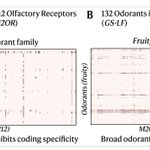
Out today in Cell Systems: the final version of our work on biologically-inspired models for predicting how molecules smell!
With @SeyoneC and @jdthamores

Seyone Chithrananda retweeted

We've spent the last 30 months building the physical infrastructure to develop personalized medicines.
Now, we deploy: in the next year, we will manufacture 100+ mRNA cancer vaccines - each purpose built for a single person.
RNAFoundry.com


Super interesting thoughts on music as a novel brain intervention!

It may be possible to train music generation models which have a shot at treating, and perhaps even preventing Alzheimer's.
It'd take ~$5m to build and run trials for what could become one of the most widely deployed public health interventions.
jajoo.sh/gamma


Seyone Chithrananda retweeted

On August 31, the first two participants were injected with @PopVaxIndia’s first fridge-stable RNA vaccine candidate in a Phase I clinical trial in Australia. We built this vaccine at our RNA Foundry in Hyderabad – from computational design to GMP manufacturing. Here's how:
Seyone Chithrananda retweeted
The team:
- computationally designed and tested ~1300 vaccine constructs in animals
- screened ~5000 novel LNP formulations in the wet lab
- built a mRNA-LNP manufacturing facility which can produce a million doses every year
and now, we are well into our first human trial!
On August 31, the first two participants were injected with @PopVaxIndia’s first fridge-stable RNA vaccine candidate in a Phase I clinical trial in Australia. We built this vaccine at our RNA Foundry in Hyderabad – from computational design to GMP manufacturing. Here's how:
Seyone Chithrananda retweeted

There’s lots of buzz around agentic harnesses for robots, particularly for long horizon tasks that require complex reasoning and memory. But what will it really take to turn a reasoning agent into a reactive, reliable and low-latency robot policy?
In our new paper, workspace models, we design a new memory architecture that acts as a latent harness for stronger reasoning models. Here’s why we think this might be the way forward:
(1/9)

Seyone Chithrananda retweeted
My friend, co-conspirator, and colleague @jajoosam has written a wonderful essay about the collaborative baking of half-baked ideas. I highly recommend it, and not just because he says nice things about me:
jajoo.sh/medium-rare
Seyone Chithrananda retweeted

Mark Carney is for me, right now, the most interesting man in the world. Gift link for his recent NYT interview: nytimes.com/2026/09/23/world…

Seyone Chithrananda retweeted

Many important bacterial non-coding RNAs and structural elements remain undiscovered. To help, @_David_Li, @garykbrixi, @mfgrp, @BrianHie & team introduce Minerva, which uses a genome language model to predict RNA base pairing, repeats, & other interactions from sequence alone.

Seyone Chithrananda retweeted

Genomes are full of dark matter of unknown functions.
We present Minerva, a new method for discovery guided by genome language models. Minerva reveals the interactions hidden in non-coding DNA, pointing to hundreds of new putative RNAs and repetitive elements per bacterial genome. Minerva allows us to find and study elements invisible to traditional methods at orders of magnitude greater scale than before.
Seyone Chithrananda retweeted

As with biological design, AI can also accelerate biological discovery.
In new work led by @_David_Li and @garykbrixi with @mfgrp, we show how genome language models enable systematic discovery of genetic elements, revealing a new class of reverse-transcriptase mechanisms.
Check out this super exciting approach from David and @garykbrixi that enables efficient, scalable discovery of uncharacterized genetic elements with gLMs, at a scale orders of magnitude more precise than existing techniques!

Excited to share Minerva, our approach using genome language models for biological discovery! Using Minerva, we find that UG27 reverse transcriptase systems encode variable arrays of diverse ncRNAs with a shared structure, each templating a short DNA hairpin. With @garykbrixi.

Seyone Chithrananda retweeted

In light of the progress in mathematics, we at Edison Scientific and FutureHouse have assembled a set of Millennium Problems for Biology. They are chosen to be very hard to solve but very easy to validate in a simple laboratory environment. Any of these, if solved, would mark a major advance in biotechnology, and most of them would contribute materially towards curing disease. These are, in some sense, the “last reasonable eval” for AI in biology. This was work primarily by @MichaelaThinks and myself, with contributions from many others.
Short descriptions below. The full descriptions of the problems with acceptance criteria are at the Bio Millennium Problems website, linked in the next post. Share more if you have ideas. If they meet our criteria, we’ll add them to our list (with attribution and permission).


Seyone Chithrananda retweeted

VIPR is now out in @ScienceMagazine!
What started with a mysterious RNA led us to an unexpected way of recognizing DNA, as well as some clues to CRISPR’s origins.
So happy to share these two papers with an incredible team. Links below; original discovery thread here ↓


Seyone Chithrananda retweeted
hype!!!
news.unchealthcare.org/2026/…


Starting a new thing at UNC with @BenjaminGVincen to figure out which tumor-specific pMHCs are actually on tumor cells & which vaccine platforms are more immunogenic.
Lots of long-read WGS/scRNA, targeted mass spec, tumor-specific TCRs coming your way in the near future
Seyone Chithrananda retweeted

Most people treat a zero-failure record as a flex. In computer science, there is a sharper perspective famously known as "Umeshisms."
During his PhD at UC Berkeley under quantum computing pioneer Umesh Vazirani, computer scientist Scott Aaronson noted an aphorism his advisor loved to repeat:
"If you have never missed a flight, you are spending too much time in airports."
The math logic is simple: a 0% miss rate often means you are overpaying in friction, prep time, and missed opportunity. Occasional failure is often the price of a better expected-value tradeoff.
Aaronson named these "Umeshisms" in a 2005 blog post and penned a few sequels in the same spirit:
- "If you have never been rejected, you are not asking enough."
- "If you never cut yourself while shaving, you are not shaving close enough."
The lesson is recognizing when extreme risk aversion costs you more than the risk itself.

Seyone Chithrananda retweeted

A fast method for building phylogenetic trees with millions of sequences and then a model that leverages the tree structure to predict viral protein evolution!
@ivanspecht @SeyoneC @driscoll_cl @garykbrixi @BrianHie

