

National survey data & precarious employment research | @Kennedy_School & @UCBerkeley | #Scheduling #ServiceSector #EssentialWorkers #Health
Cambridge, MA
Joined June 2018
- Tweets2.7K
- Following727
- Followers1.2K
- Likes830



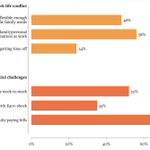


1/5- As calls grow to fix chaos in service‑sector jobs (erratic schedules, back‑to‑back shifts, too few hours), Fair Workweek (FWW) laws are spreading across the U.S. But do they actually deliver the promised benefits for workers? Our new study tests this: science.org/doi/10.1126/scia…

4/5 - Notably, the strength of the FWW laws strongly differed depending on the jurisdiction. The percentage point increase in two-week notices was 5x as much in New York as Philadelphia (25p.p. vs 5p.p.). This potentially reflects differences in local enforcement capacity.

5/5 - Overall, the results from this empirical study show that new FWW laws have the ability to improve measures of work stability without negative effects on wages and benefits, though the magnitude partially depends on local government capacity. @Kennedy_School @HarvardMWC
At the Shift Project we are recruiting one full-time postdoctoral fellow. Folks interested in labor standards violation, industrial relations, labor economics, sociology of work, + please apply to join our crew! Fall 2026 start. Apps due February 13, 2026. shift.hks.harvard.edu/post-d…

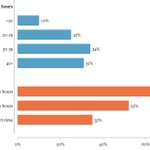
1/8 Los Angeles has recently taken steps to guarantee retail workers more stable work schedules, but fast food workers remain unprotected. A new Shift brief explores how these workers are faring—and what could be done to improve their schedules. shift.hks.harvard.edu/fast-f…

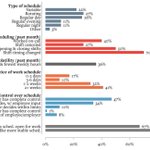
7/8 Are Fair Workweek policies a promising way to improve the quality of workers’ schedules? Our data say yes. We find that Los Angeles’ FWWO for retail workers has reduced exposure to “just-in-time” scheduling practices, like short notice of work schedules and on-call shifts.

New @SF_Journal article by @JoshuaChoper using @Shift_HKS data: mothers in the US service sector have more stable schedules on average, but this advantage disappears under female managers, especially those without children. Check it out! doi.org/10.1093/sf/soaf193

The Shift Project retweeted

Special thanks to @dannyjschneider @KristenHarknett for their support on this project.
The Shift Project retweeted
These findings are largely consistent with "queen bee" theories of women in management, and build upon this body of research to consider how gender and parenthood interact within manager-employee relations to produce inequality.
The Shift Project retweeted
Now available online @SF_Journal, my new article uses @Shift_HKS data to show that while mothers in the US service sector secure more stable schedules on average, this advantage disappears under female managers, and particularly those without children. doi.org/10.1093/sf/soaf193
At the Shift Project we are hiring 1 to 3 pre-doctoral fellows (= full time paid RA). Folks interested in labor policy, work scheduling, PSL, firms, survey methods, + please apply to join our crew! Fall 2026 start. Apps due January 15th, 2026. shift.hks.harvard.edu/pre-do…

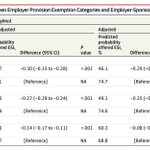
1/5 - Current policy debate often assumes workers who lose Medicaid coverage can get employer-sponsored insurance (ESI). A new Shift Project article in JAMA Health Forum shows why this may not be the case for hourly service-sector workers: shift.hks.harvard.edu/employ…

4/5 -Falling into an exemption category is associated with a lower likelihood of being offered ESI. Workers are nearly 30, 25 & 8 percentage points less likely to be offered ESI if at a franchised firm, work part time, and have been at a firm for less than one year, respectively.
